
The last few days of the walk started by crossing the Minho River via boat from Caminha to Spain. It’s a unique, fun way over to Galicia, the region where the trail continues (and where Santiago de Compostela is located). Rides can be booked online, including Xacobeo Transfer that provides a stable ‘dock landing’ (beware of boat businesses without a proper dock to embark/disembark safely).
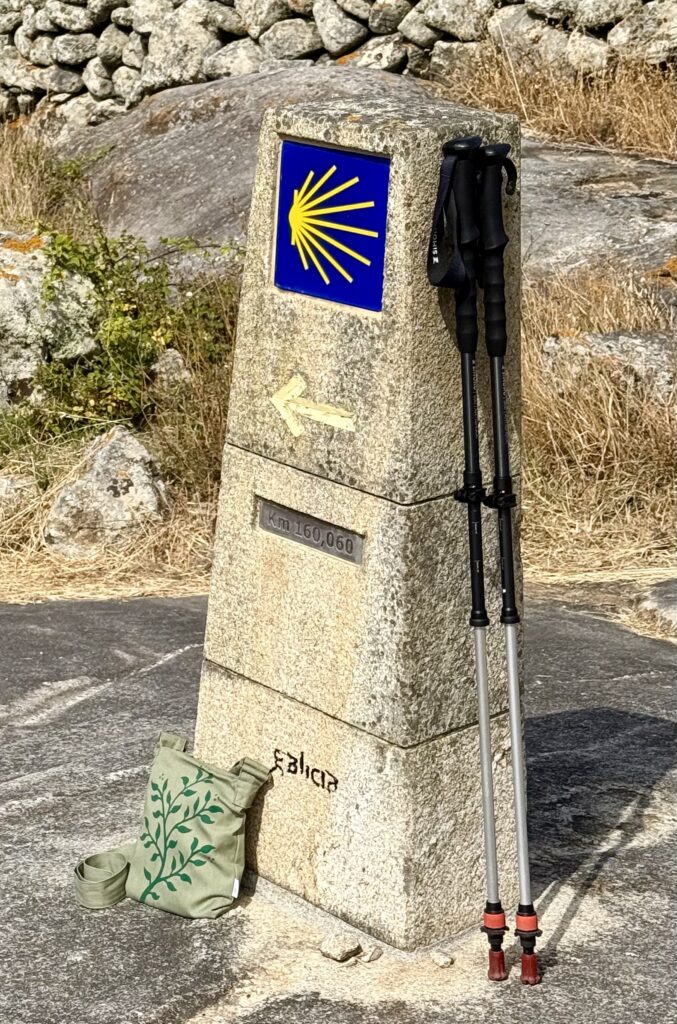
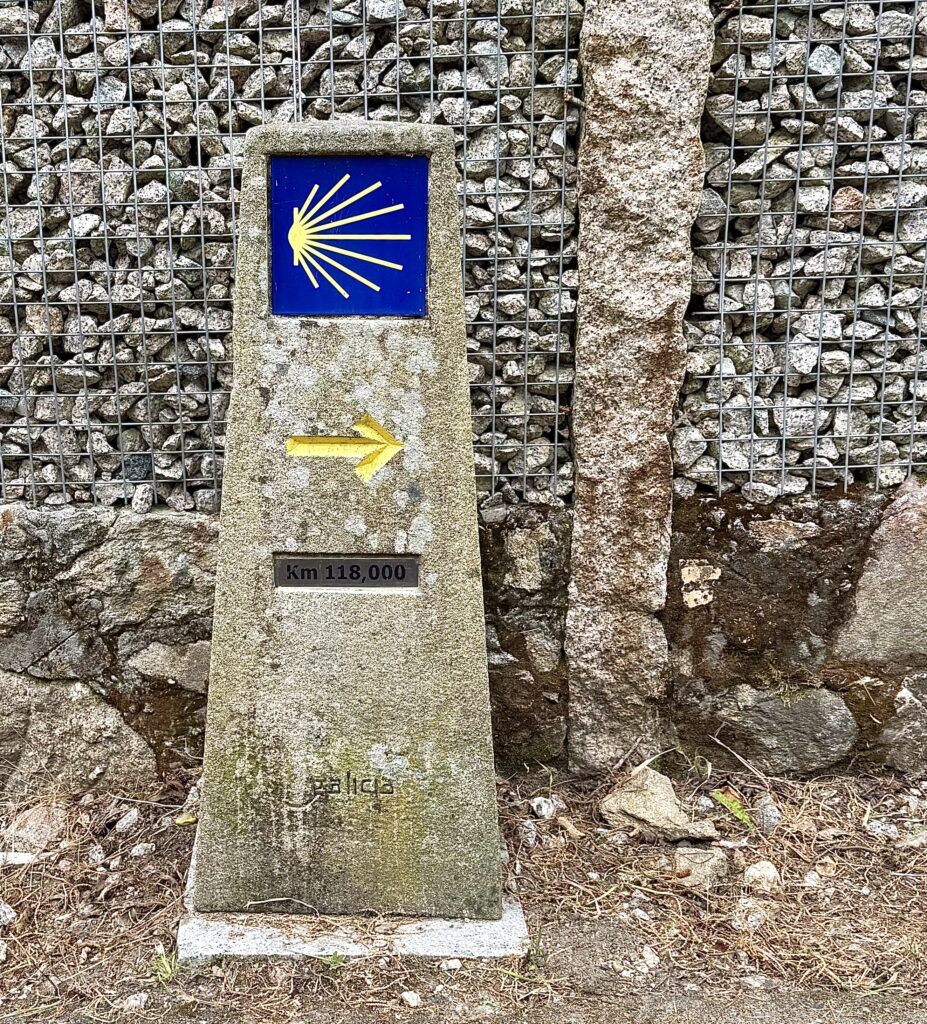
Once on the Costa’s Spanish side the greetings between walkers changed from Bom Caminho (Portuguese for “have a good Way”) to Buen Camino (in Spanish). Trail guidance now entailed “Galicia” stone markers with shells & arrows, and the time changed to an hour later. More walkers appeared as well, which was anticipated because the distance from there to Santiago meets the 100 kilometer distance required for a Compostela (see The Camino, Part 1 for more info about this certificate).
Thus far, the Costa trek held a few surprises, including how much the traditional path looped inland & gained elevation (even after looking at guide maps) and how many people I met who had chosen the coastal paths as their first Camino (rather than the popular Camino Frances). Unsurprisingly, though, was the ‘Camino spirit’ found on the route, encompassing the lovely landscapes, historical sites, charming towns, and international pilgrim community I experienced.
There’s also a saying that “the Camino provides” when a challenging or unexpected situation works out in a serendipitous, magical way. This transpired on Day 2 after I arrived to Vila do Conde and realized the bottom half of a walking stick was missing. Moments earlier I had been taking pictures at a plaza before checking into my hotel. Both of my sticks’ wrist straps were placed around my left hand so that my right hand was free for photography. An adjustment latch on a shaft must have loosened, and the bottom half fell off (weirdly, I didn’t hear or feel anything fall). Frantically I retraced my steps searching for the lost end but to no avail and concluded the only option was to buy new sticks somewhere.
At the hotel I explained my predicament and inquired about a sports/outdoor store. The receptionist motioned ‘wait a minute’ and went into a back room. He returned with what looked like brand new sticks (shown above) that apparently a walker left behind a year prior. “You can take them,” he announced. Camino magic!
Snapshots of the final Days 7-9:
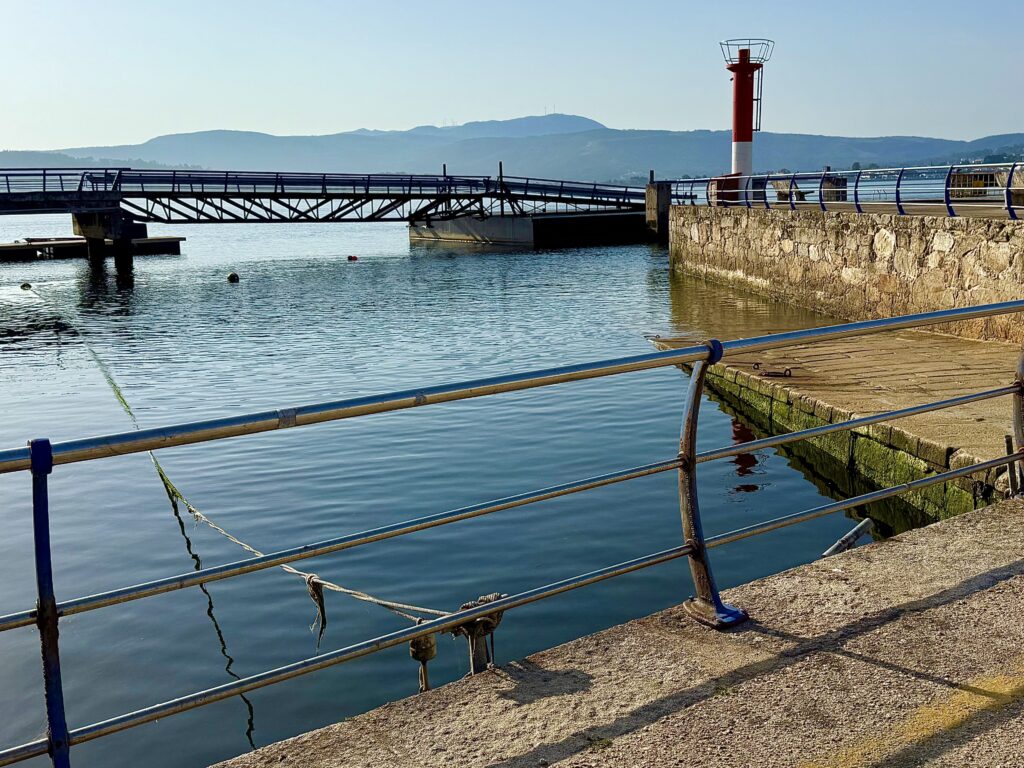
Arrival to Spain on Day 7 to Oia
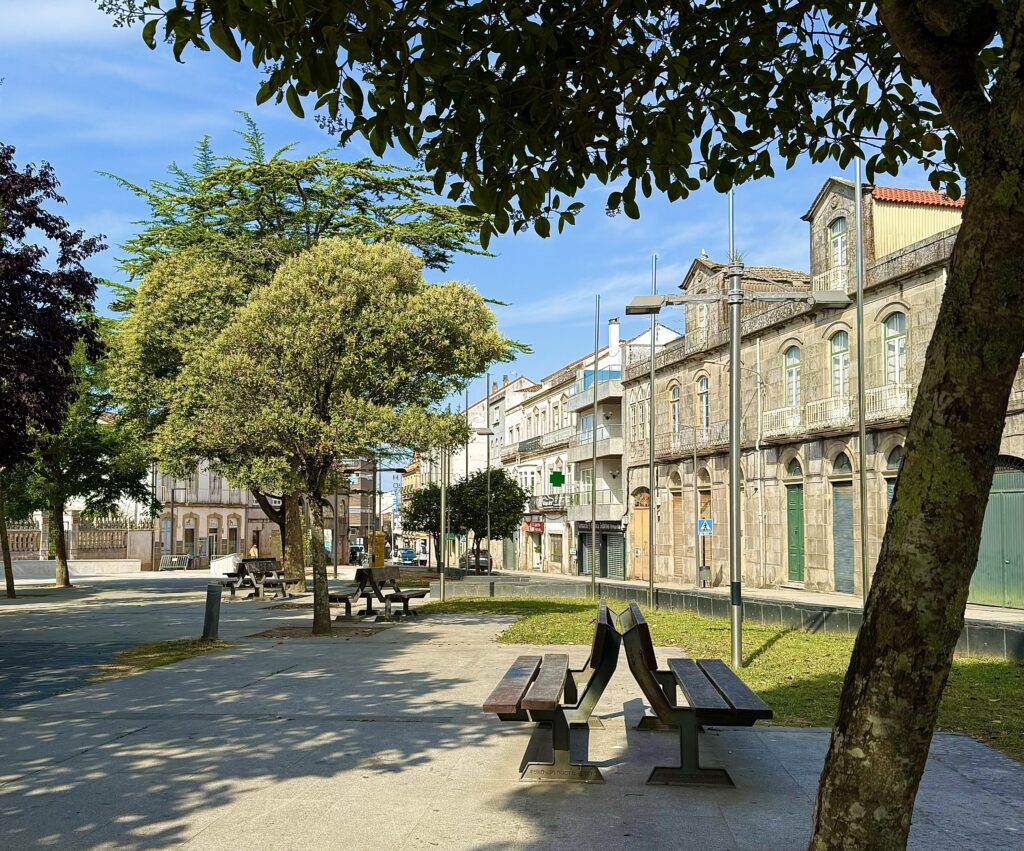
The first town over the water was A Guarda, where I stopped at Alameda de A Guarda for a breakfast snack after the boat ride.
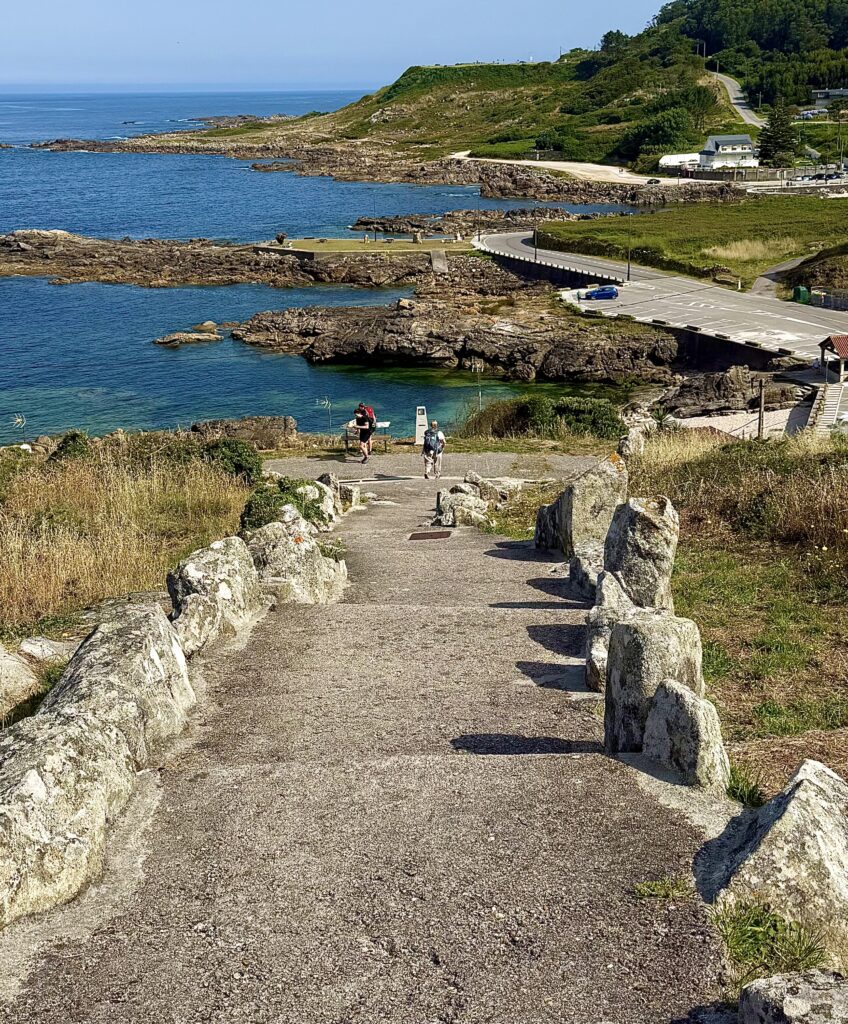
The shoreline beyond A Guarda
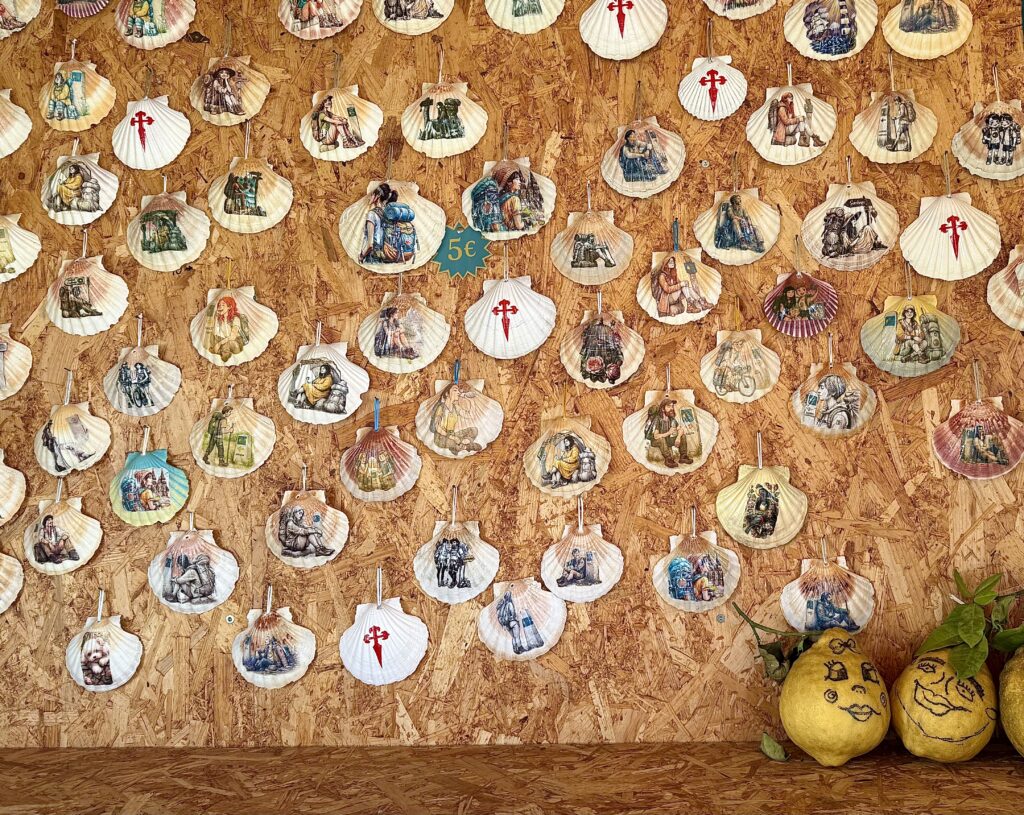
Shells for sale
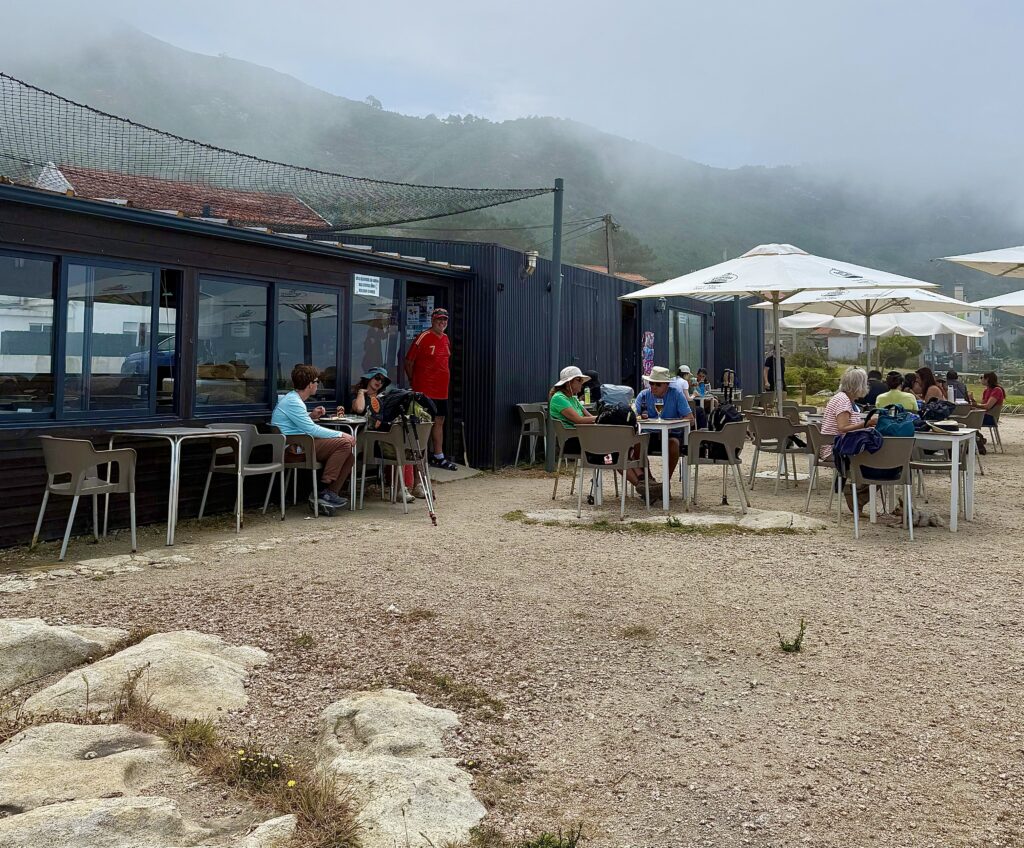
Morning mist at a cafe break in Portecelo
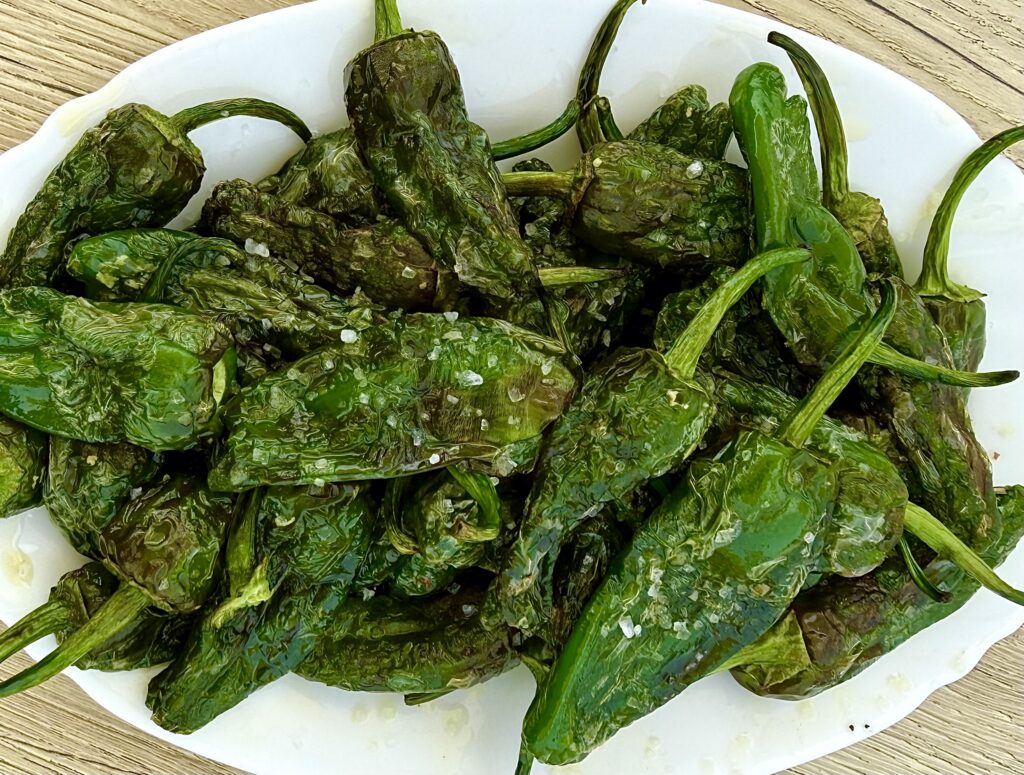
Padron peppers (pimientos de padron), roasted & sprinkled with sea salt — there’s sometimes a hot pepper in the bunch but not in this order!
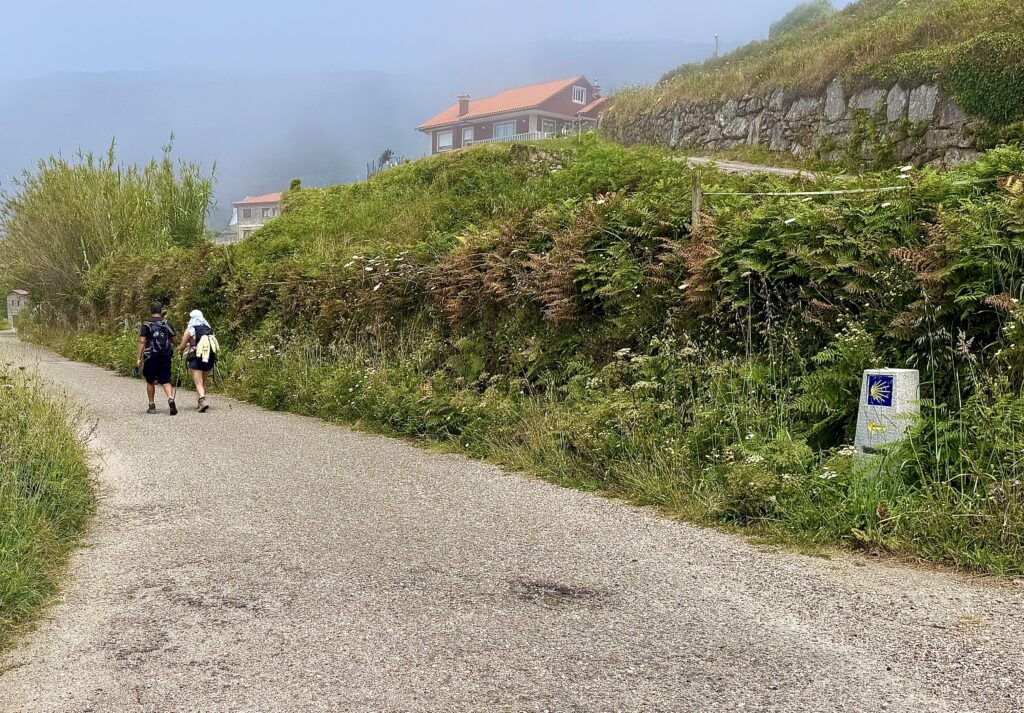
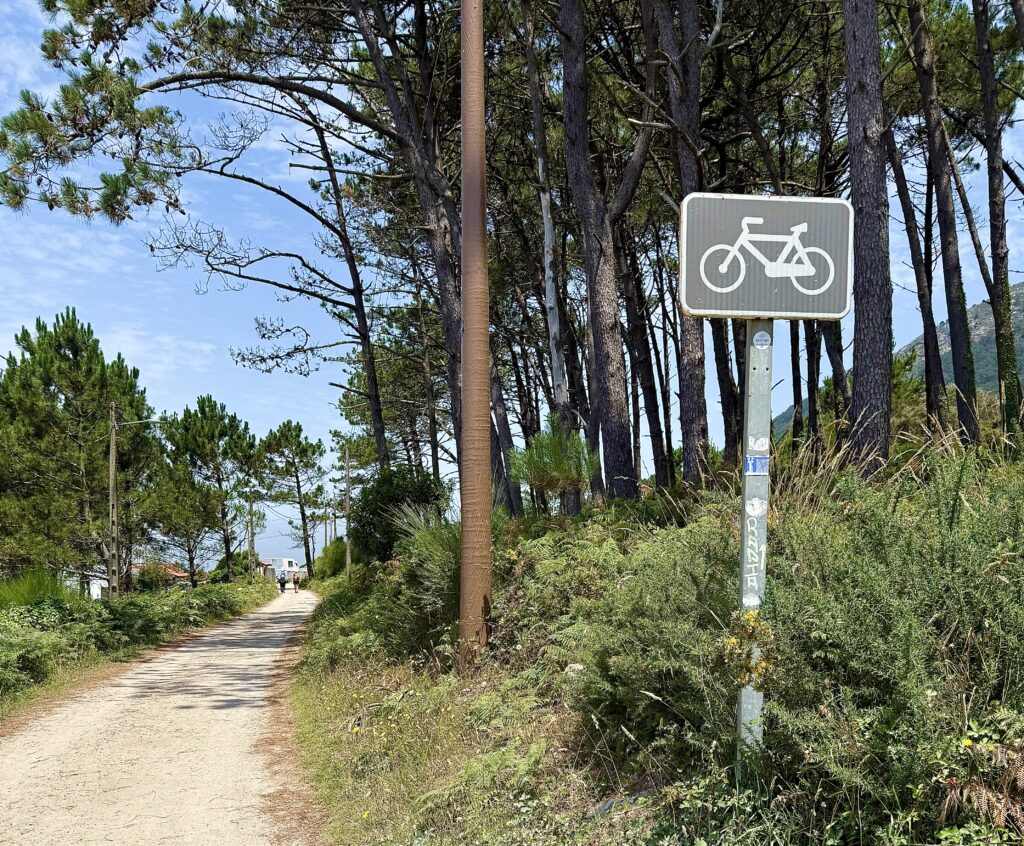
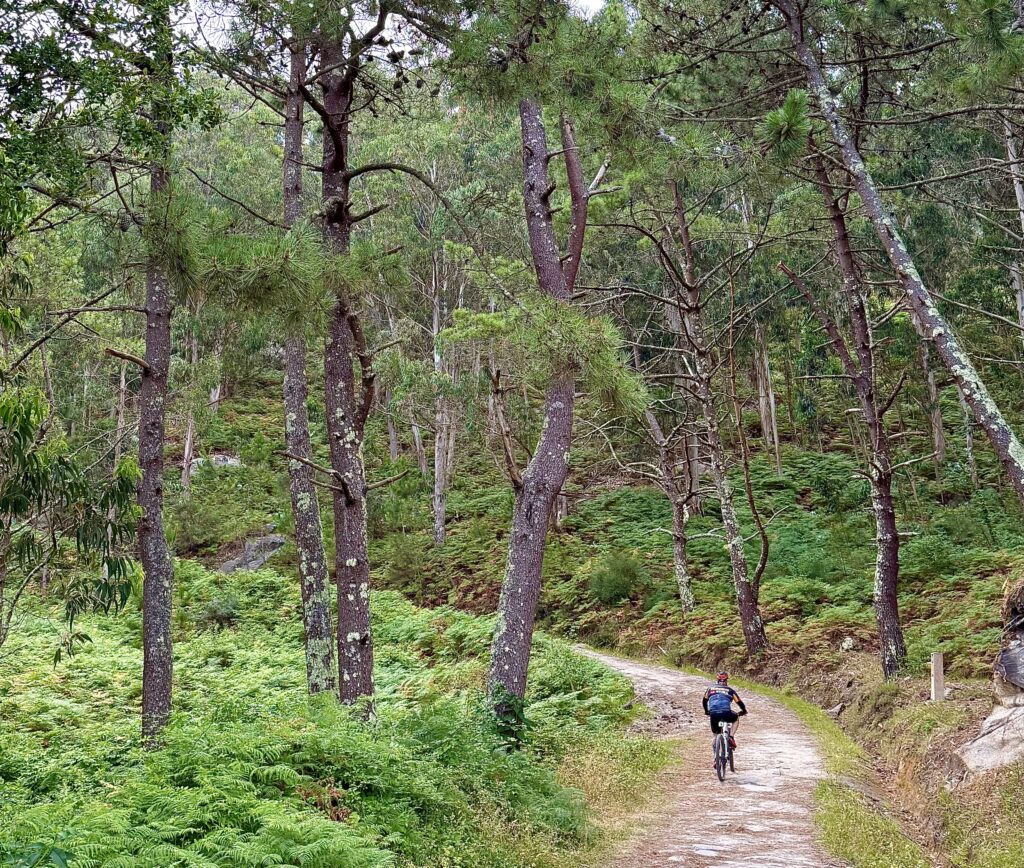
Camino trails are meant for cyclists too. However, they can always opt for adjacent roadways when paths involve difficult terrain.
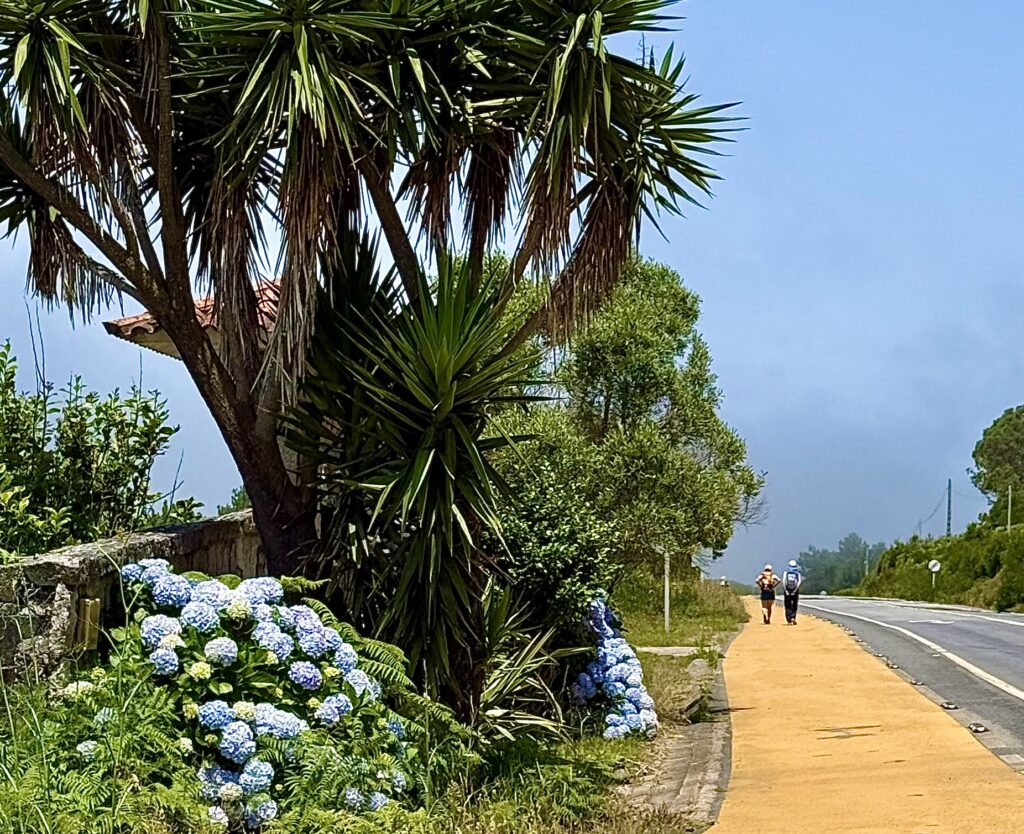
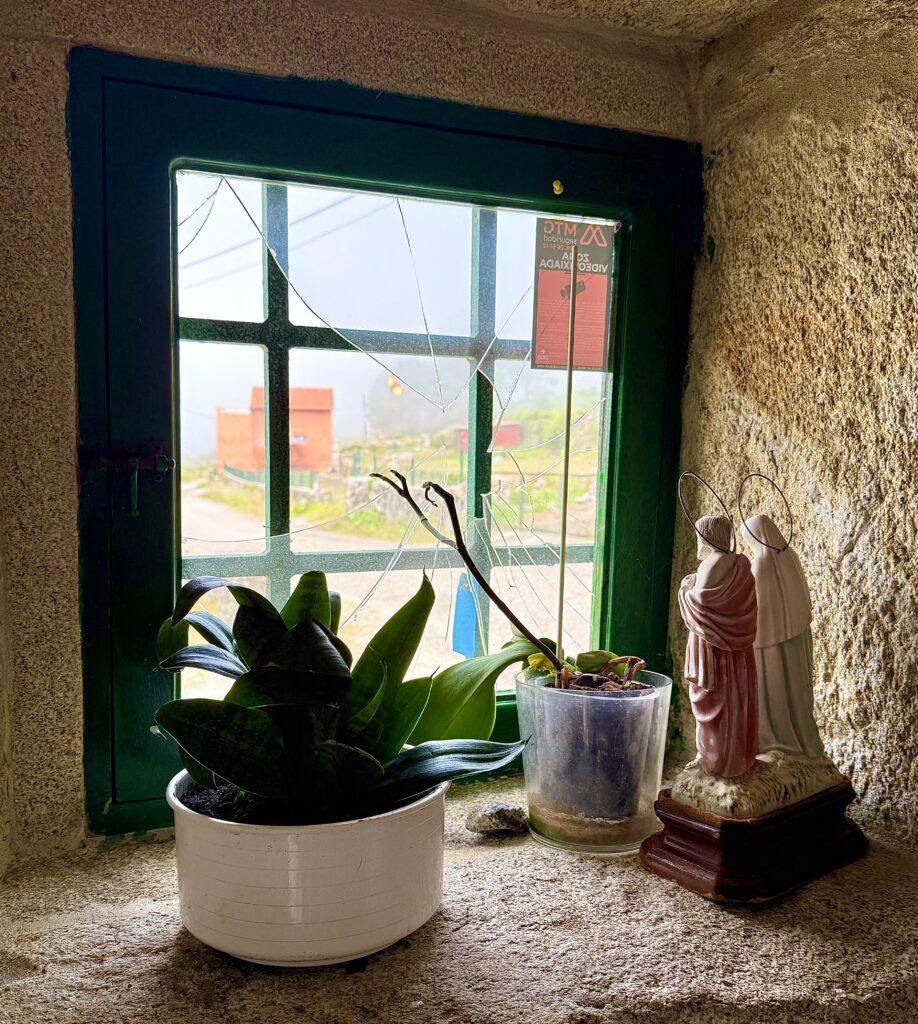 18th c. Ermita de San Sebastian near Oia was open for walkers to visit. Windows inside looked out to the Road.
In Oia the Royal Monastery of Santa Maria de Oia is currently undergoing a renovation and closed to the public except for private tours. Founded in 1137, the Cisterian monastery acquired royal status after monks blocked a pirate attack off the coast in the 17th c.
More recently, the complex was purchased at various points by individuals plus business & financial entities. It also served as the set for the 1969 Spanish film Esa Mujer.
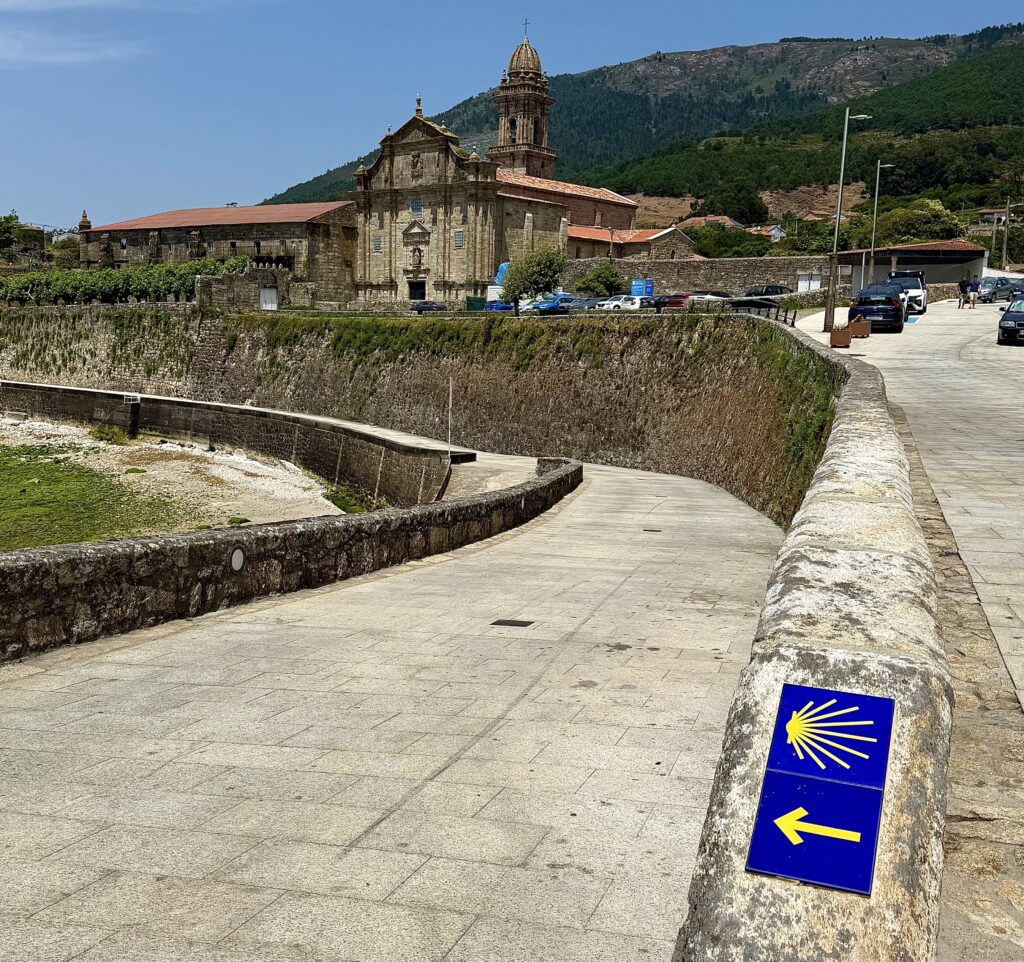
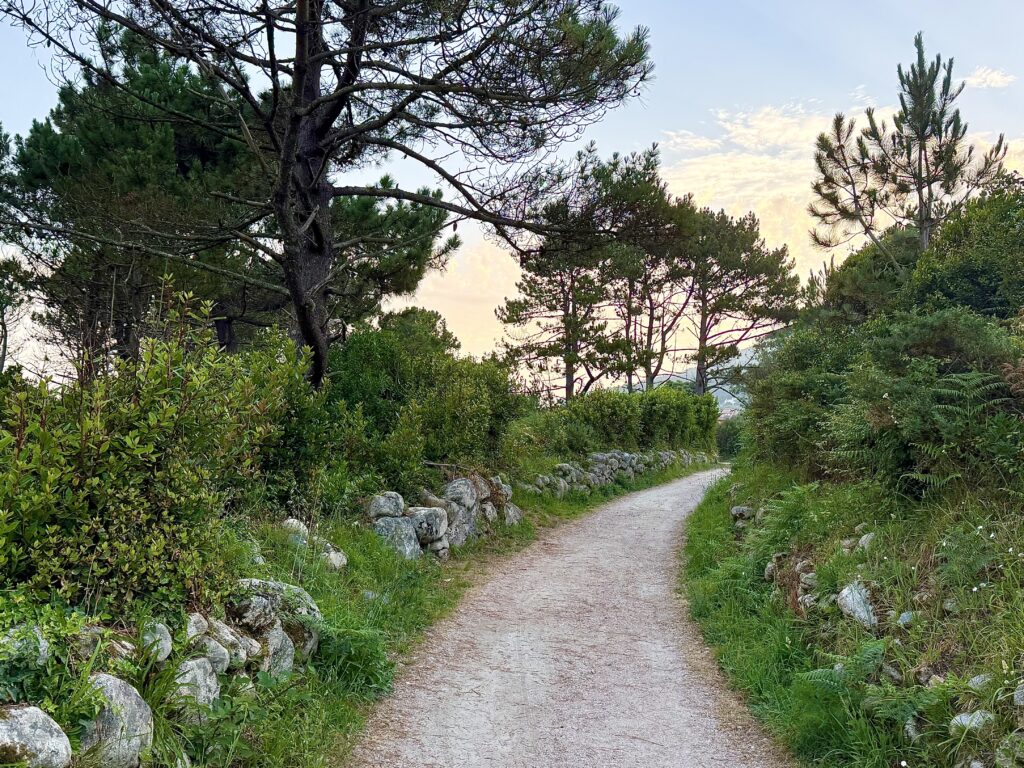
7:34 a.m. on Day 8 to A Ramallosa
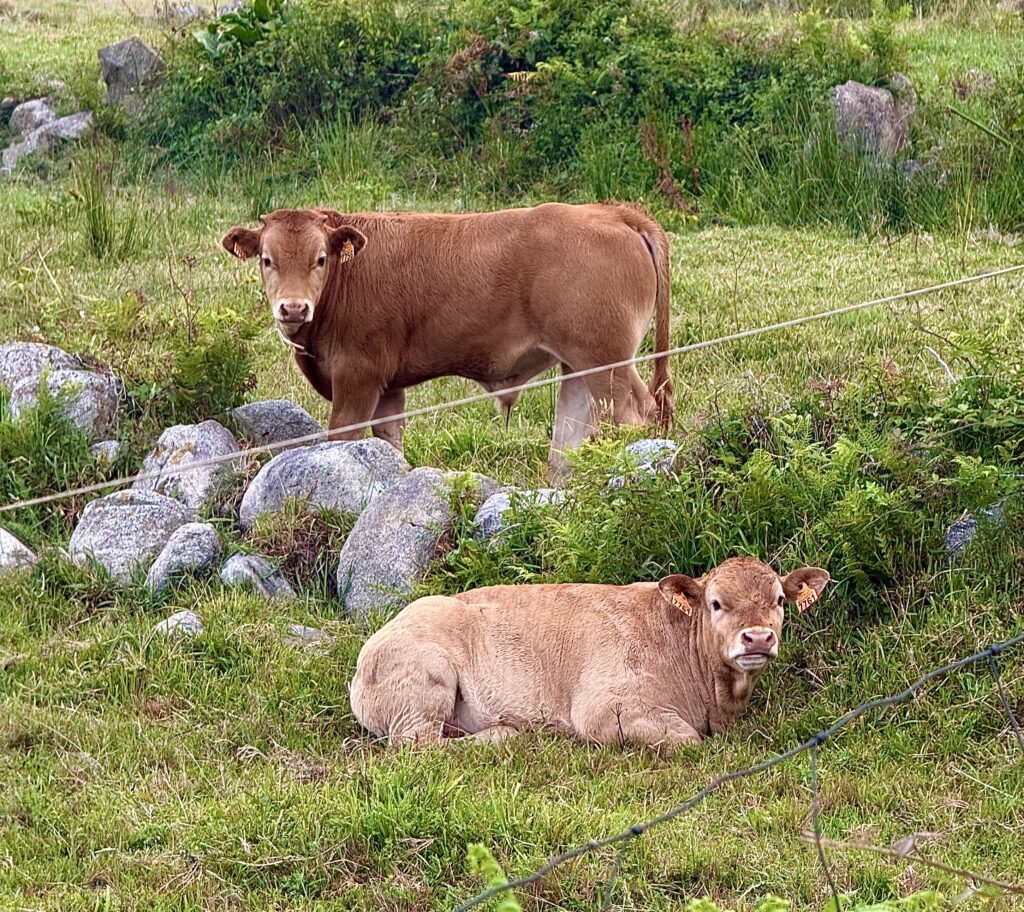
Sweet cows grazing in the early morning
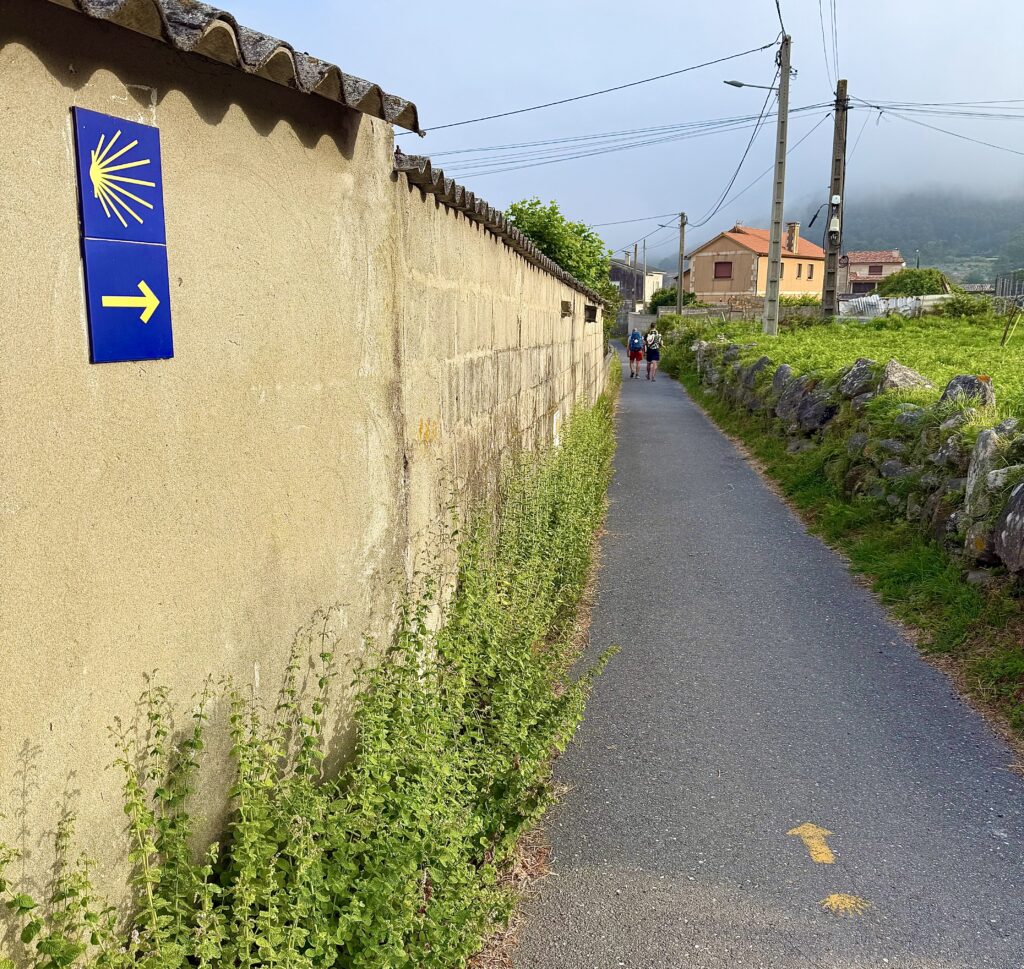
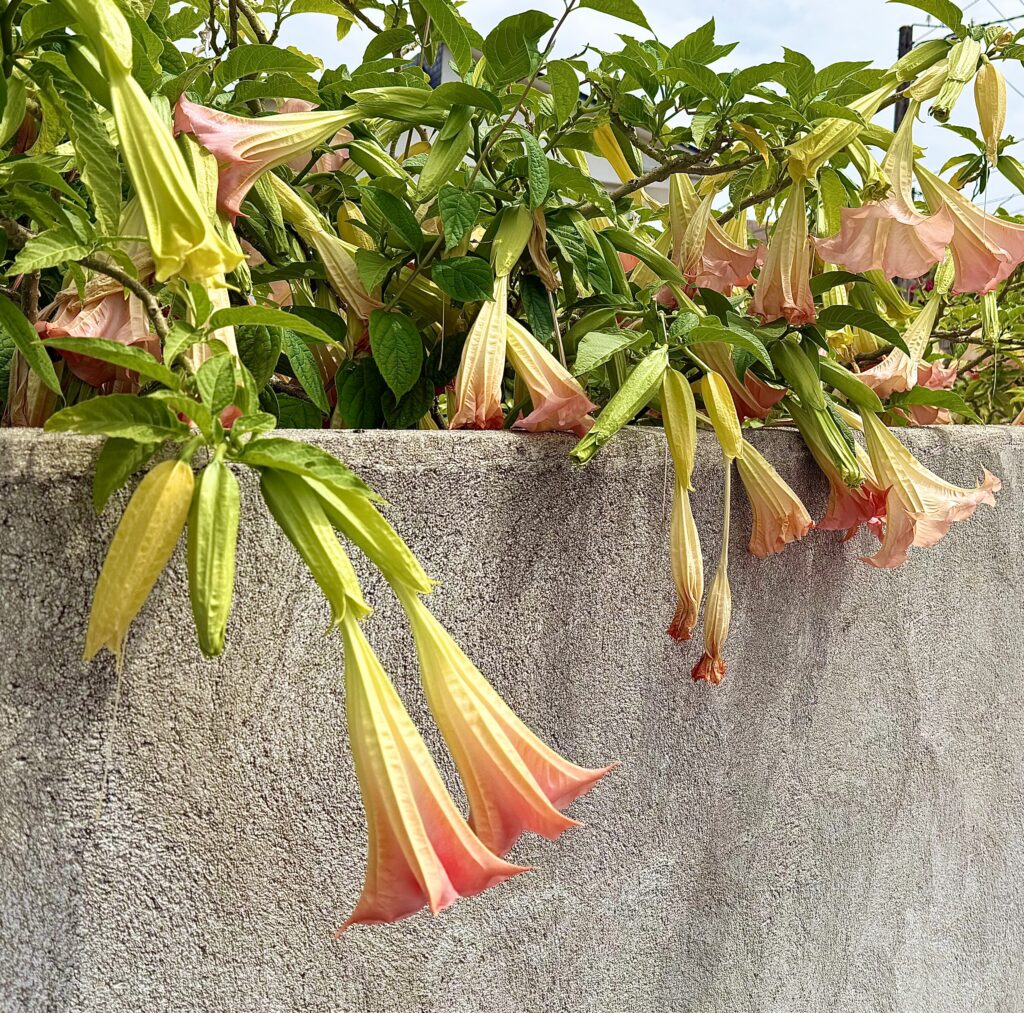
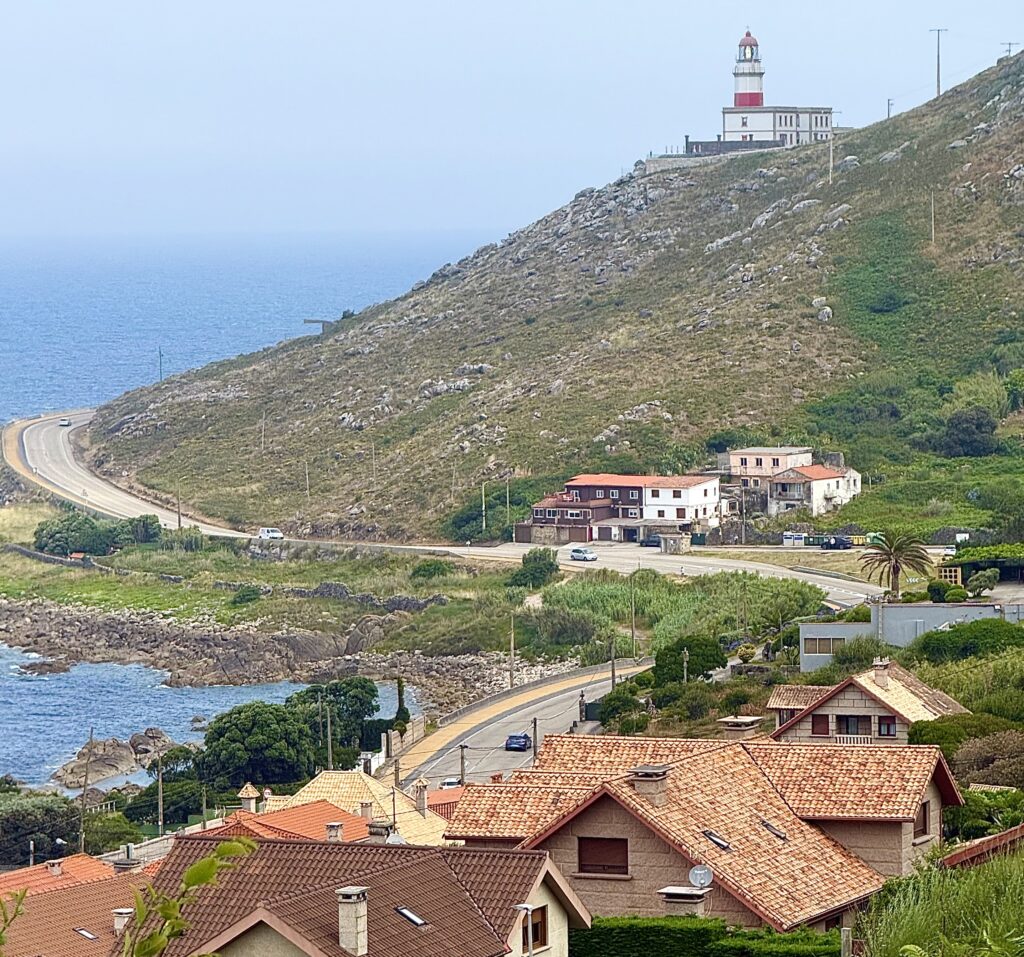
The Costa climbed upwards near the lighthouse in As Marinas.
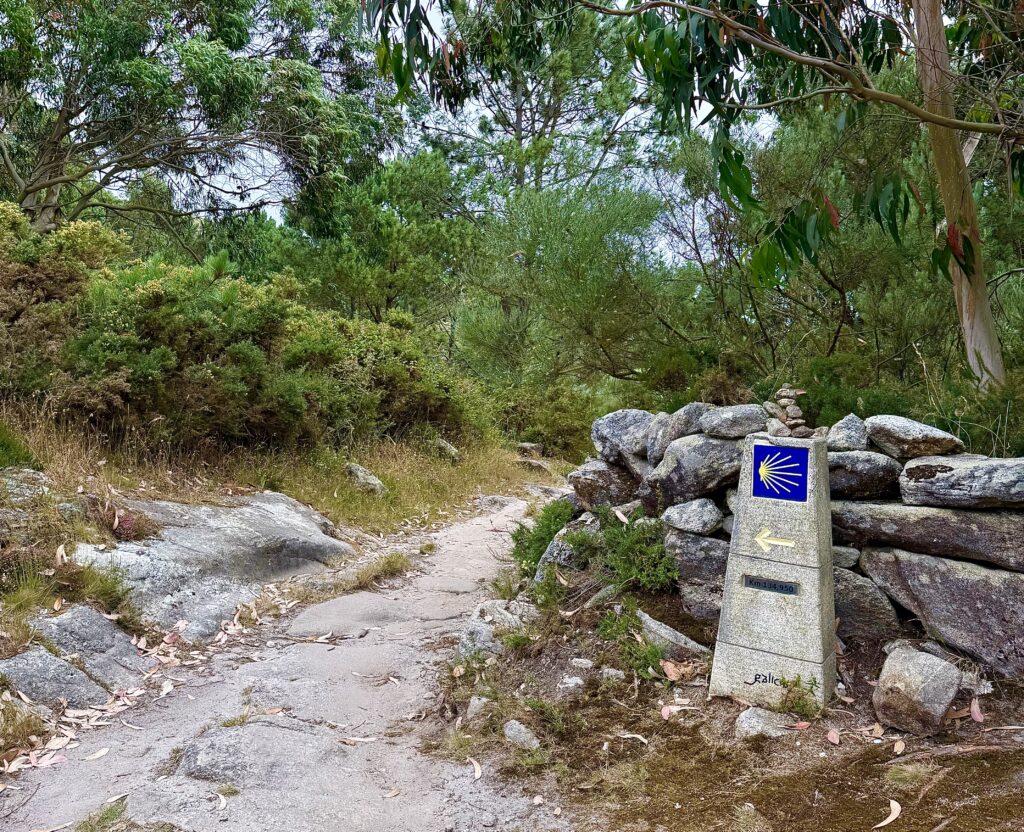
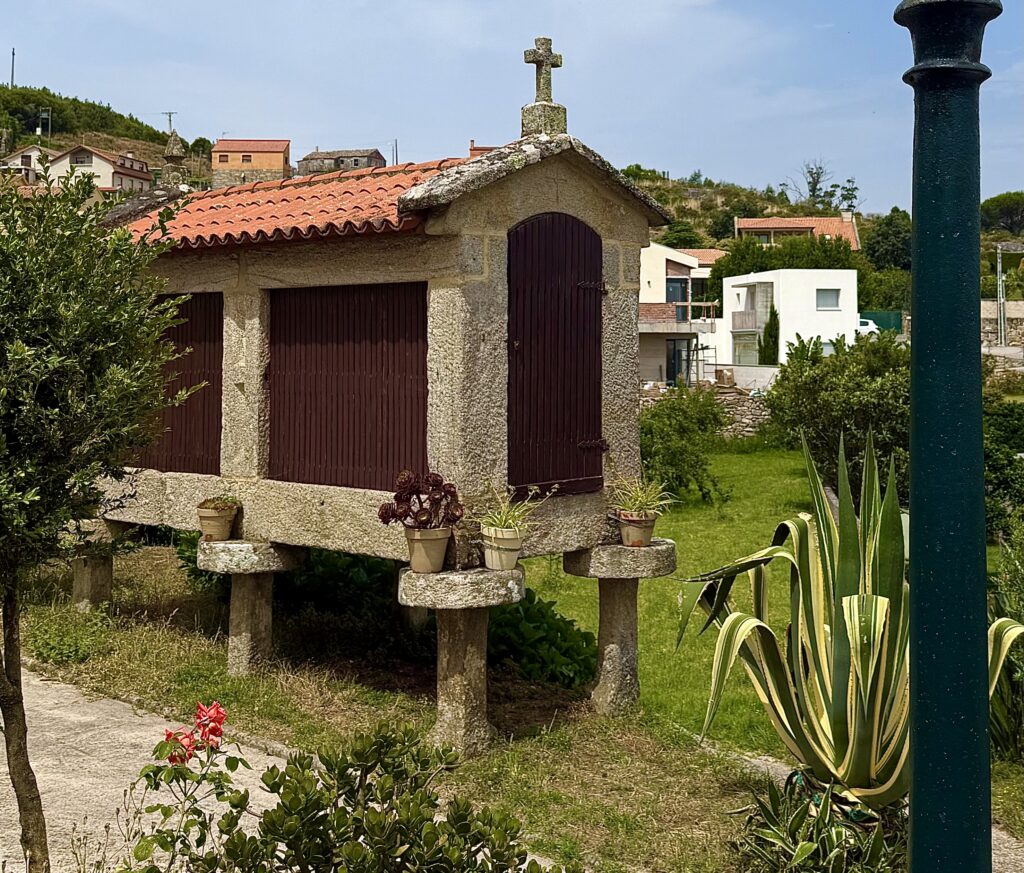
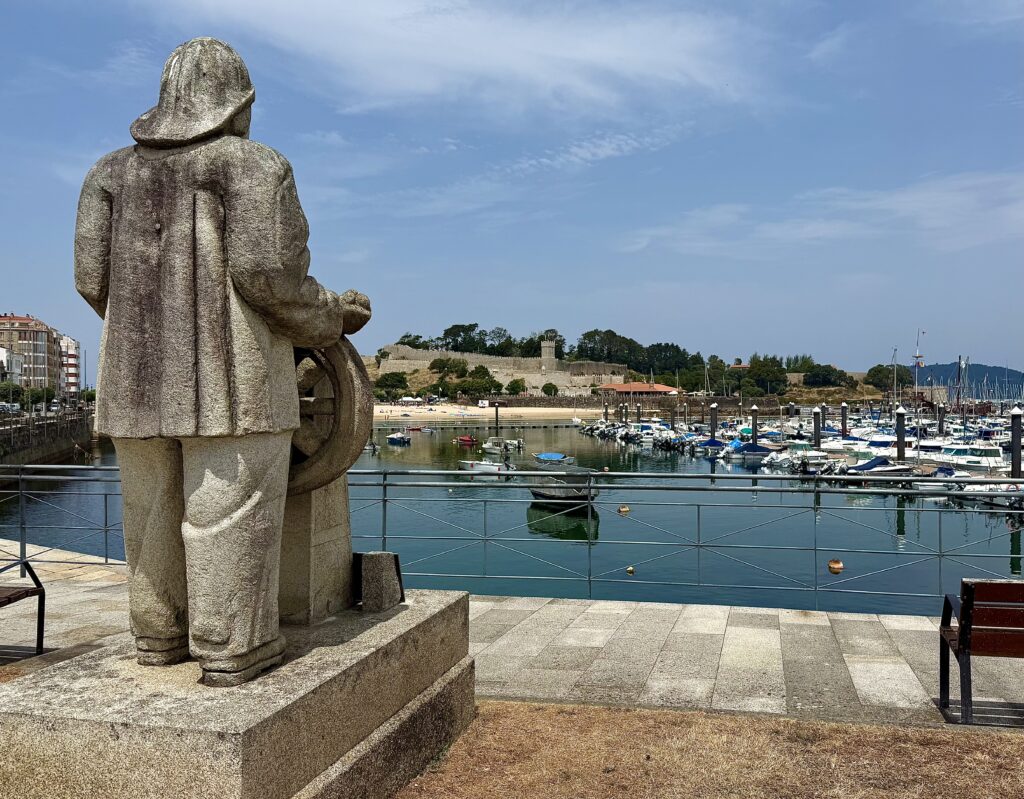
Down by the coast again in Baiona, a fishing center & picturesque tourist spot
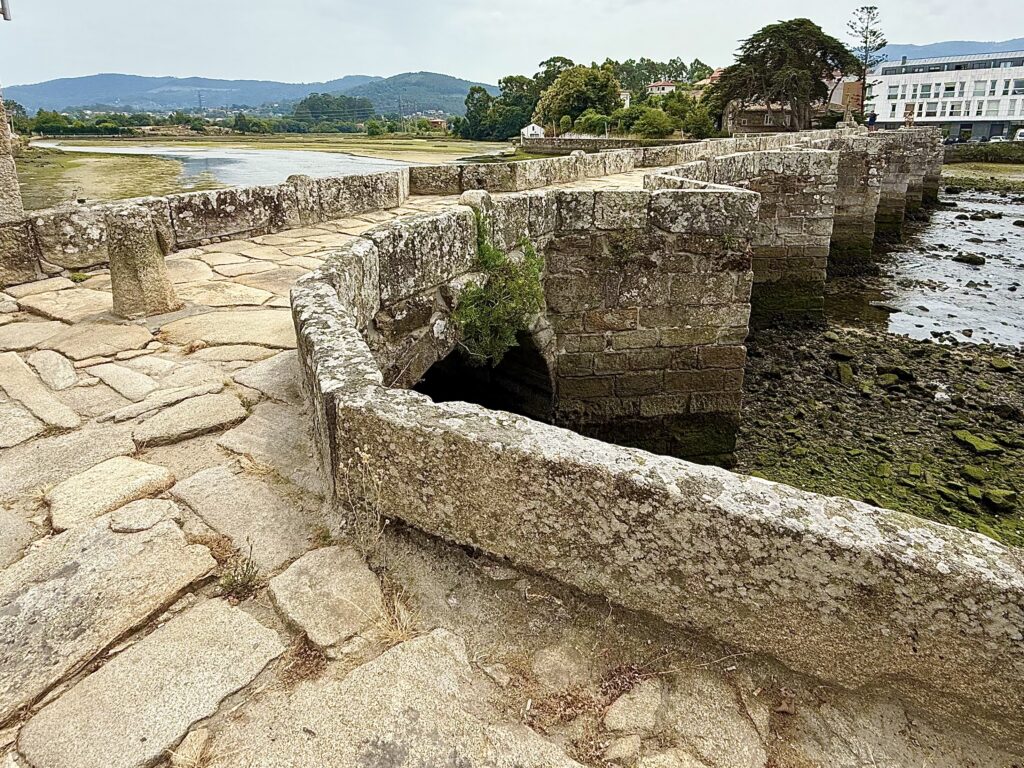
13th c. Puente de A Ramallosa connects Baiona to Nigran, not far from A Ramallosa. Imagine peregrinos from centuries past crossing the bridge on their way to Santiago!
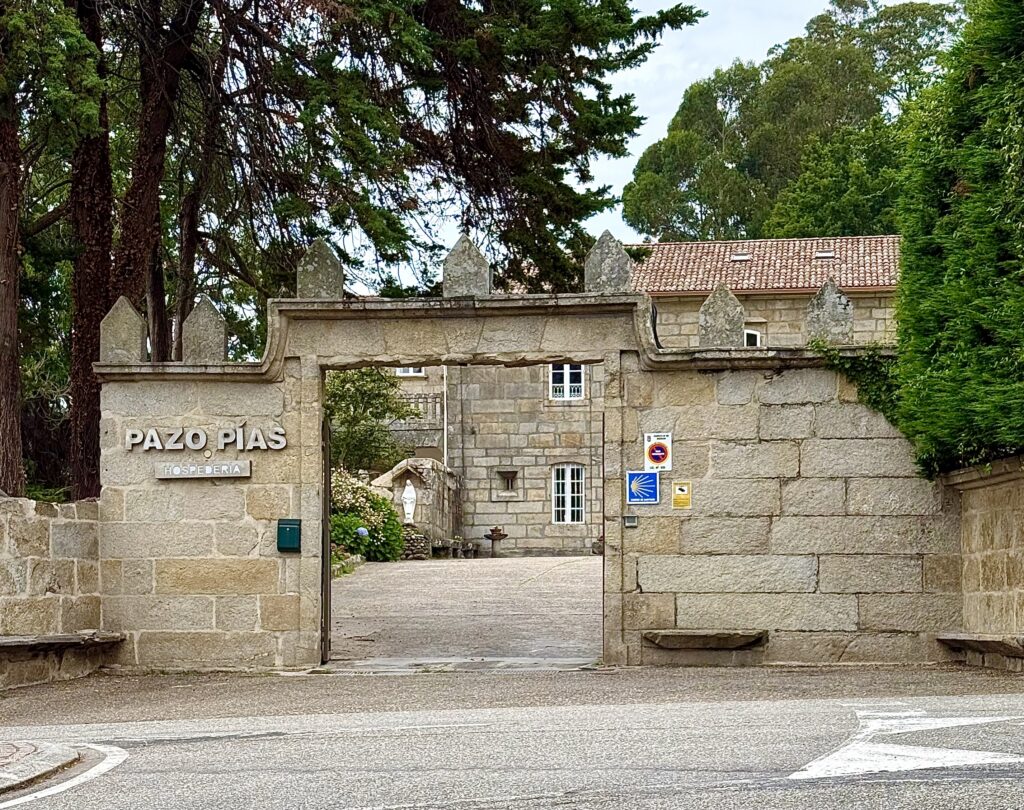
The Pazo Pias in A Ramallosa was a 17th c. manor house/religious institute and is now a guest house & albergue — the perfect place to spend my final night on the Camino.
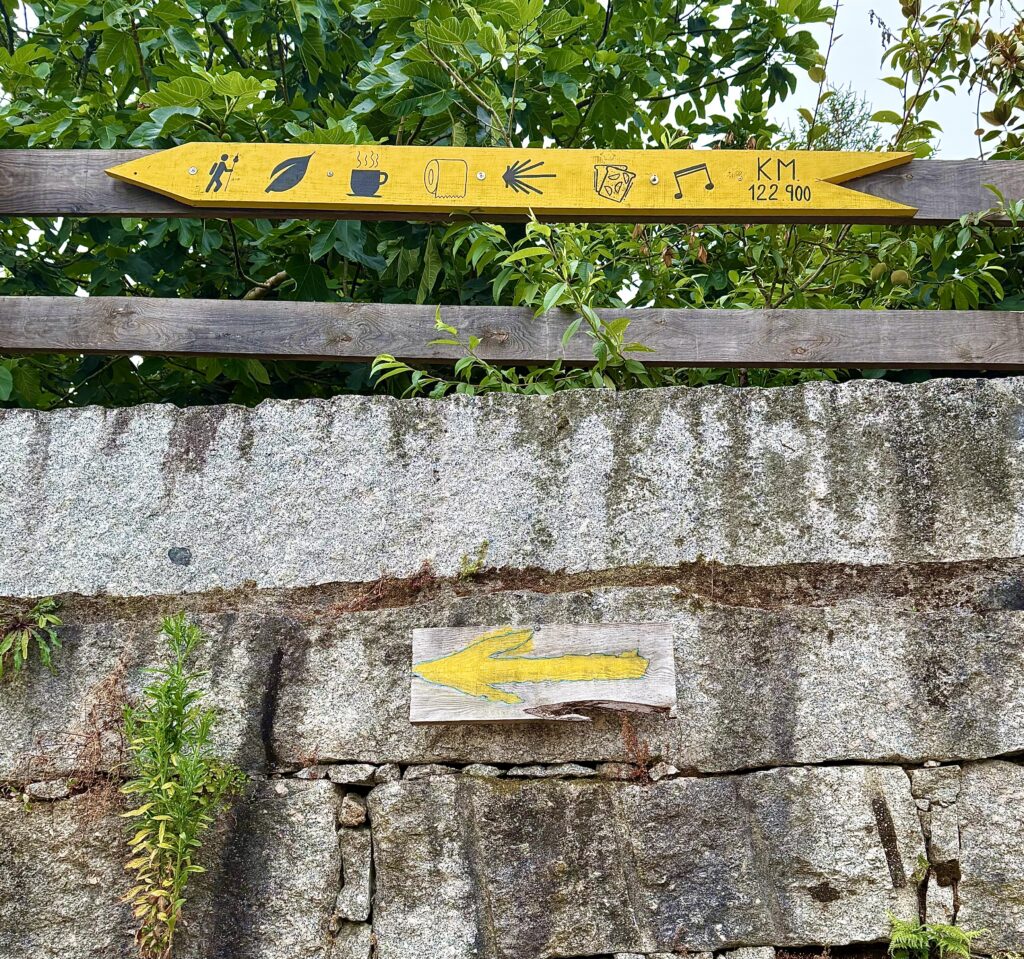
Day 9 — last day walking
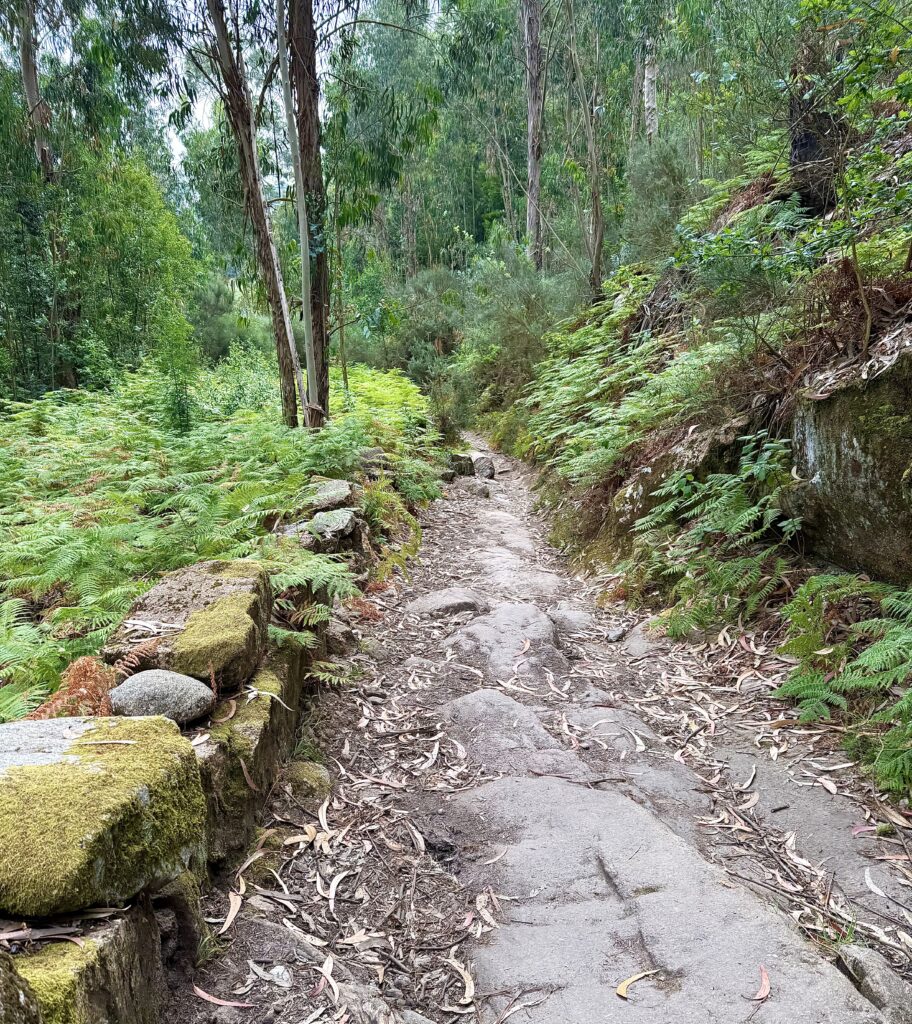
The path to Vigo involved wooded areas and residential & commercial sections closer to the city.
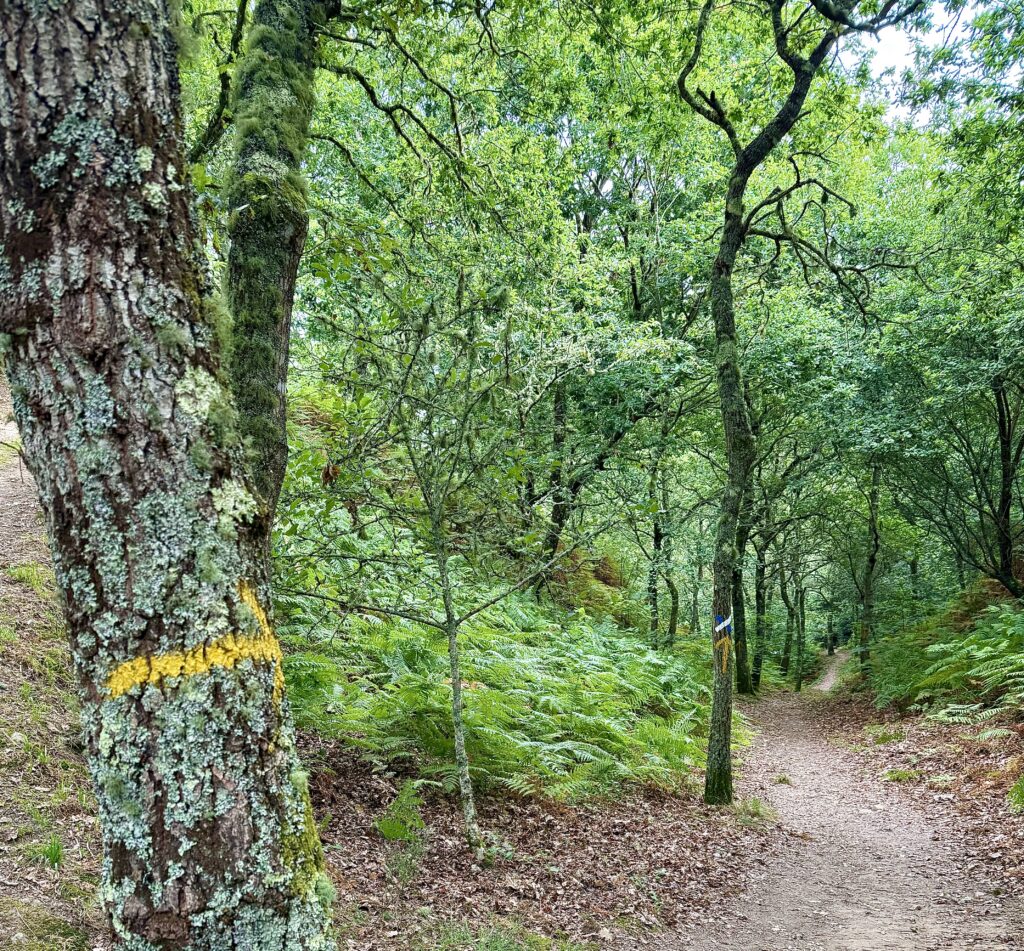
Tree direction
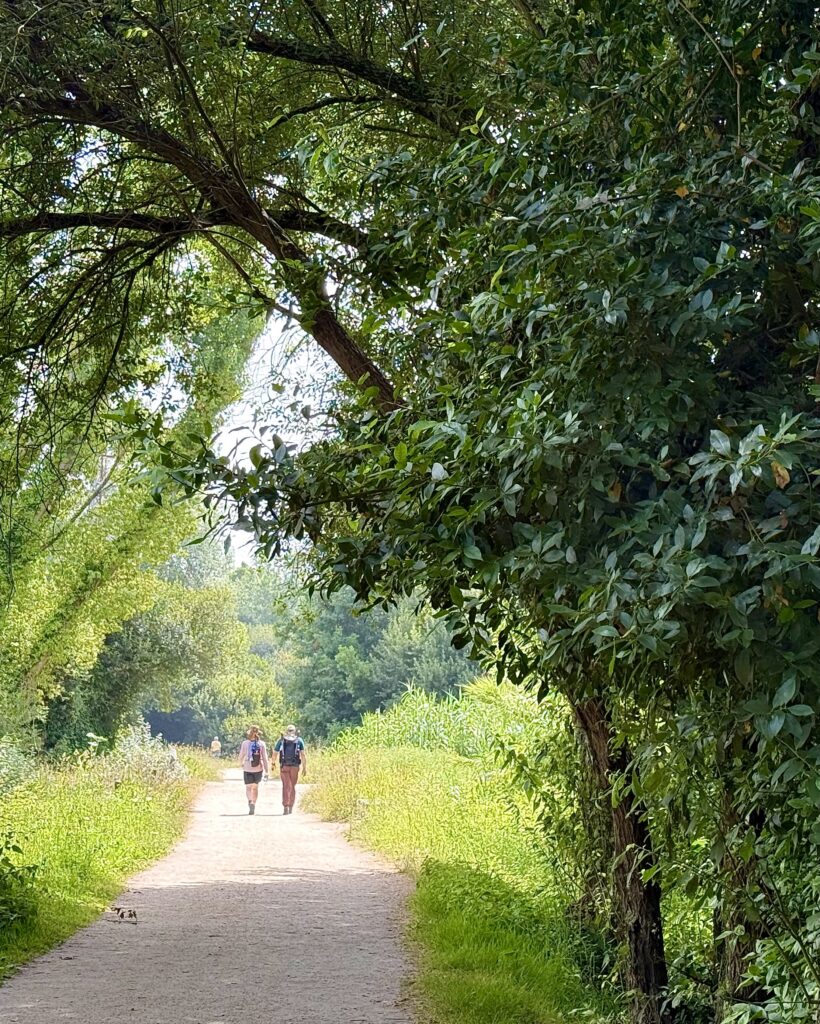
Walkers along the Via de Vigo river that leads into Vigo — this stretch was a quiet respite away from the surrounding city noise.
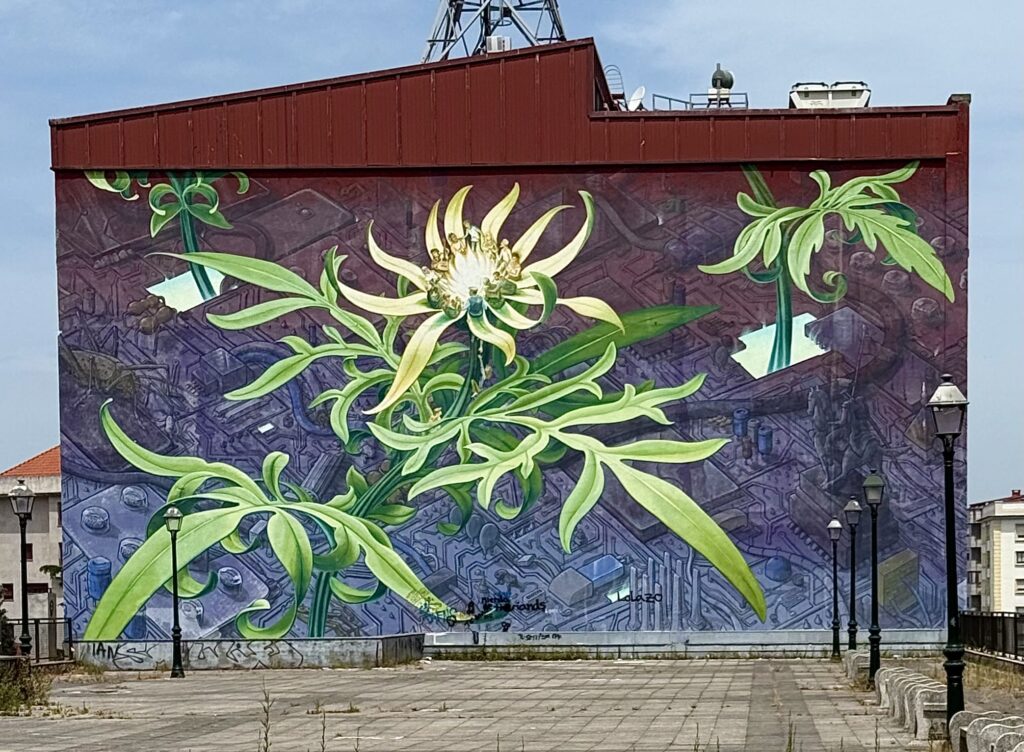
Mural in the business/commercial district
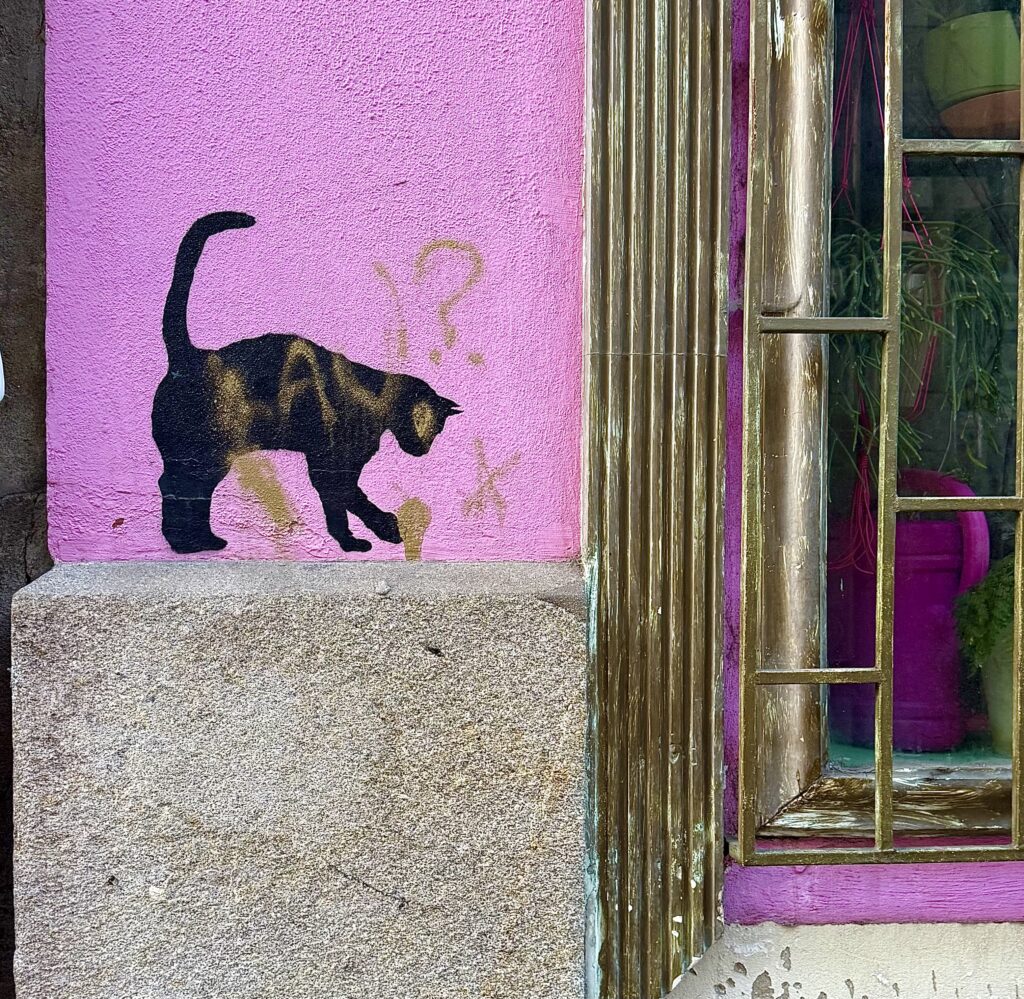
Street art
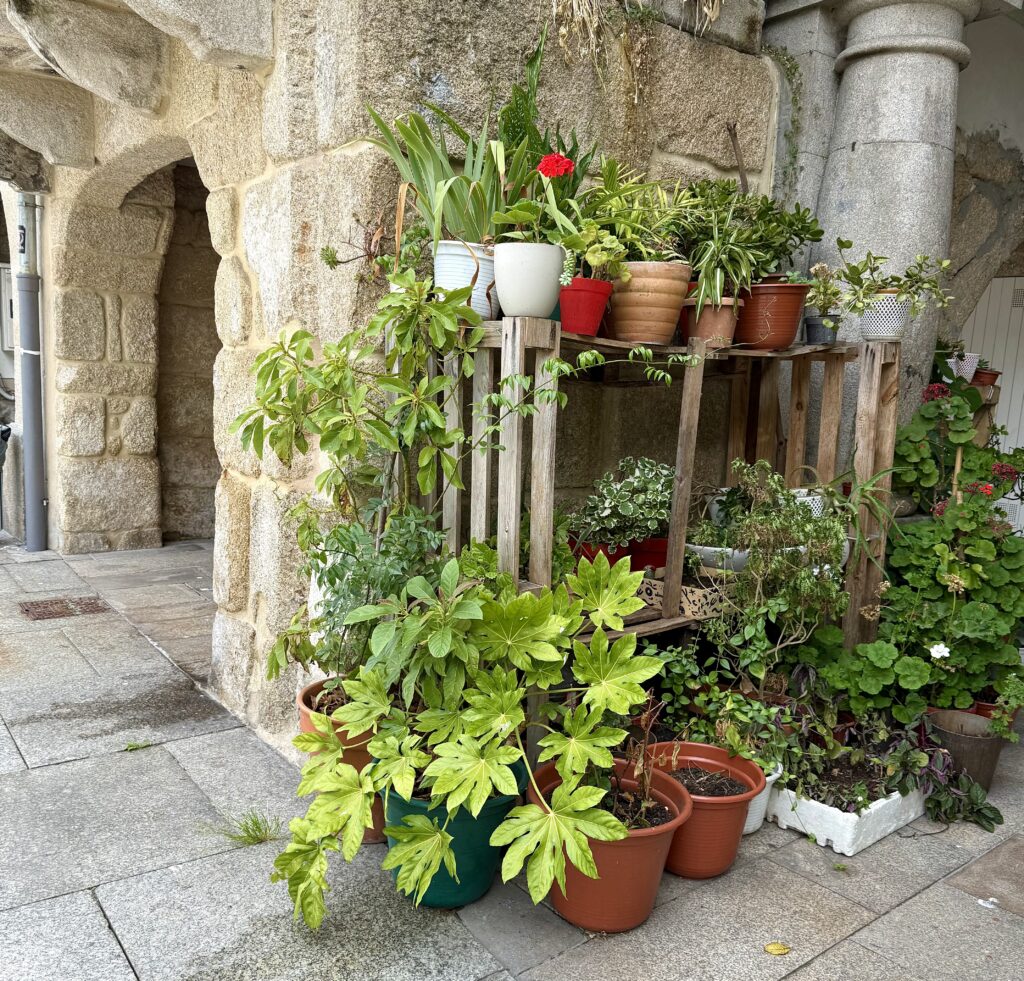
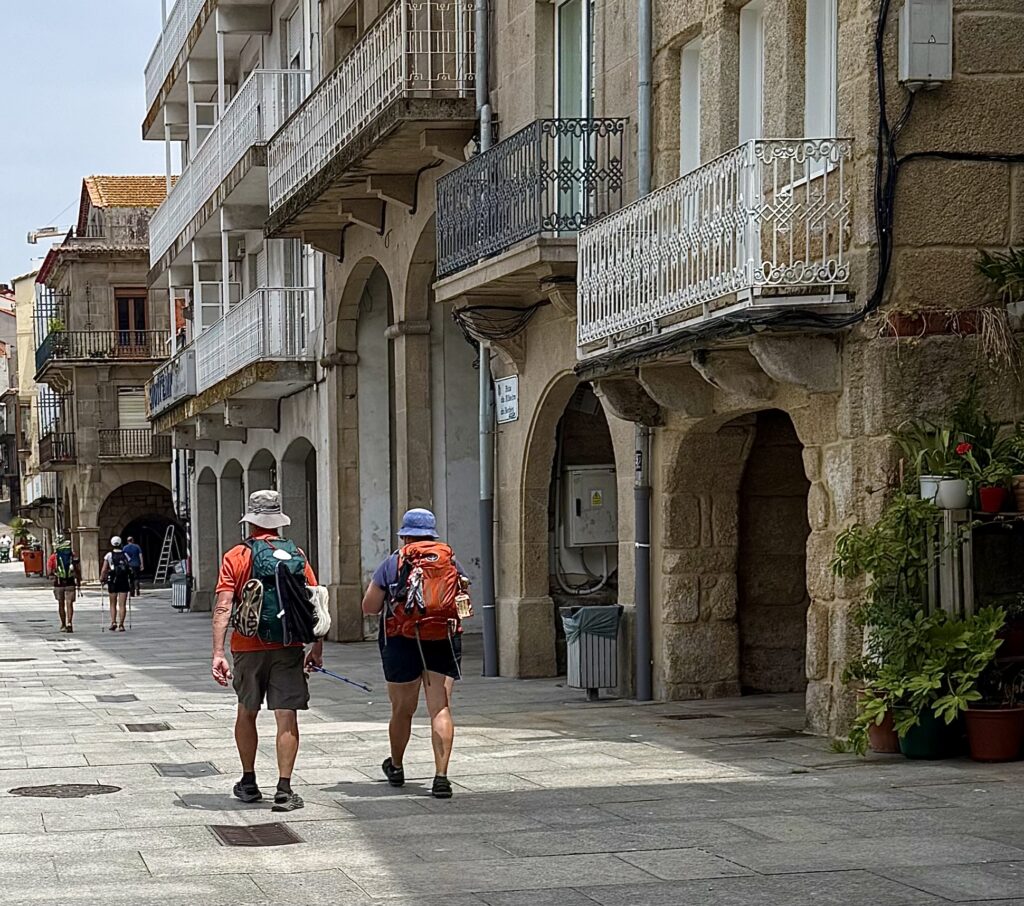
Along the pilgrim path in the ‘old town’ area, much quainter than Vigo’s commercial zone
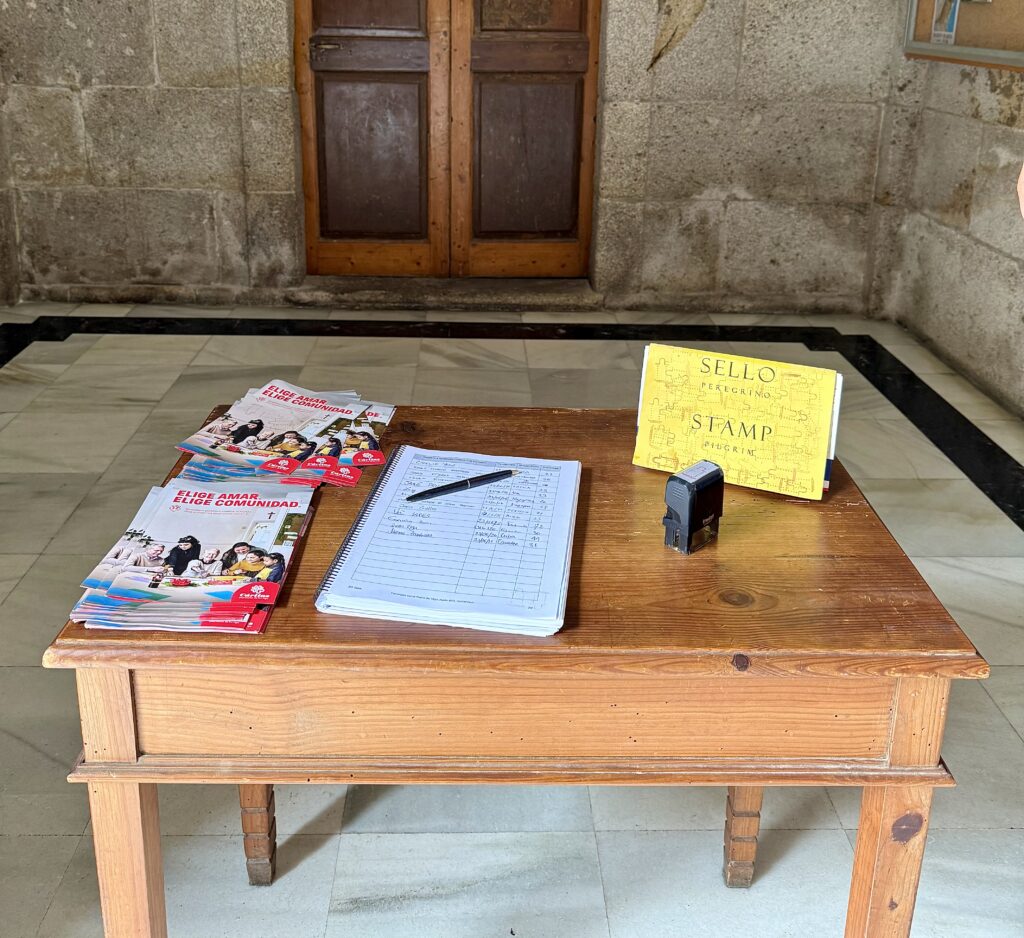
On the last night I gathered a few sellos, including a stamp at Colexiata de Santa Maria de Vigo, a church close to my lodging.
The next morning I trained to Lisbon to join Dad who was arriving for the Portugal Basketball Festival. A basketball-filled week flashed by before we flew home.
Obrigada & gracias to Caminho de Costa and the opportunity of exploring the coastal paths. I’m thankful for the memories and discoveries made along The Way.
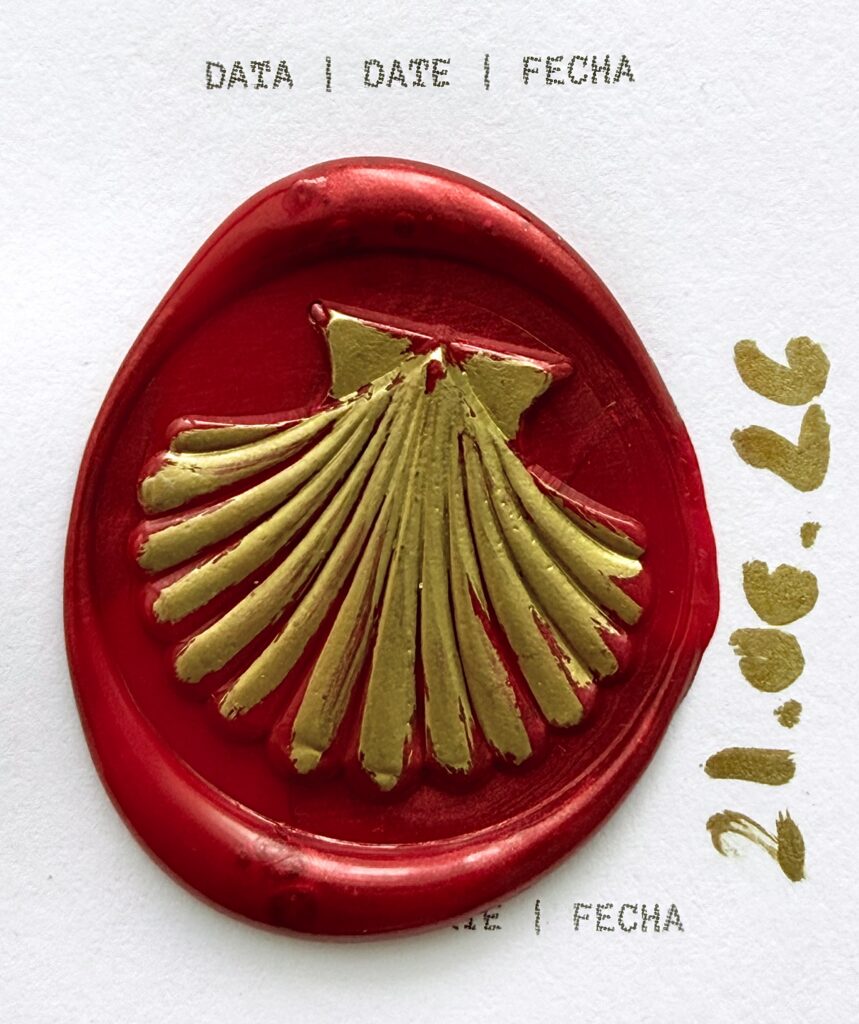
A favorite Credencial sello of the journey was created by an artist who had set up a stand on the trail near A Guarda. I watched as she used melted wax to form the shell & then added gold paint on top — a special Costa keepsake!
Until the next adventure, Ultreia et Suseia!
For the rest of the walk, see Part 1 & Part 2
More of Camino Portuguese: Lisbon to Porto & Porto to Santiago