
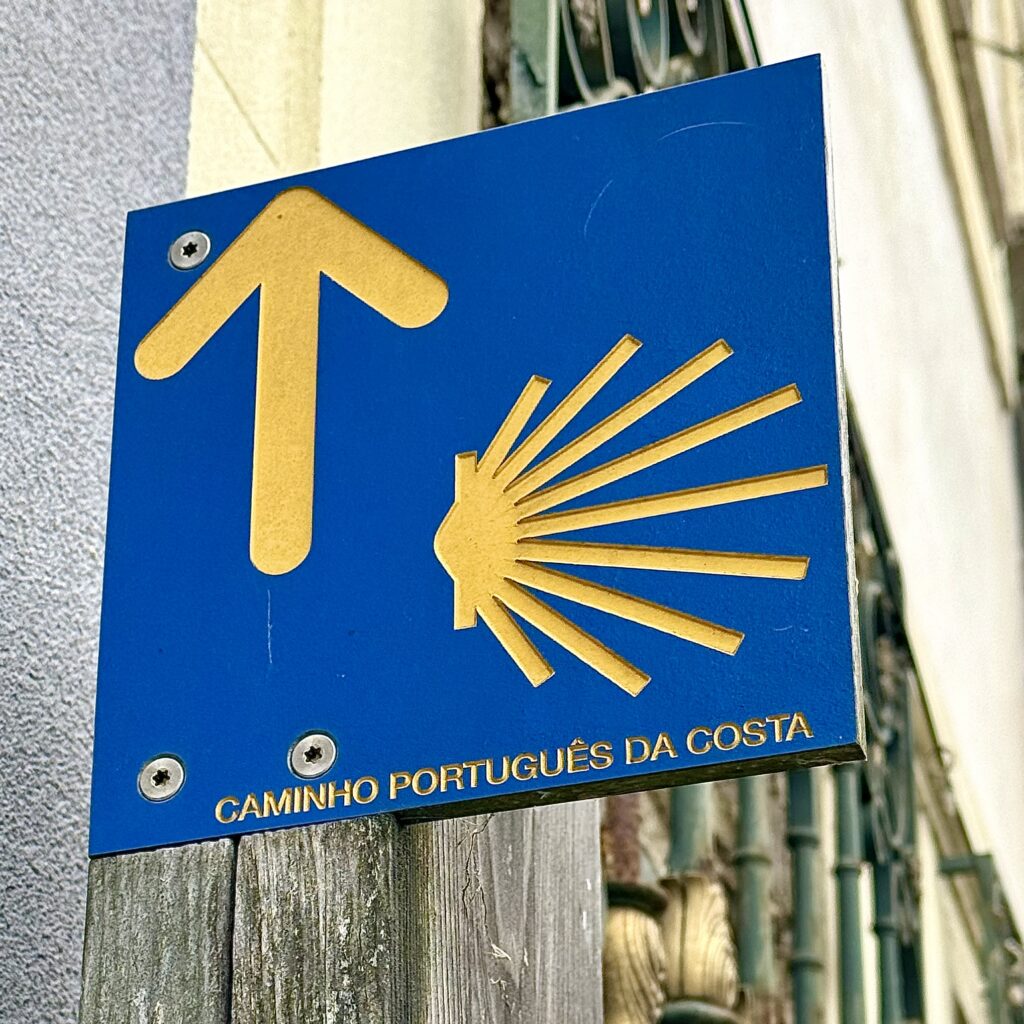
 Bom Dia! In June 2026 I explored more of the Camino Portuguese routes with a walk from Porto to Vigo, Spain on Caminho Portugues da Costa (Coastal Route). This trek continued walks in Portugal that began with the Central Route by Dad & me in 2022 (Pt 1). Since then I completed the route from Lisbon to Porto (Pt 1). All the paths are unique & present their own rewards.
Caminha da Costa is the older ‘traditional’ Way that follows the coast but also climbs inland. The route encompasses dirt paths, rocky roads, cobblestone lanes, and cement walkways along the water. The other coastal option is the Senda Litoral, a ‘modern’ path that directly follows the beach. It intermingles with the Costa at several junctions, sometimes creating confusion about which route you’re on. But, as an owner of a guest house told me, “both trails are correct” and can be swapped at various points if desired.
For navigation I used Brierley’s guide & also the Wise Pilgrim app that helped keep the two trail options clear (more guide options are listed in Camino Resources, Pt 1). My itinerary included: Moreira, Vila do Conde, Apulia, Belinho, Viana do Castelo, Caminha, Oia, A Ramallosa, & lastly, Vigo (route map on Gronze.com). Regions encompassed Porto, Braga, & Viana do Costelo in Portugal and Galicia in Spain.
The coastal routes have gained attention in recent years and were the third most popular Camino paths in 2025. As expected, I met more walkers than on my treks from Lisbon to Porto (the Portuguese trails’ quieter section). In particular, there were many other solo women or women in pairs/small groups.
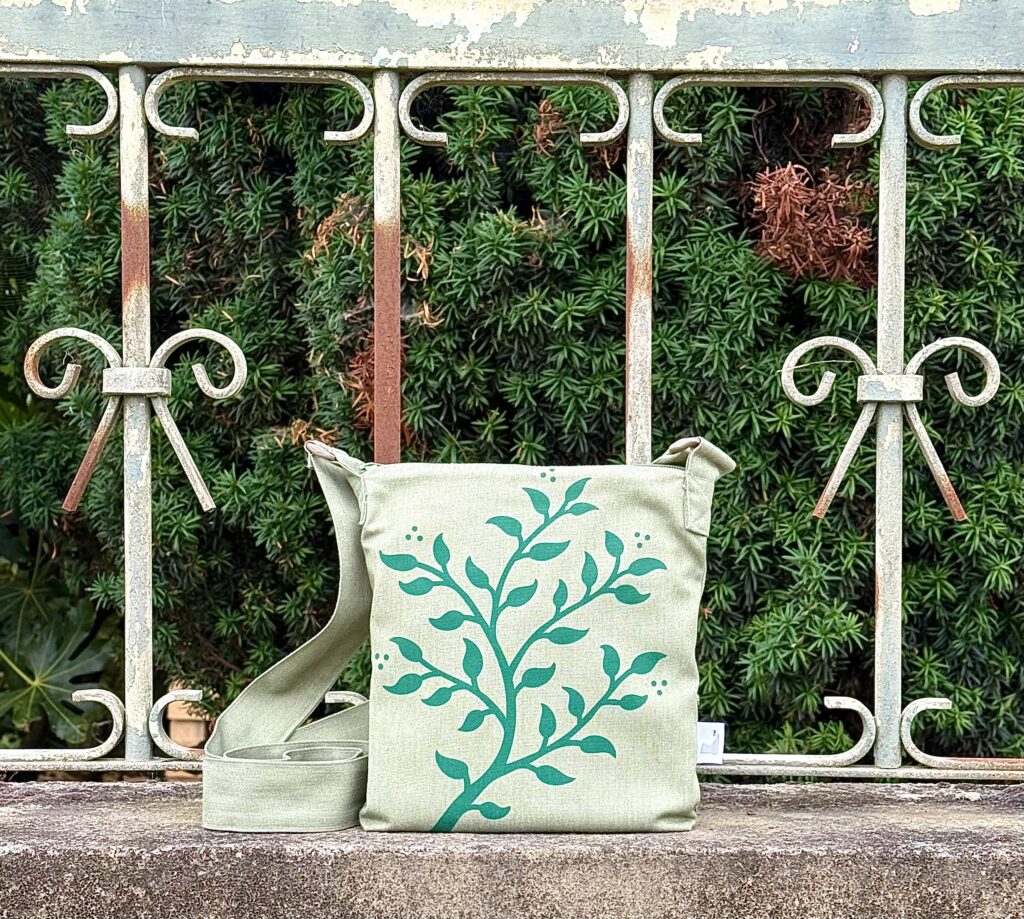
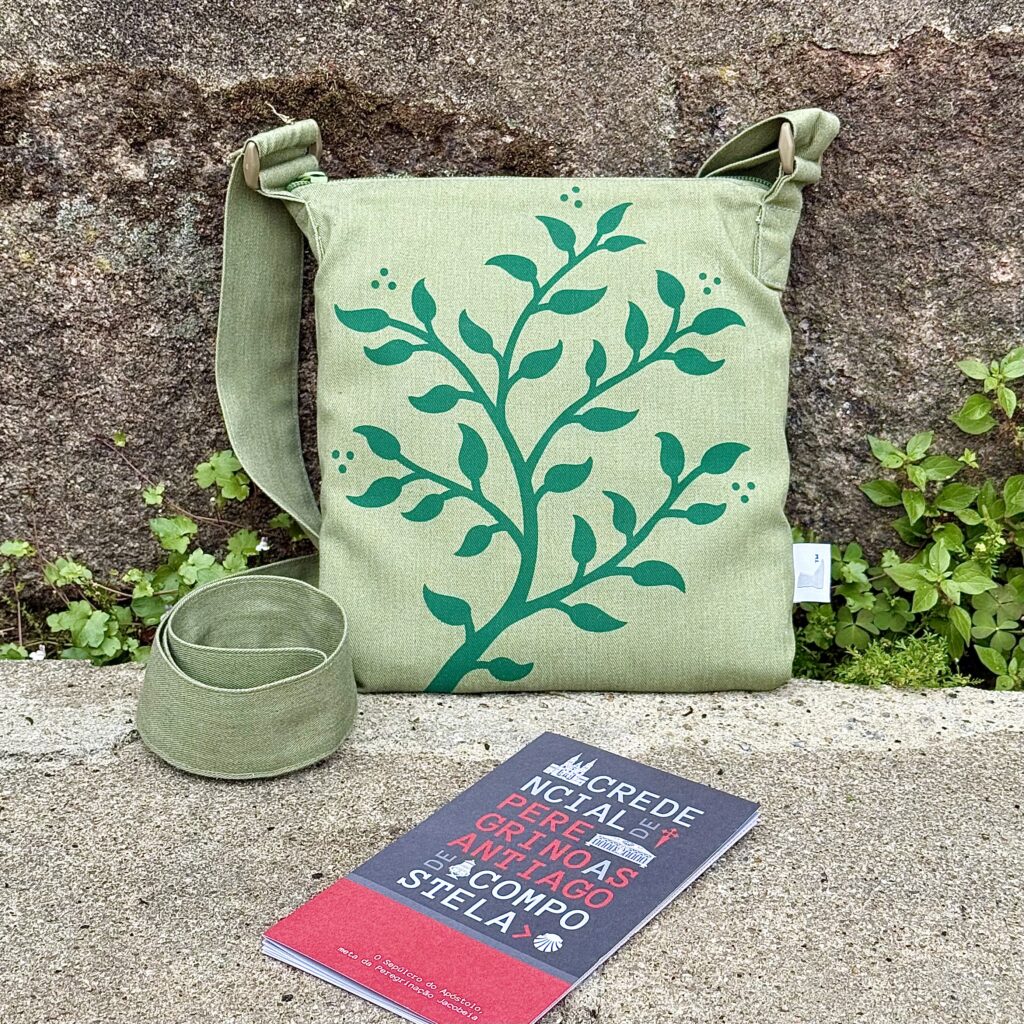 The Green Foliage Bag once again joined me on the journey to carry essentials, including my iPhone, sunscreen, cafe Euros, & Credencial (Pilgrim Passport). For info about Credencials check out Camino de Santiago, Part 1.
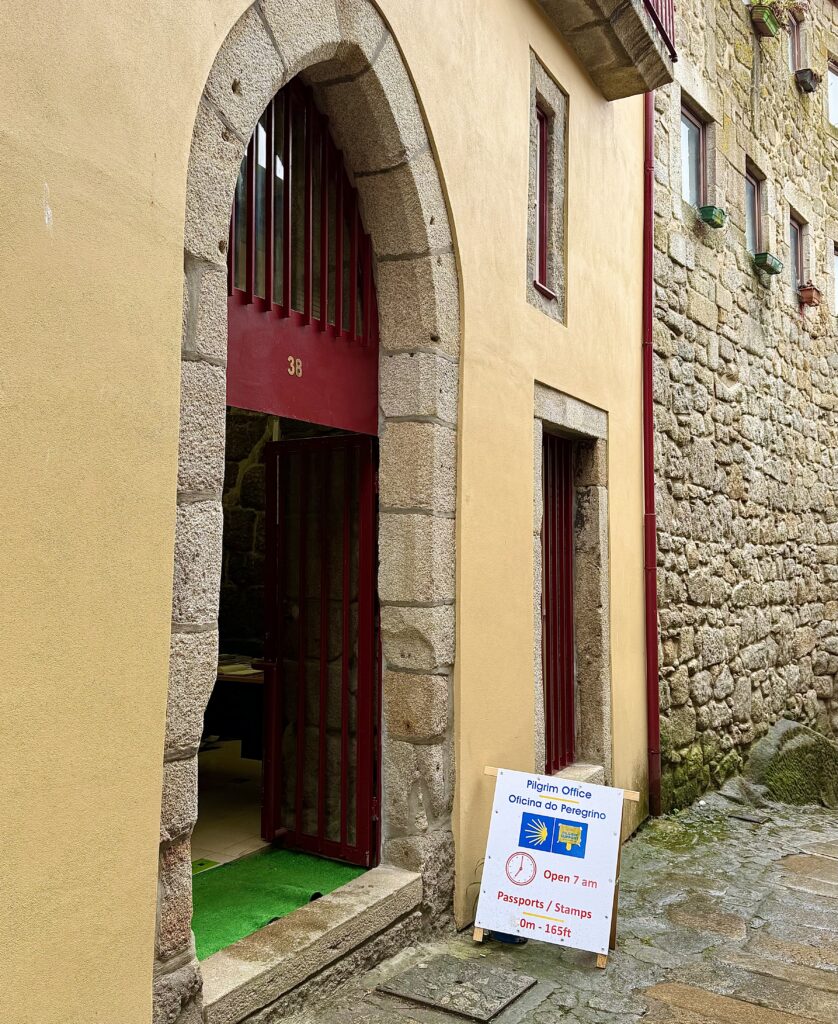
My Credencial and shell were purchased at Porto’s newly opened Pilgrim Office located near the Cathedral (where Credencials and shells are also available). Additionally, the office provides route info, answers to any questions, and Bom Caminhos! It opens early in case pilgrims want to stop at the outset of their first day walking.
Snapshots of Days 1-3:
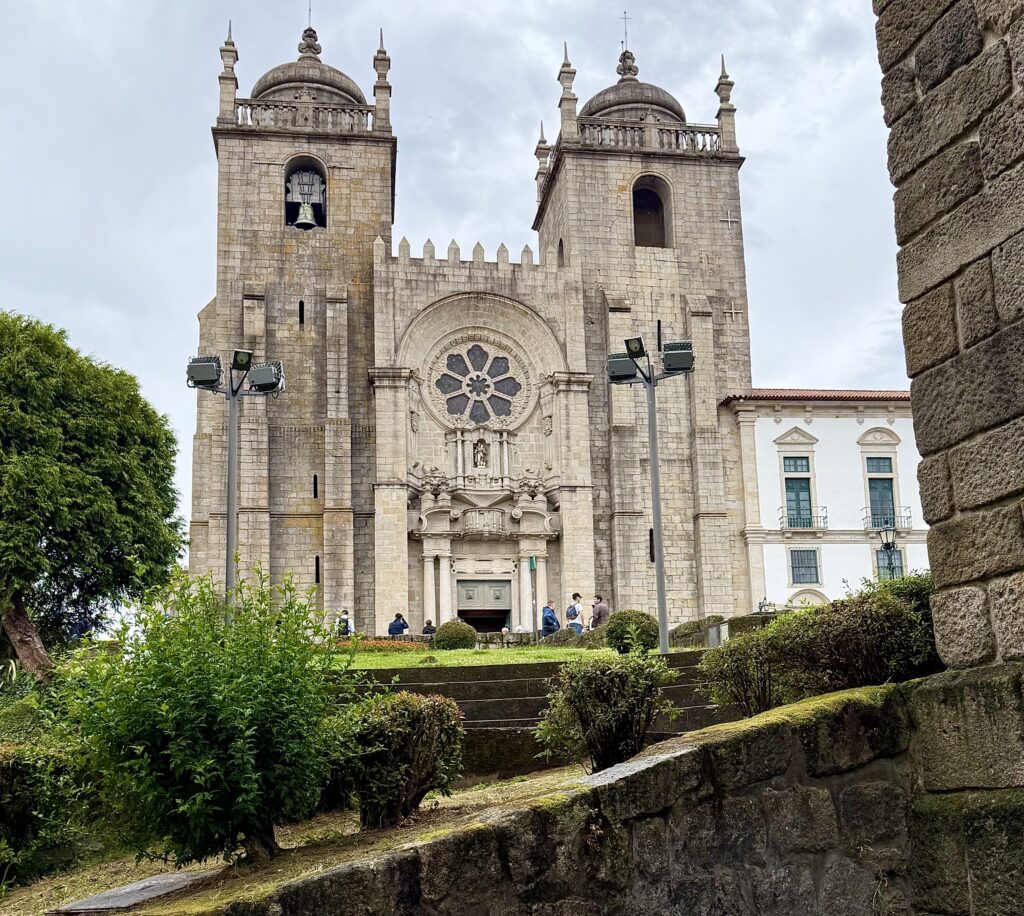
The Costa begins at the Porto Cathedral (Se do Porto) with origins in the 12th c.
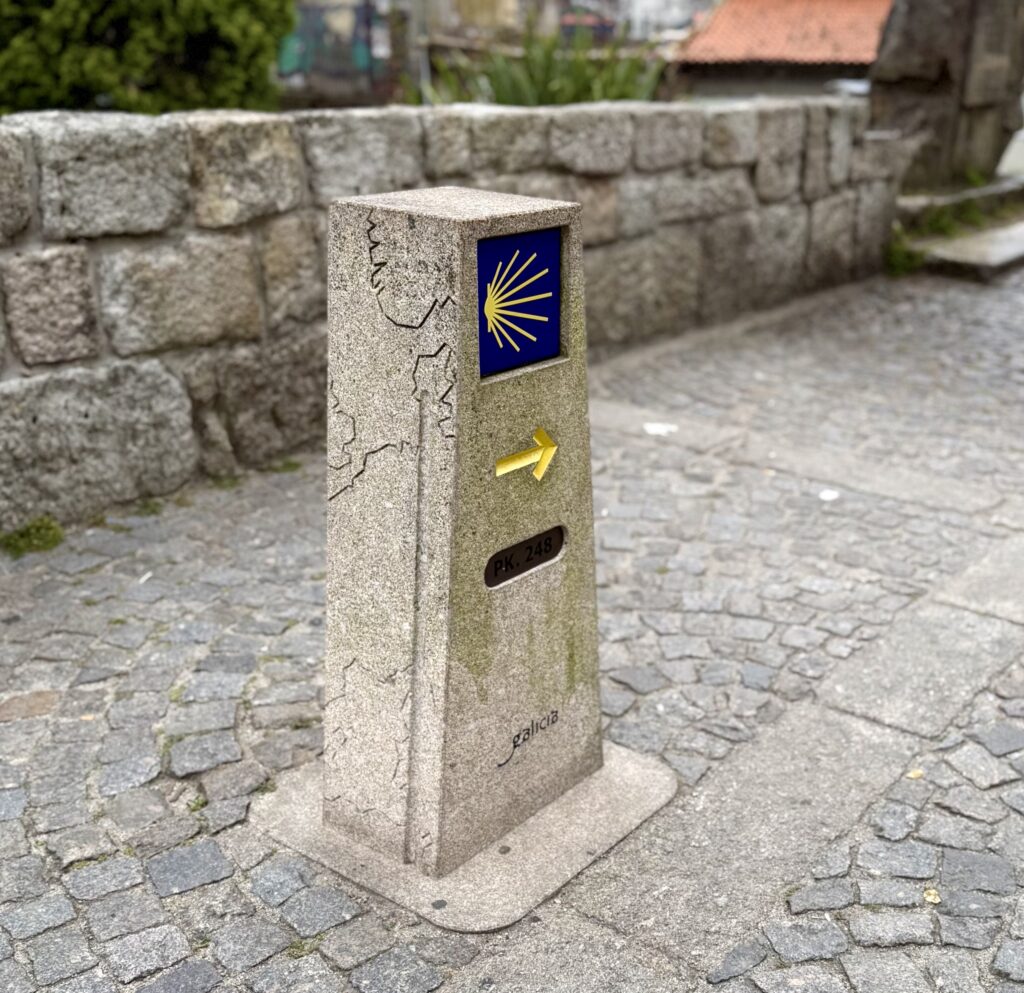
The Costa’s first marker is in front of the Cathedral and also directs walkers on the Central route; yellow arrows nearby point to the Litoral trail down by the water.
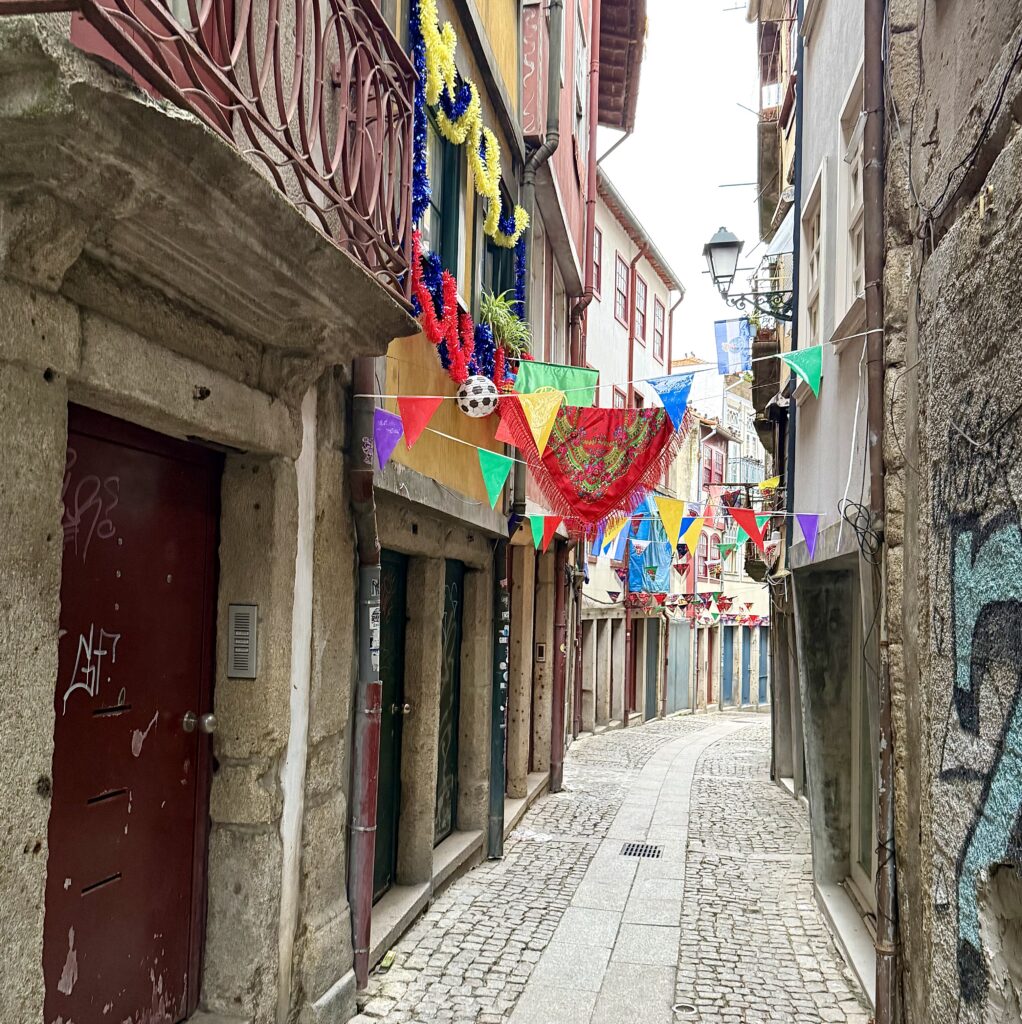
Day 1 to Moreira involved traversing Porto’s urban landscape that included the ‘old town’ area and beyond into residential/commercial sections.
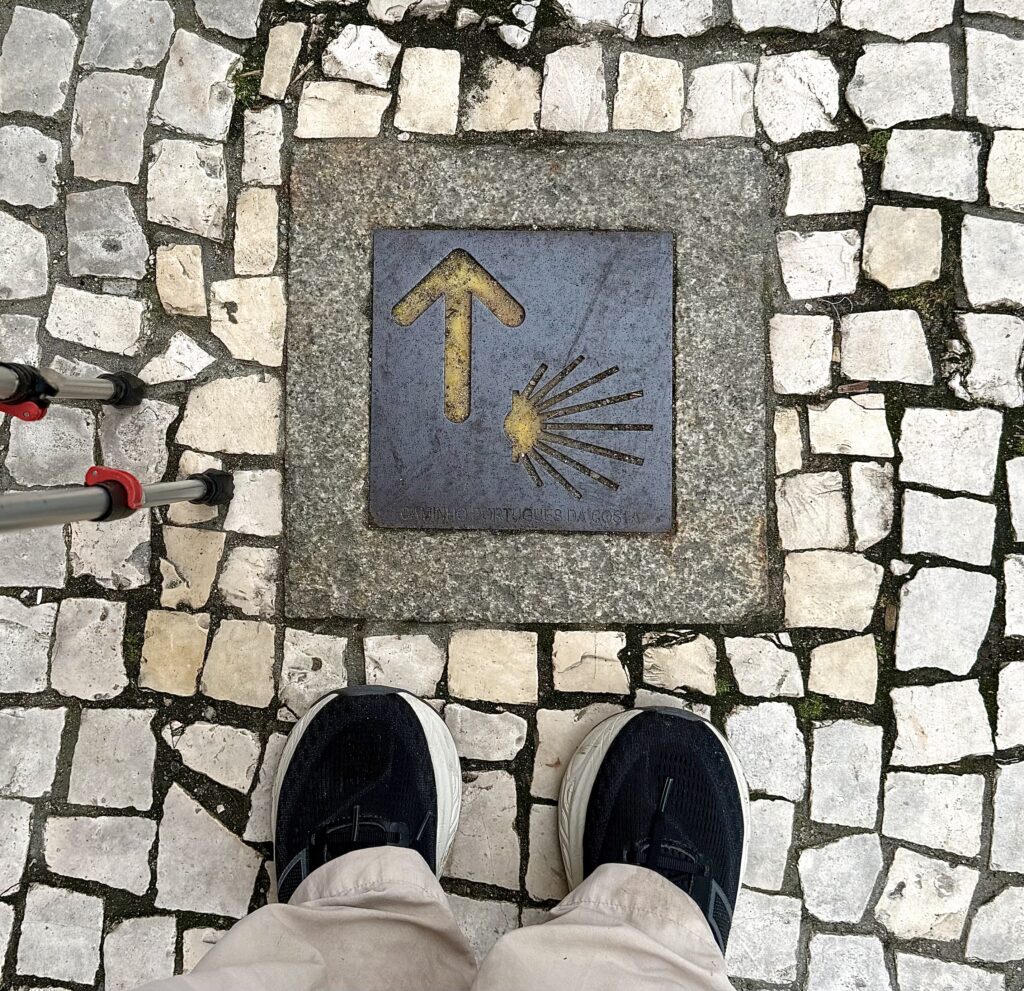
Metal guidance imbedded into walkways
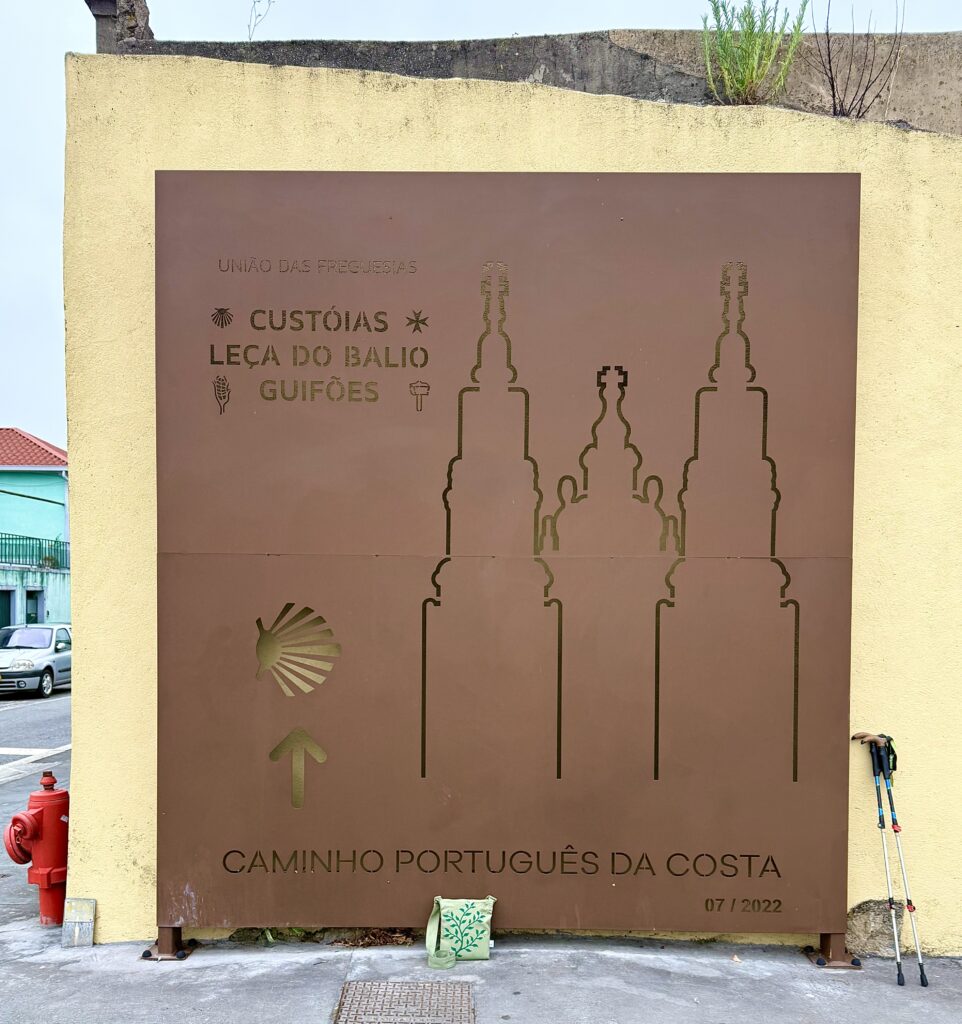
Large plaque honoring the Caminho da Costa
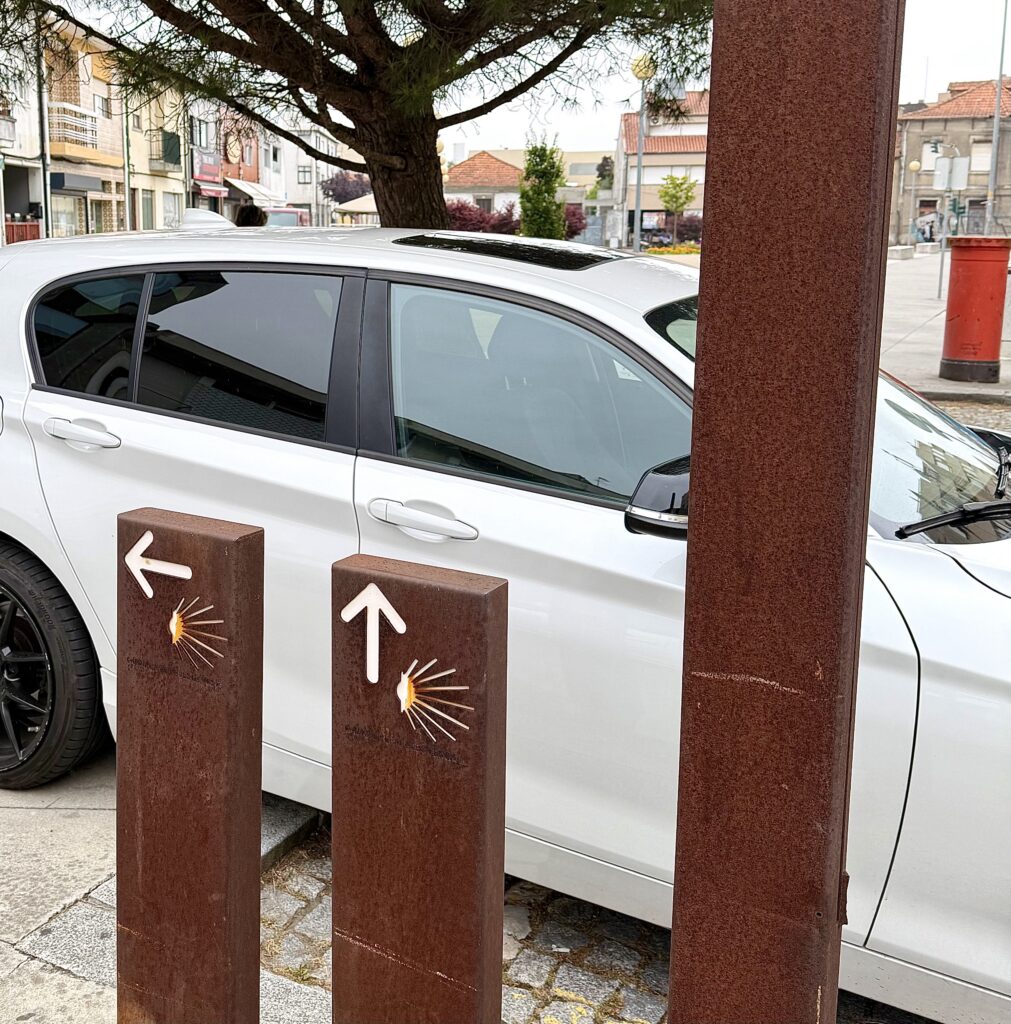
At one point the Costa veered to the left while the Central route kept straight ahead — watch out for these important markers since they’re easy to miss!
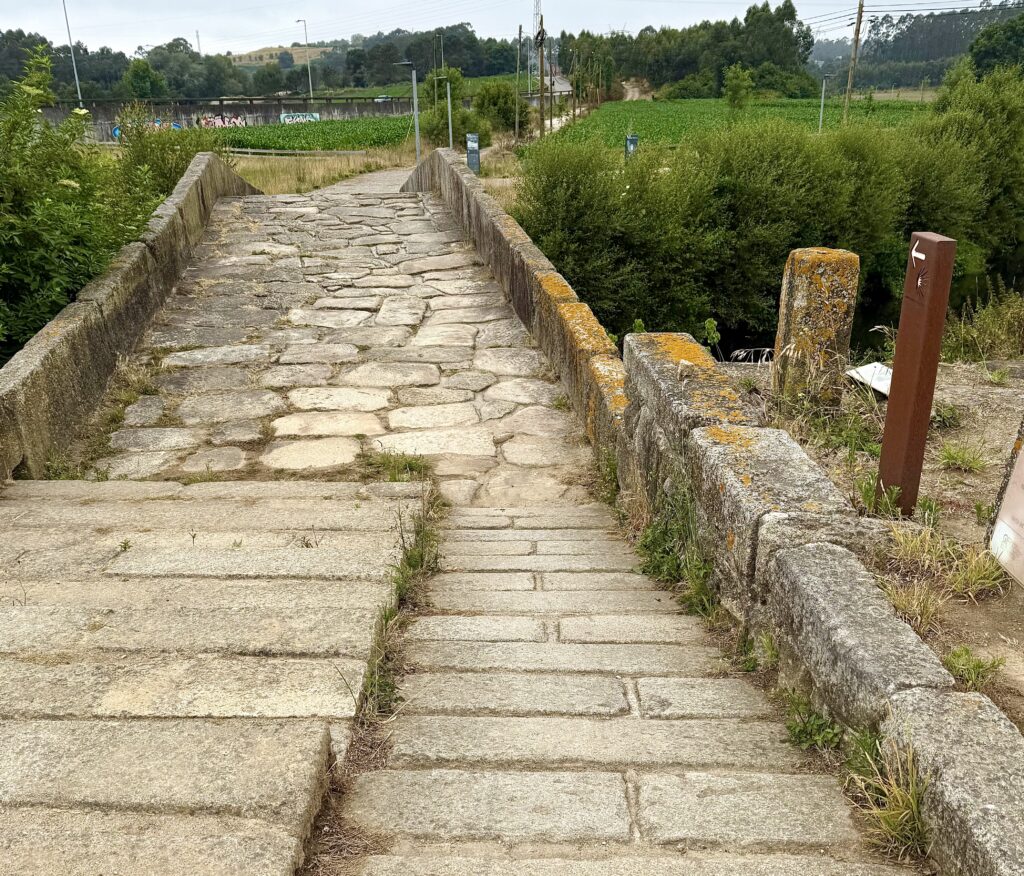
The D. Goimil medieval bridge near Custoias was part of the old Roman Road.
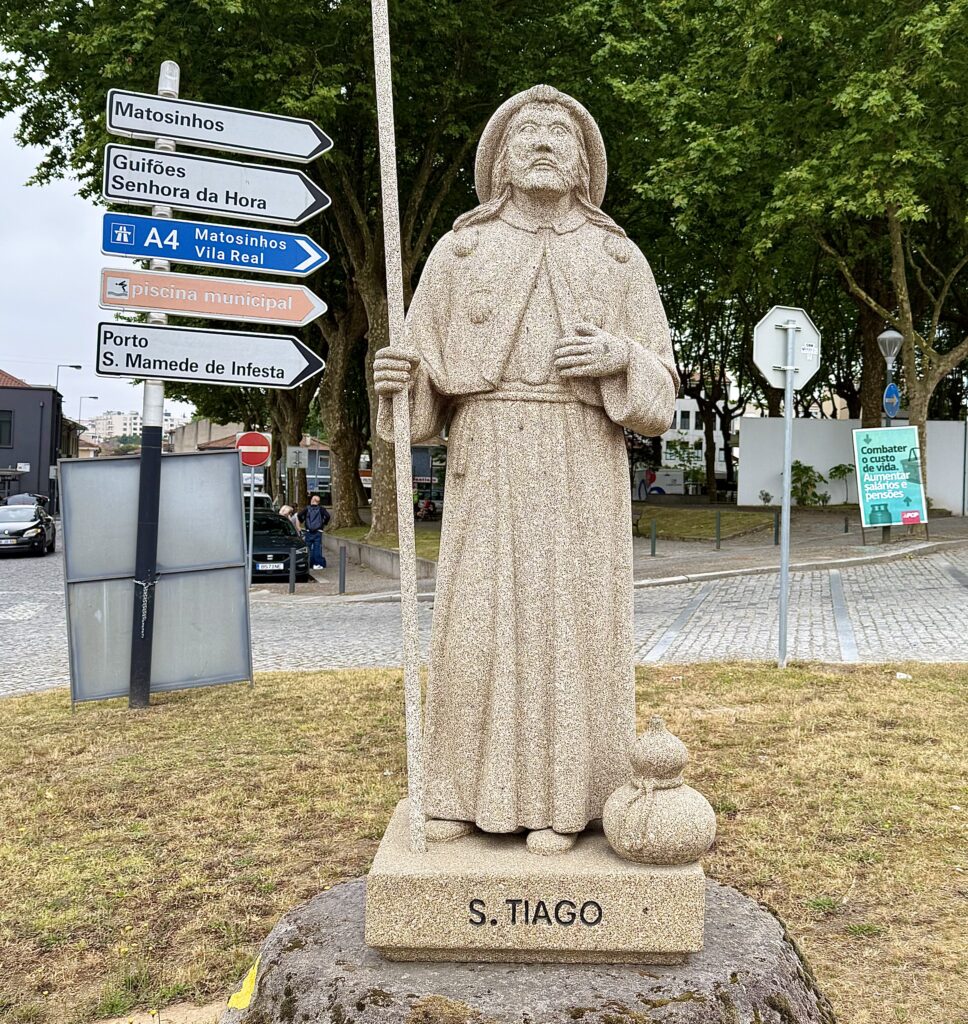
St. James appeared in Custoias.
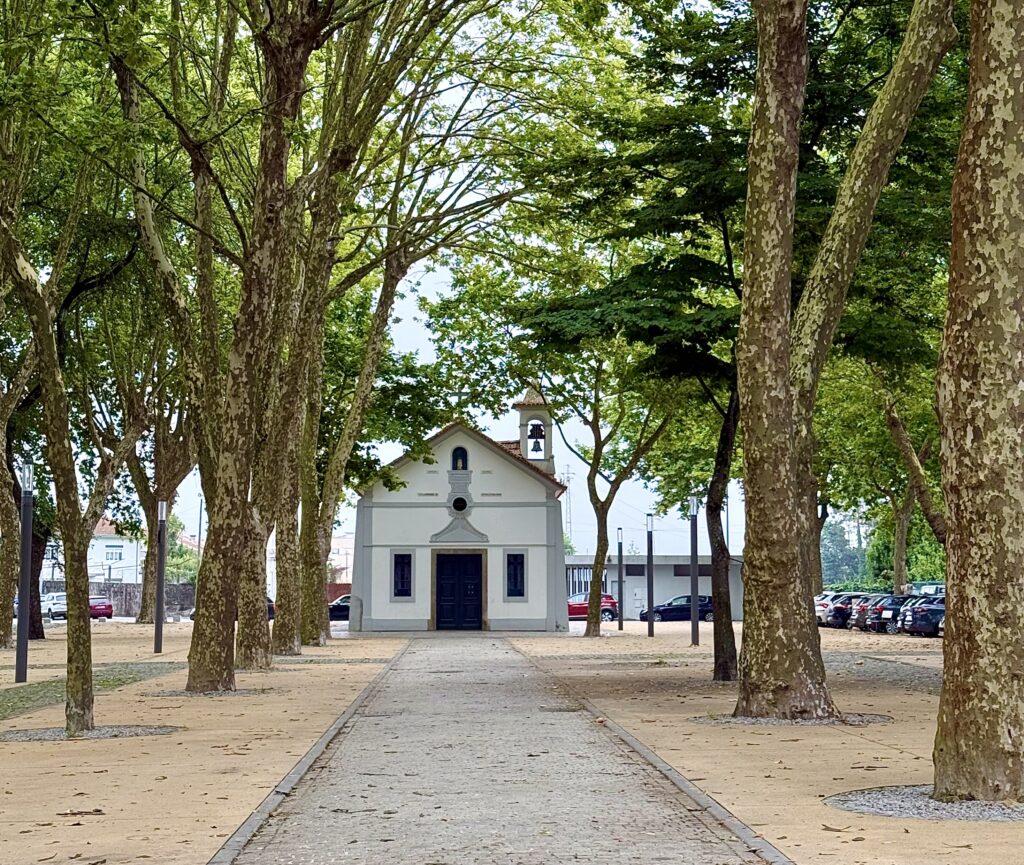
Capela do Christo Rei de Pedras Rubras at the plaza in Moreira
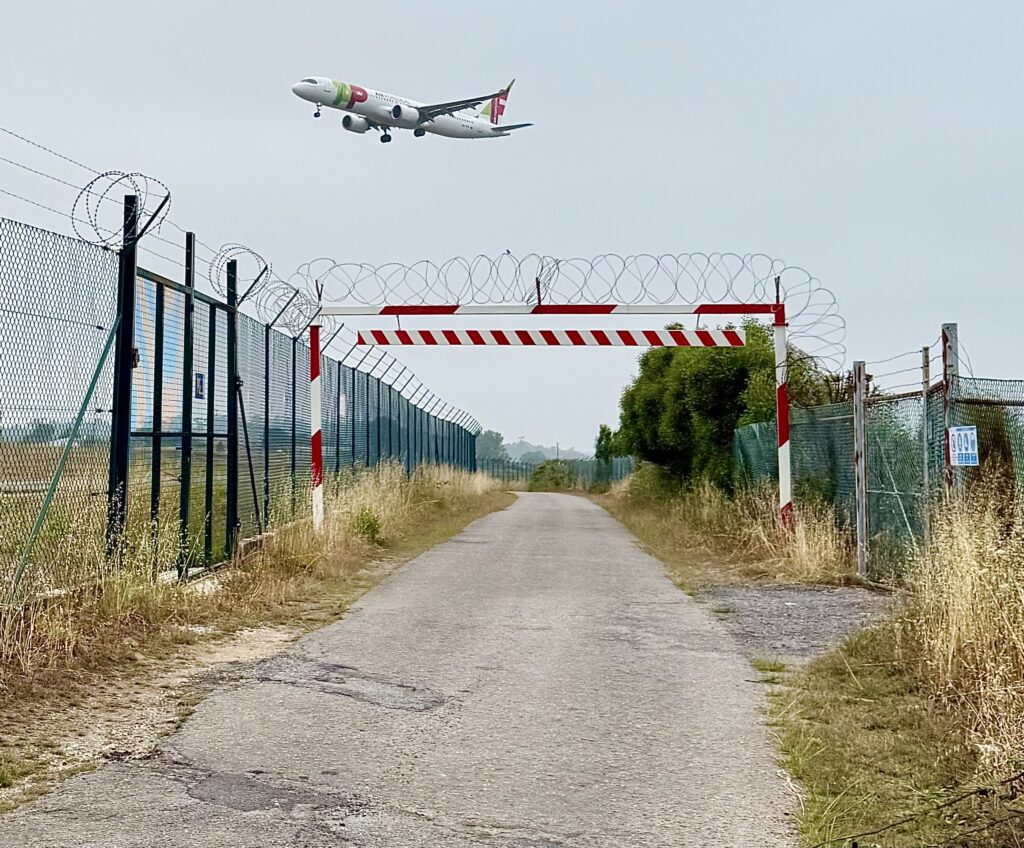
On Day 2 to Vila do Conde the trail passed Porto’s airport.
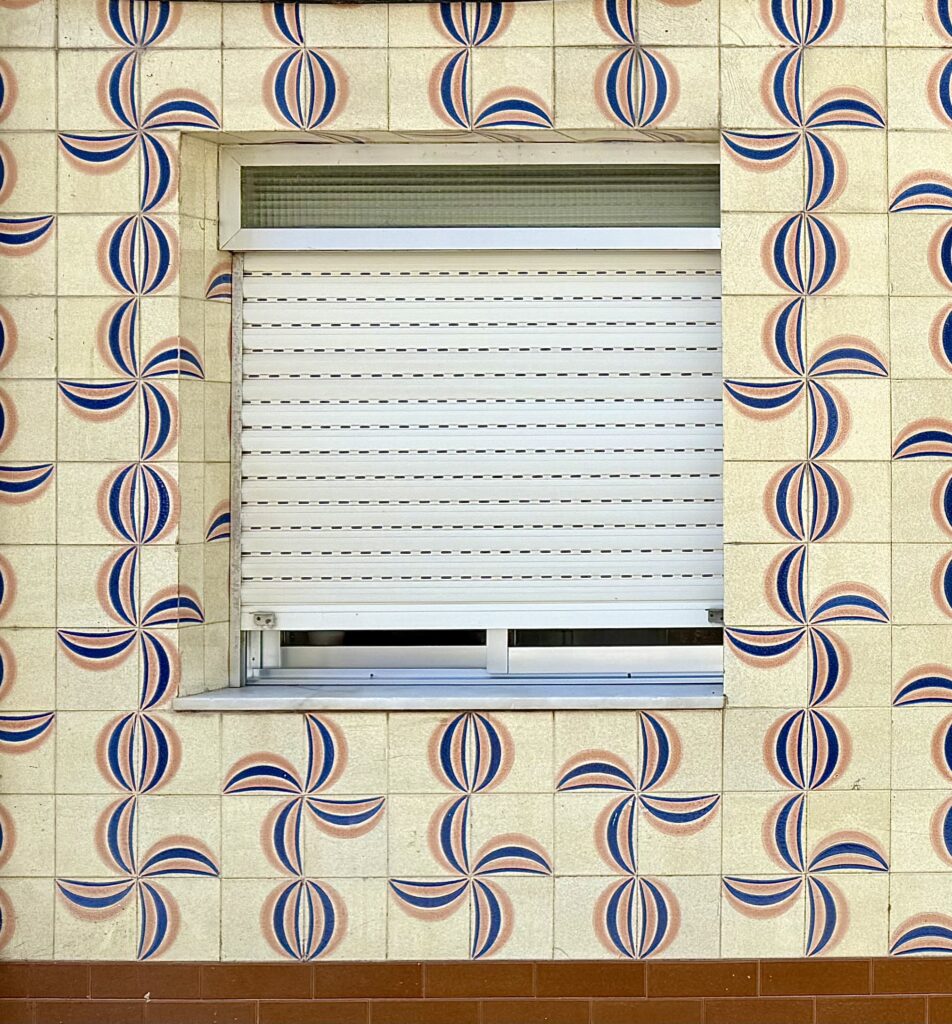
Lots of cool tile designs
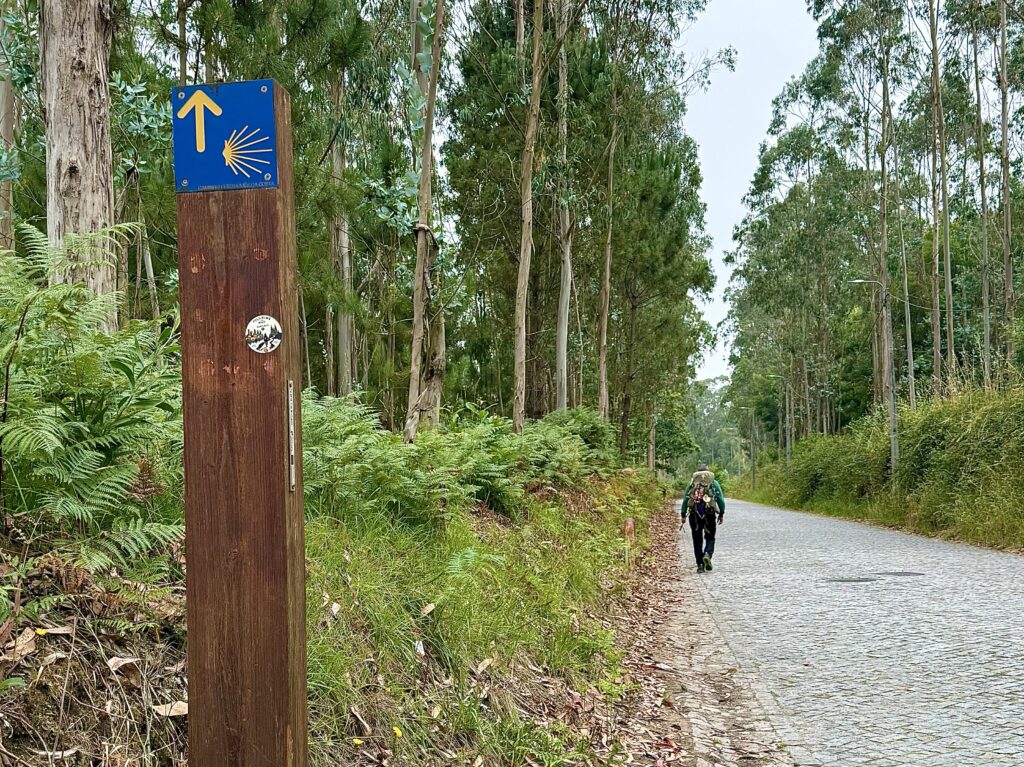
Heading towards Vila Cha
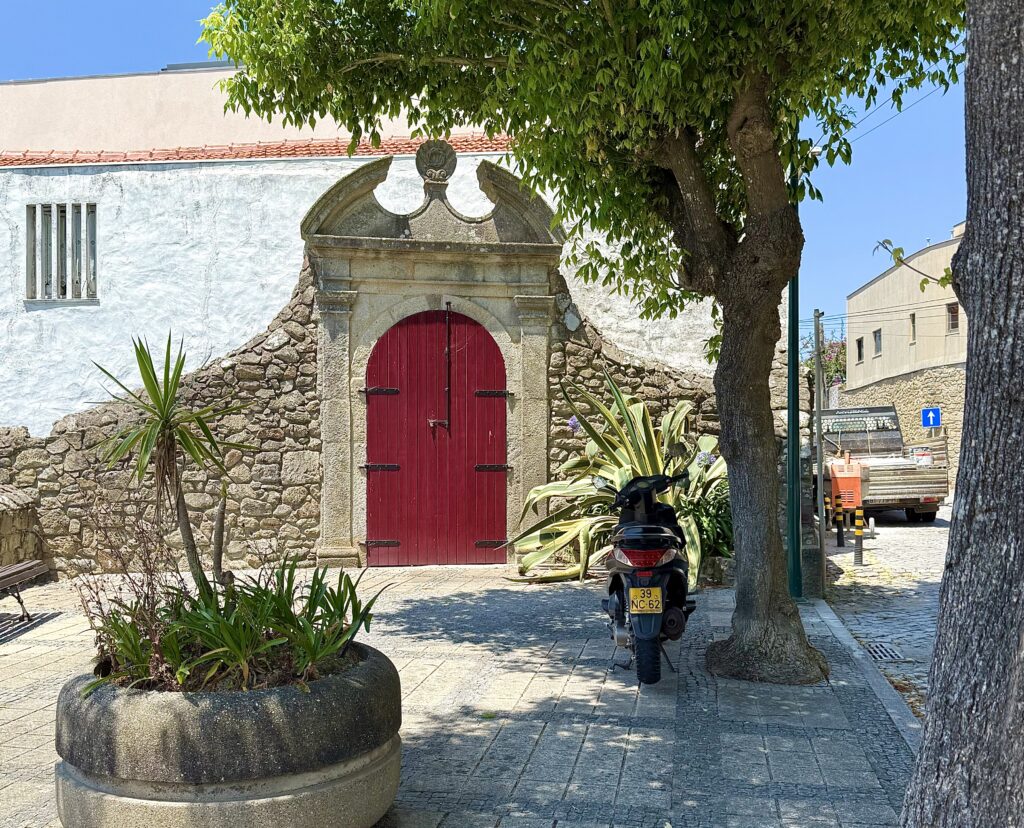
Casa in Azurara
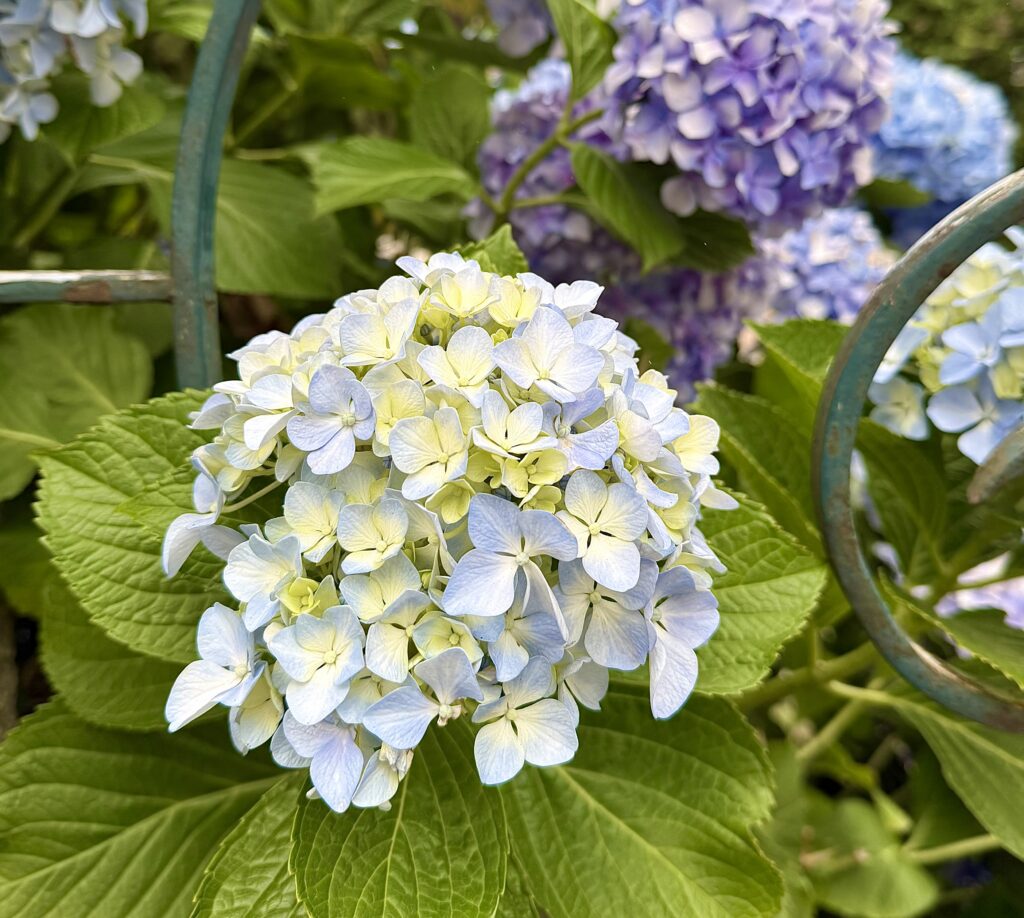
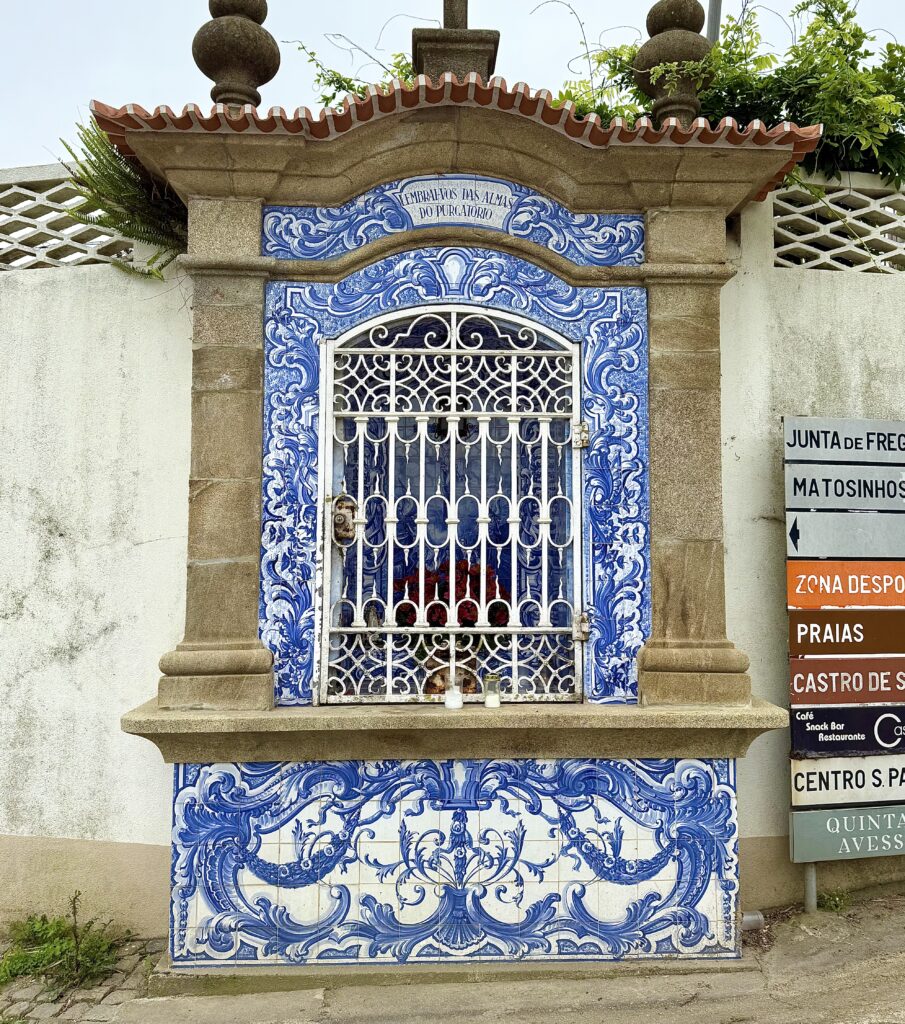

Wayside shrines are found along streets, by casas, & on rural roads. The one above near Labruge was covered with azulejo tiles, a Portuguese decorative art form dating back to the 15th c. Tiles illustrate religious, mythological, & cultural themes. The blue color was inspired by Chinese porcelain & blue tile from the Netherlands during the 16th & 17th c.
Not far from Vila do Conde the town of Mindelo invited visitors to “Leave your Mark” on “a path to freedom.”
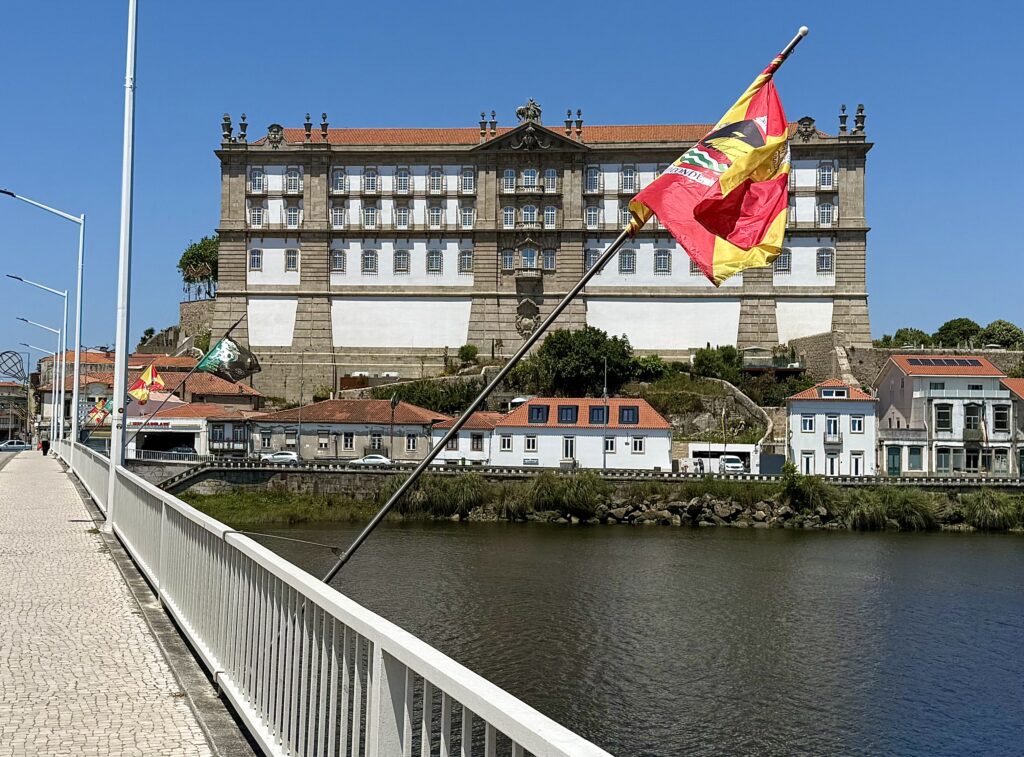
14th c. Monastery of Santa Clara in Vila do Conde overlooks the Rio Ave.
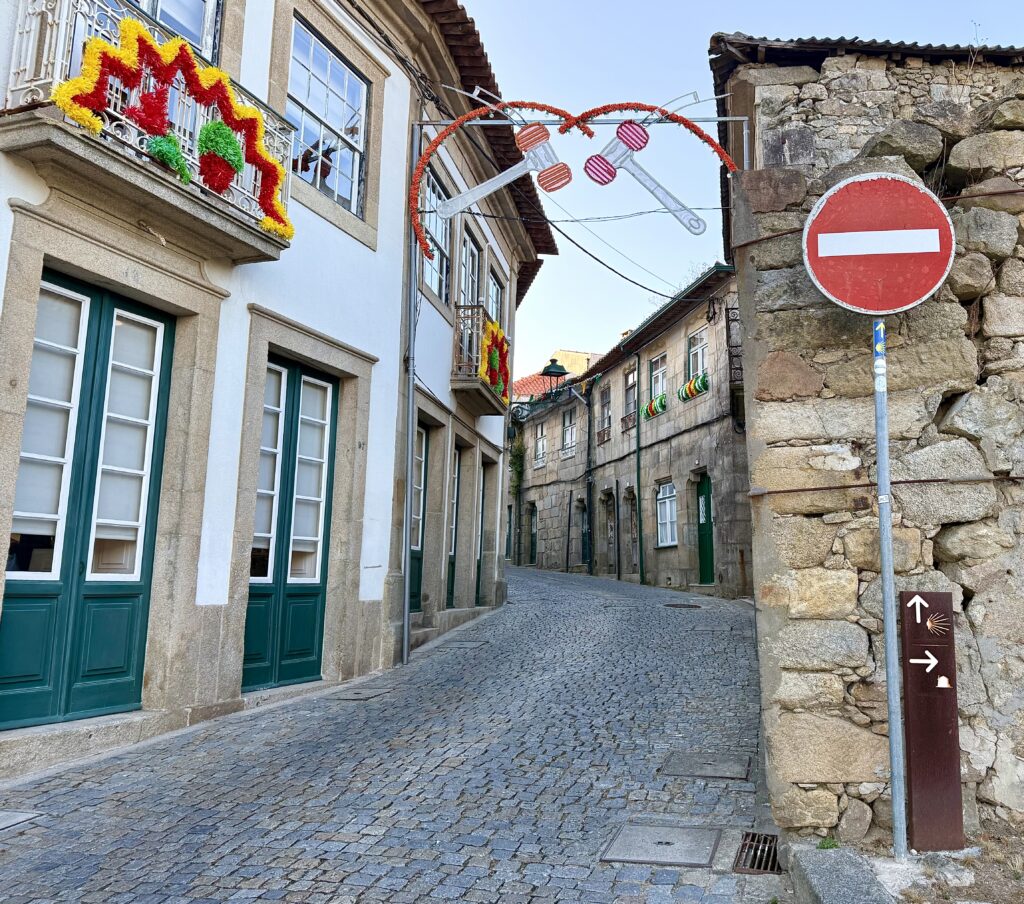
Displays decorated streets for the Sao Joao Festival that happens in June.
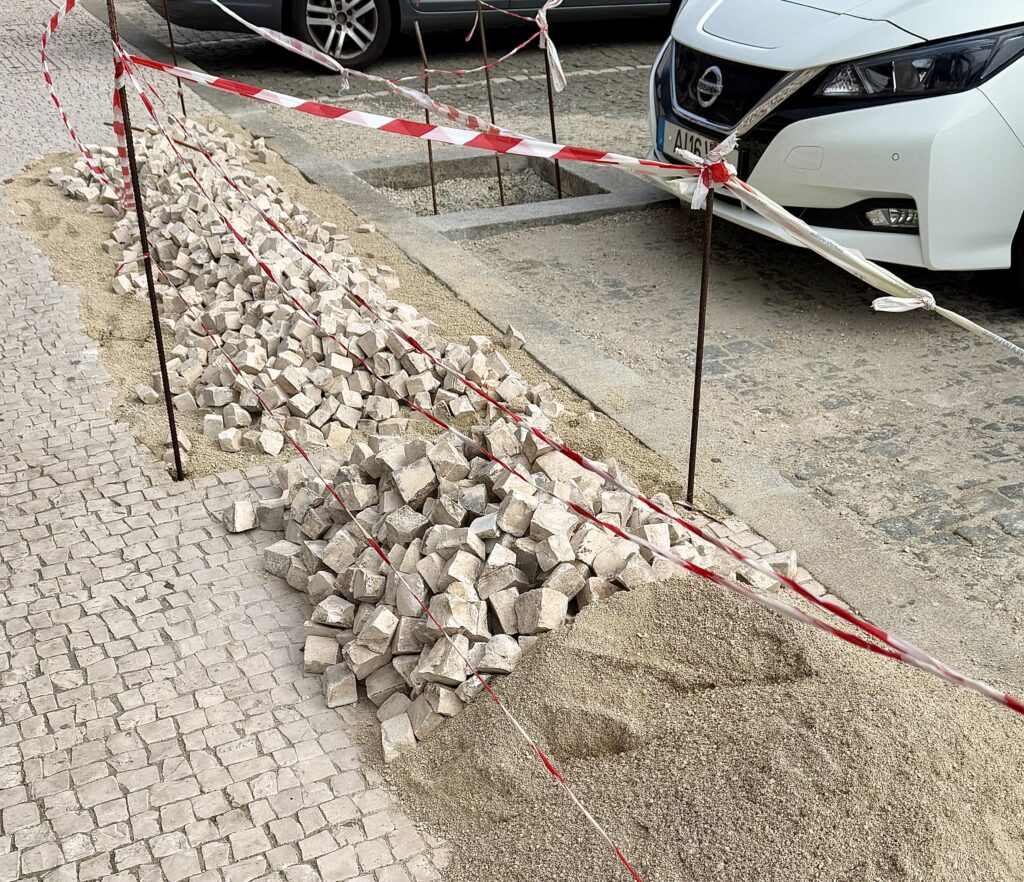
Day 3 to Apulia began by navigating Vila do Conde’s residential areas. Cobblestones were being repaired — special artisans construct this pavement tradition, calcada portuguesa.
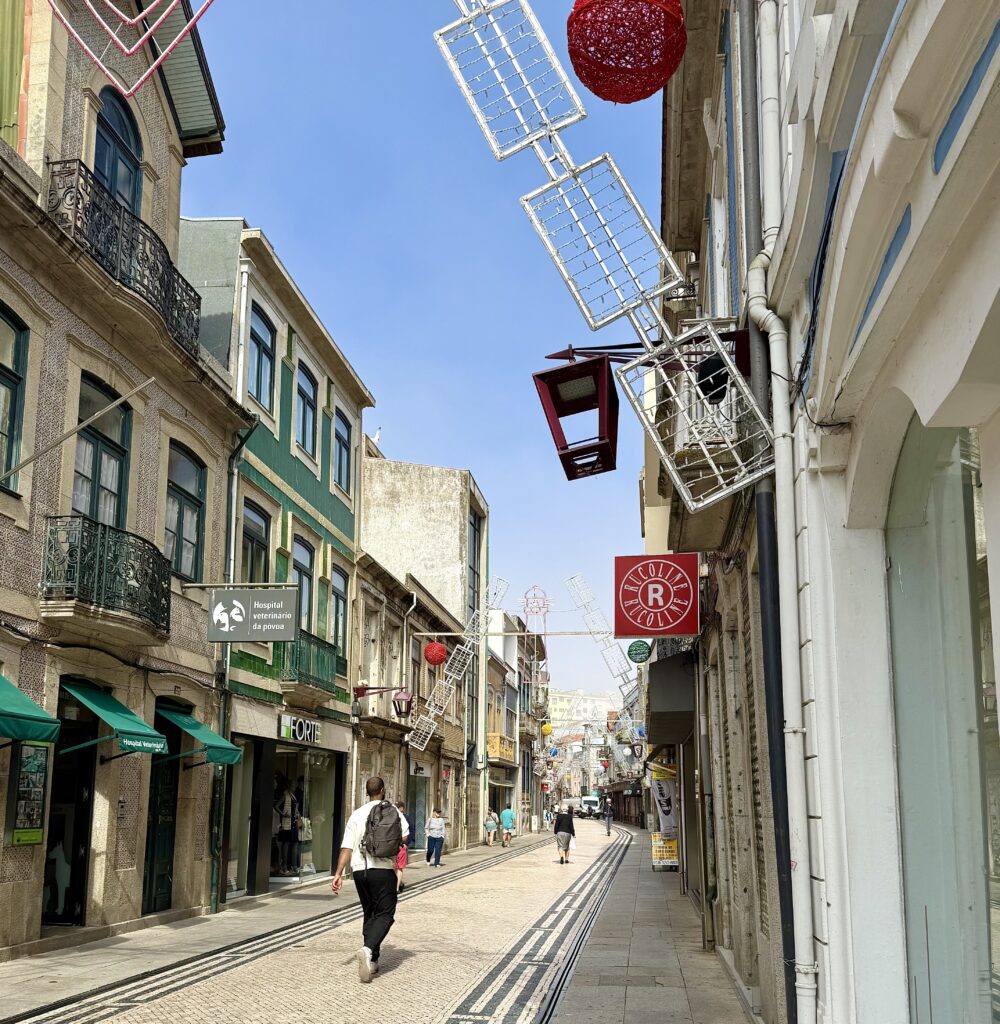
Next, the path wove through Povoa de Varzim.
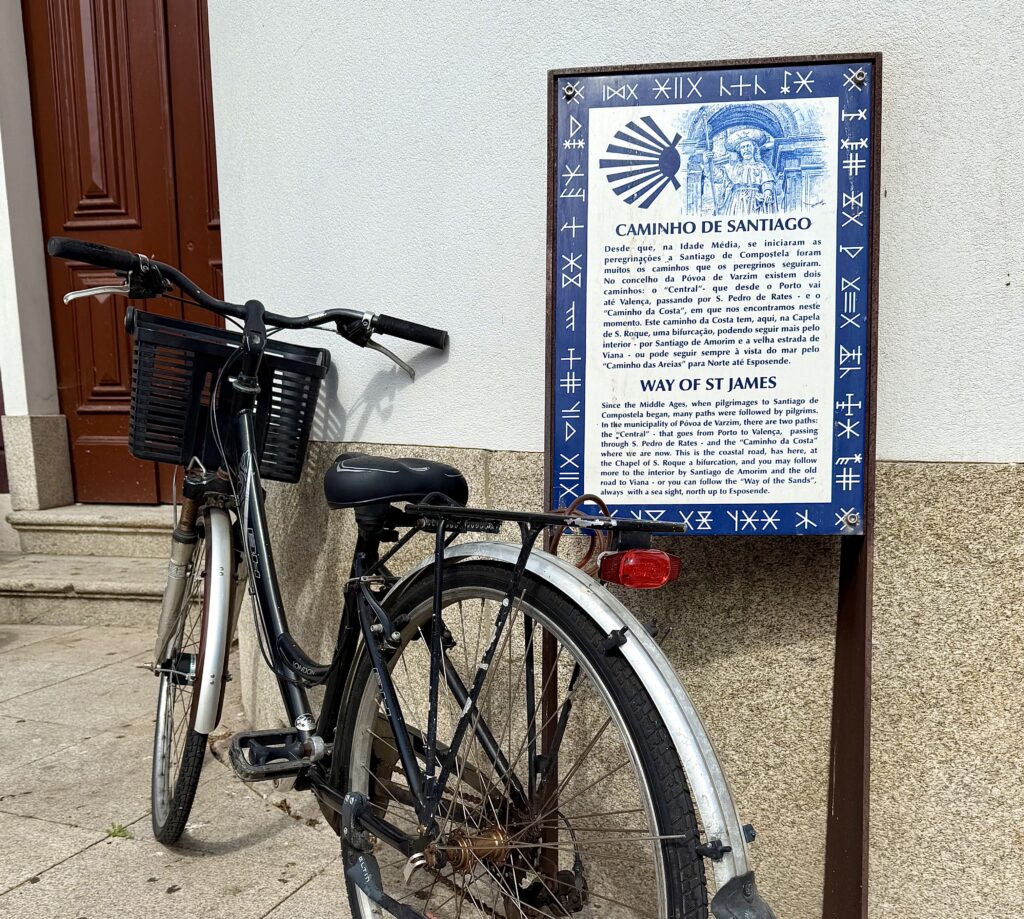
A sign about the Caminho next to 18th c. Igreja Matriz de Povoa de Varzim
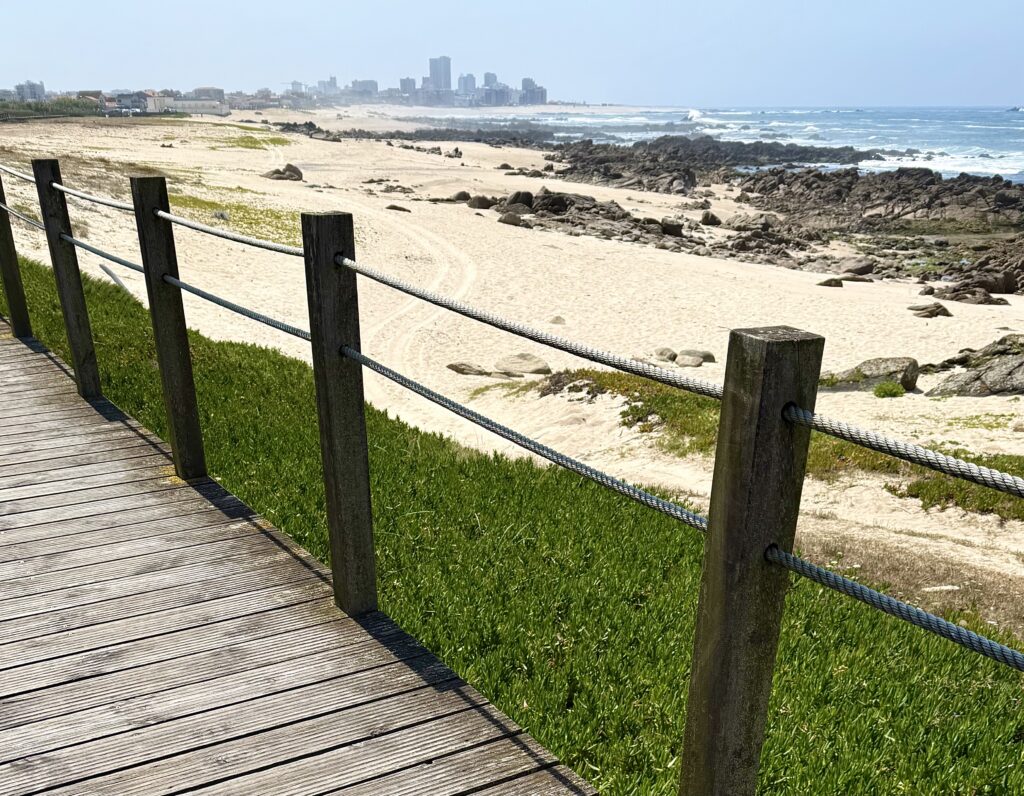
Looking back to Povoa de Varzim along the boardwalk
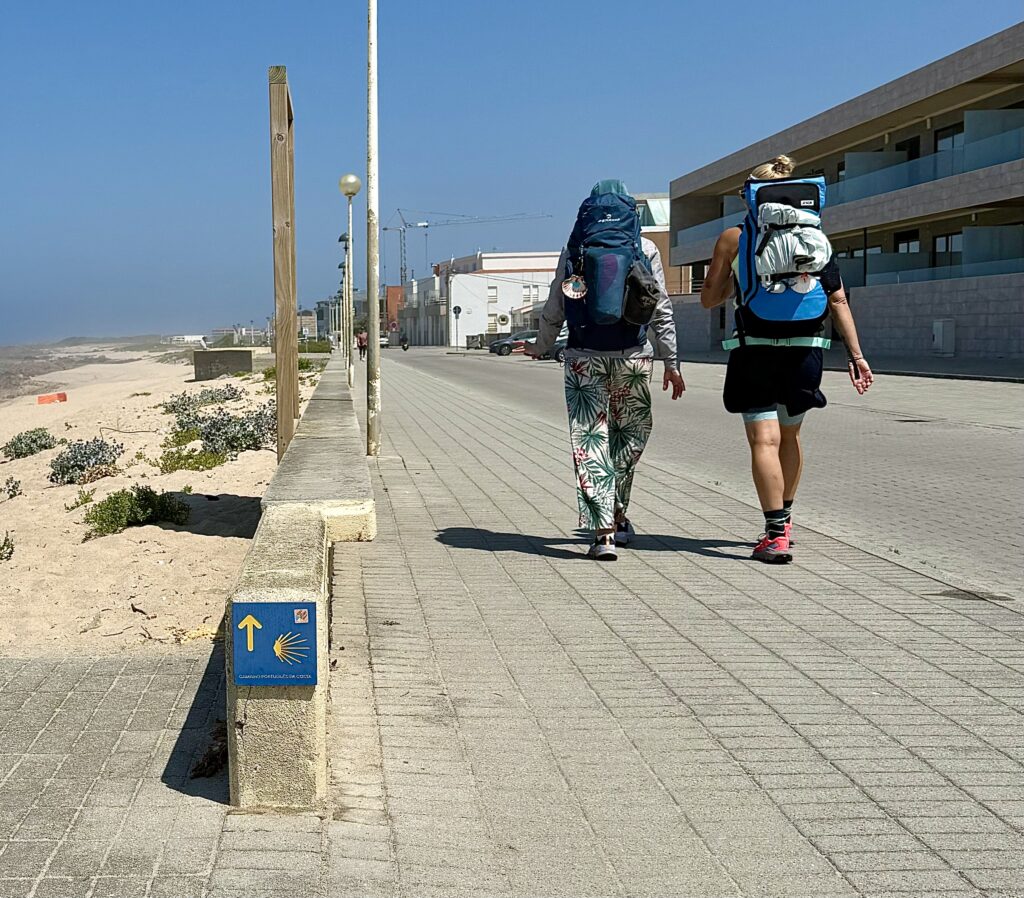
Peregrinas in the beach community A Ver-o-Mar
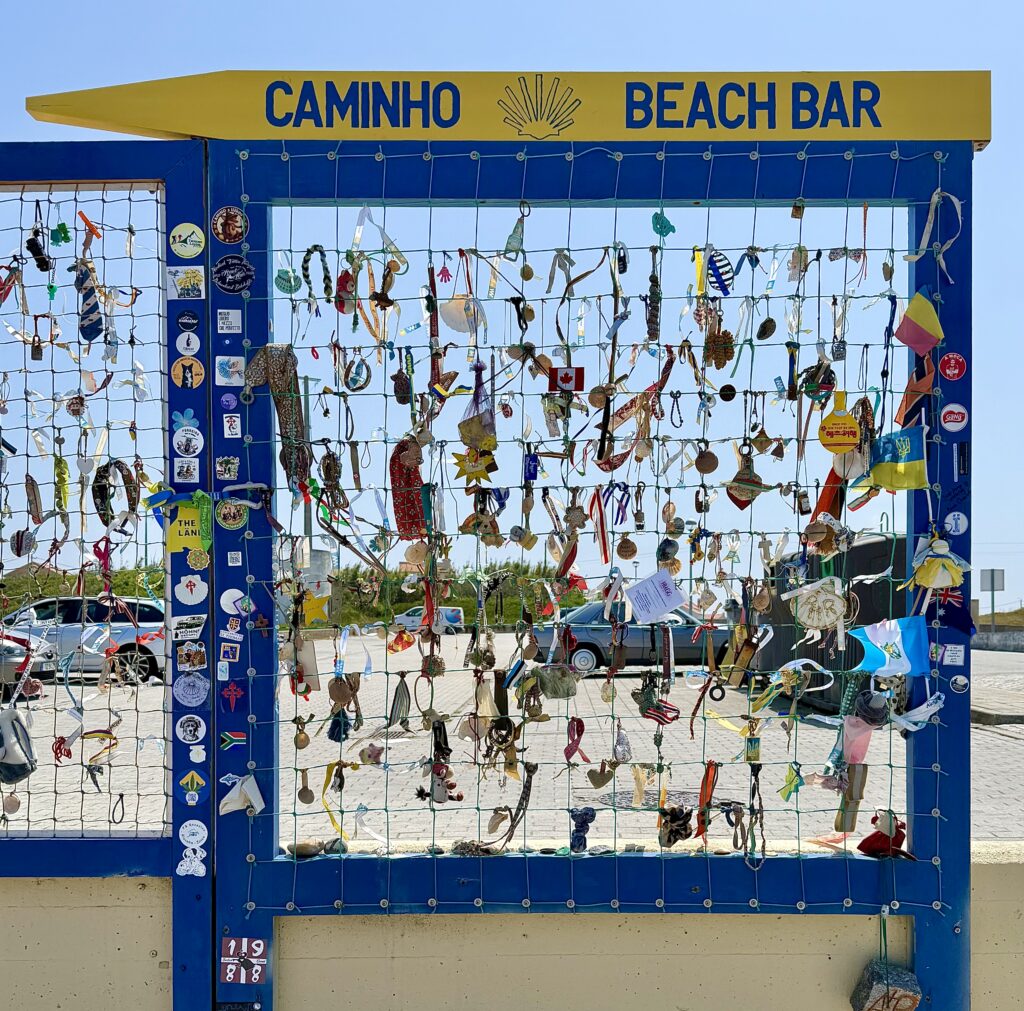
A Caminho ‘intention’ board with shells, ribbons, & mementos
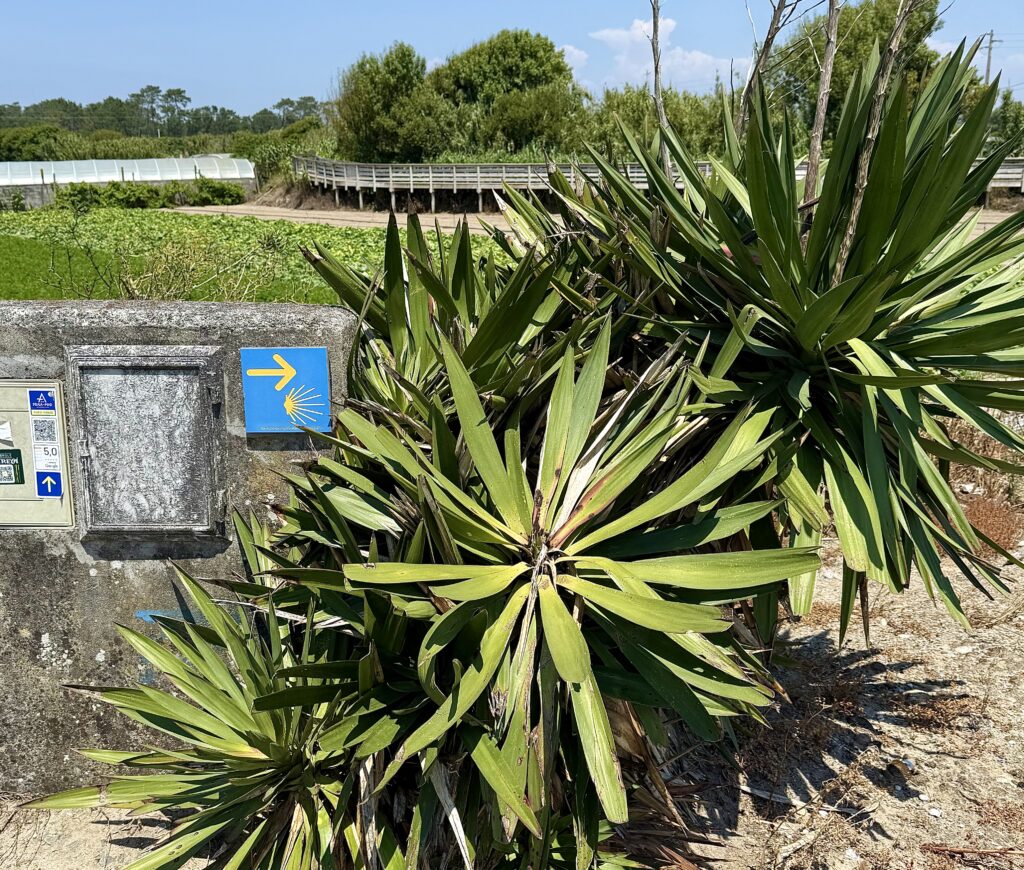
On the inland trail by Estela
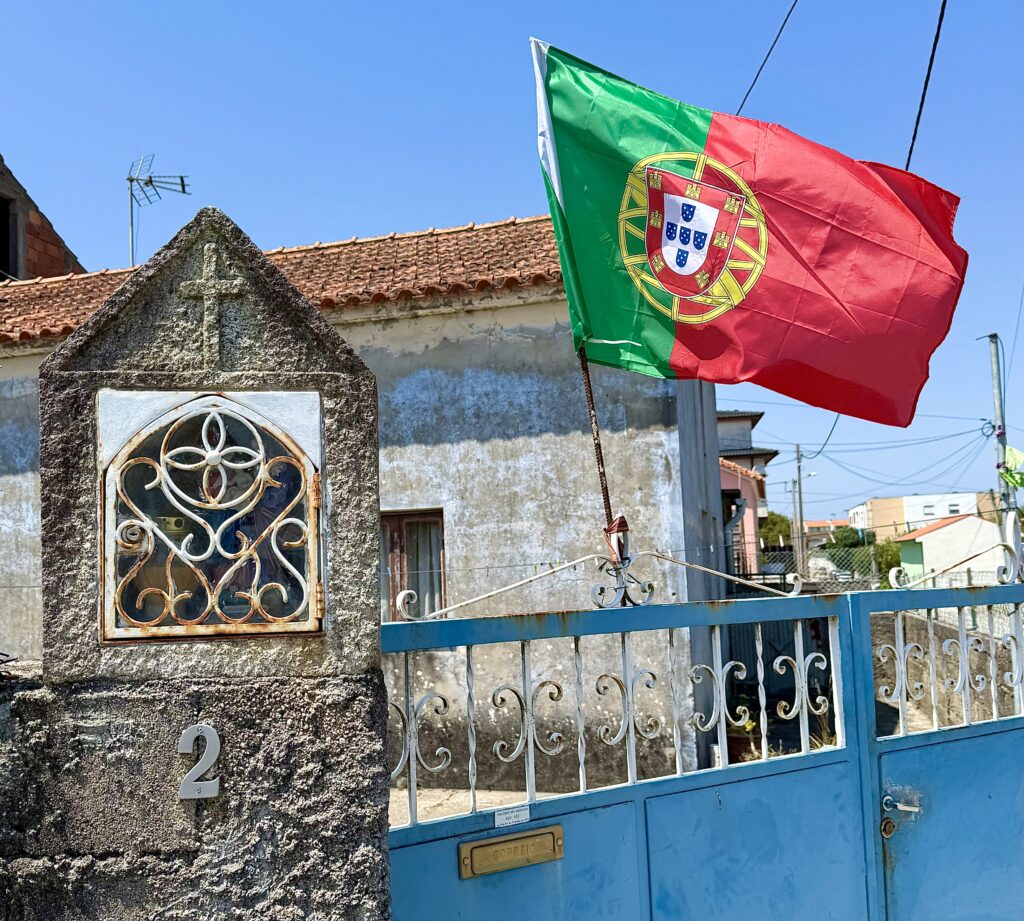
Portuguese flags waved at many casas & public buildings.
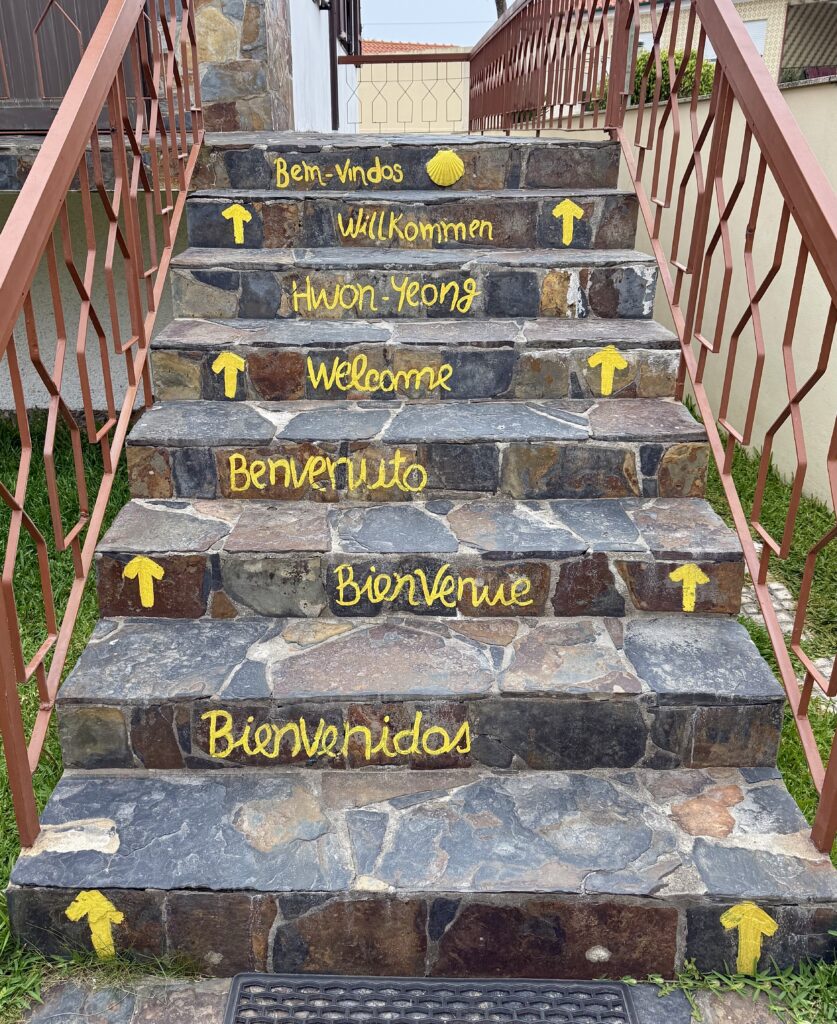
A “Welcome” to Apulia greeted me at my lodging.
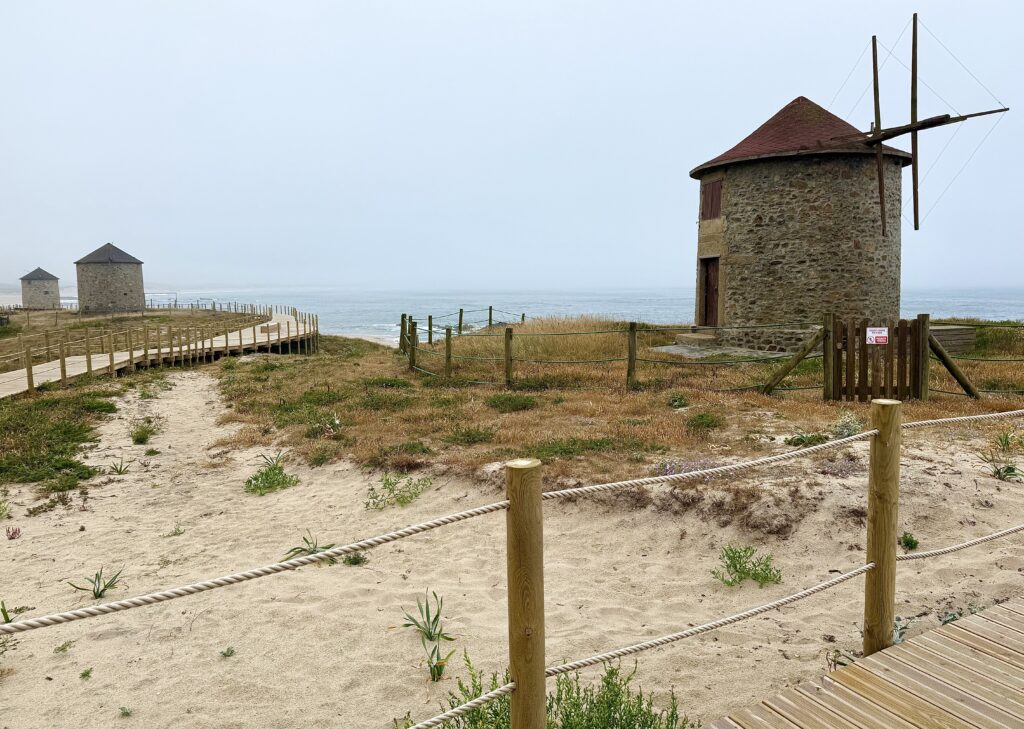
Apulia’s beachfront showcases historic windmills from the early 19th century. Originally built to grind cereal grain, they’re now private vacation homes.
Next: on the Road to Belinho, Viana do Castelo, & Caminha, the last stop in Portugal