
The Costa route for the next three days continued to wander between the coast and inland hills. Road surfaces included challenging rocky stretches where my walking sticks came in handy. To refresh I stopped at cafes for limonada & often kicked my shoes off for a while.
Good weather prevailed, and although there was no rain, I kept my rain gear within an easy reach (rain shell plus poncho). Rain gear is important to bring even in the summer for any showers or to add another layer, especially on cool mornings.
Questions about what else to bring? Check out Camino Packing for further gear info and a sample packing list with tips.
Snapshots of Days 4-6:
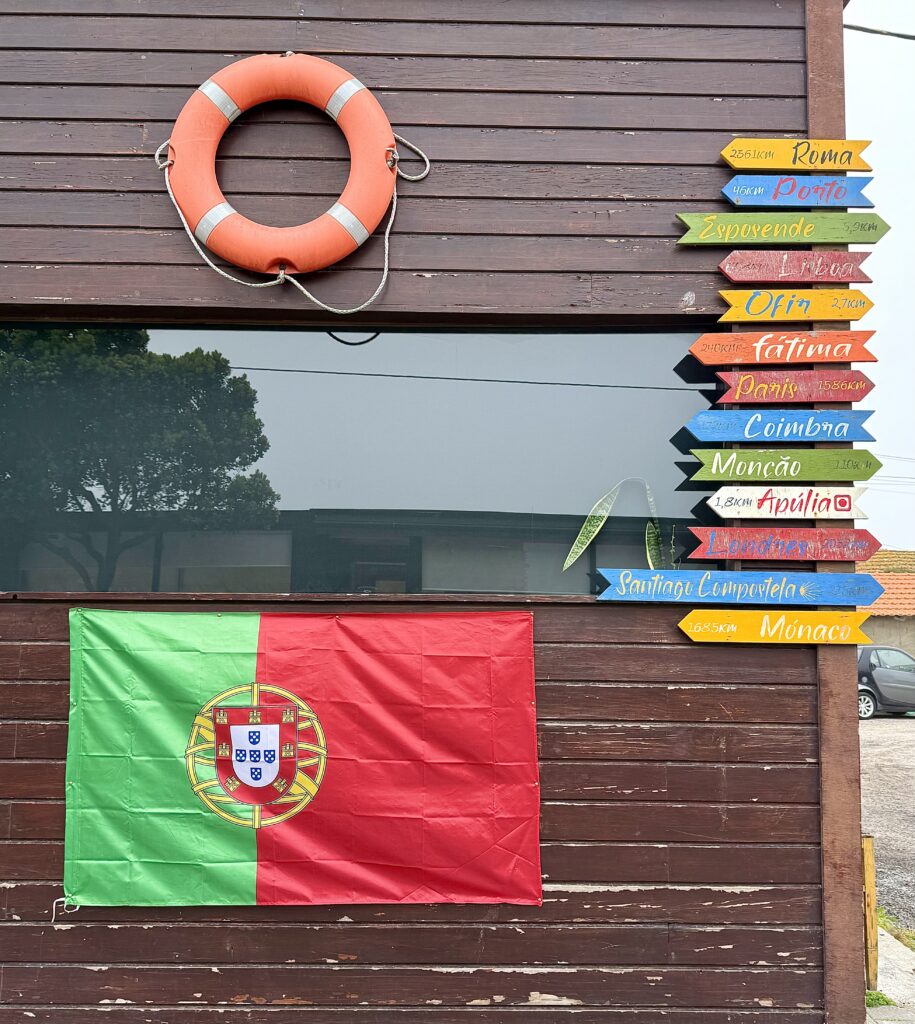
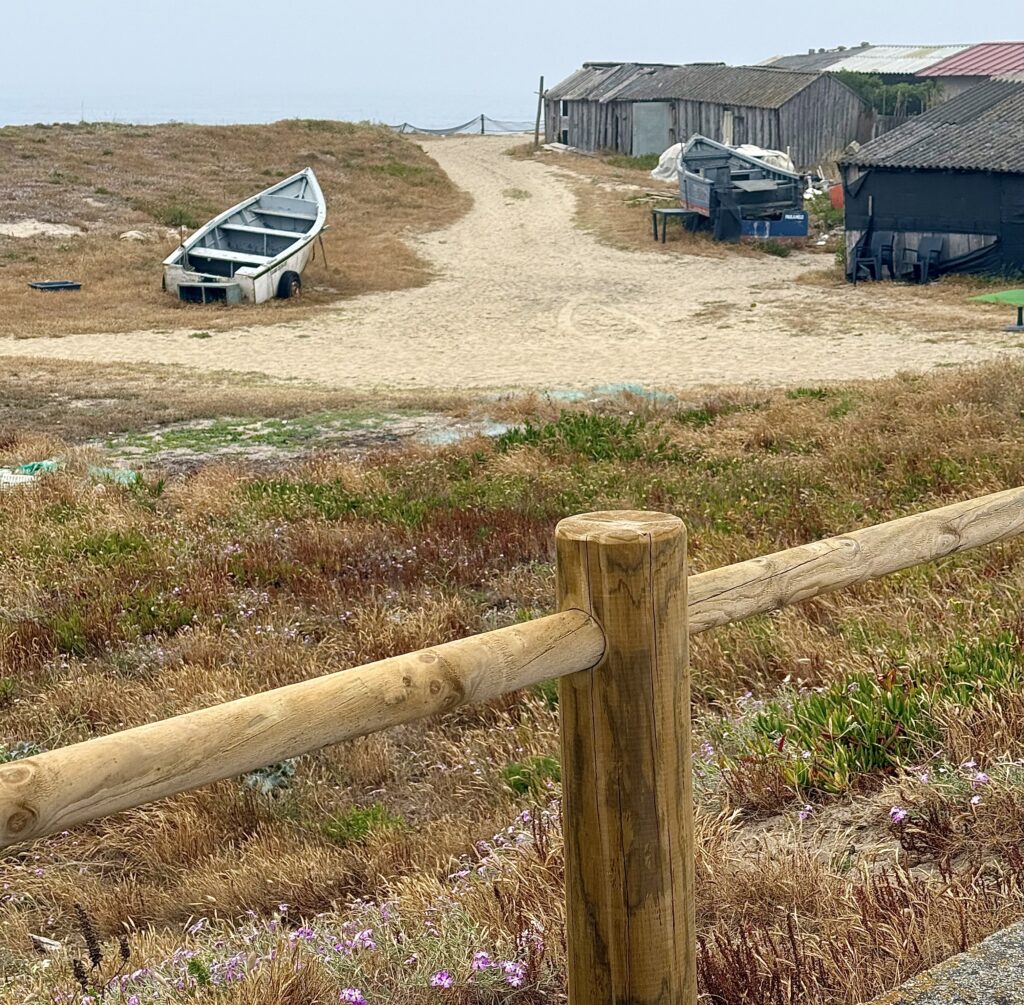
Day 4 to Belinho began with boats & nautical references.
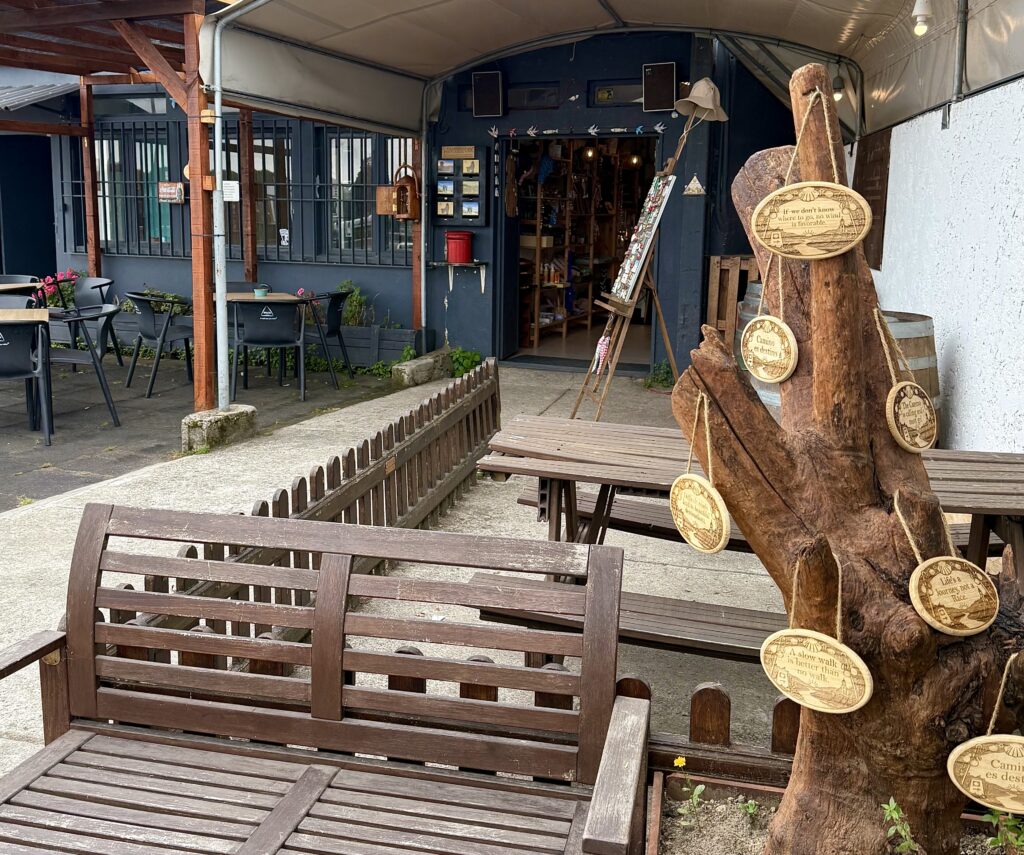
Near Esposende there was an artist’s shop with Camino items for sale, such as jewelry, keychains, & wood signs. One stated: “Difficult roads lead to beautiful destinations.”
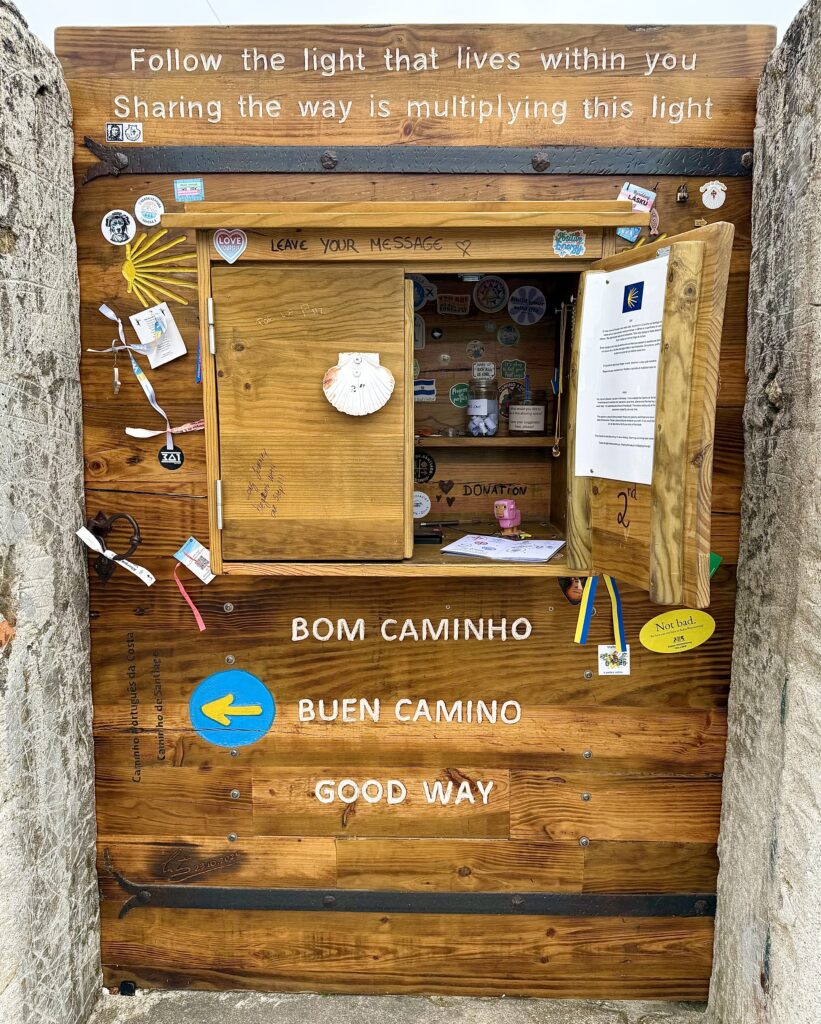
More creativity shined at a casa with a “Follow the light” ‘sello stand’ made by the homeowner, a Camino walker (as explained on a sign). Inside the cupboard I found a stamp pad and small paper rolls to take that said “Follow your heart. It’s worth it.”
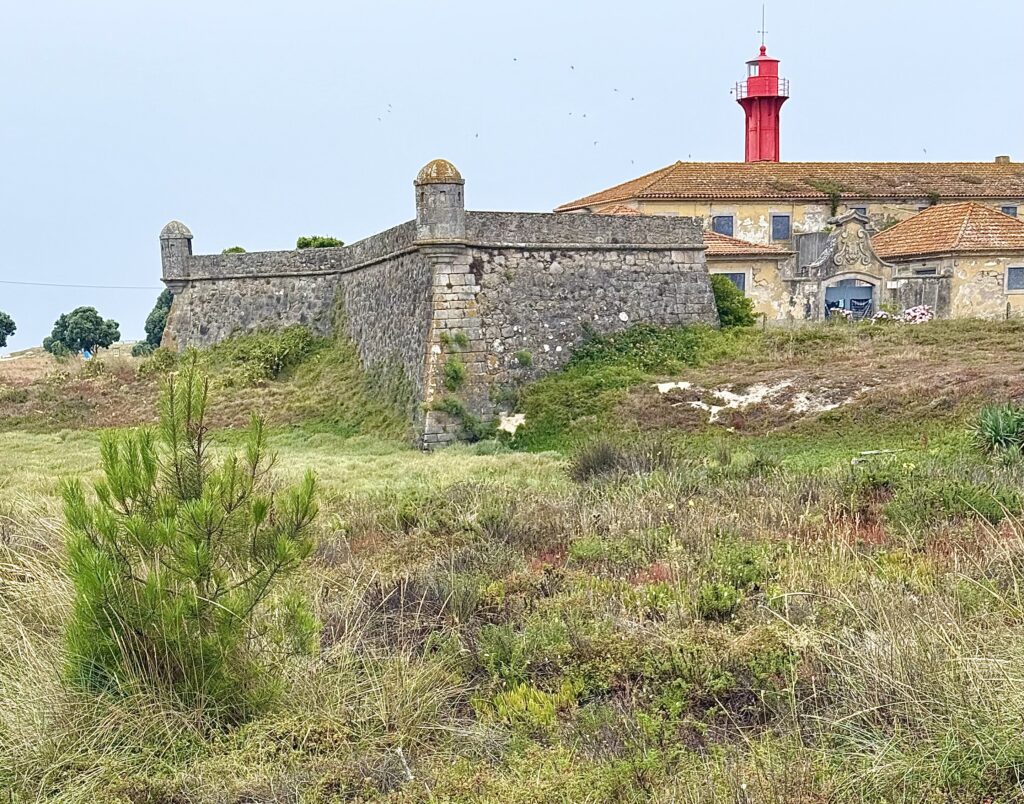
The Esposende area also had 17th c. Fort Sao Joao Baptista of Esposende and lighthouse built in 1922. Only two bulwarks remain of the fort’s original star-shaped structure.
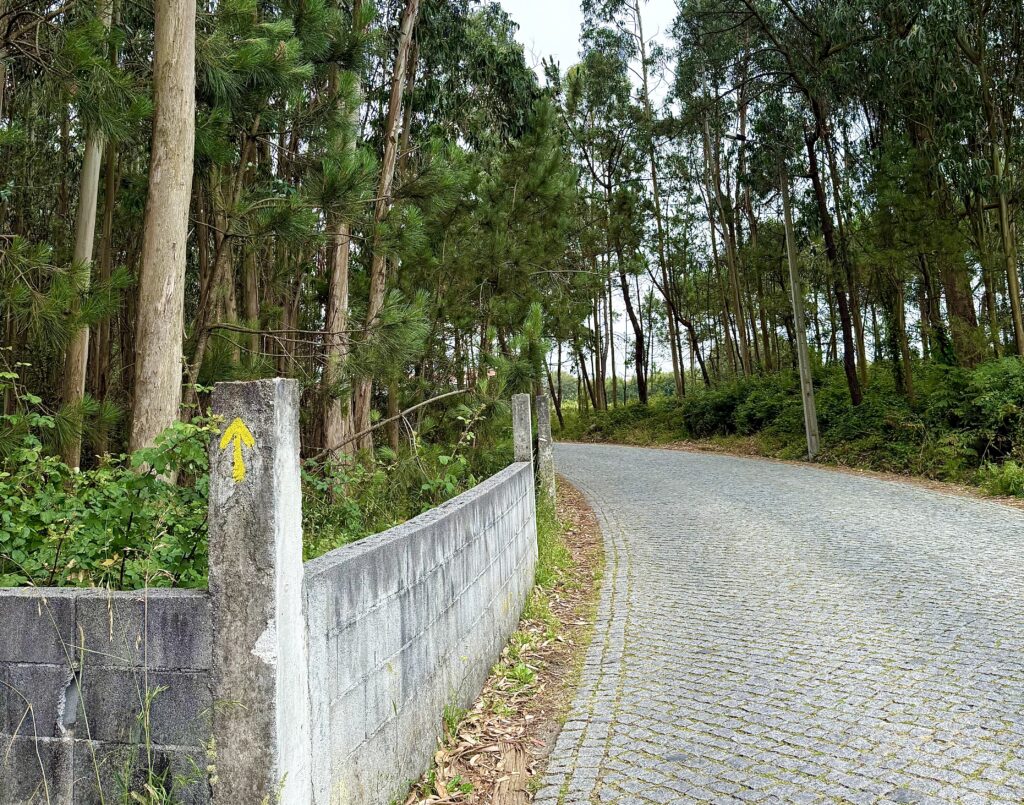
This Way through Cepaes
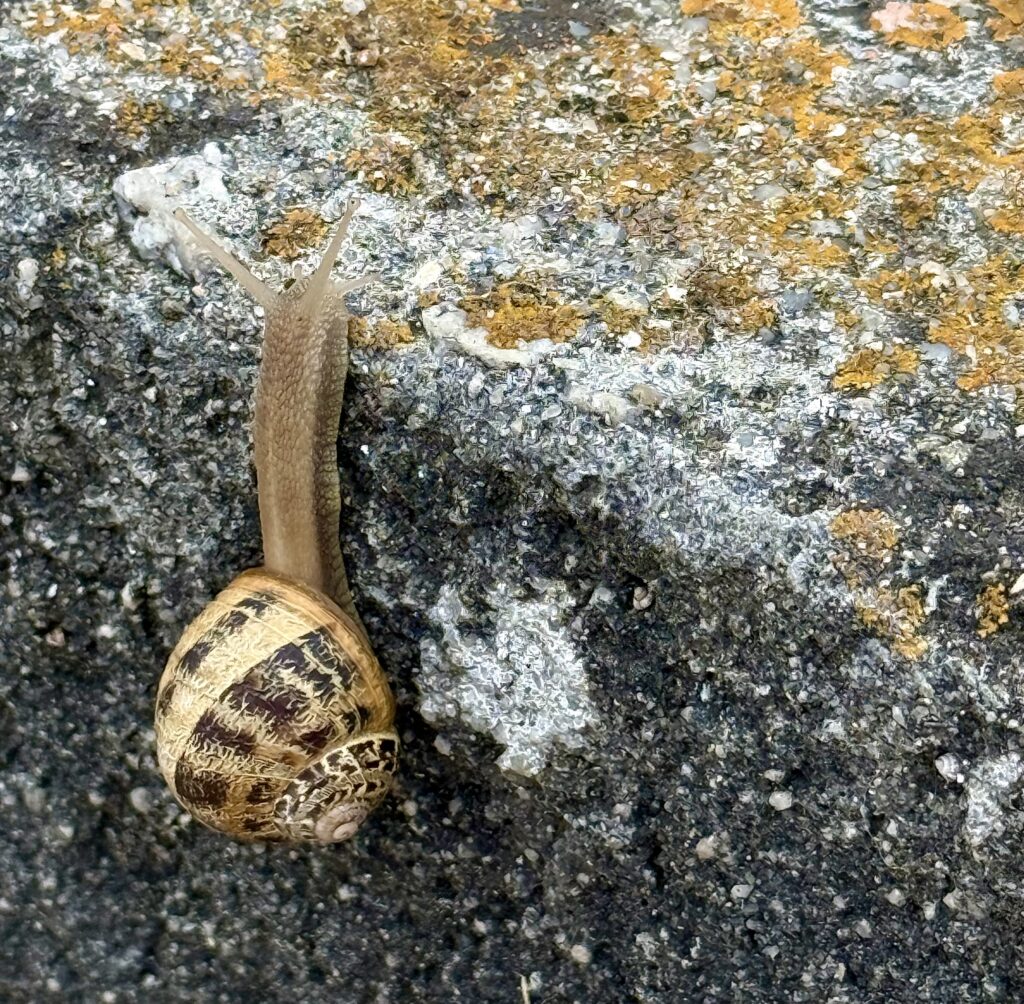
Snail pace
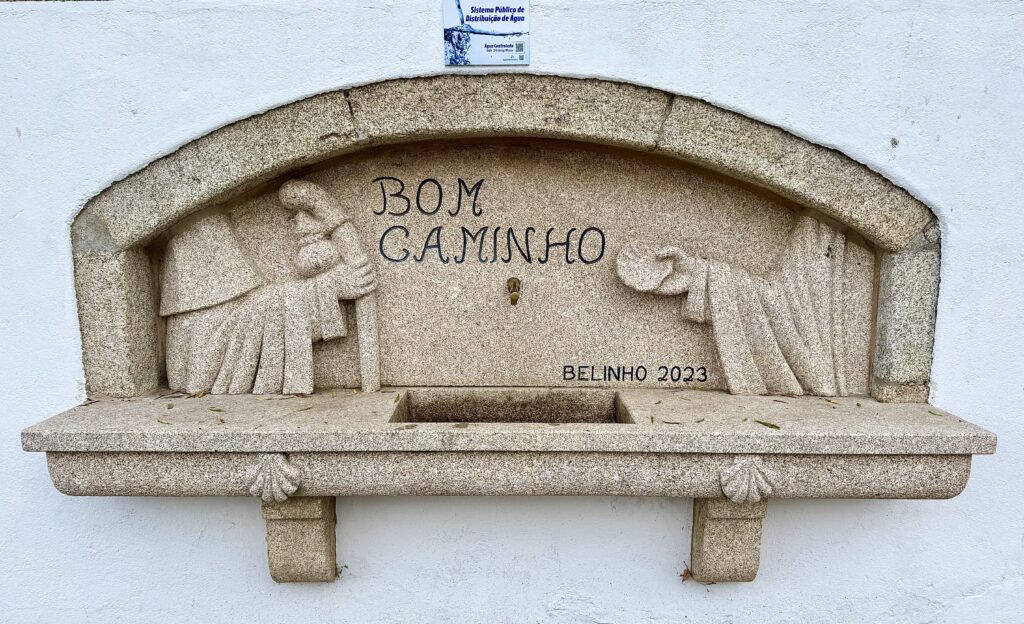
A Camino fonte in Belinho — water fountains are often noted in guidebooks (especially helpful on warmer days). Check out more about water sources & hydration in Camino Resources, Part 2.
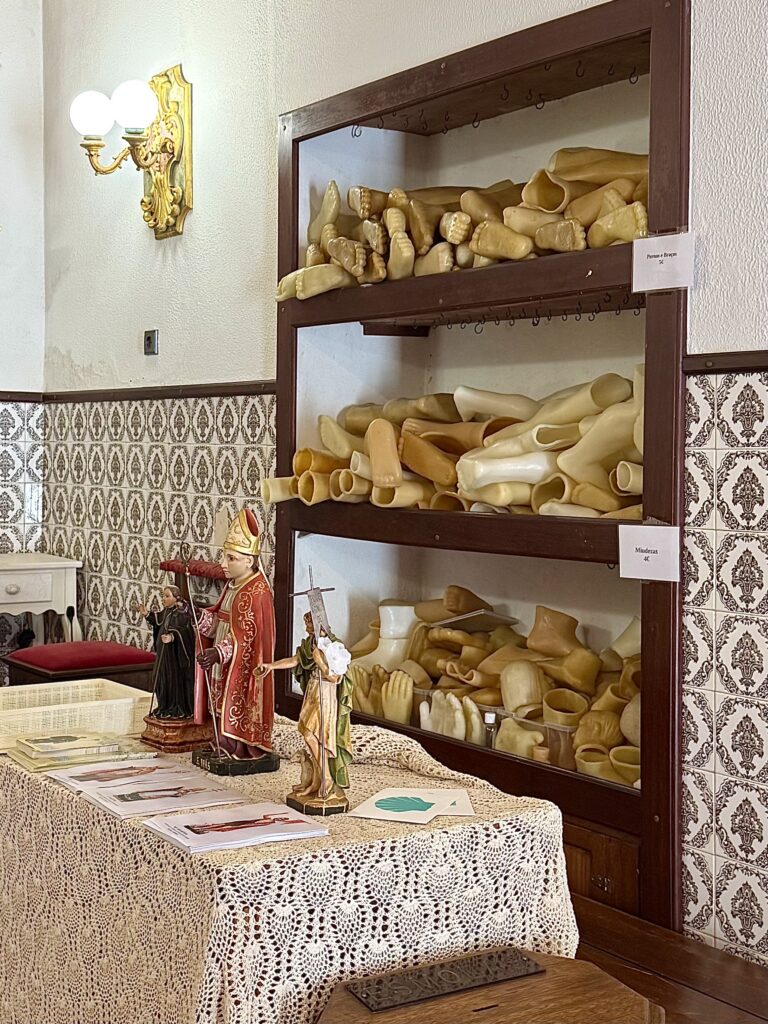
Capela de Santo Amaro in Belinho is known for its ex-voto tradition, with a display of wax and wood offerings, some 100 years old. Wax ex-votos for sale included legs & feet, heads, hands, and small figures.
In January-February a romaria (short distance pilgrimage) takes place at the chapel that honors Santo Amaro (or Amarus the Pilgrim; also referred to as Saint Maurus). Processional walks, music, fireworks & a folklore festival are part of the yearly event.
I had arranged a visit ahead of time to see this special chapel & the ex-votos there (and leave a couple of ex-votos I made). Obrigada to Grace (at Grace House where I stayed), her friend Marlene, and Jose, who kindly opened up the chapel for me.
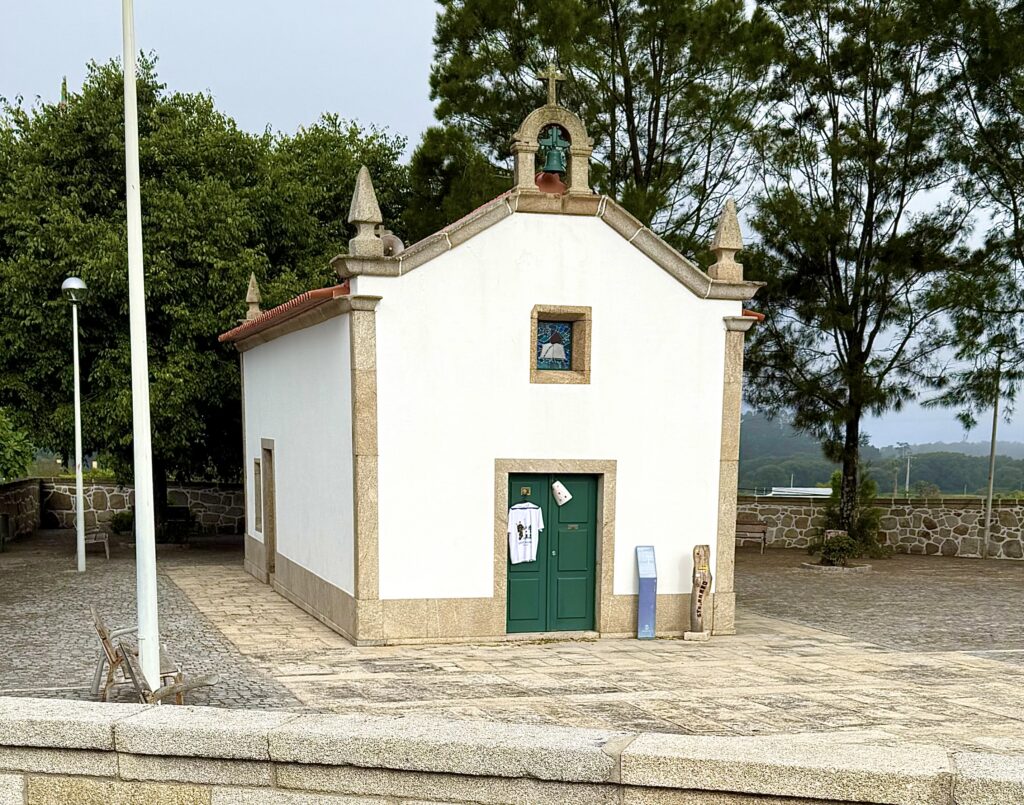
17th c. Capela de Santo Amaro — a highlight of my Camino!
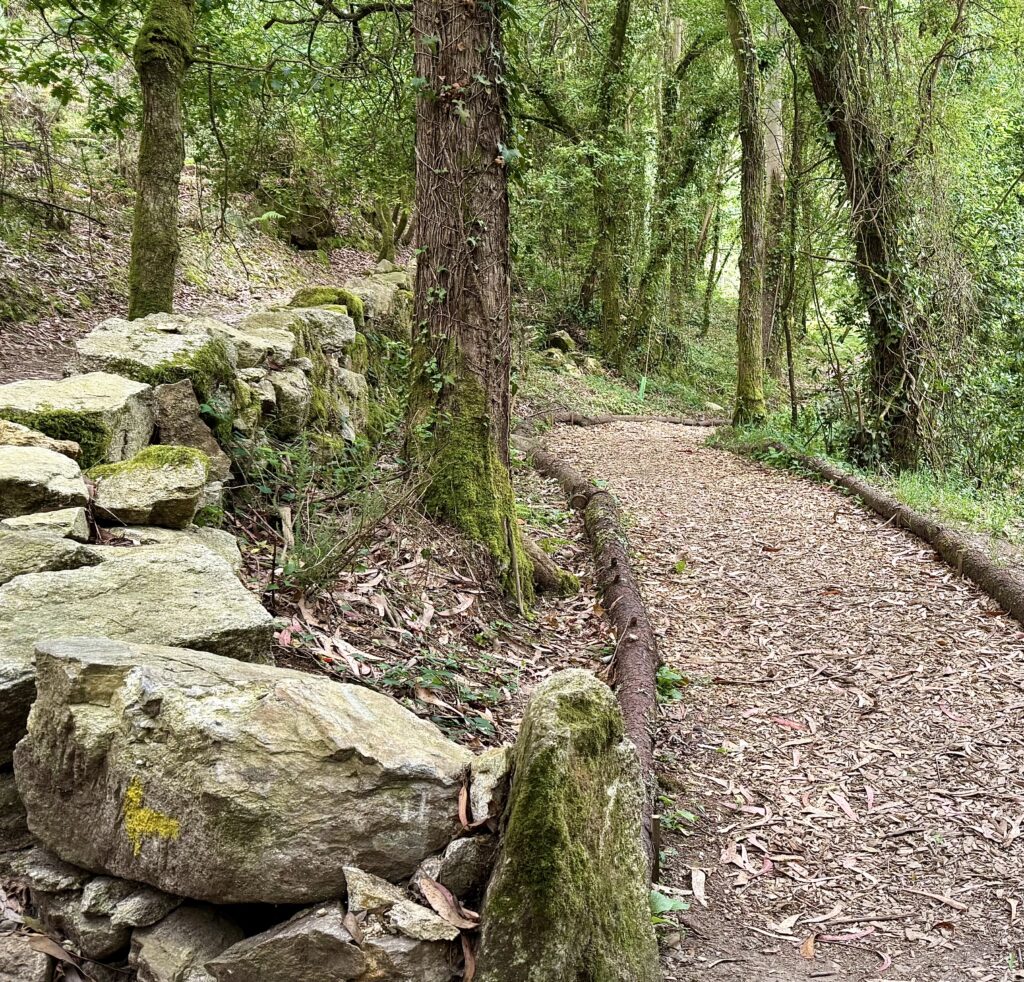
Day 5 to Viana do Castelo included a leafy path in Antas — soft on the feet.
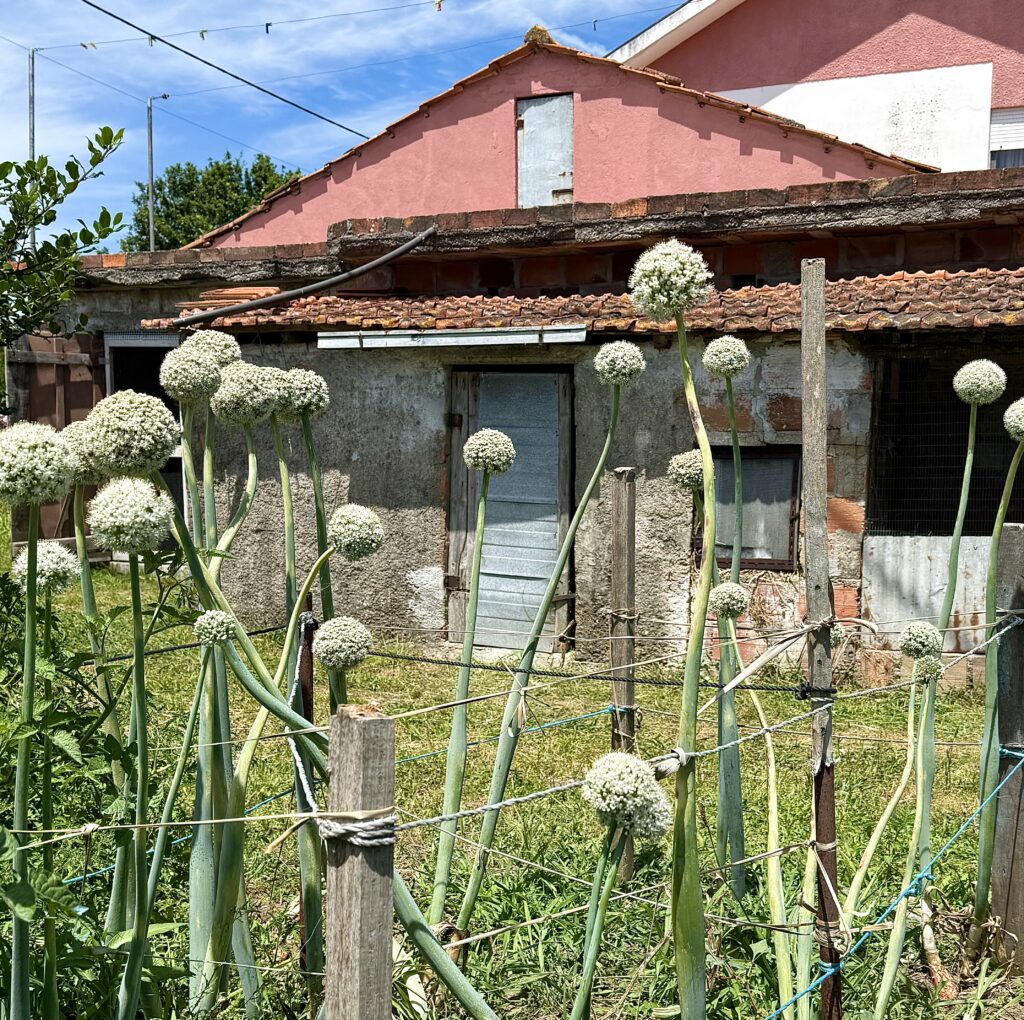
Onion blooms in Chafe
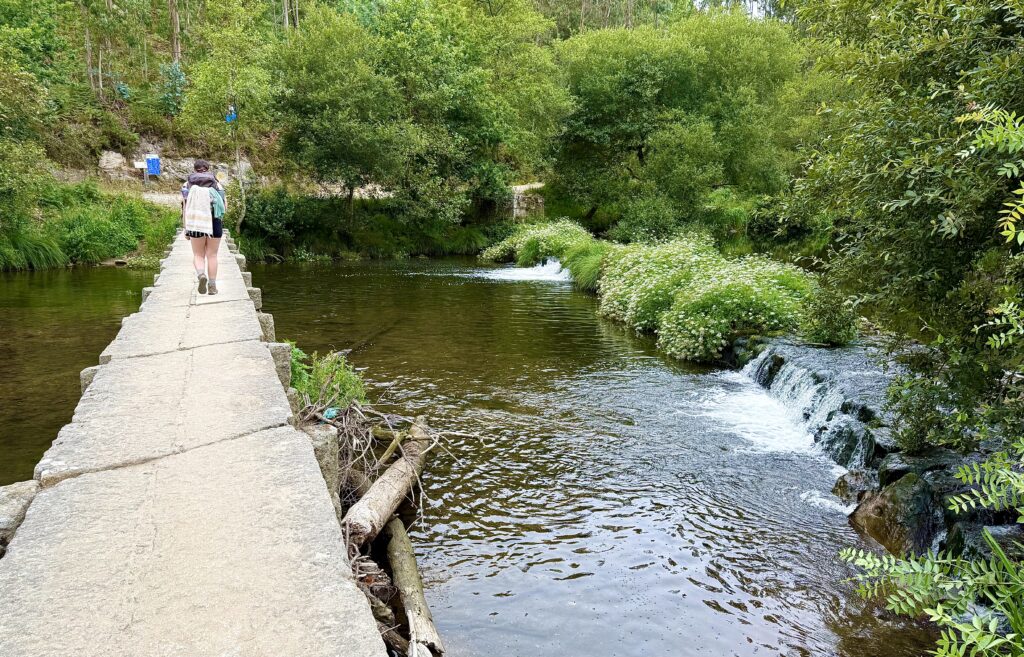
A stone walking bridge over the Rio Neiva near Castelo do Neiva — it was a peaceful setting with the sound of small waterfalls.
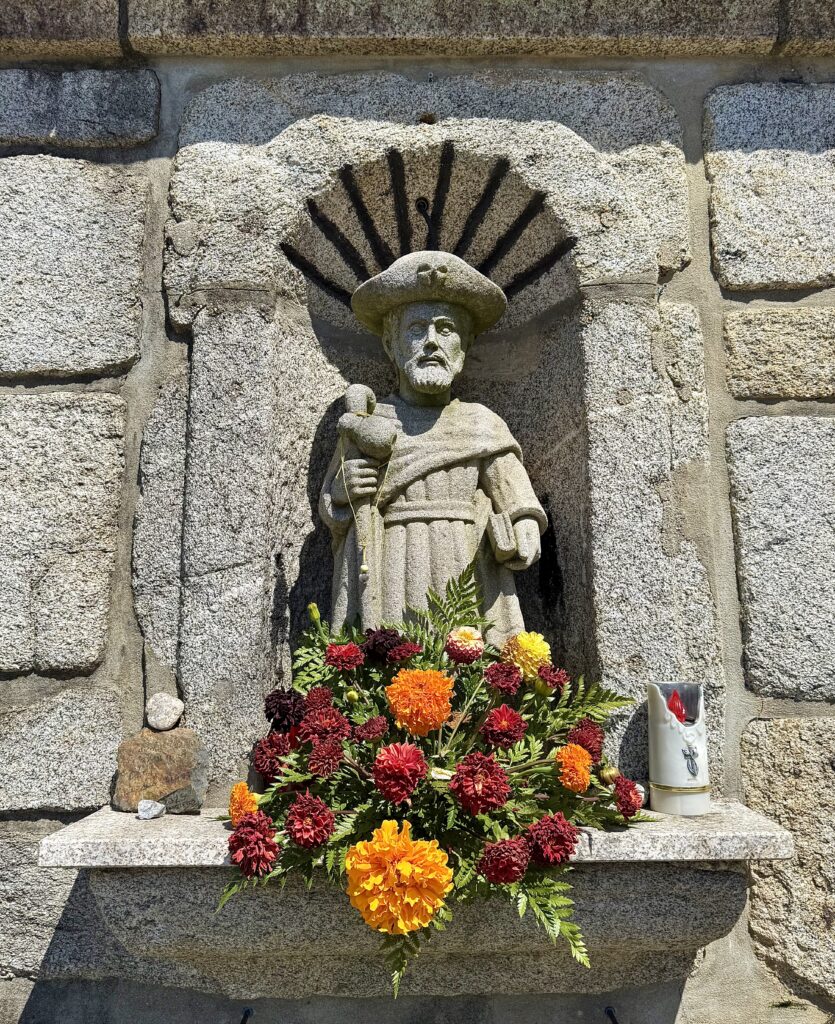
Roadside shrine to St. James in Castelo do Neiva
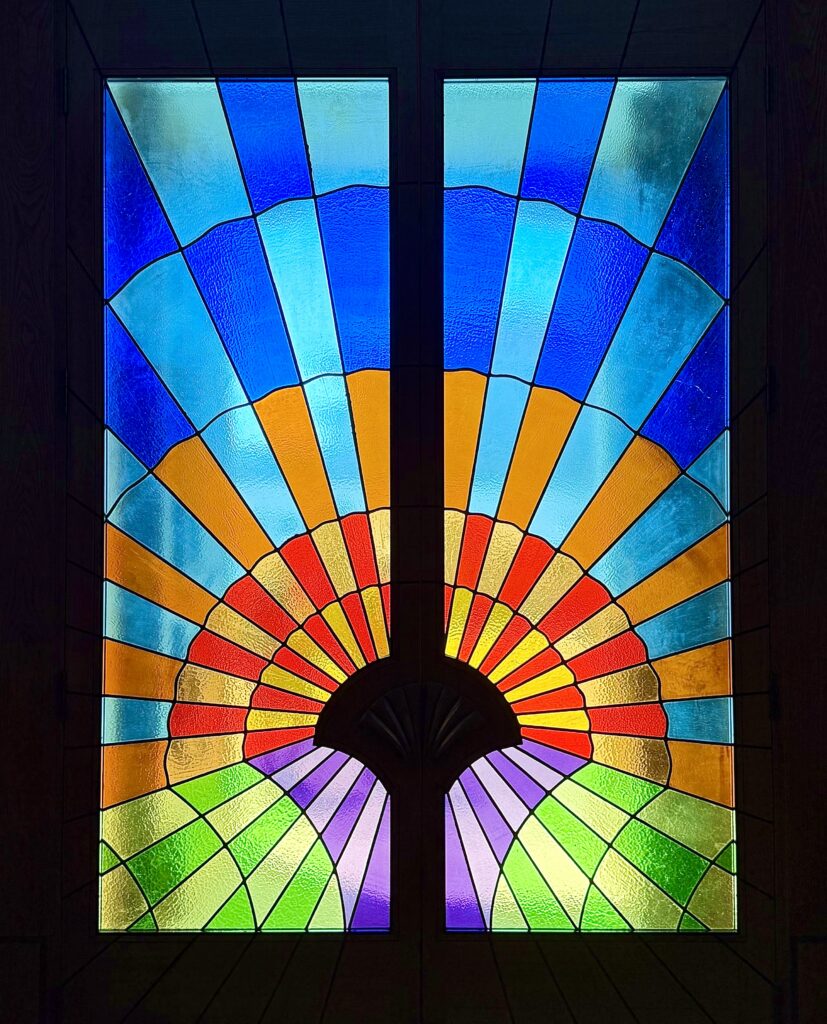
Shell stain glass door at Igreja Matriz de Sao Tiago in Anha
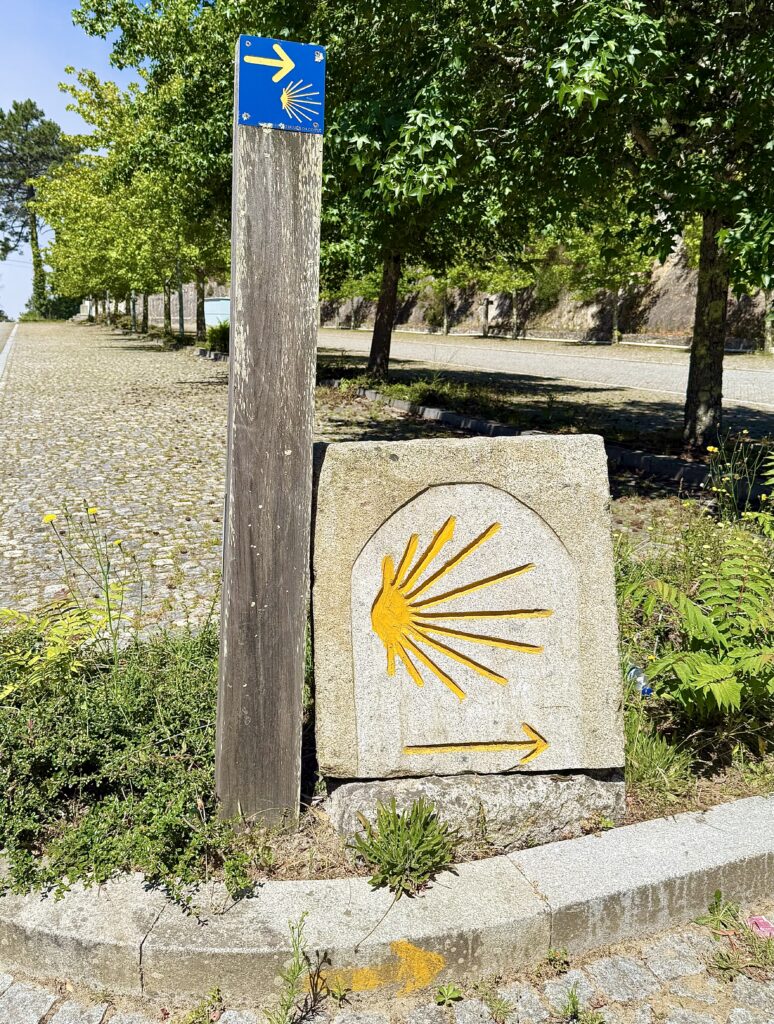
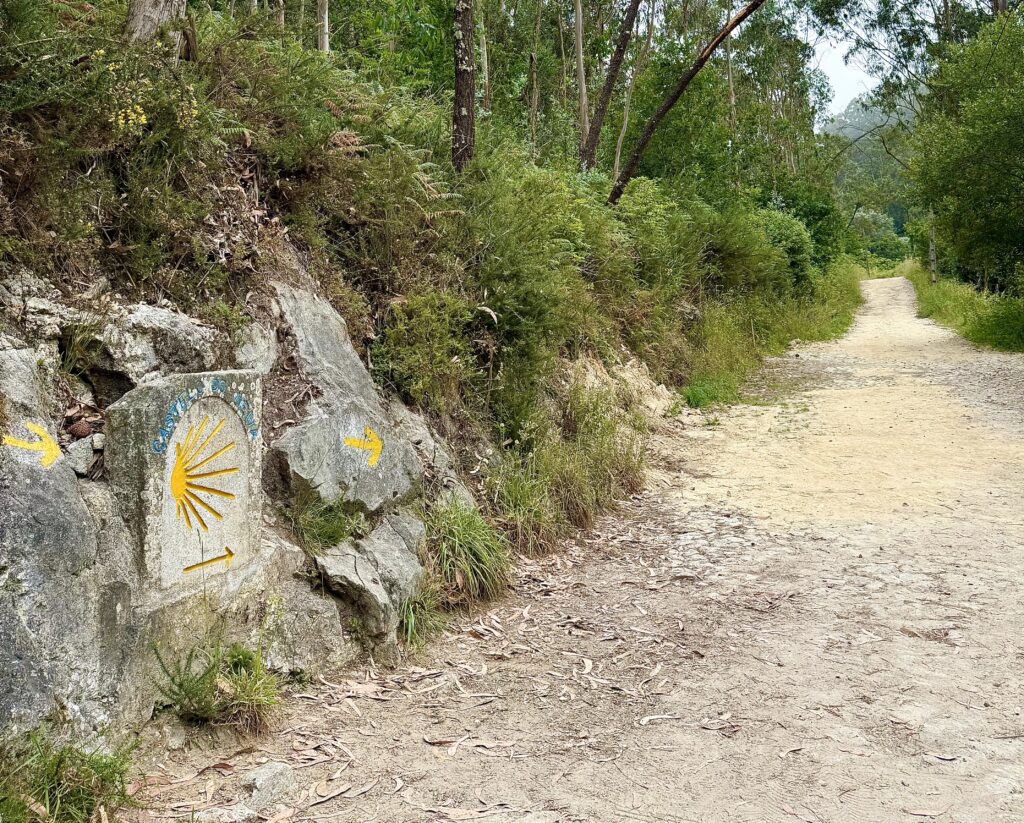
Triple arrow guidance
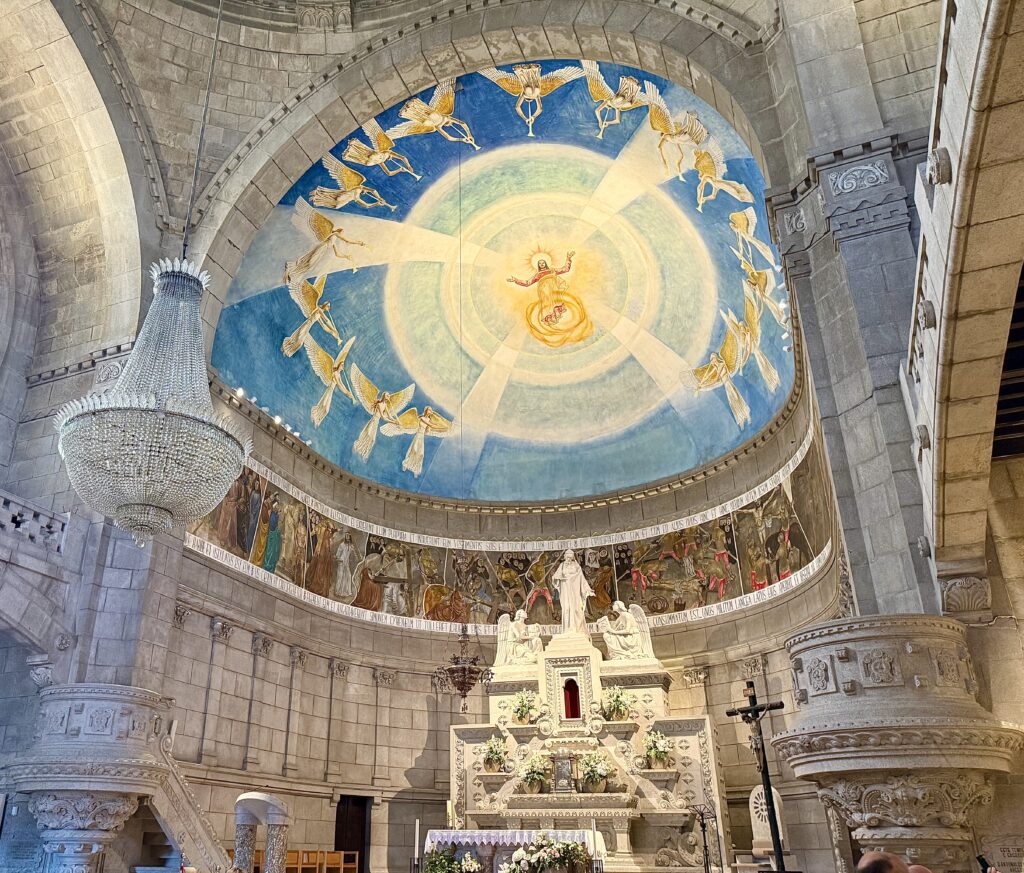
The Santuario de Santa Luzia lies high on a hill above Viana do Castelo. The early 20th c. basilica was inspired by the Sacre-Coeur in Paris and features a spectacular altar dome.
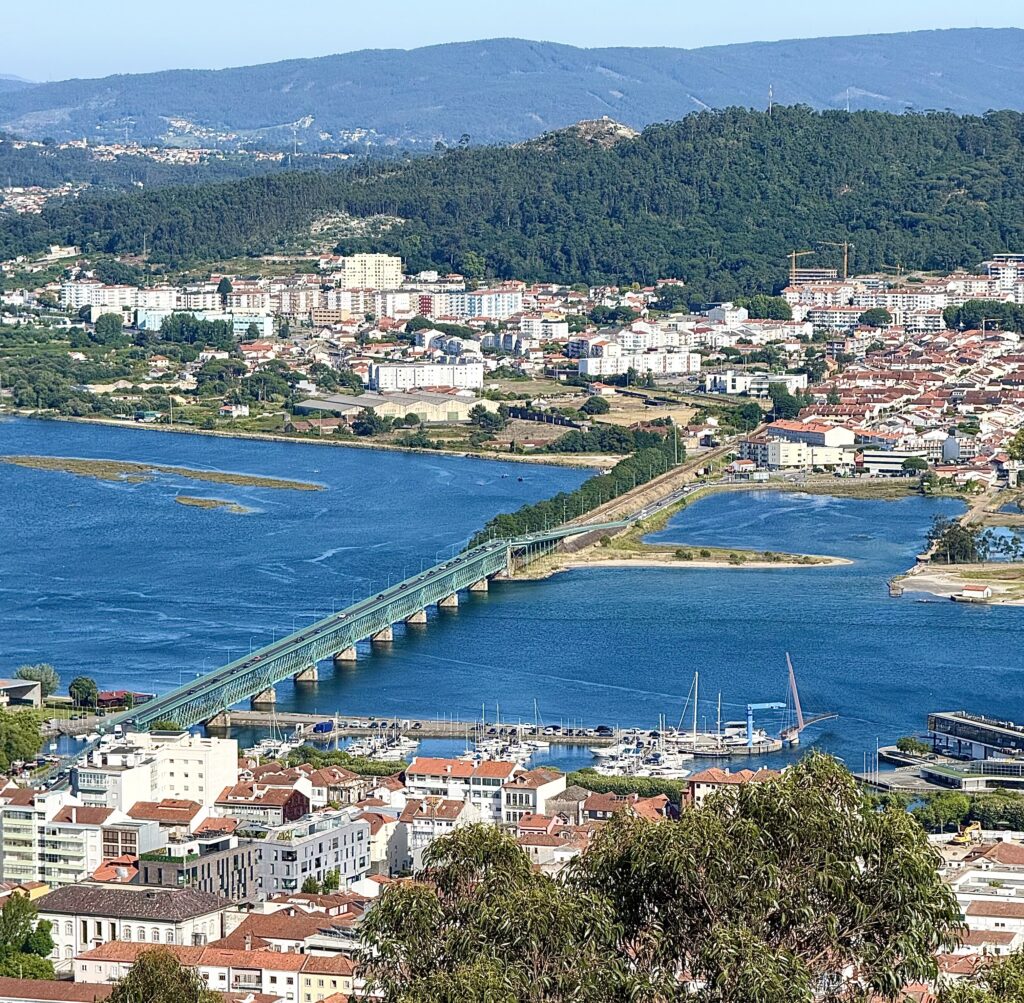
View from the church grounds — walkers cross over the bridge to reach the city.
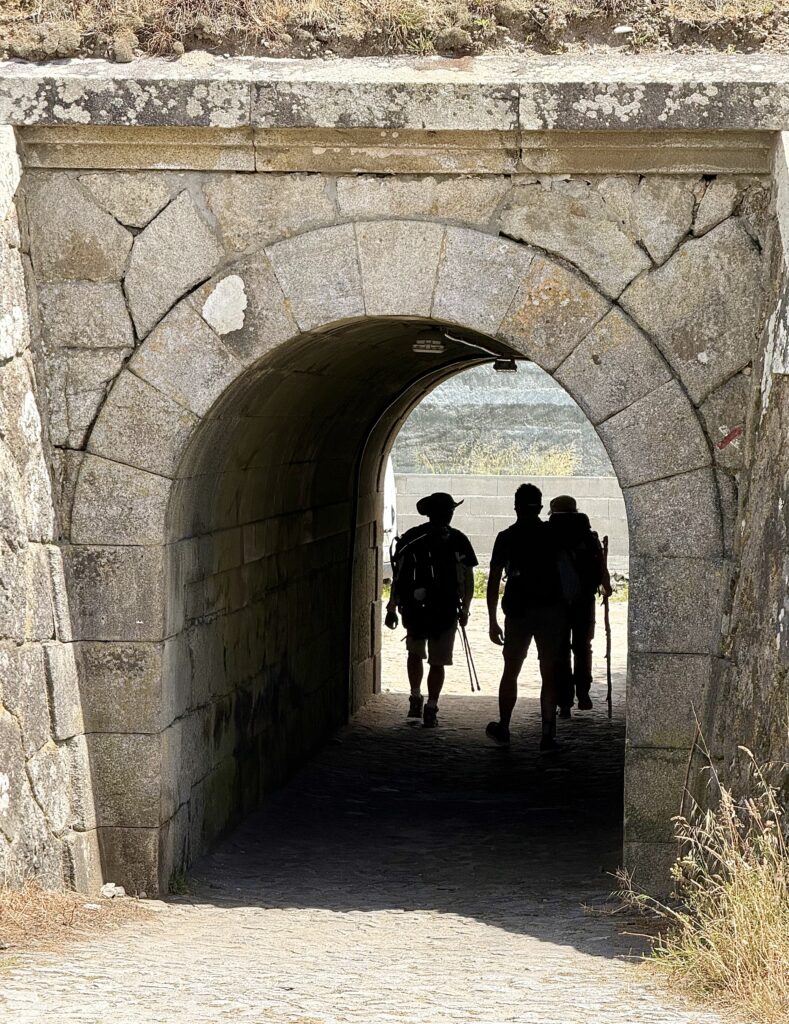
Pilgrims by Praia de Moledo on Day 6 to Caminha, the last town in Portugal along the Costa
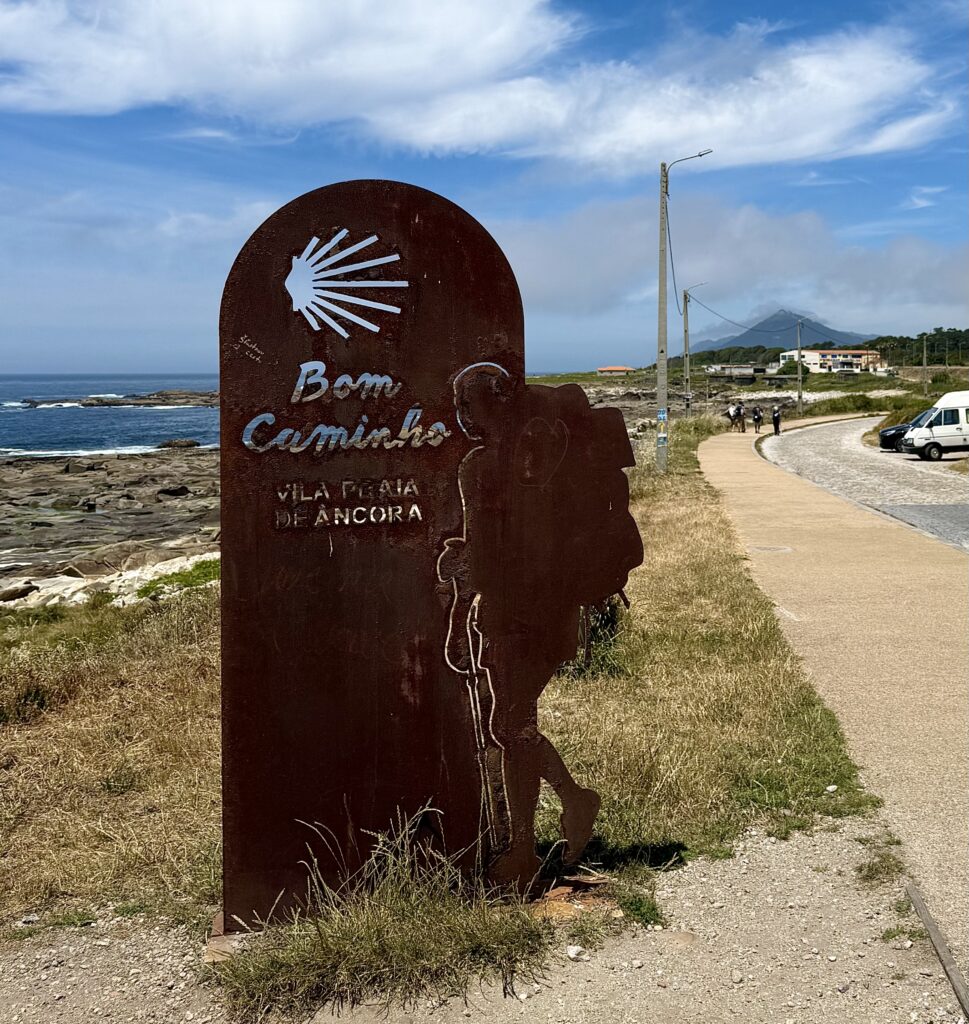
Marker in Vila Praia de Ancora
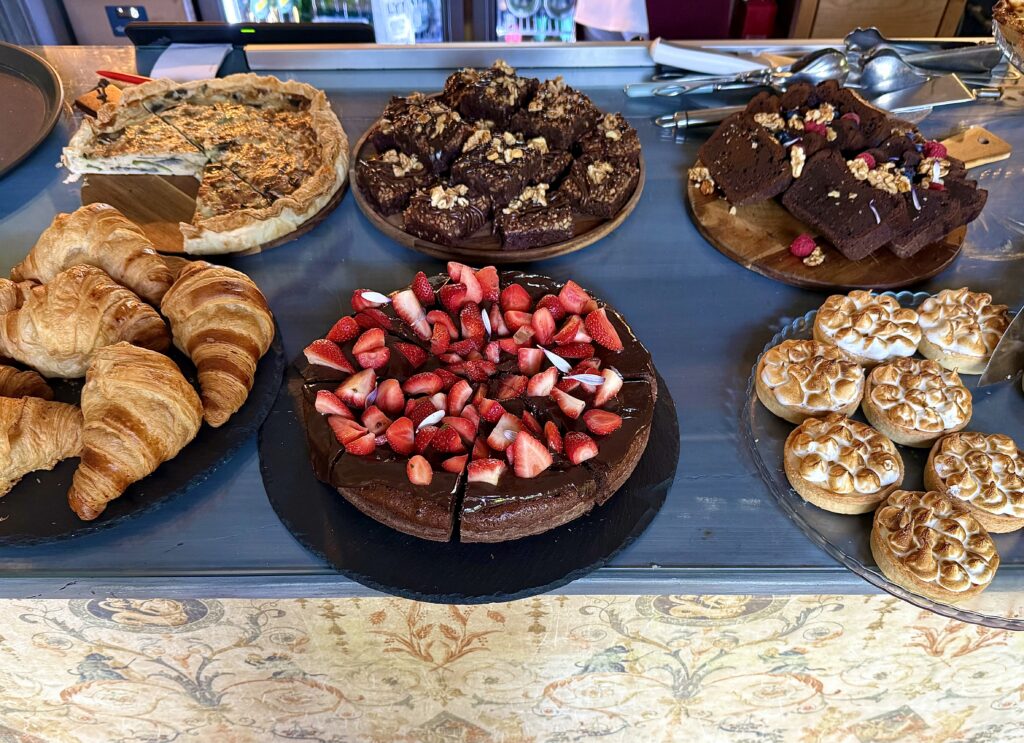
Sweet treats at a cafe in Afife
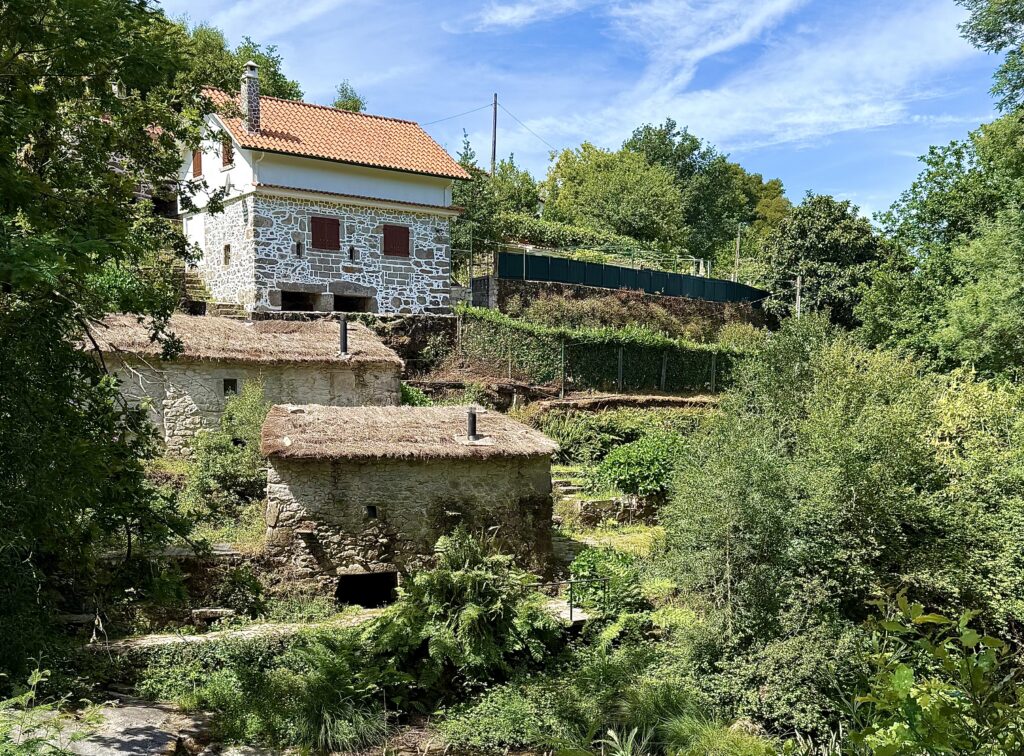
Charming Afife
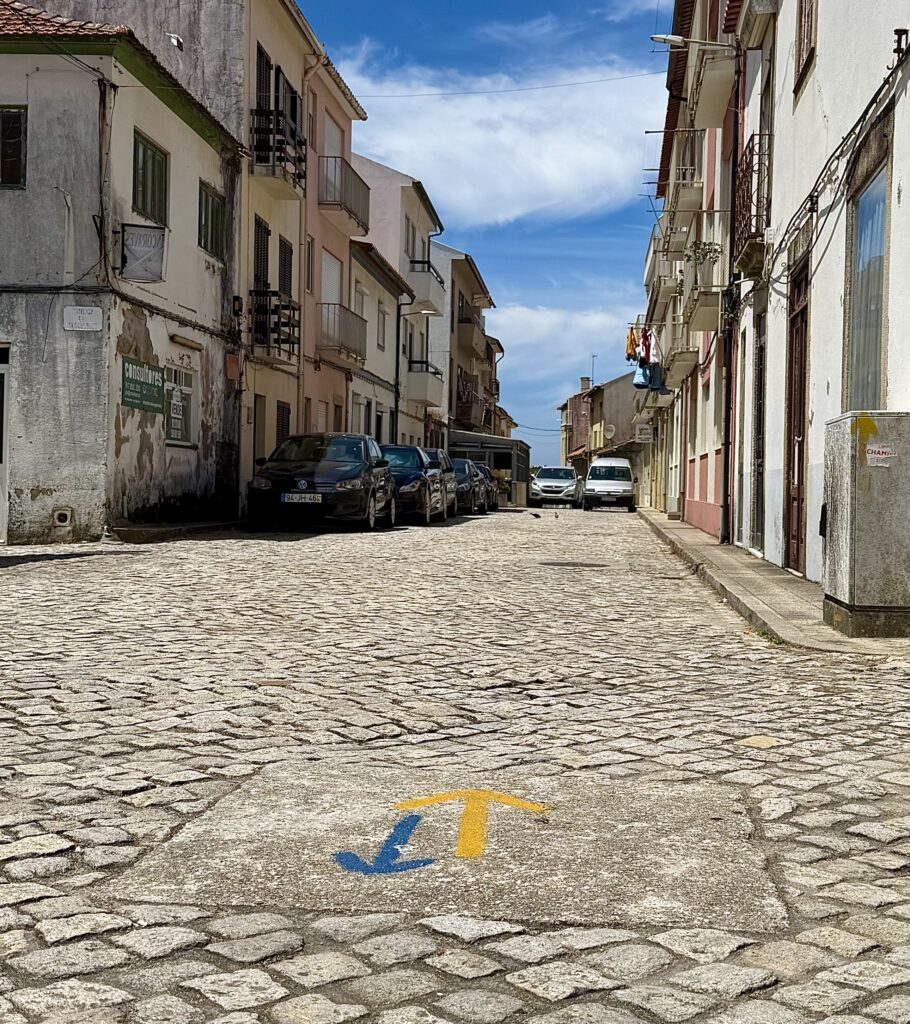
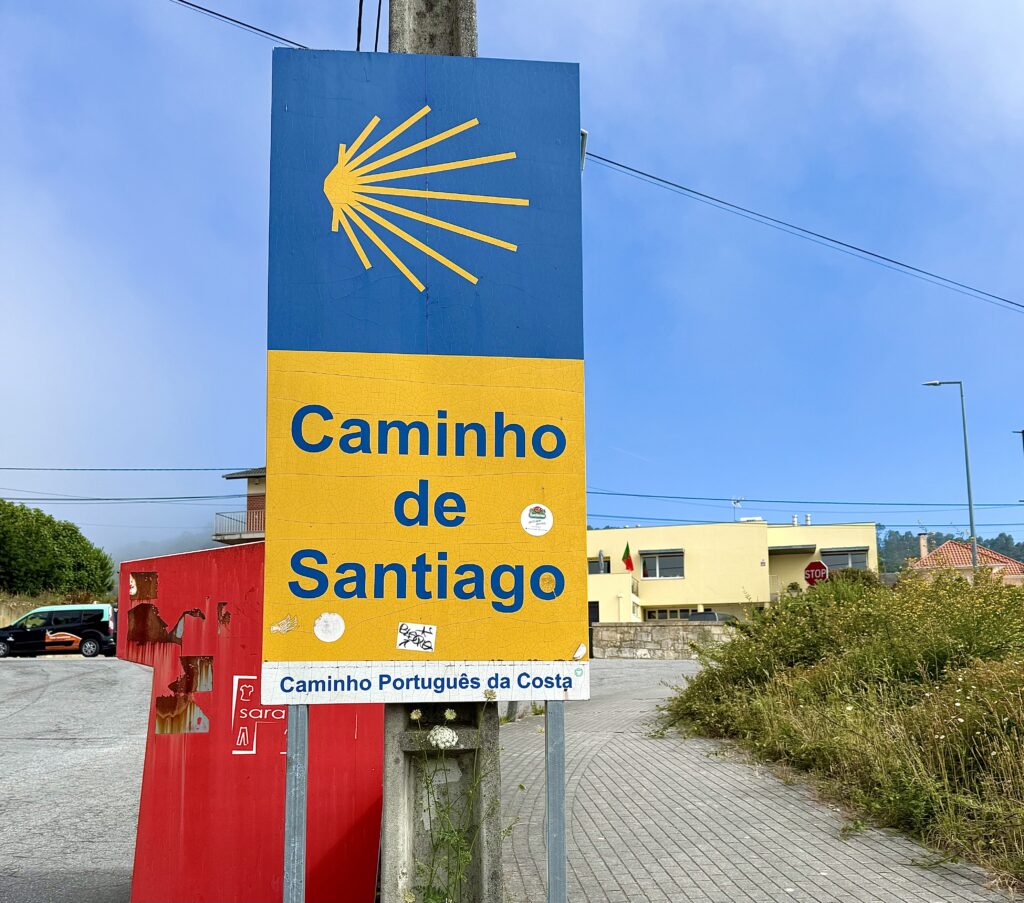
Yellow arrow for the Caminho, blue arrow for Fatima — the pilgrimage route to Fatima often coincides with the Camino Portuguese trails.
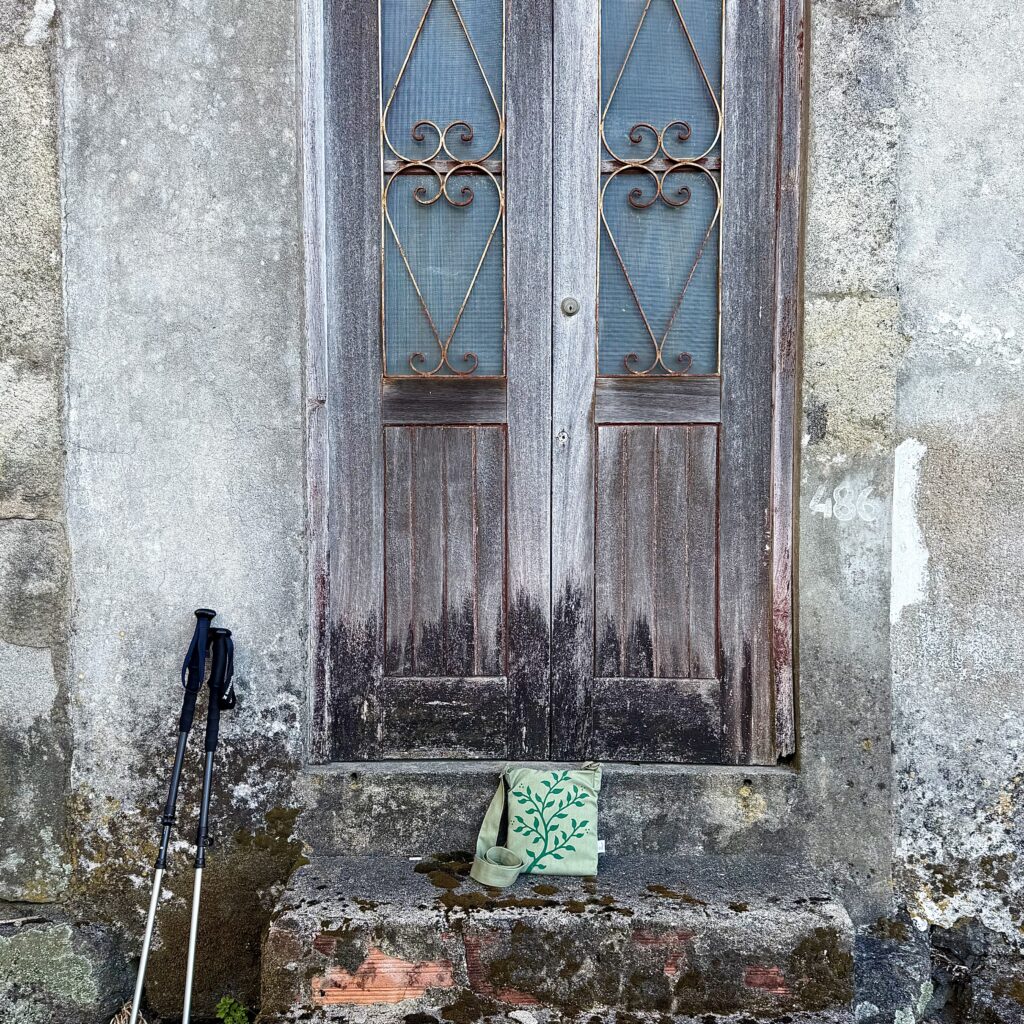
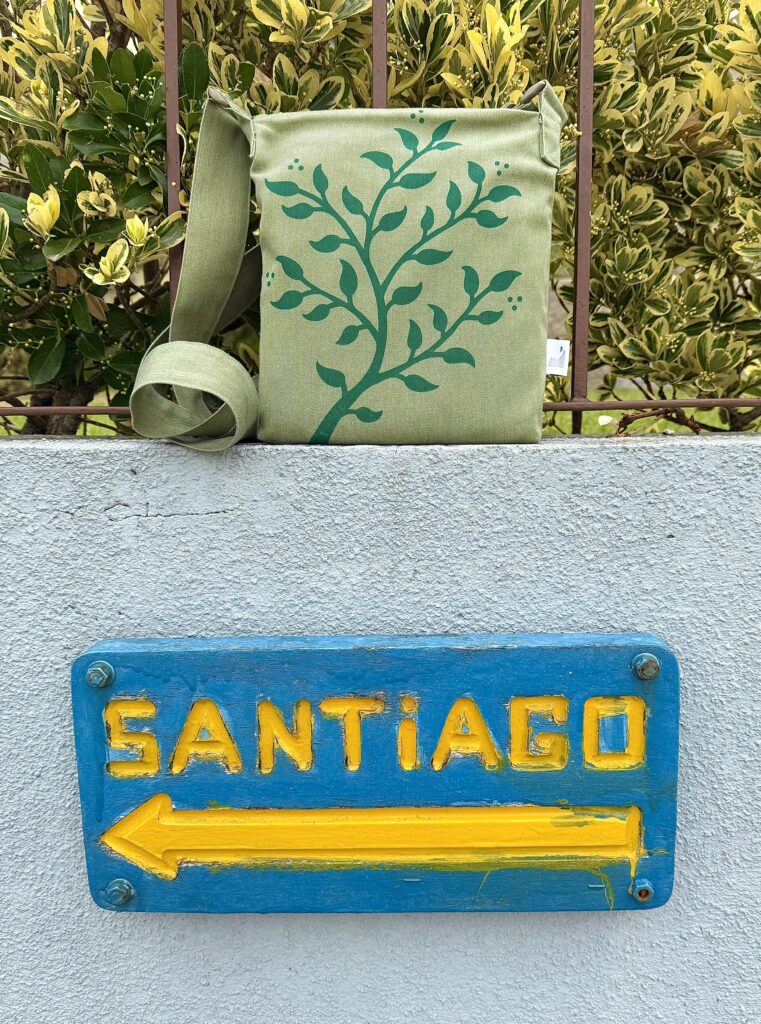
The Green Foliage Bag poses in Areosa.
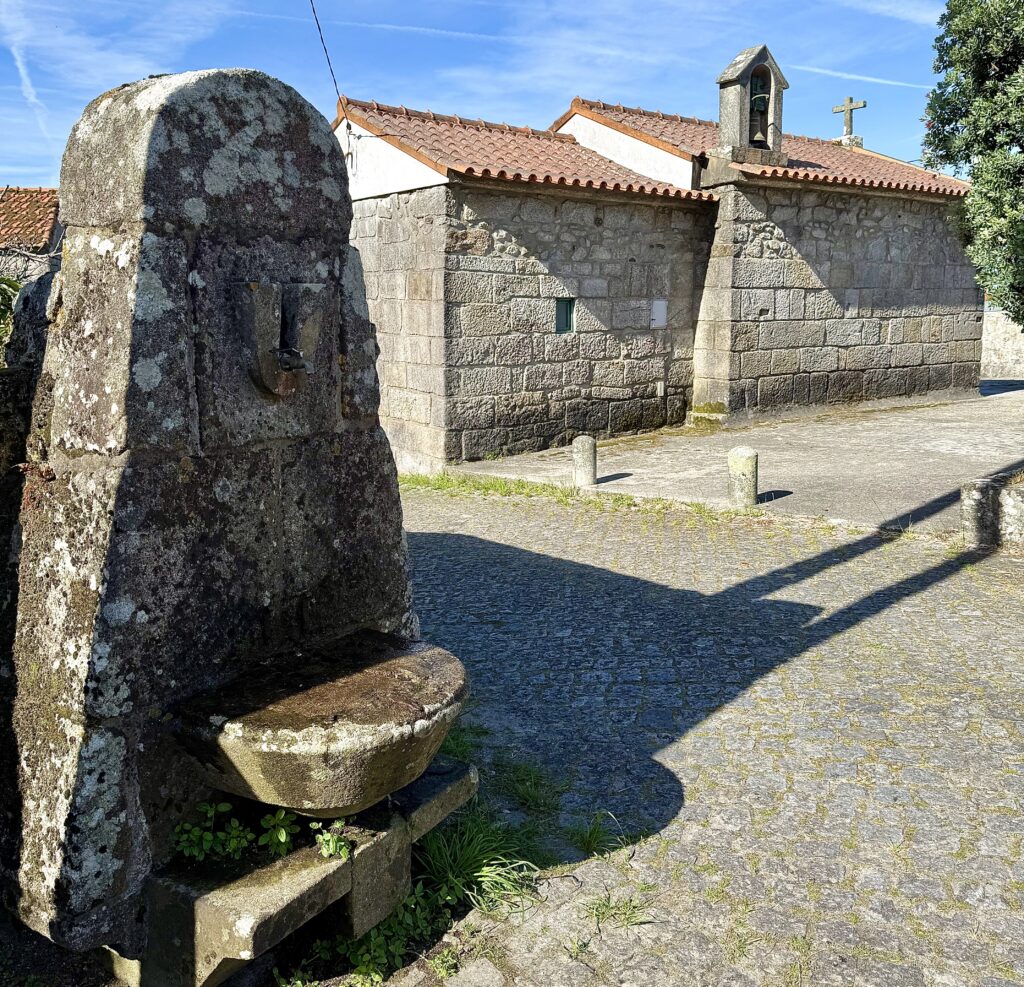
Fonte by Capela de Sao Paio in Carreco
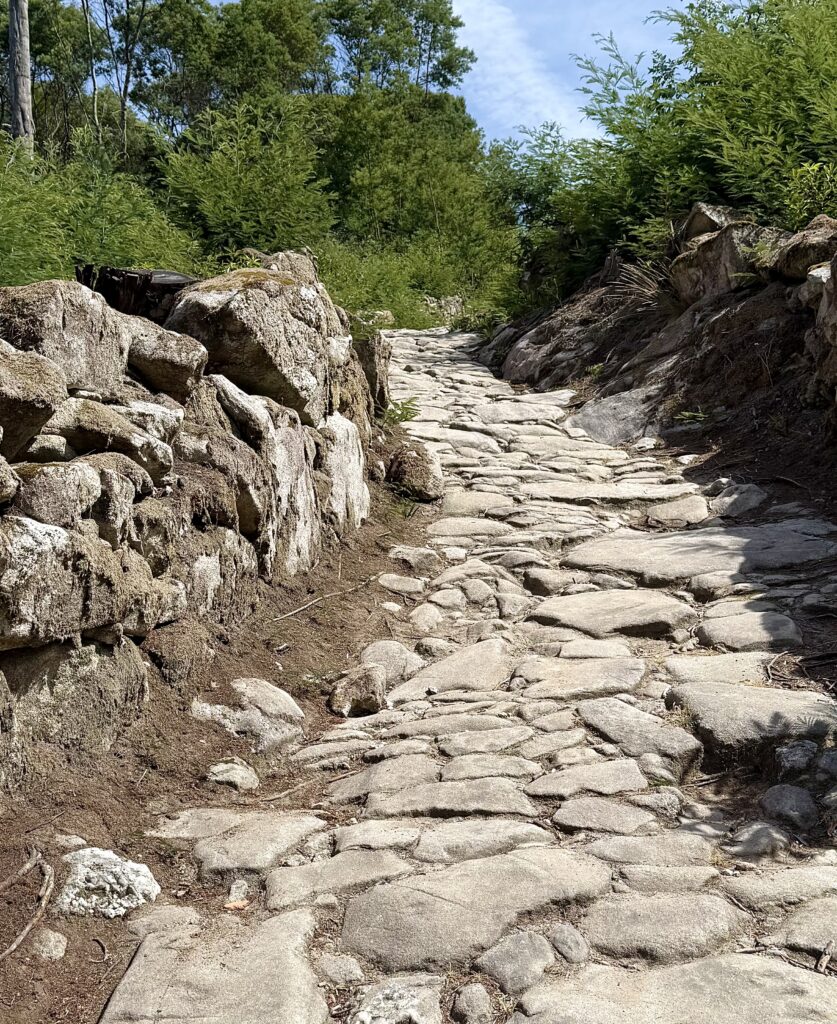
Ancient stones — tricky to walk on!
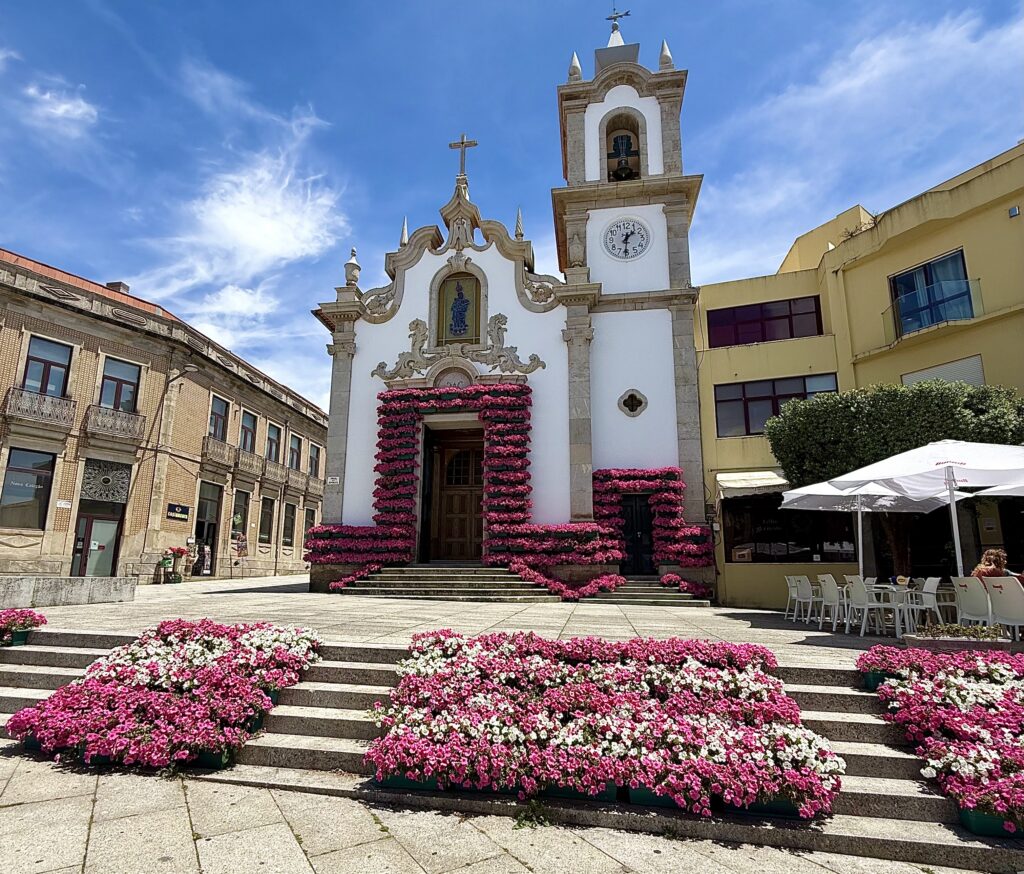
The Capela de Nossa Senhora da Bonanca in Vila Praia de Ancora was blooming with petunias for the annual Vila Praia Em Flor Festival; flowers also decorated nearby streets. The festival celebrates culture, art, & flowers and includes exhibits, markets, concerts, & a floral walk.
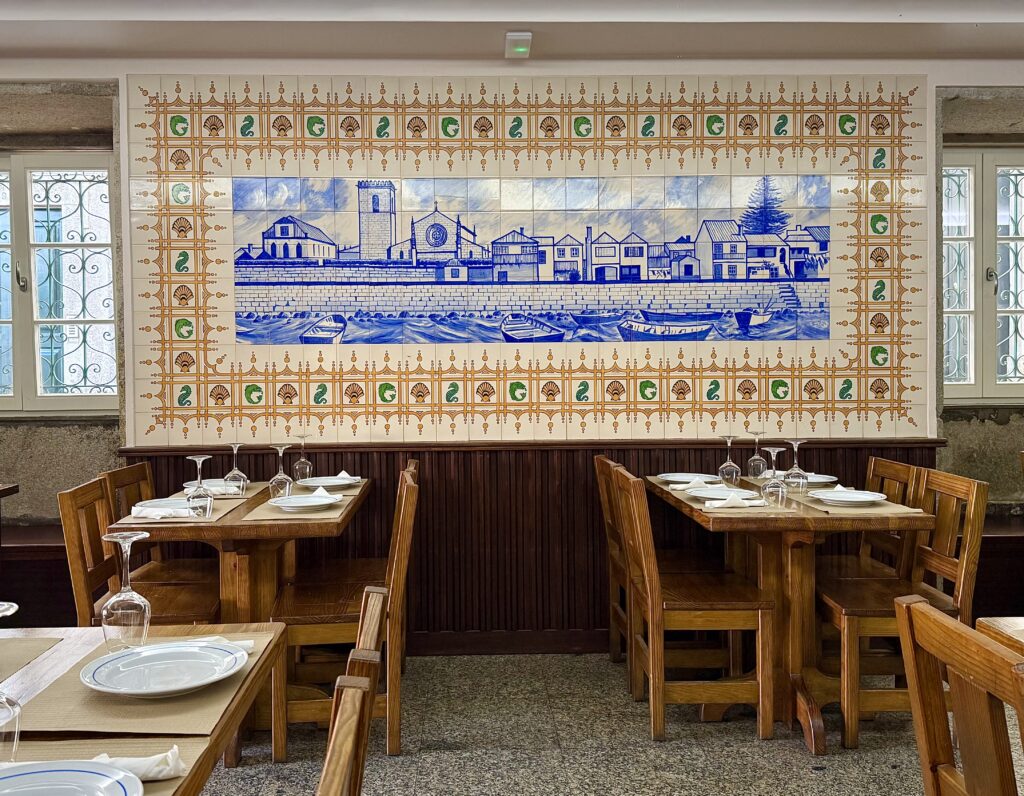
Tile art at a Caminha restaurant paid homage to this town on the Minho River in northern Portugal. Spain is across the river and the coast just a couple kilometers away from here.
Next up: Oia, A Ramallosa, & Vigo and the final days of the walk