
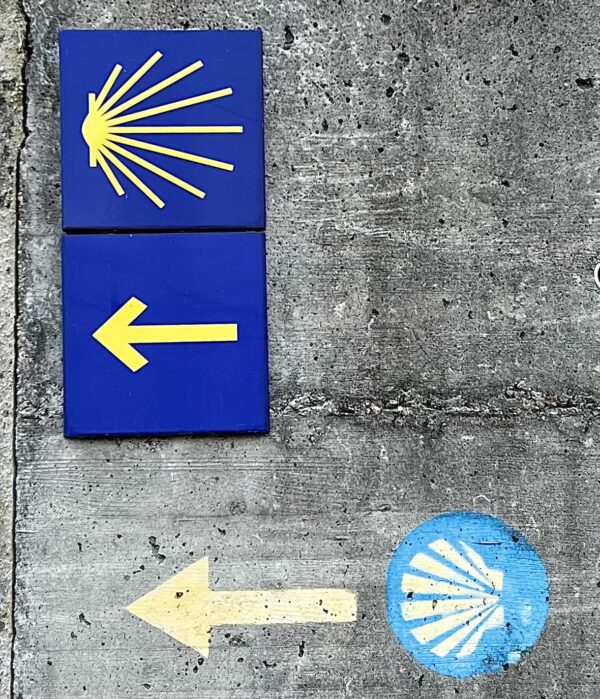
 During the final days of Camino Portuguese we passed through more Galician forests, rustic villages with horreos, & scenic Spanish cities. Intermittent rain followed us, and we sometimes left later in the morning after waiting for showers to subside. Overall, sunshine balanced out the wet days, and we felt lucky to have avoided any heat waves.
The end of a Camino is often bittersweet — there’s excitement about reaching the destination but also the realization that the experience has finished. For many, however, the journey continues long after the trek. Once home, walkers often reevaluate, reorganize, or make life changes; contemplative practices can stir. It takes a while to process a Camino, and then there may be ‘the call’ to walk again. For pilgrim stories, films, podcasts, & more about walkers’ journeys check out Camino Books, Etc.
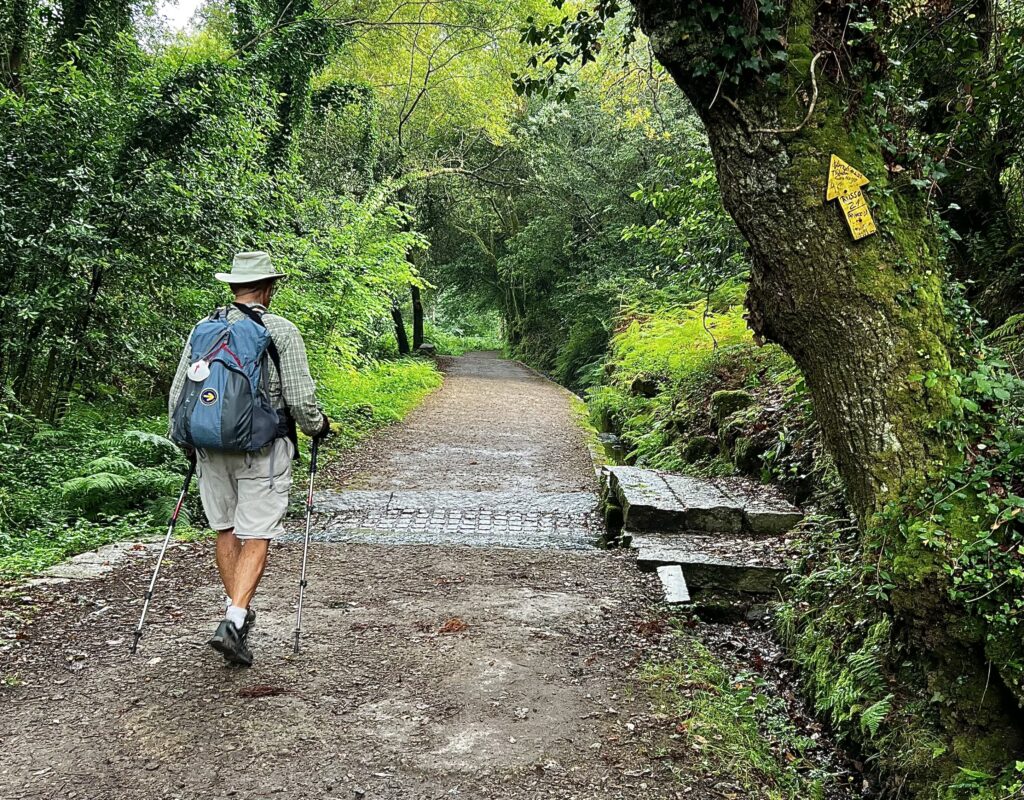
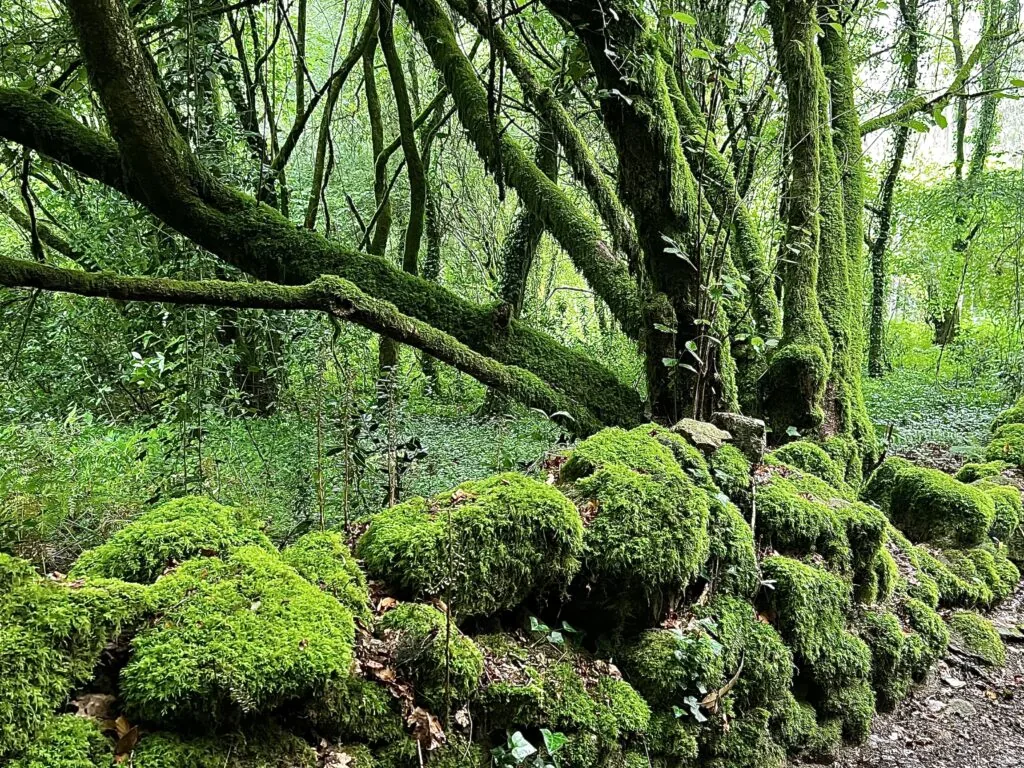
Magical Galician greenery on full display
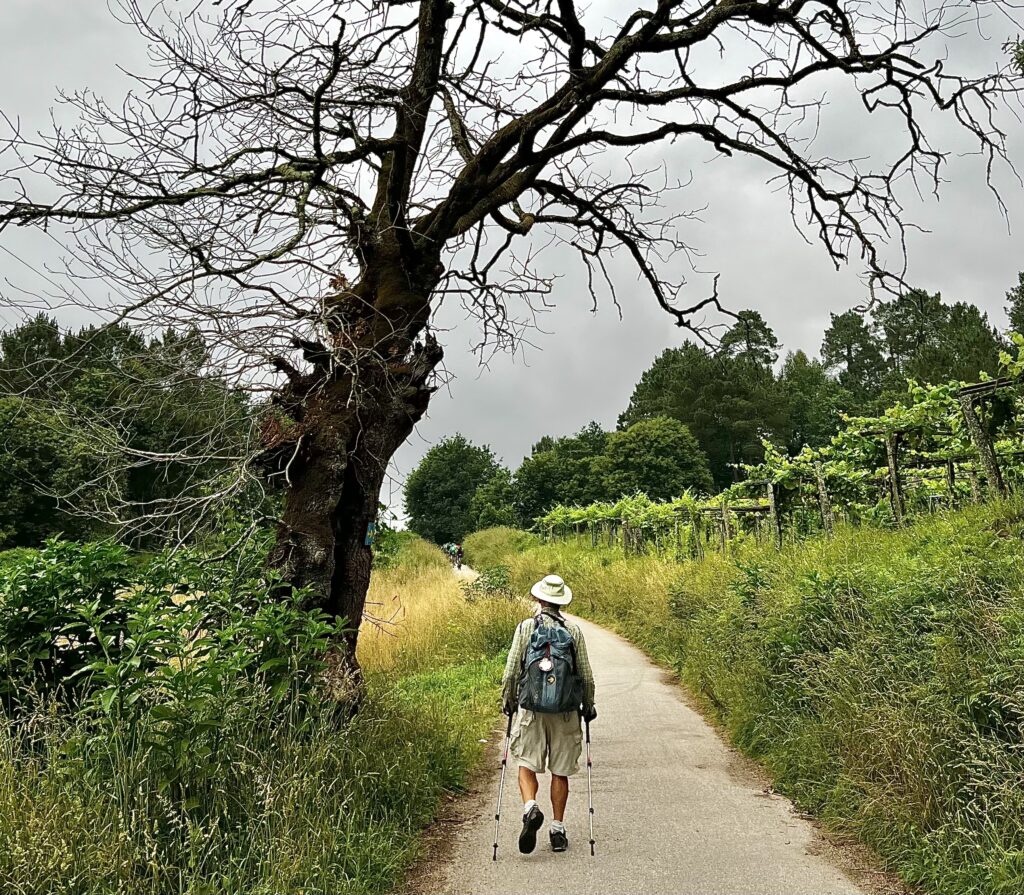
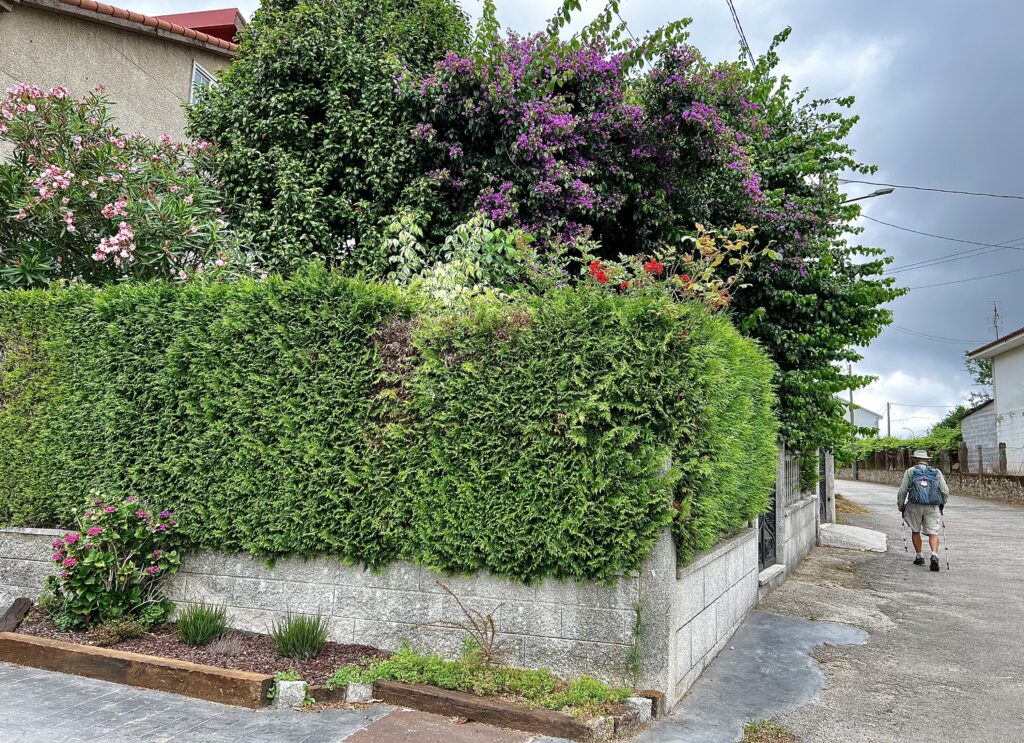
Clouds covered the Road on Day 17 to Caldas de Reis, known for hot springs (Caldas translates as “hot springs”) and whose origins date back to the Bronze Age. Blue skies broke through periodically after checking in at our lodging, and we walked around town before dinner.
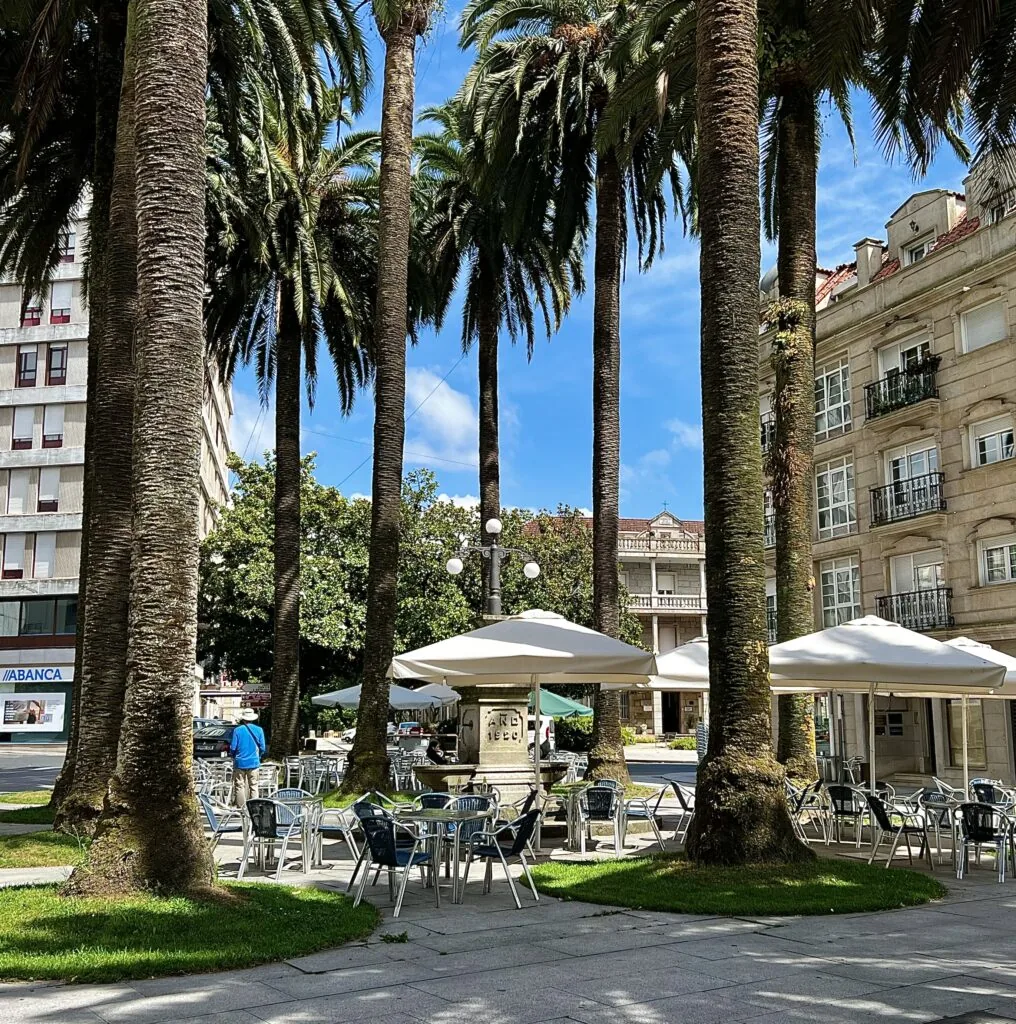
Palm trees lined several plazas — not many of these trees were seen in other towns.
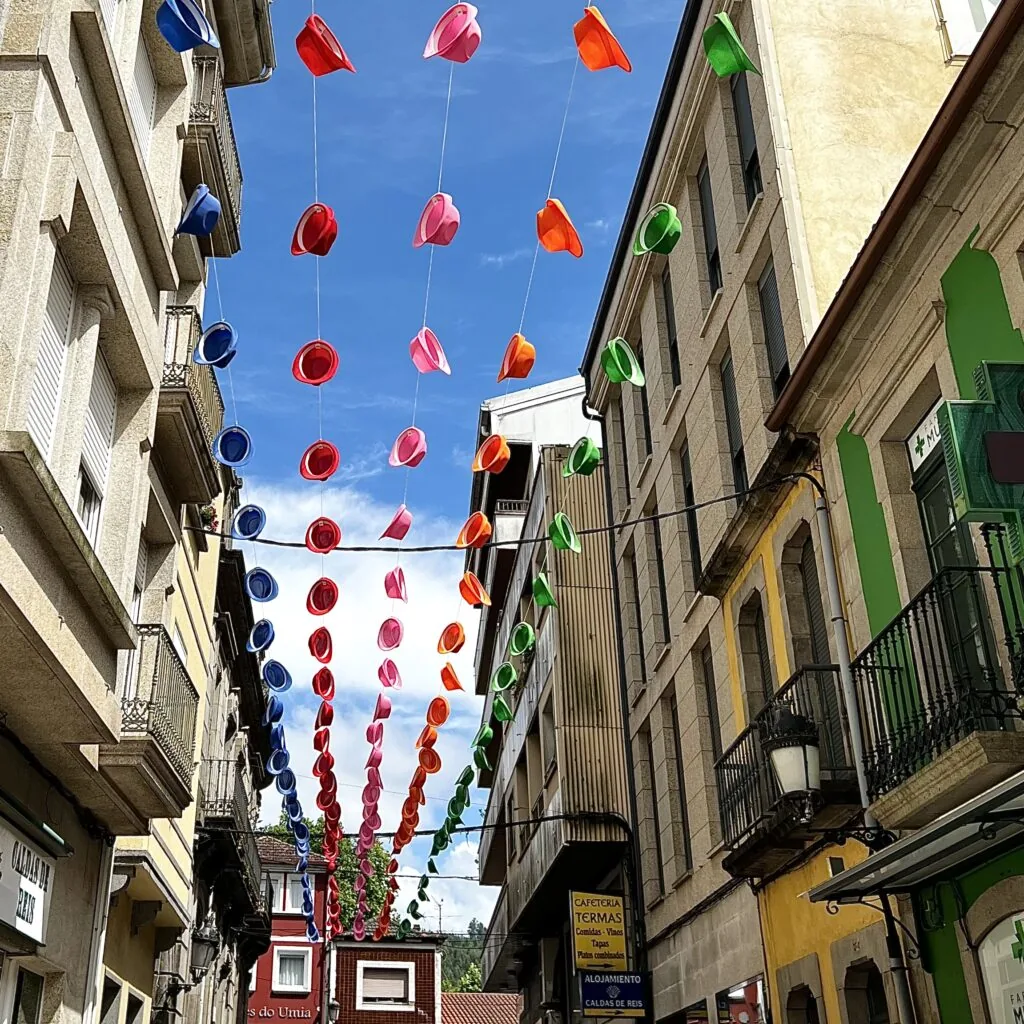
Festive hats decorated streets.
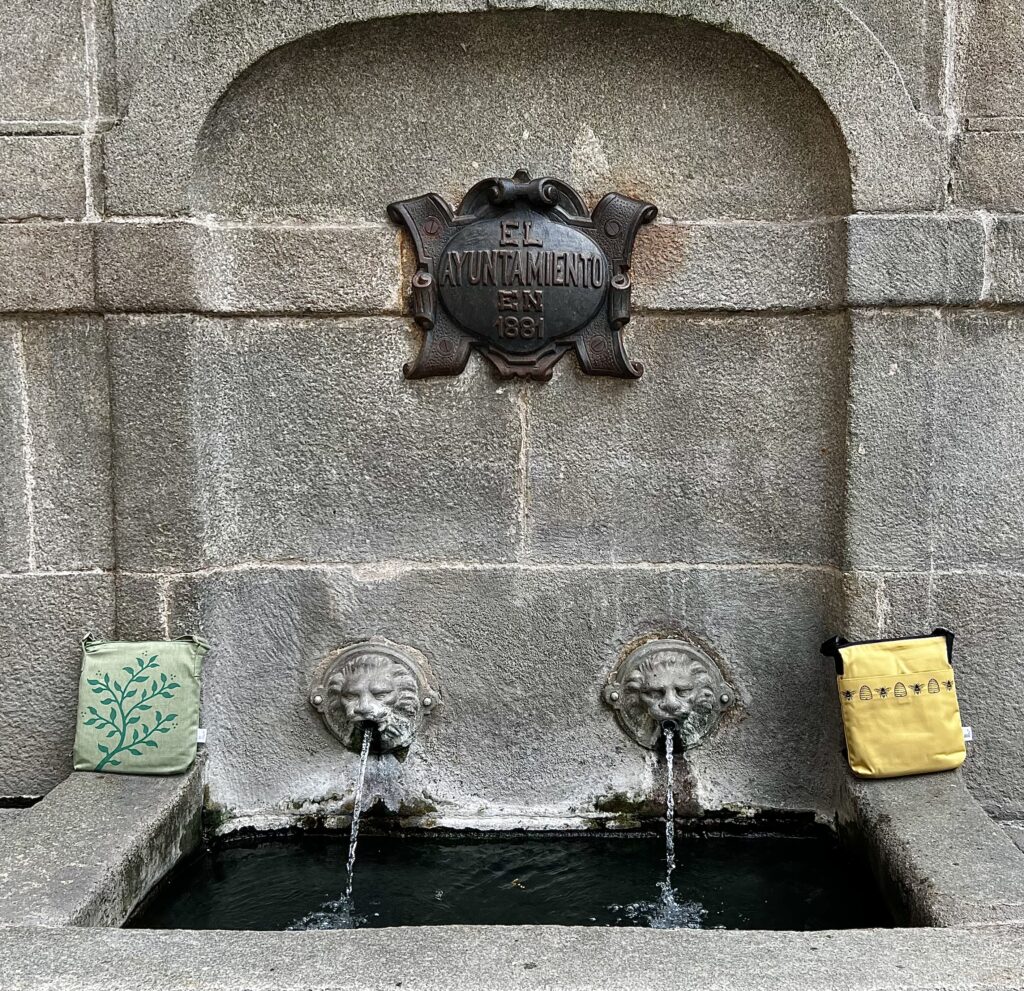
The Pilgrim Pouches refreshed by lions spouting thermal water.
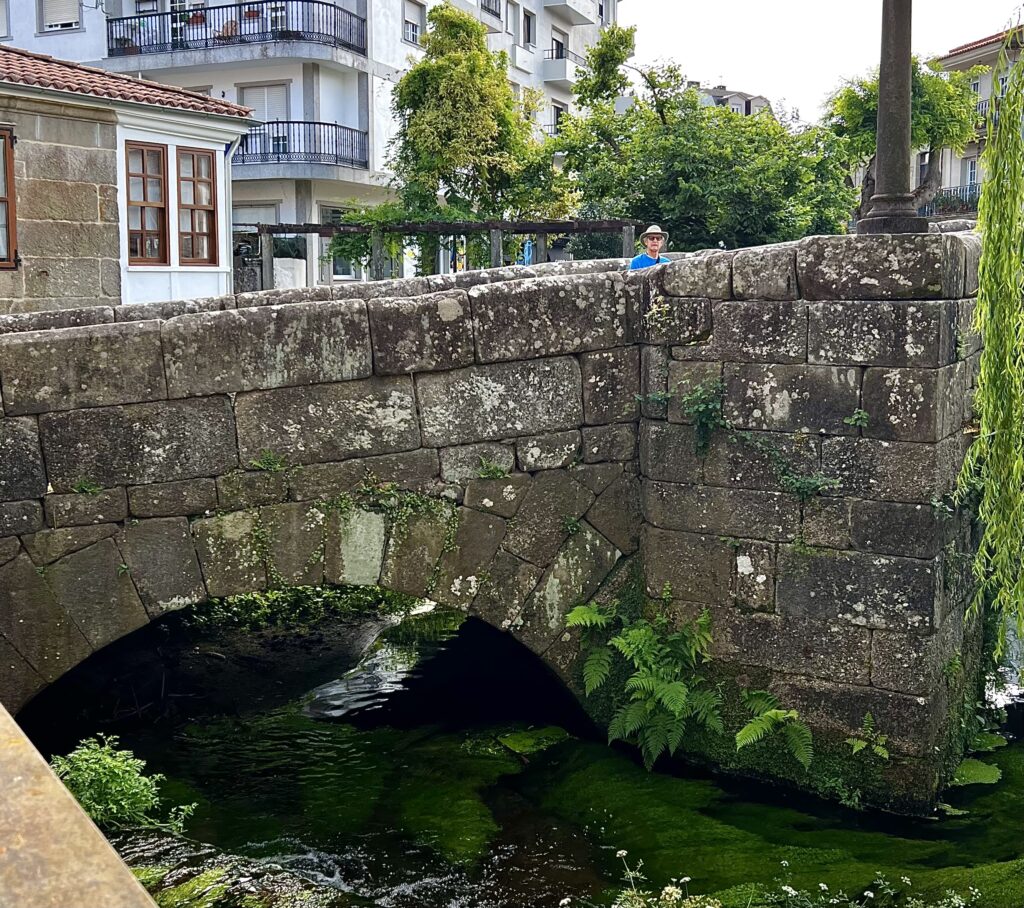
Dad peeked over the Romanesque bridge by the Umia river.
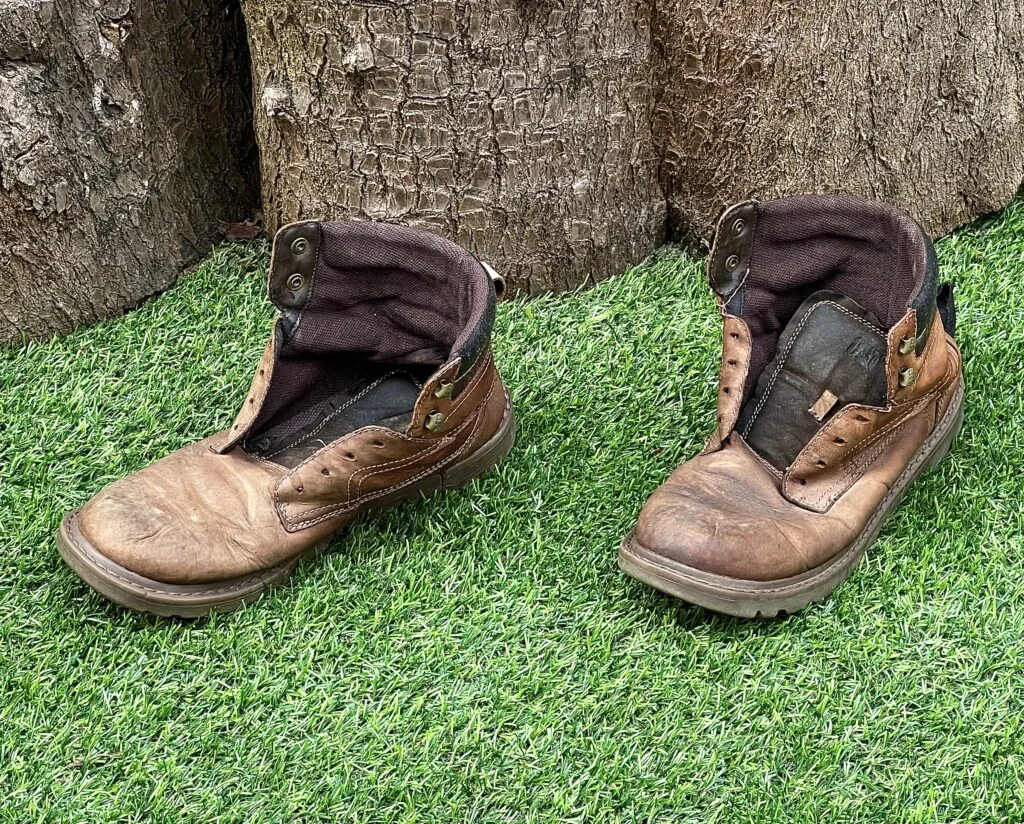
‘Worn boot art’ by a store expressed how important footwear & gear are for a Camino. What you bring matters. For shoes keep in mind that feet expand when heated while walking, so it’s recommended to wear a size larger. Also, an insert may be needed to provide extra cushion. All feet are different, & walkers need to find what works best for them.
For backpacks “every ounce counts.” An ideal weight (excluding water) is 15 pounds or less. Fitting a pack should follow the “80-20-0” rule, or 80% of the weight should rest on hips, 20% on the front of shoulders, & 0% on the top of shoulders. For more gear info check out Camino Packing.
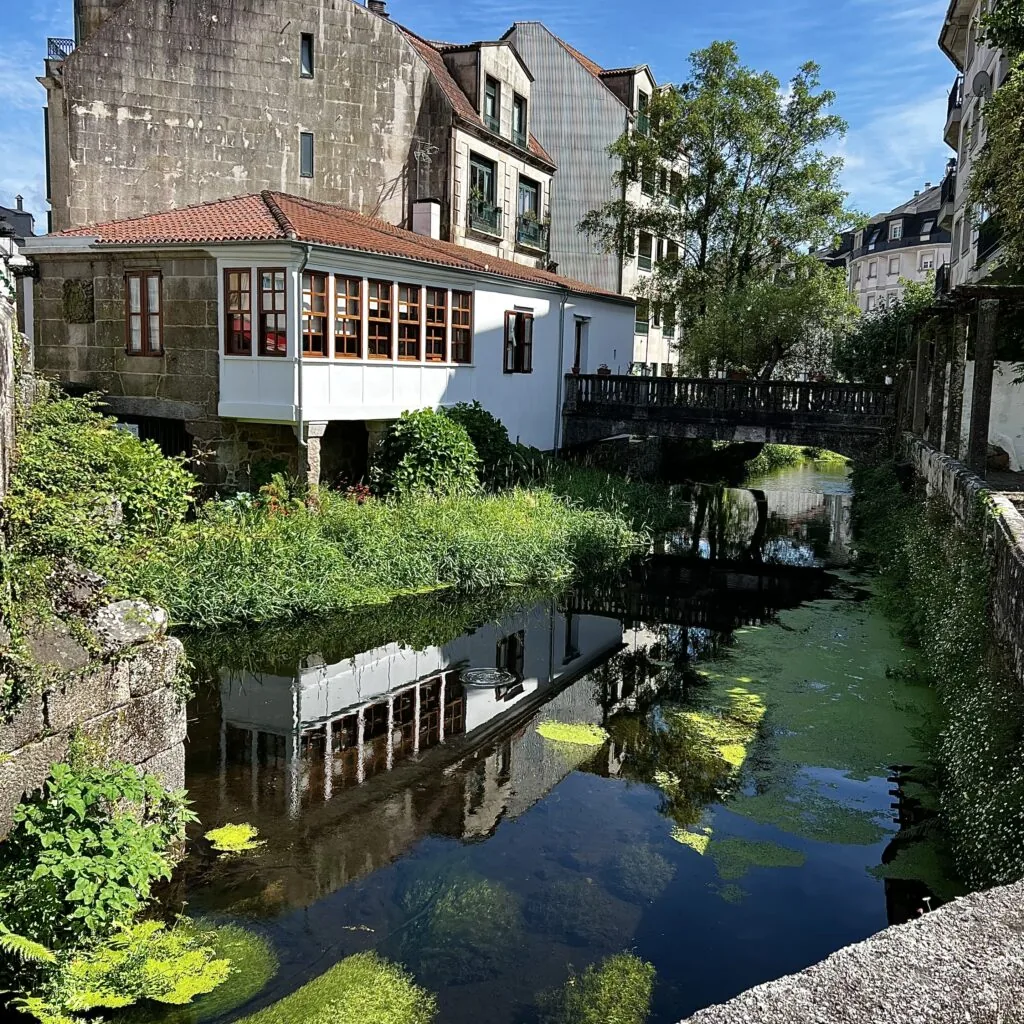
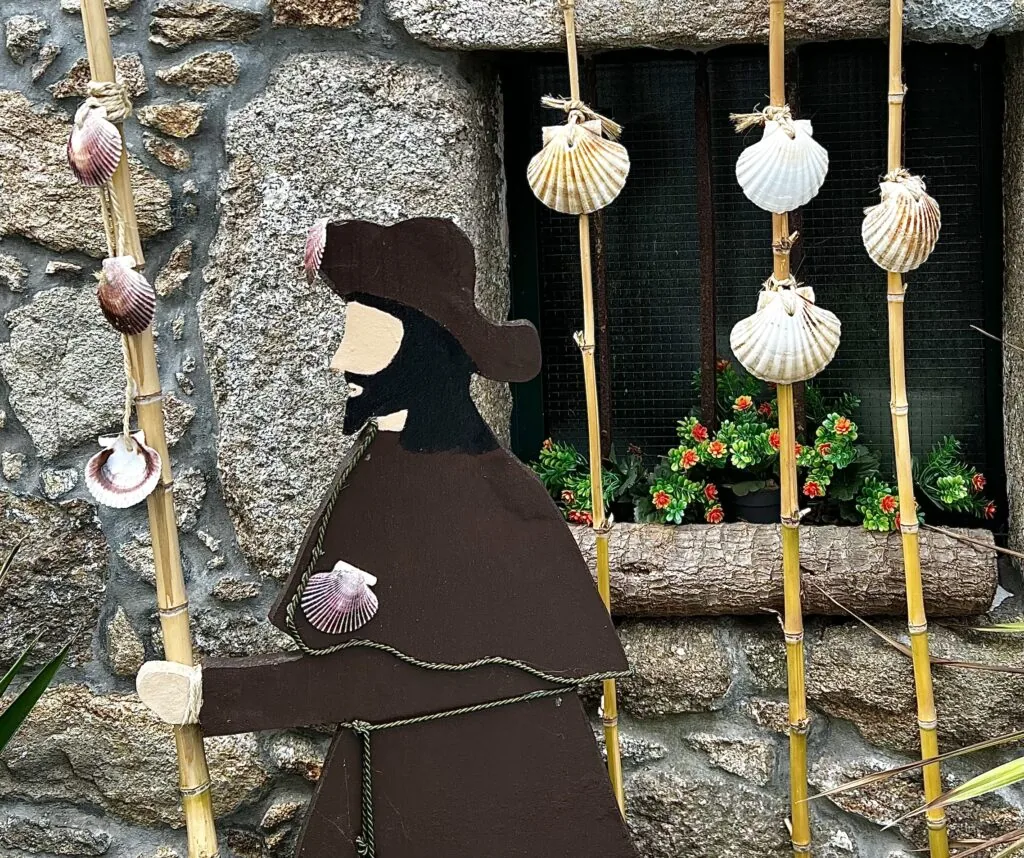
Ultreia, onward on Day 18! Our final stop before Santiago was Pontecesures.
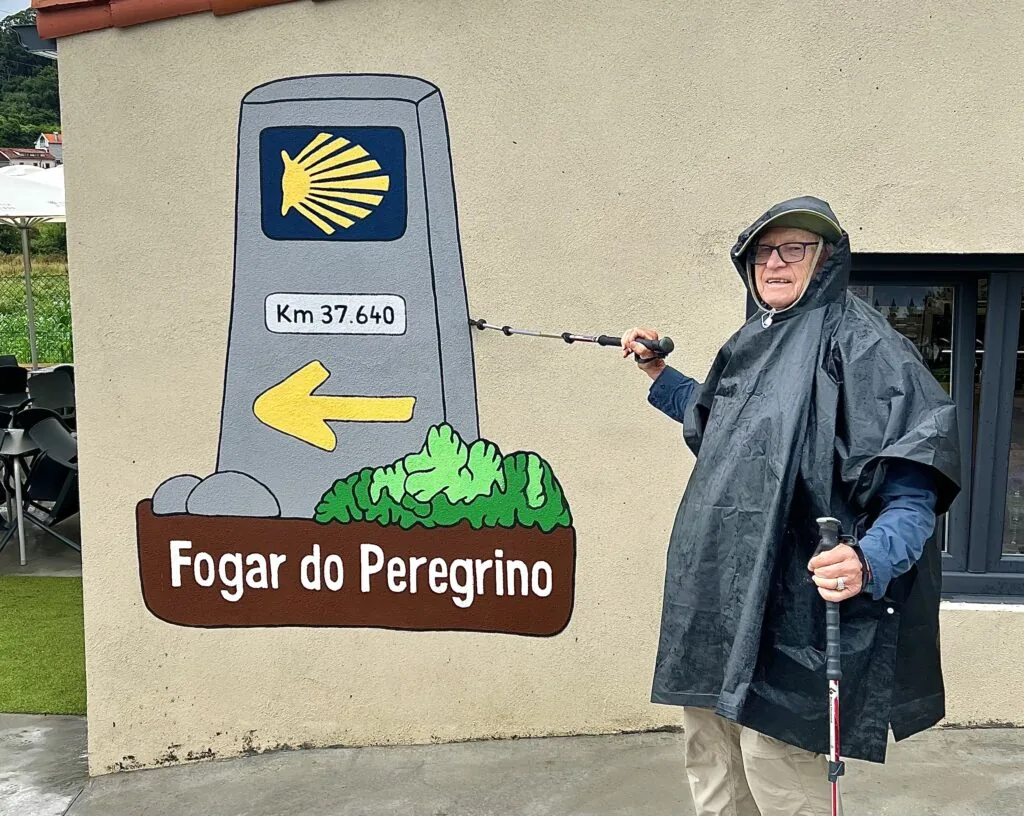
Only 37.640 kilometers (over 23 miles) to Santiago from the bar Fogar do Peregrino in O Gorgullon. We ate & took a respite from showers — the place was packed with others who had the same idea.
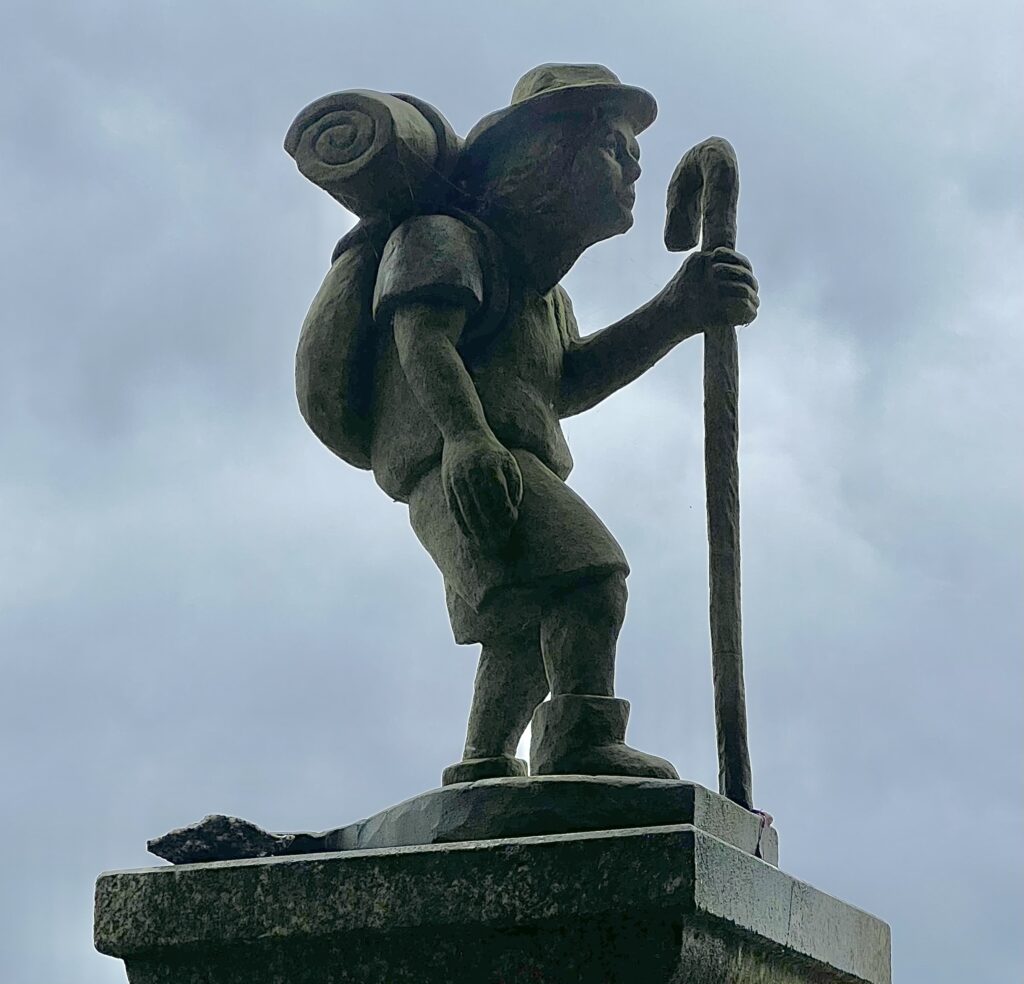
A pilgrim sculpture in O Gorgullon
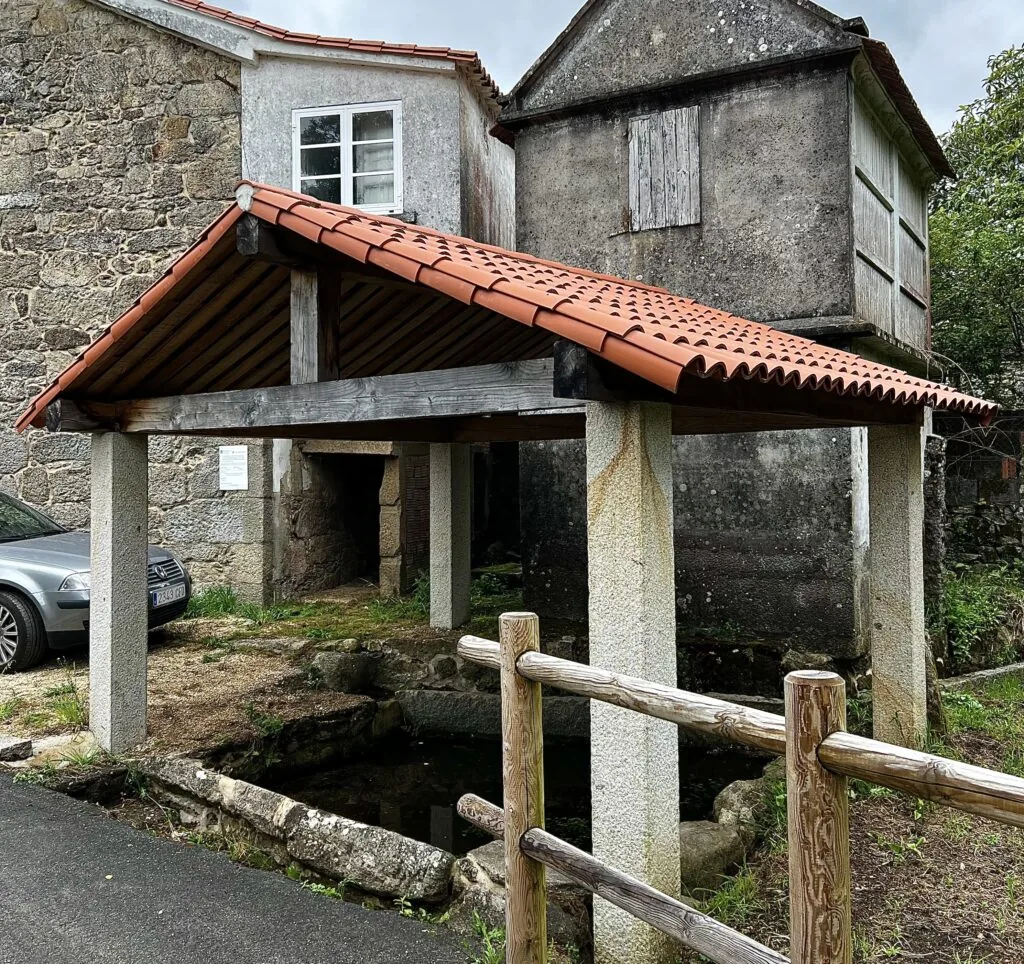
An old lavanderia, or public ‘laundromat,’ where people washed clothes in the past — one of the unique cultural sites seen in towns along Camino routes in Spain.
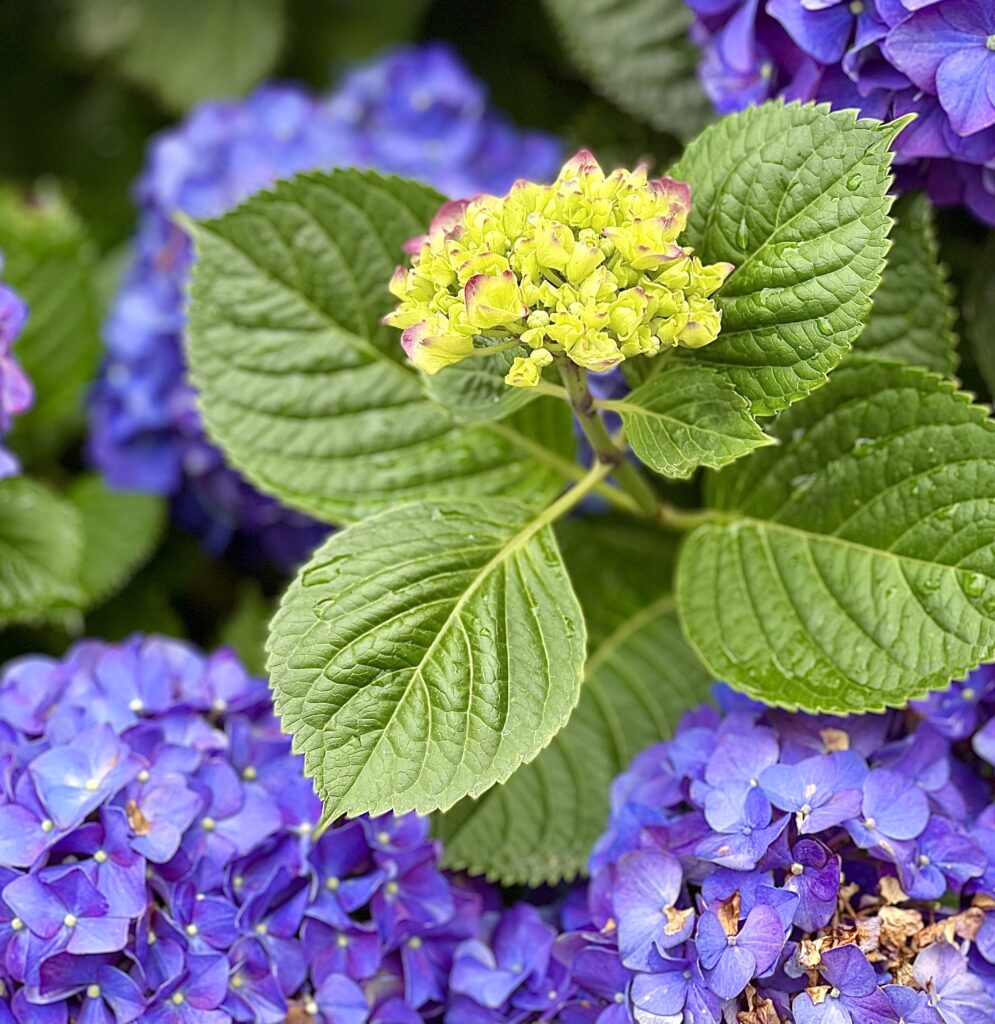
Ubiquitous purple hydrangeas
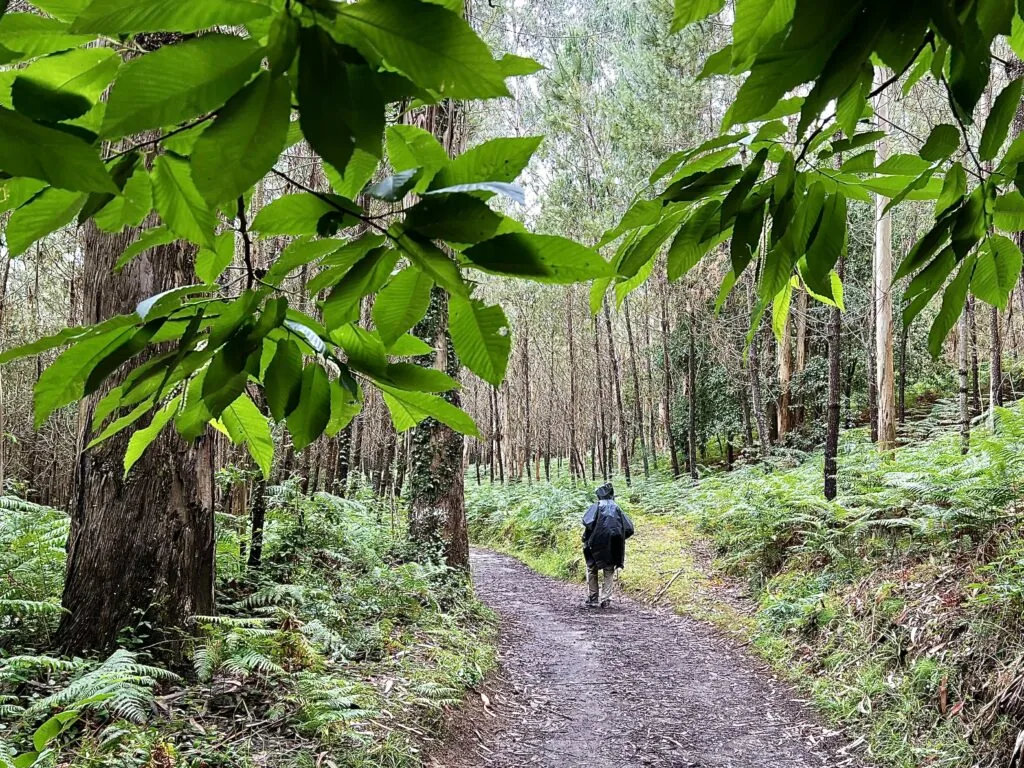
Walking in the rain under a canopy of leaves
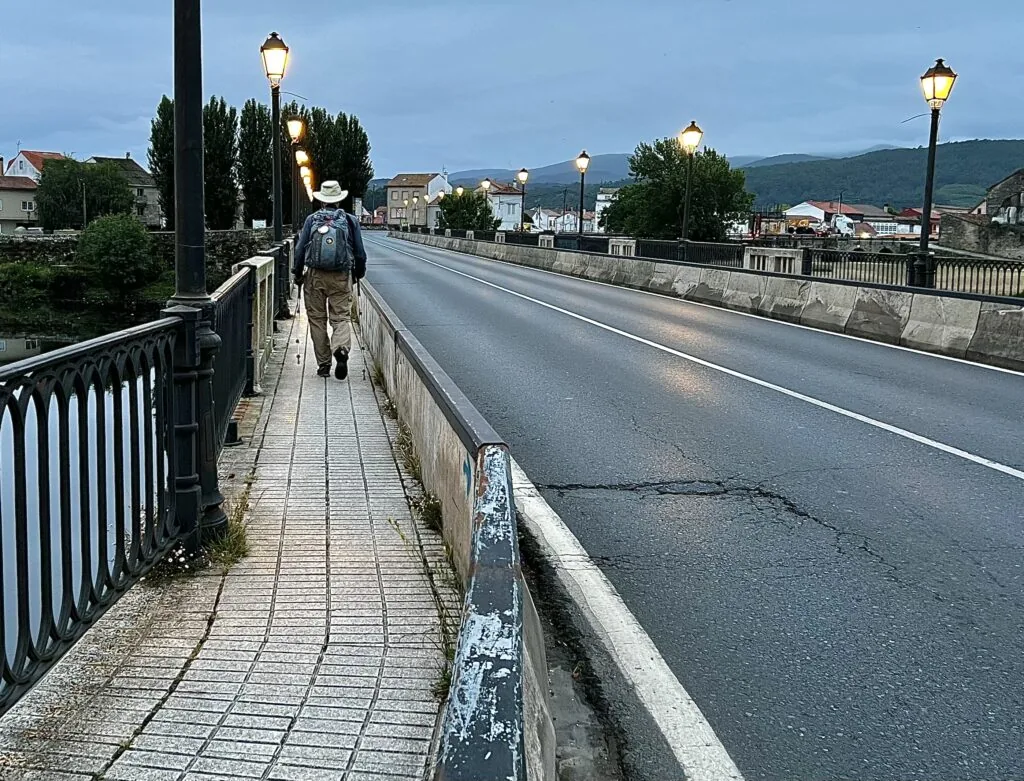
Our lodging in Pontecesures was near the bridge over to Padron, known in Camino history for being the first place where St. James evangelized in Spain. Also, Padron’s Iglesia de Santiago is home to the sacred stone that moored the boat carrying the saint’s remains back to Spain from Jerusalem (part of the legend of St. James). In addition, Padron is known for “Padron peppers,” which are roasted & sprinkled with sea salt — a favorite dish of ours.
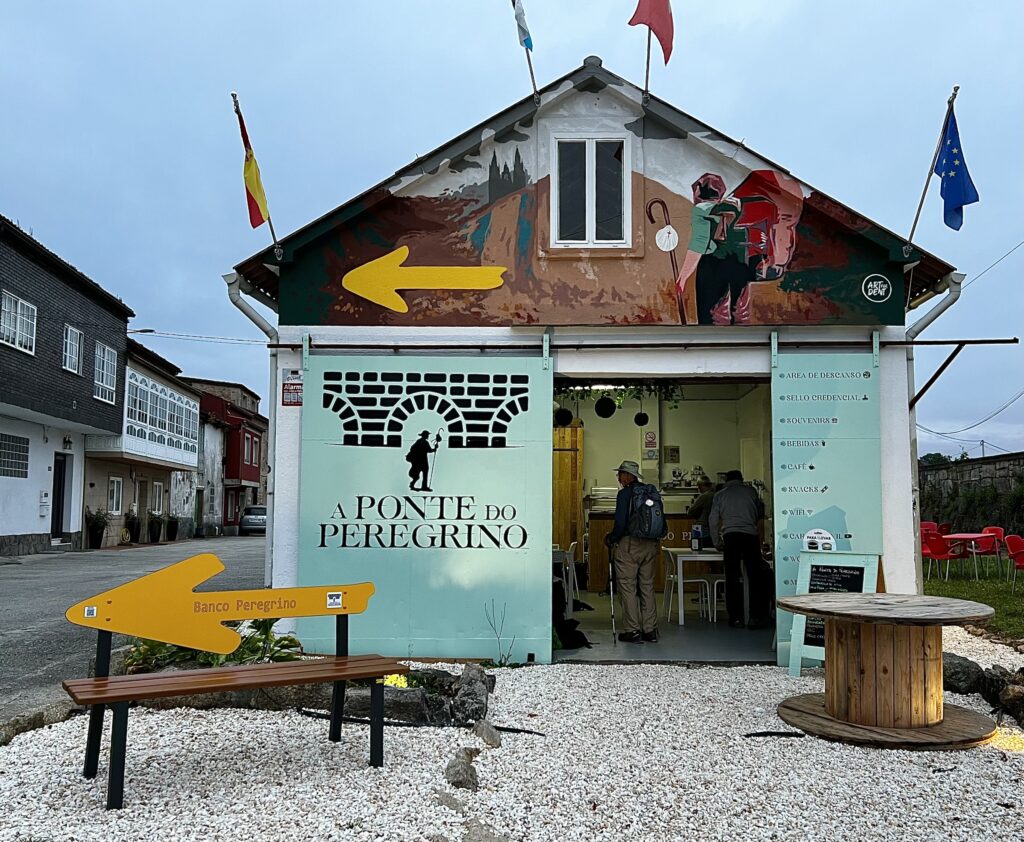
Across the bridge the next morning we found A Ponte do Peregrino coffee shop open early for breakfast. The shop sold Camino gear as well, including walking sticks, shells, & ponchos. It was a cozy place to start our last day of walking.
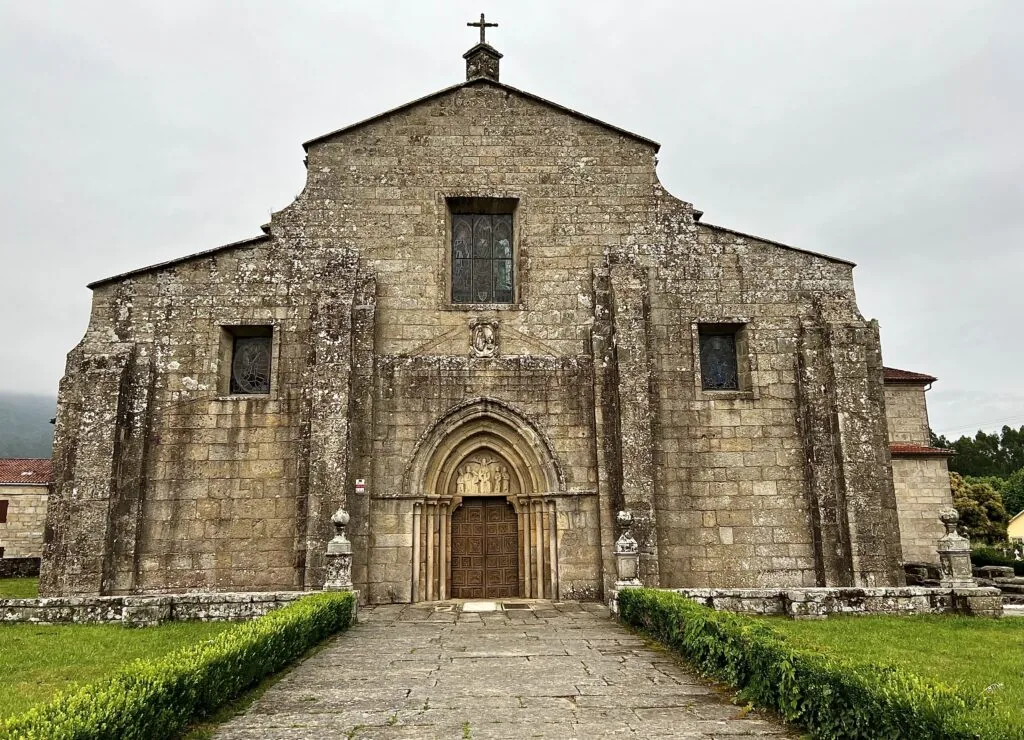
12th c. Igrexa Santa Maria Iria Flavia is one of the oldest churches in Galicia, rebuilt after the original structure from the 10th c. was destroyed. It’s located in Iria Flavia, a municipality of Padron with Celtic & Roman roots and linked to the legend of St. James.
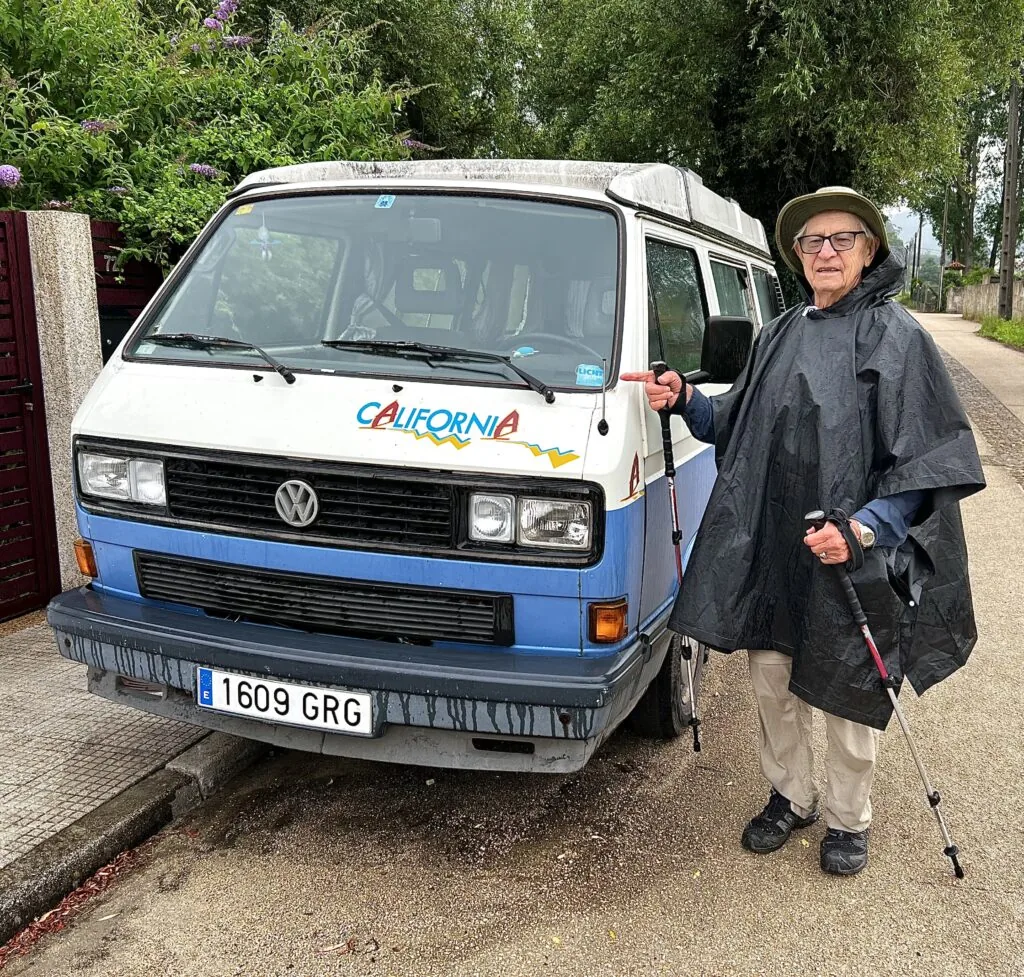
California dreamin’!
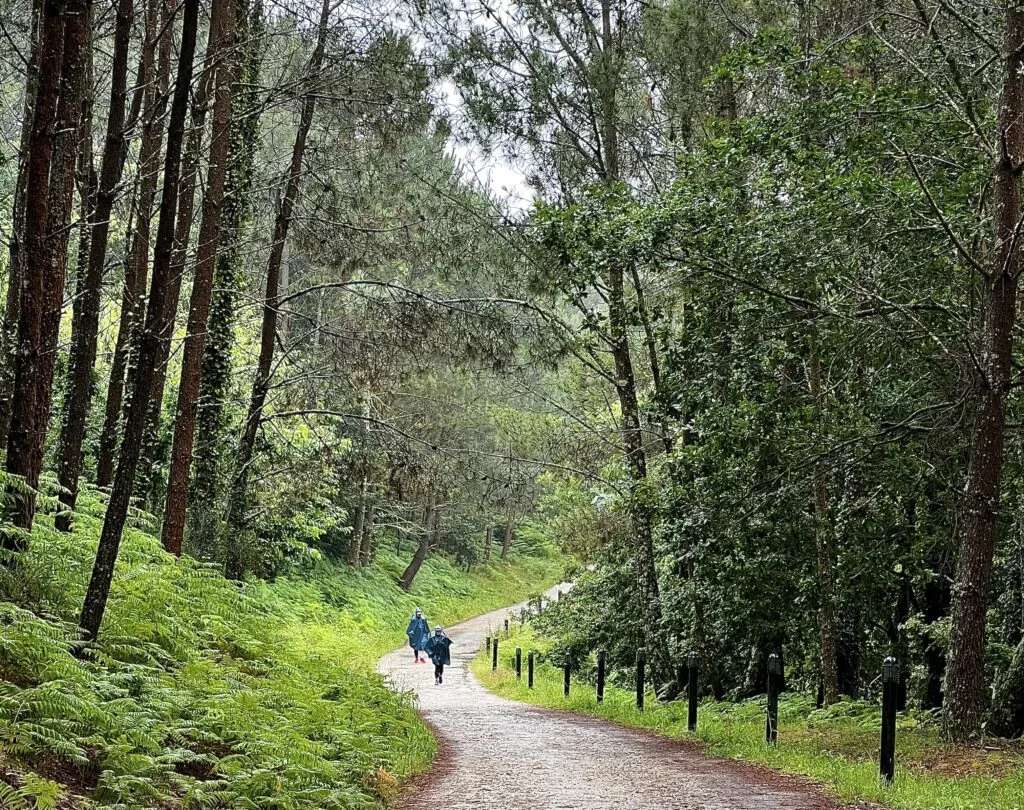
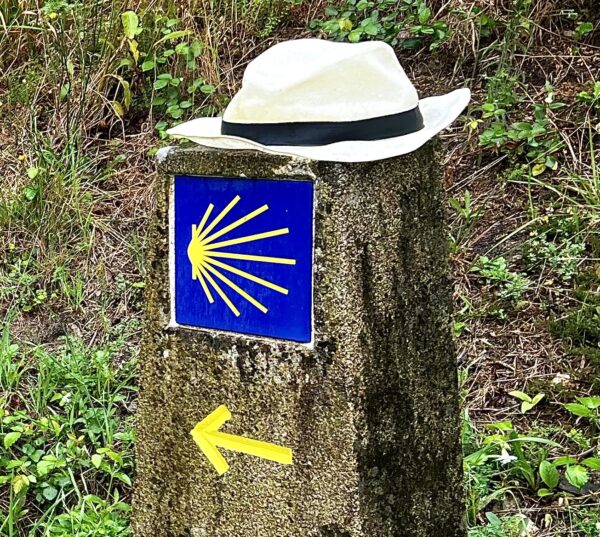
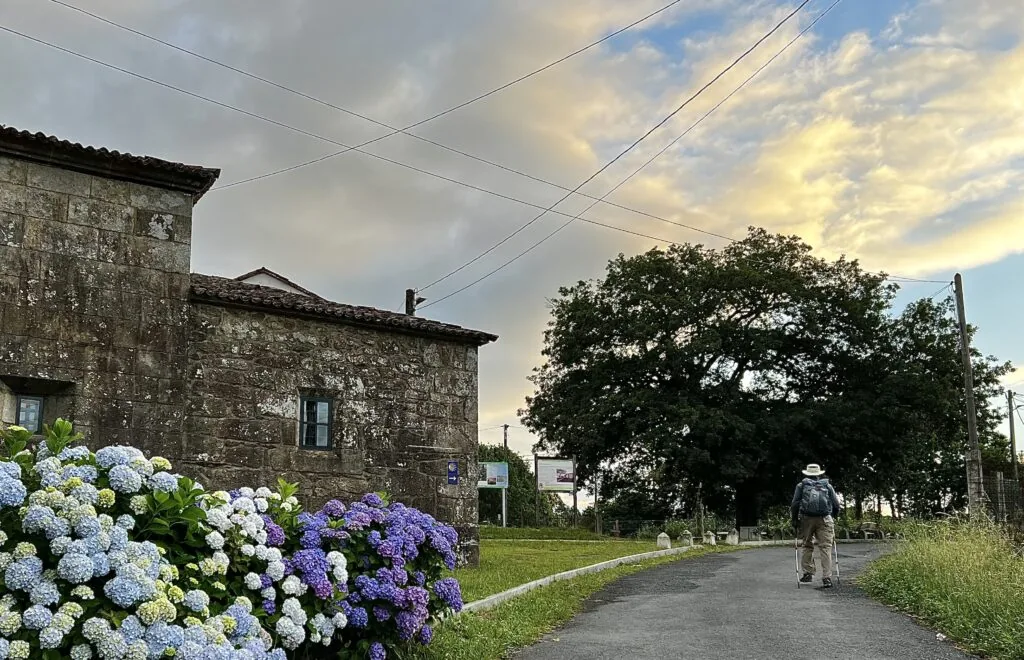
The sun occasionally peeked out of the clouds.
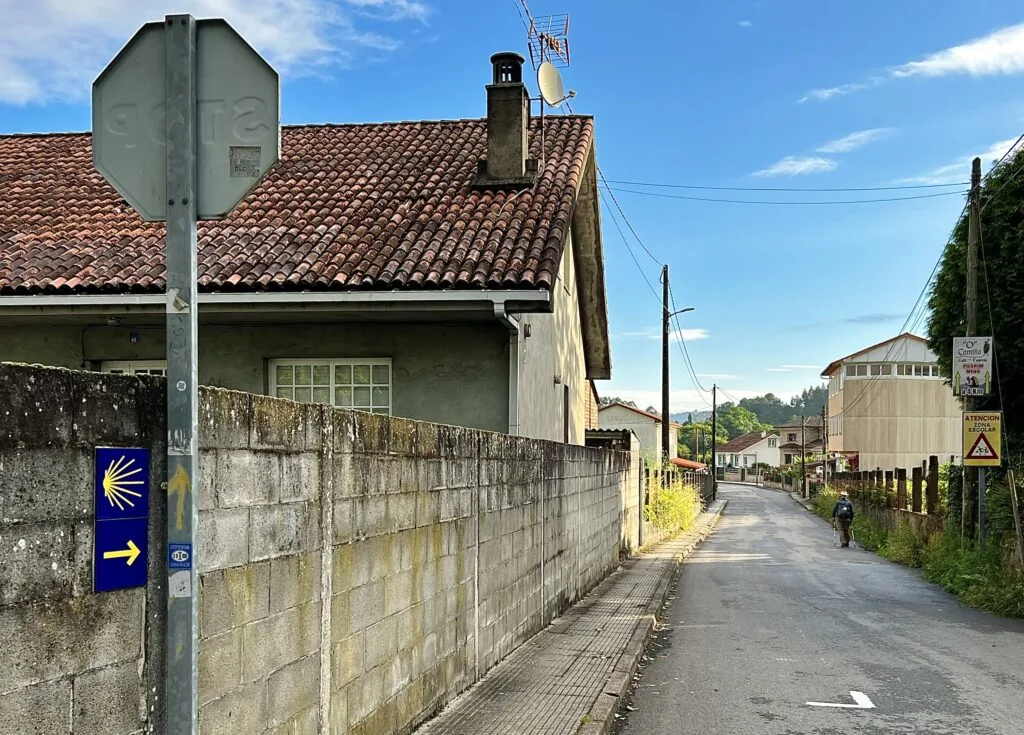
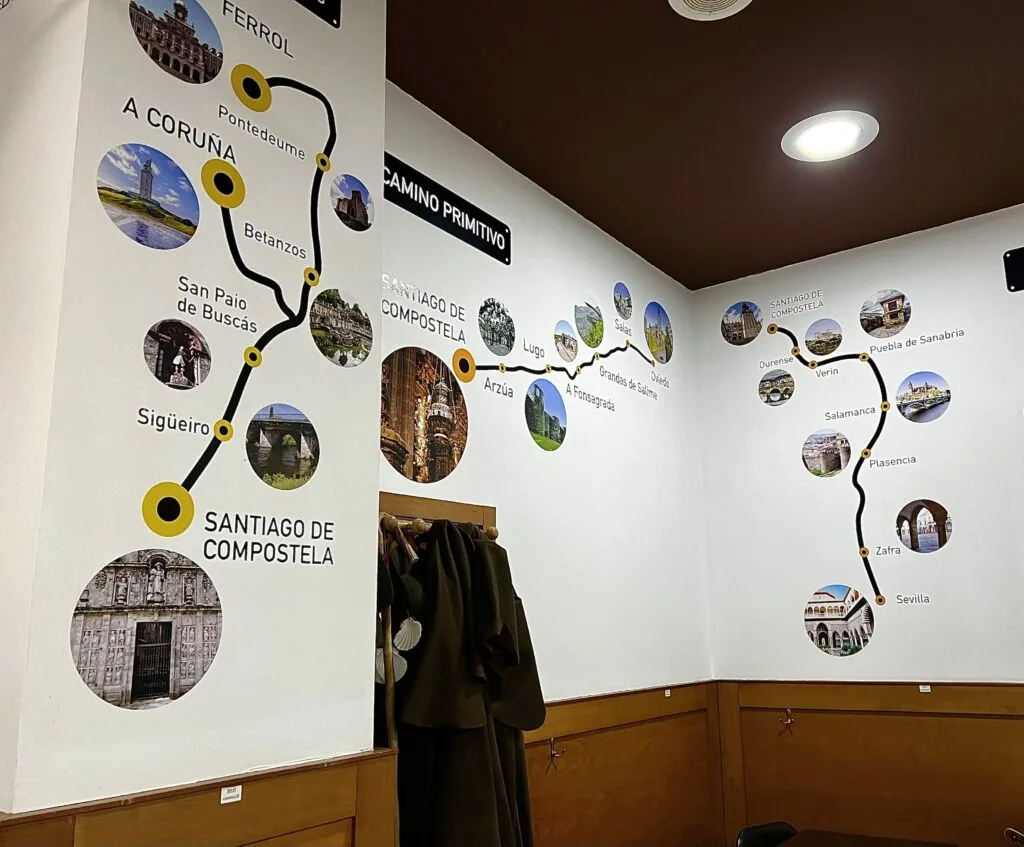
O Camino Milladoiro bar in Milladoiro featured a wall display of Camino routes the owner had walked; his shells & medieval style cloaks he wore were included as well.
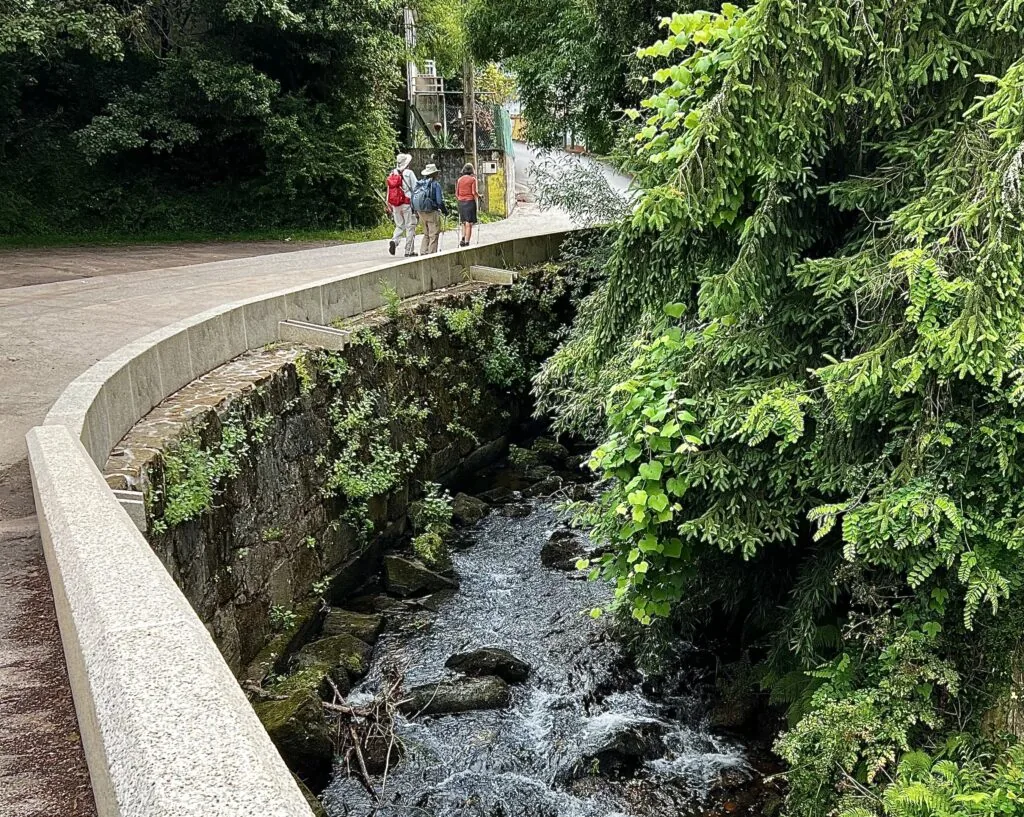
Walker friends Denise & Eric from Toronto joined us on the last stretch into Santiago. We’d met them before Redondela and stayed at most of the same lodging since then.
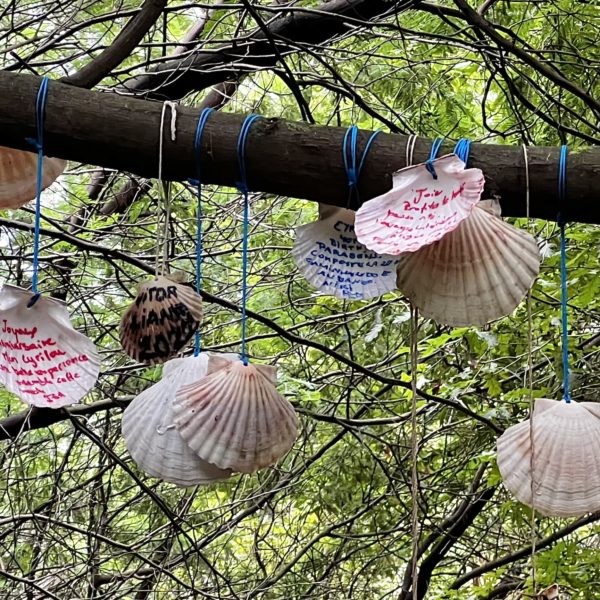
Shells with notes were strung around a tree branch — perhaps left by walkers to express an ‘unburdening’ on the last day’s trek or in celebration of completing the journey.
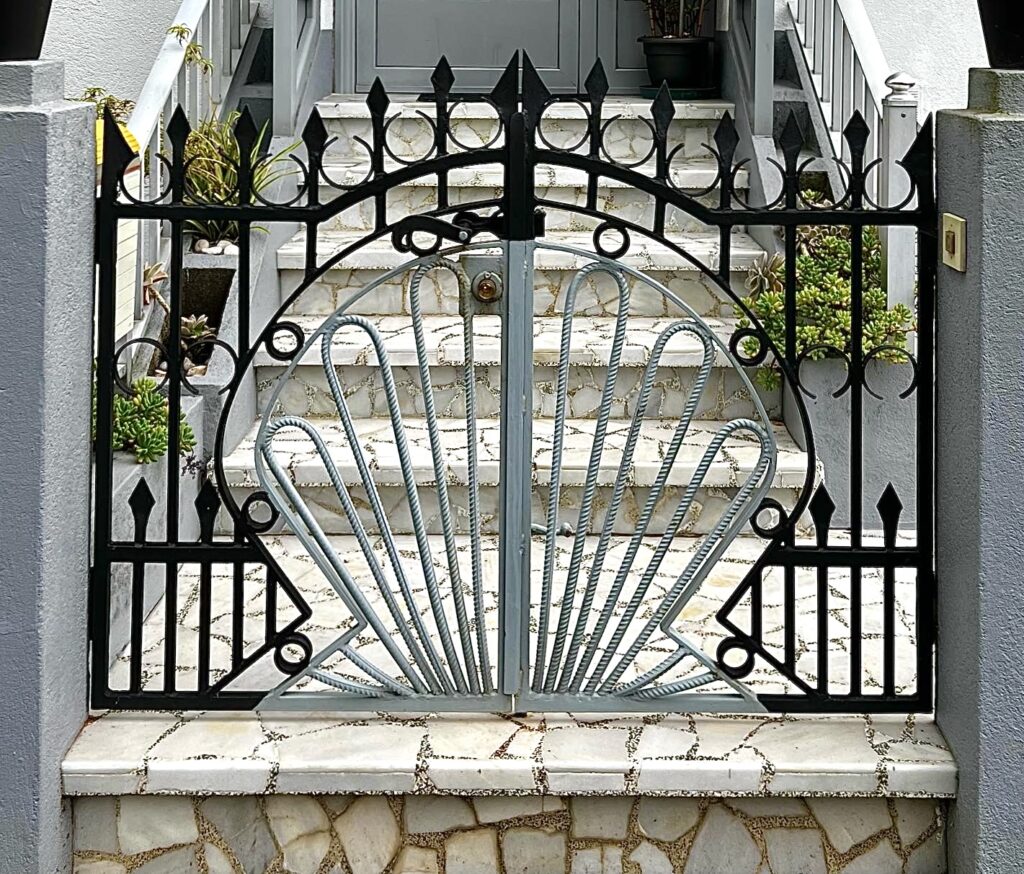
A casa’s shell gate on the outskirts of Santiago
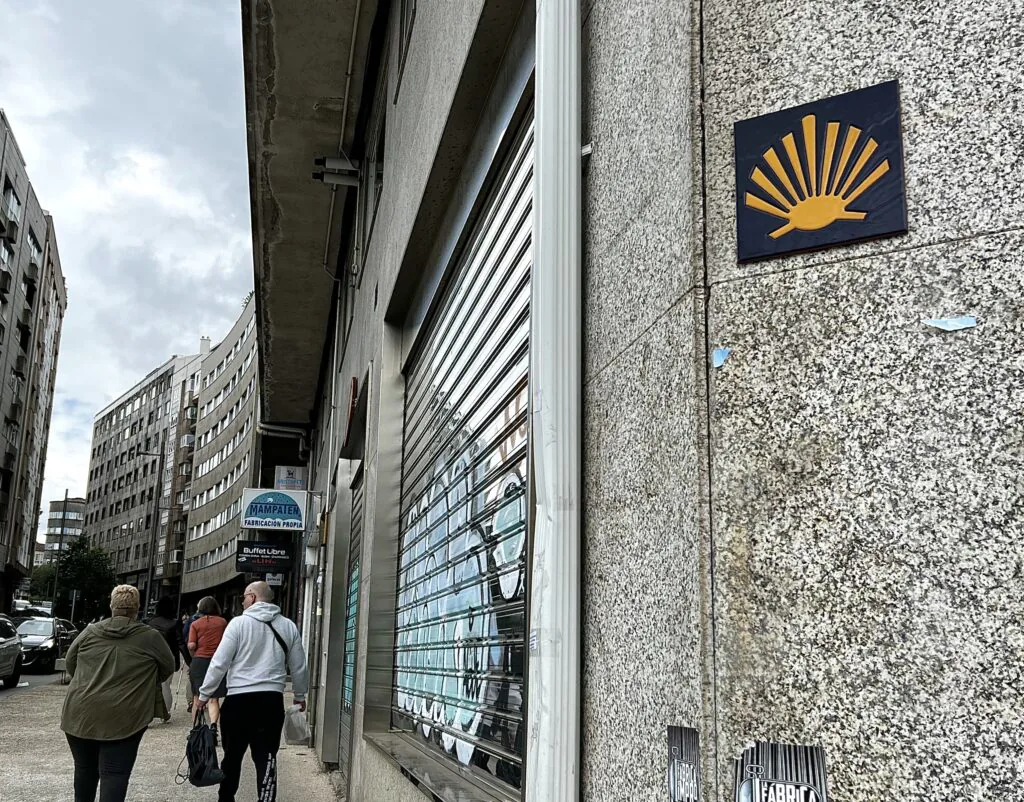
As we wound north through the commercial district of Santiago, markers became rare & a challenge to find, a surprise given the Portuguese routes’ growing popularity. All Camino trails, however, have their unique historical pathways into the city, and it was interesting to see this one.
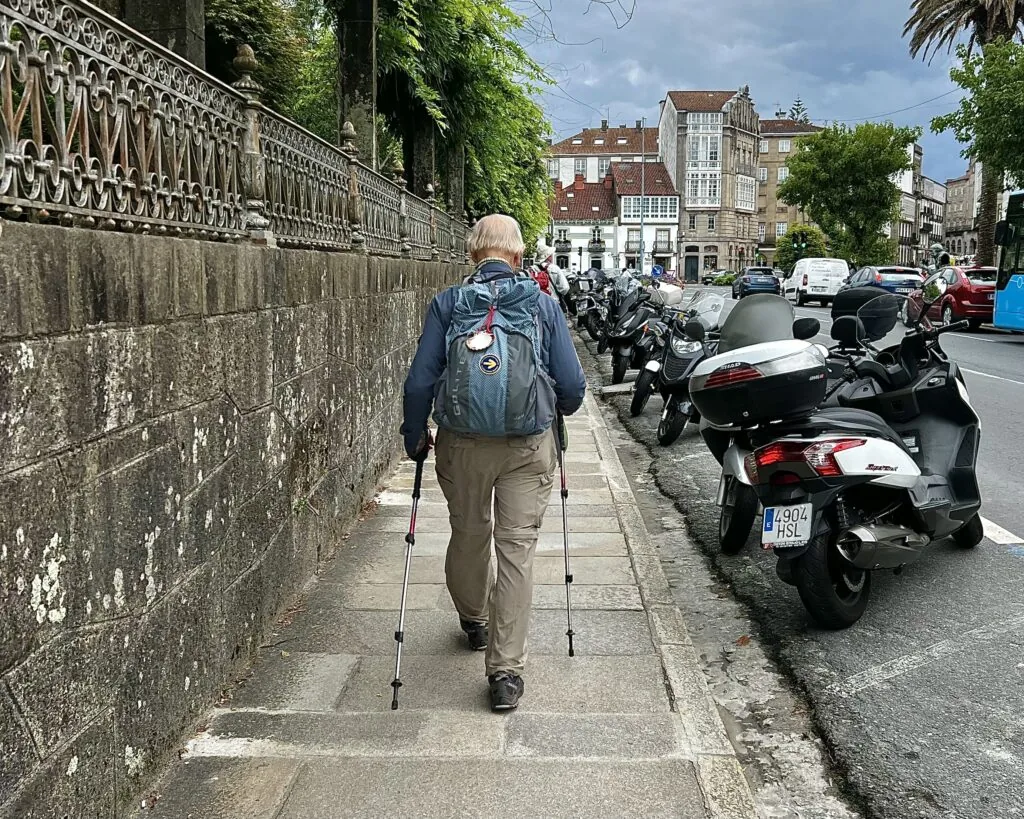
By Alameda Park next to Santiago’s old town — getting close to the endpoint, Catedral de Santiago
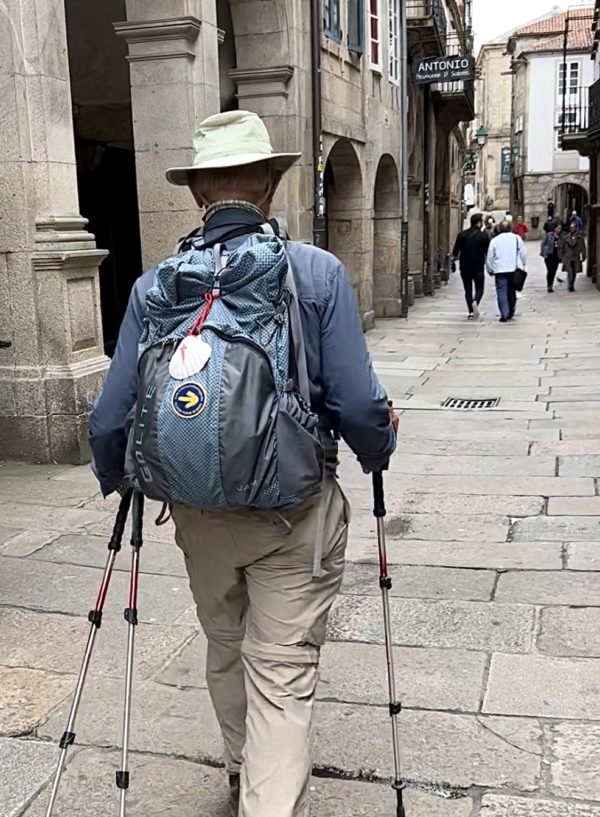
Along Rua do Vilar to the Cathedral’s south portal, Puerta de Platarias — this is where medieval pilgrims from Portugal would traditionally end their journeys. Dad carried one of my walking sticks as I took photos/videos.
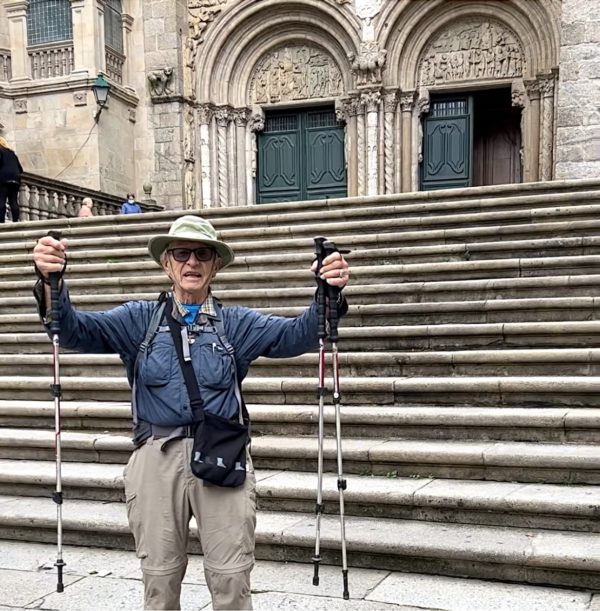
We made it! Dad gives a ‘sticks up’ by the portal.
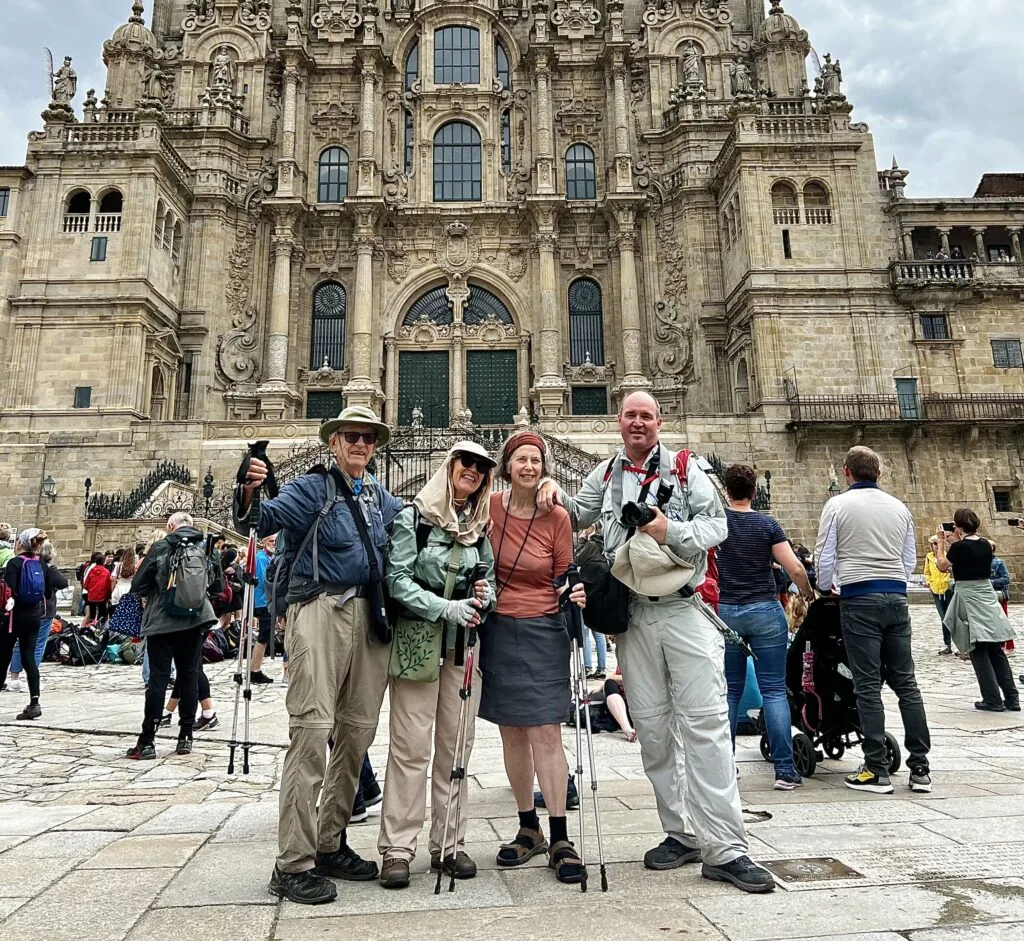
Denise & Eric celebrate with us at Obradoiro Plaza in front of the Cathedral.
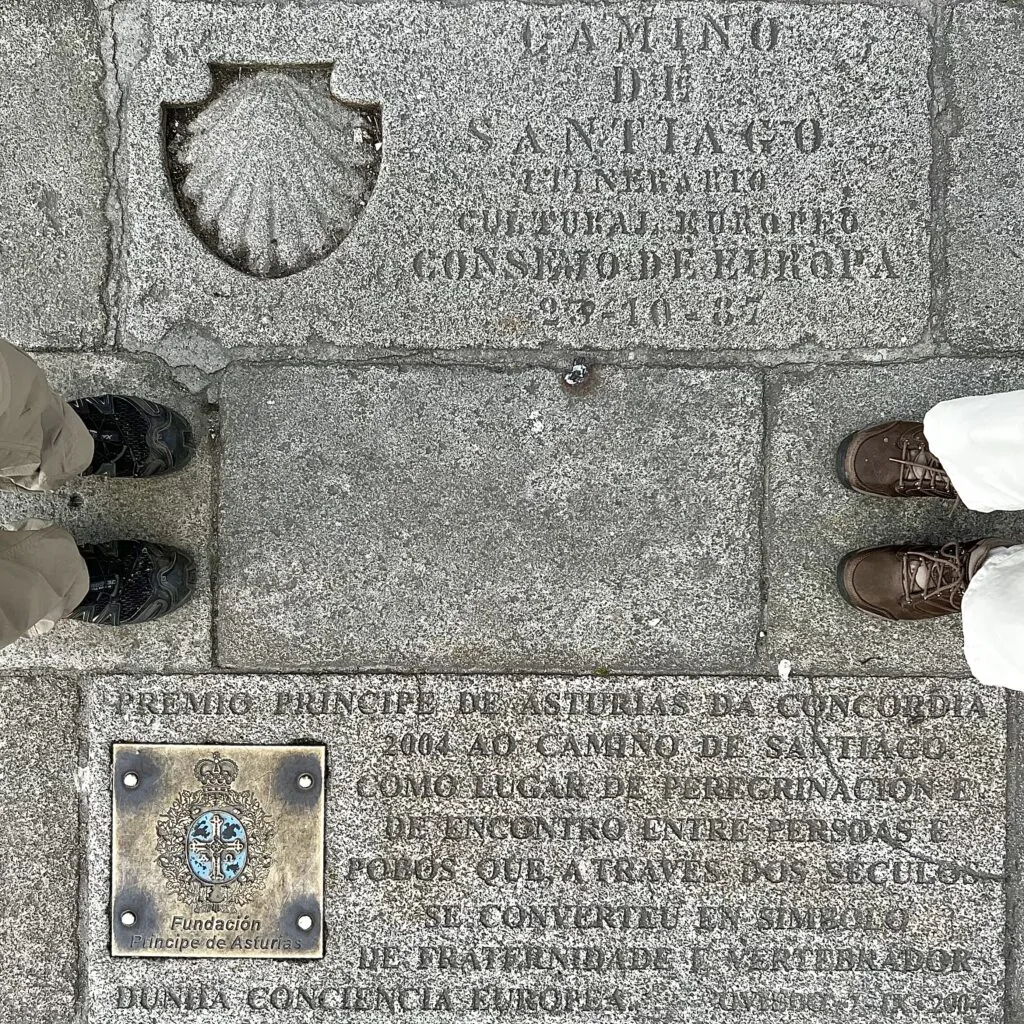
Two plaques are found in the center of the Plaza where many pilgrims mark their finish. The top plaque designates the Camino as the 1st European Cultural Itinerary awarded in 1987 by the Council of Europe; the bottom one commemorates the Holy Year in 2004 (Holy Years happen when St. James’ Feast Day falls on a Sunday — the next one will be 2027).
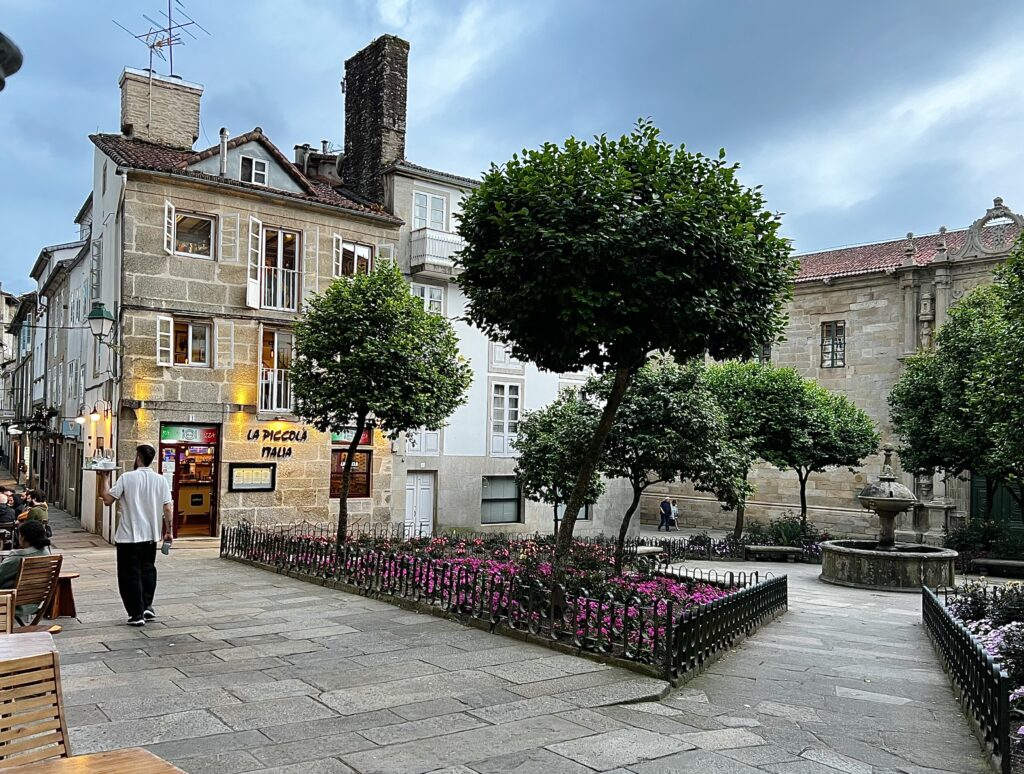
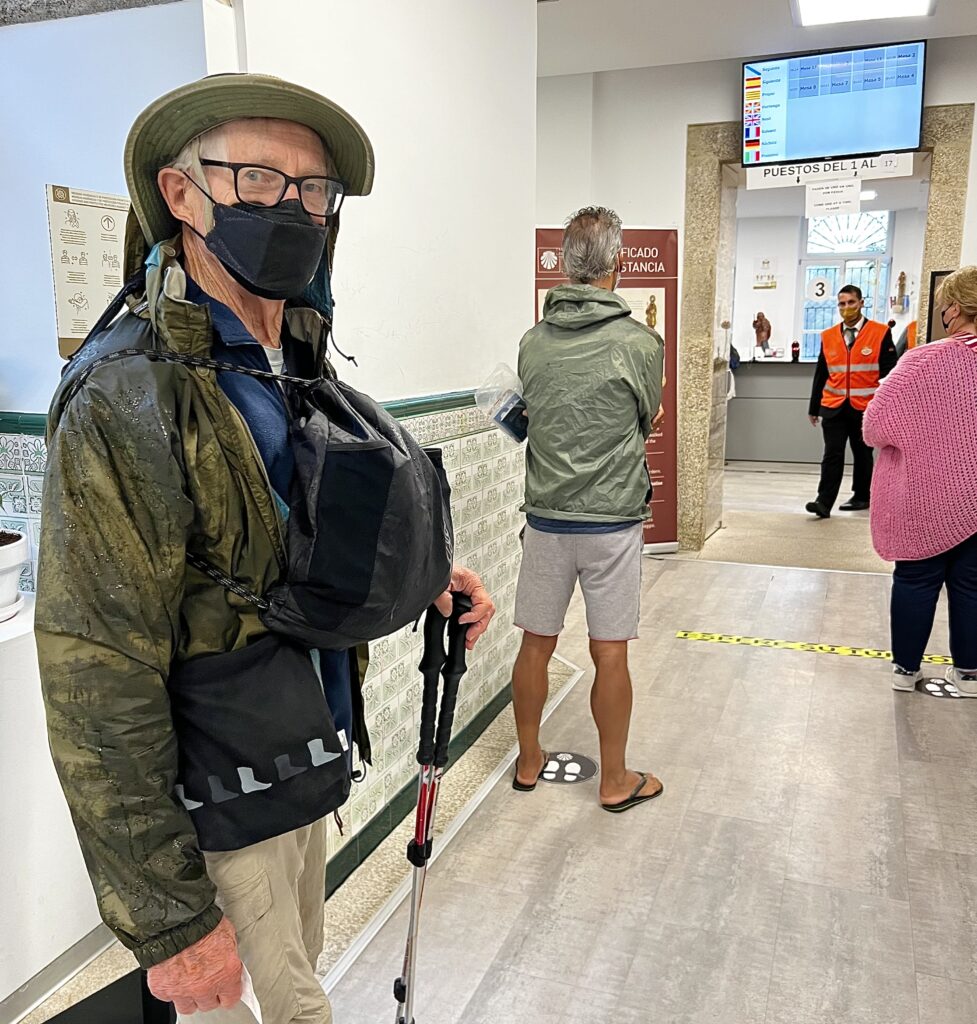
The first night’s stay in Santiago was by Praza de Fonseca, near the Cathedral and one of the many medieval corners to explore.
The next morning we received our Compostelas at the Pilgrim’s Office — not too much waiting in line! On busier days there can be a long queue, and walkers may have to wait for several hours. For more info regarding the Compostela, including pre-registering online, check out “Pilgrim Registry” under “Camino tips & misc.” in Camino Resources, Part 2.
Afterwards we went to the Pilgrim’s Mass, a tradition that honors the Camino’s history & walkers’ pilgrimage experiences. Masses are held daily at 7:30 a.m., 9:30 a.m., 12:00, & 7:30 p.m.
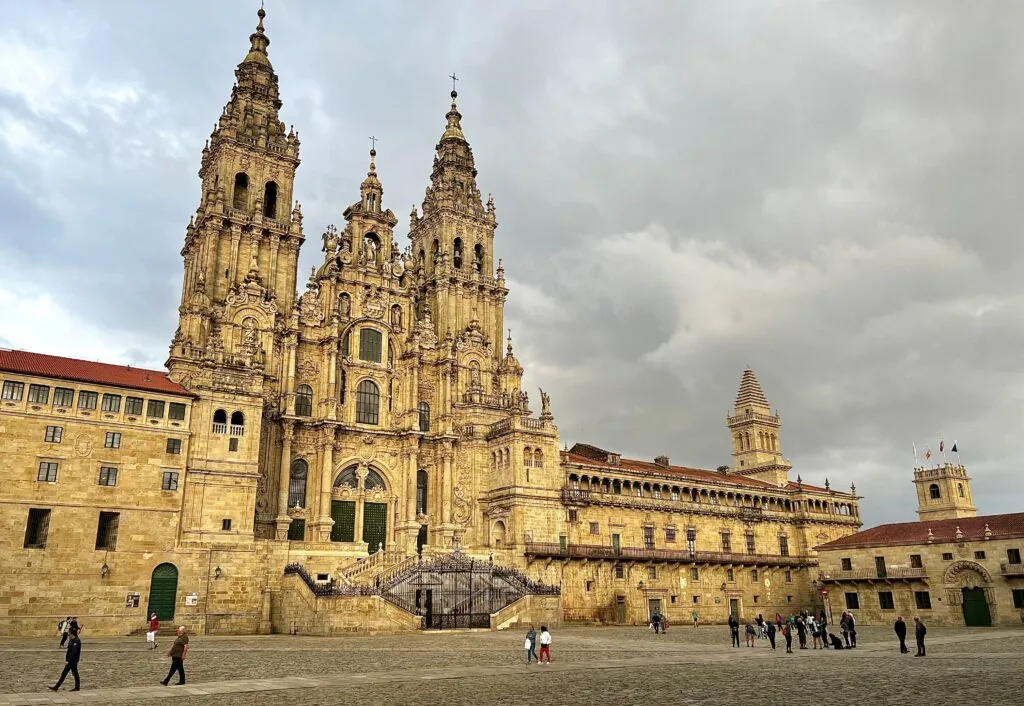
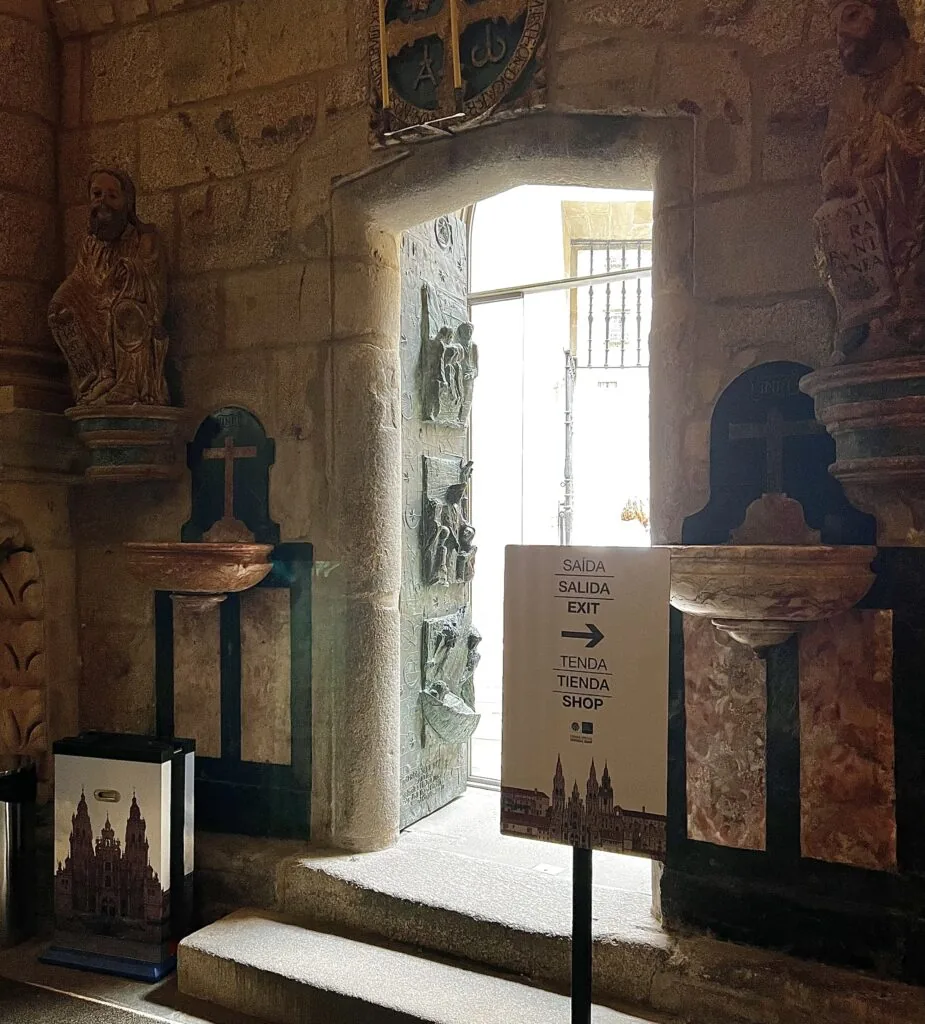
In recent years the “Romanesque dressed in Baroque” Cathedral has been under scaffolding for major restoration work. It was completed in time for the Holy Year celebrations for 2021 & the pandemic related extension in 2022.
The Porta Santa, or Holy Door, in the Cathedral is only open during Holy Years. The door faces Praza da Quintana and leads into the apse area behind the altar. The door panels are made of bronze with bas-relief scenes about St. James’ life. Inside, the 18th c. Baroque organ pipes & 12th c. altar shine.
At the altar is a sculpture of St. James — stairs behind it allow walkers to climb up & hug the saint from behind to give thanks for the journey. For more pilgrim traditions see The Camino de Santiago, Part 2.
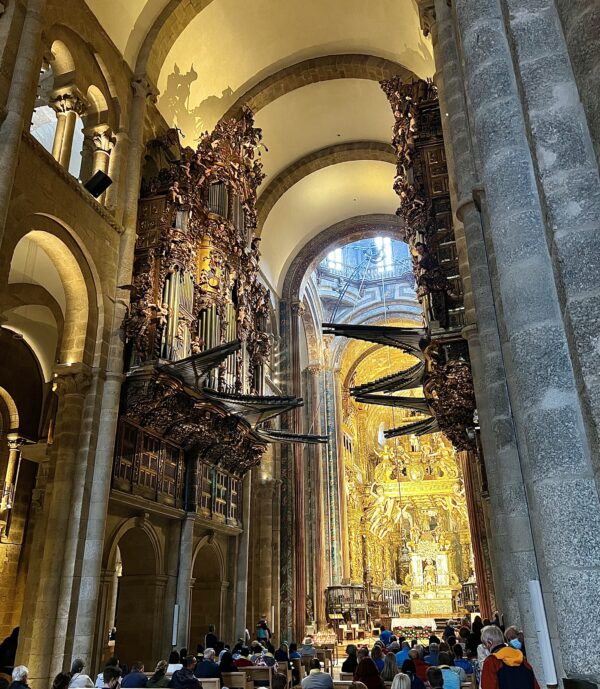
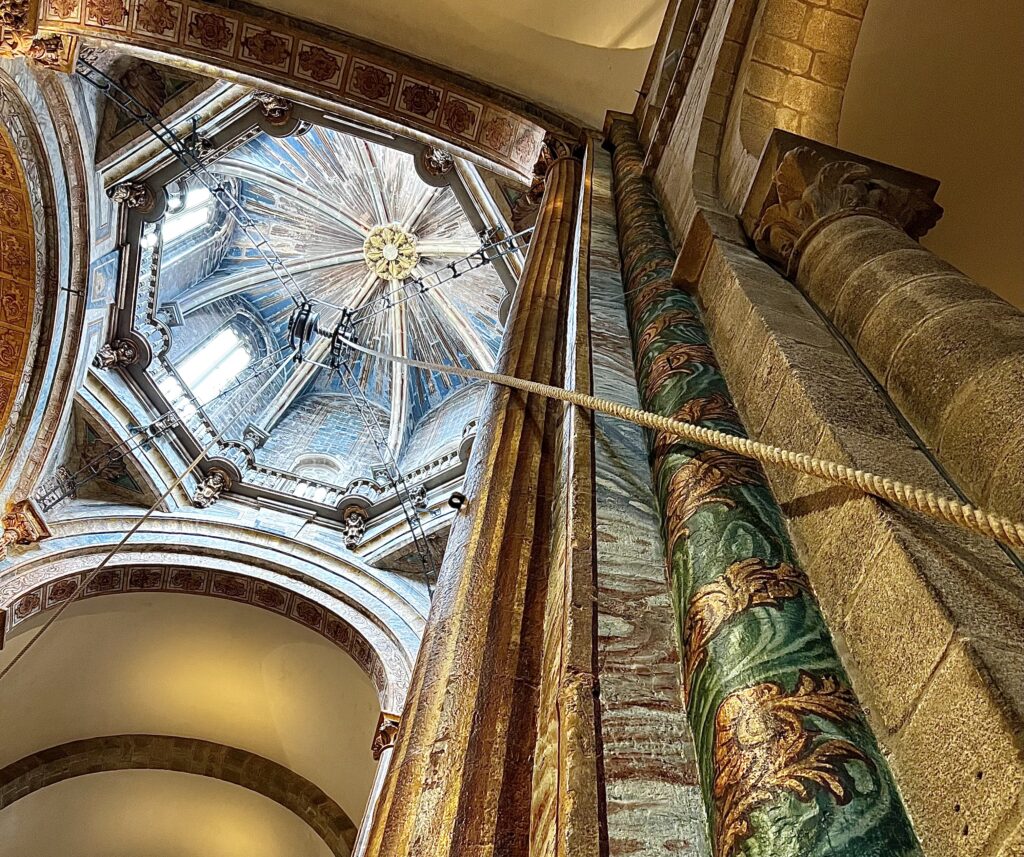
The crossing dome has a pulley with a rope that red-robed tirabolieros (“incense carriers”) pull to swing the giant incense burner, the Botafumiero (“smoke expeller”).
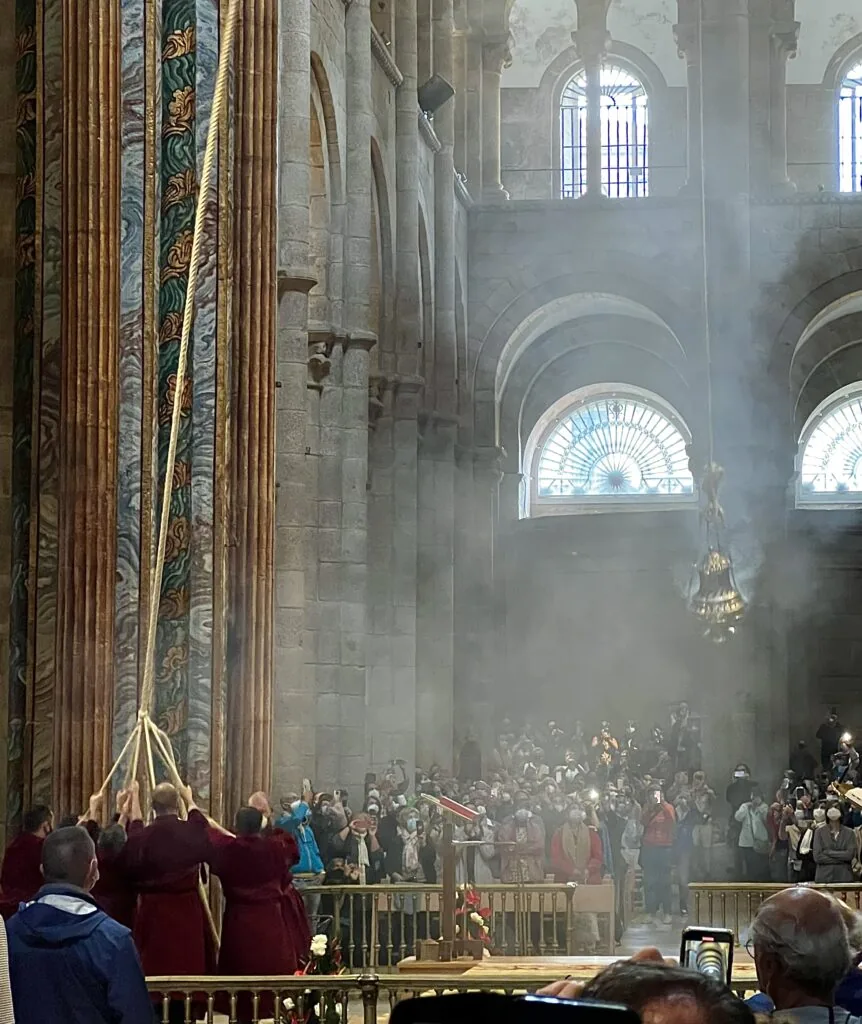
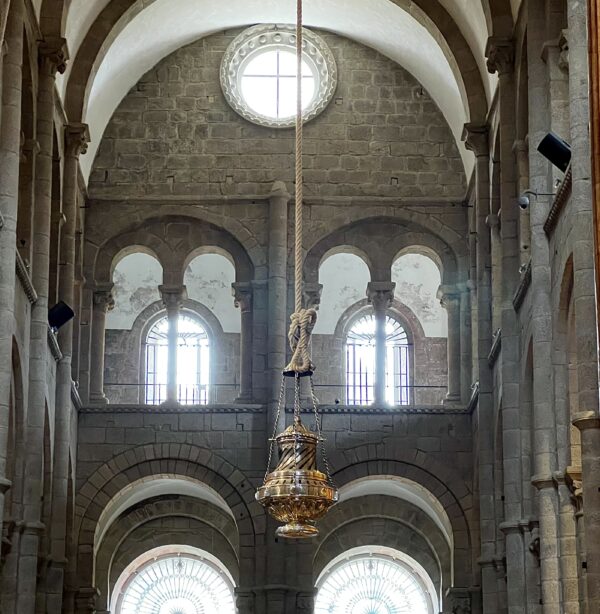 The transept fills with the odor of incense as the Botafumiero swings (in the Middles Ages it helped to mask smelly pilgrims!). Watching this tradition is awe-inspiring & has been the culmination of all our Caminos.
The Botafumiero doesn’t swing every day — the schedule is unpredictable. Check in the morning to see whether it’s hanging, & if so, then it likely will be part of the day’s Pilgrim Masses.
Read more about this amazing “thurible” under “Pilgrim Traditions” in Camino de Santiago, Part 2.
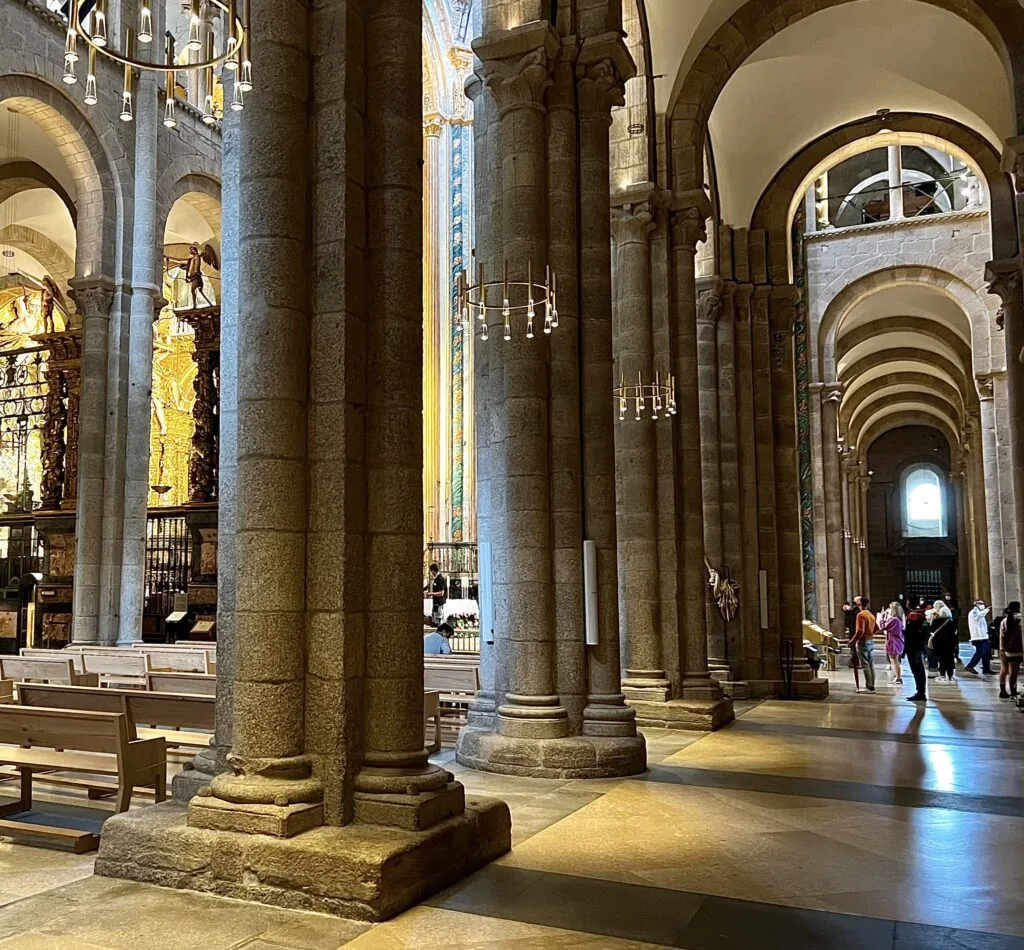
The Cathedral’s interior now includes restored frescoes on columns and modern looking light fixtures along the nave. The 10 year restoration even involved fire protection and waterproofing.
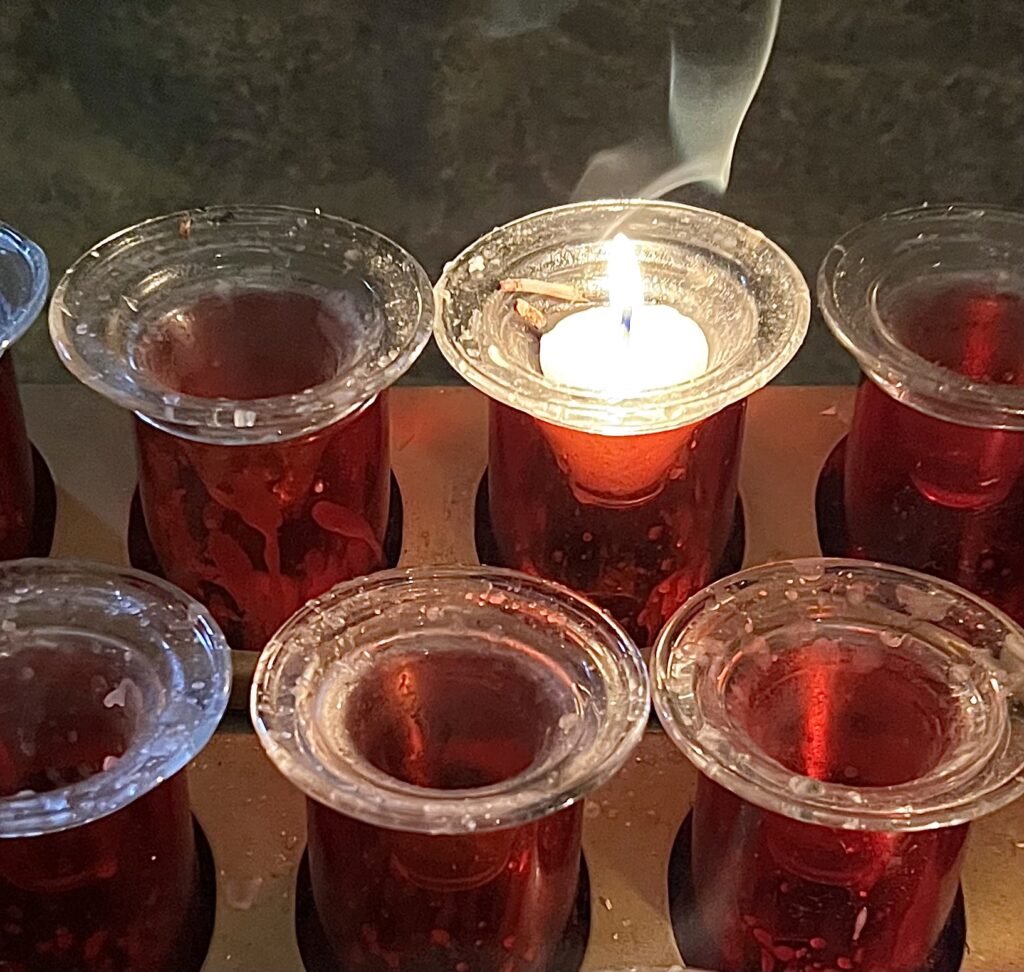
During our visit we left the remaining ex-votos at the sacristy office where mementos are kept.
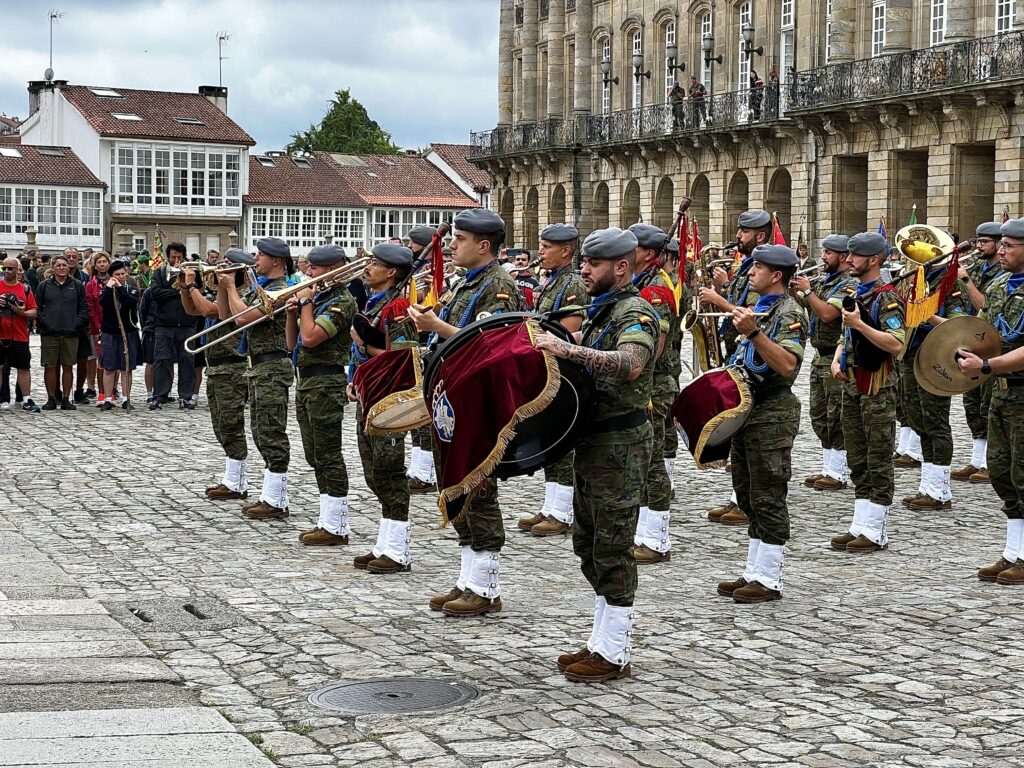
A couple days were spent in this special city before returning to Lisbon & then home. In Obradoiro Plaza, the heart of Santiago, a military band played Celtic music.
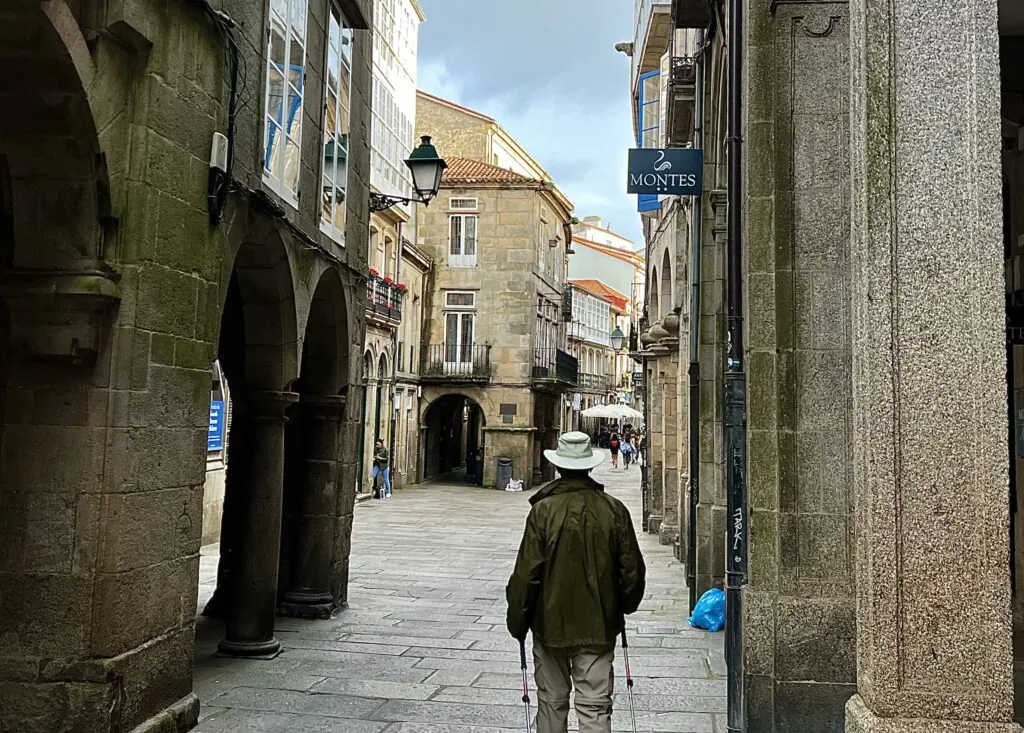
Strolling the old town area — cafes, shops, & art history to discover
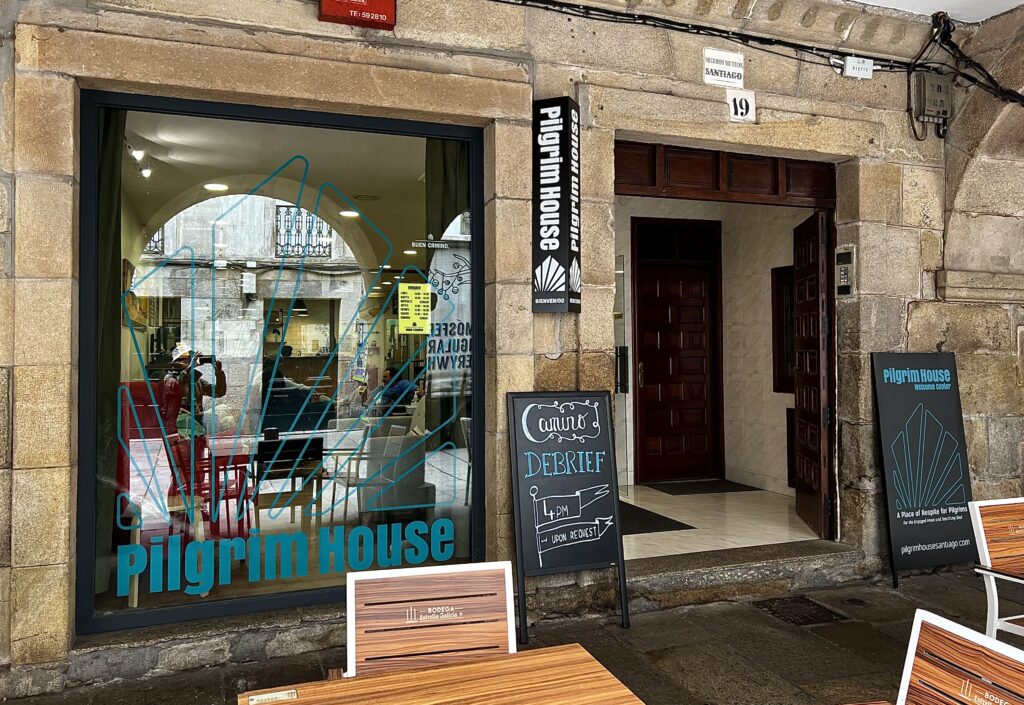
Santiago’s Pilgrim House welcomes walkers & offers services, such as wifi, laundry, backpack storage, printing, & more. They host sessions where pilgrims can “debrief” & share stories. There’s also a contemplative room in the back that provides a peaceful setting to relax & rejuvenate.
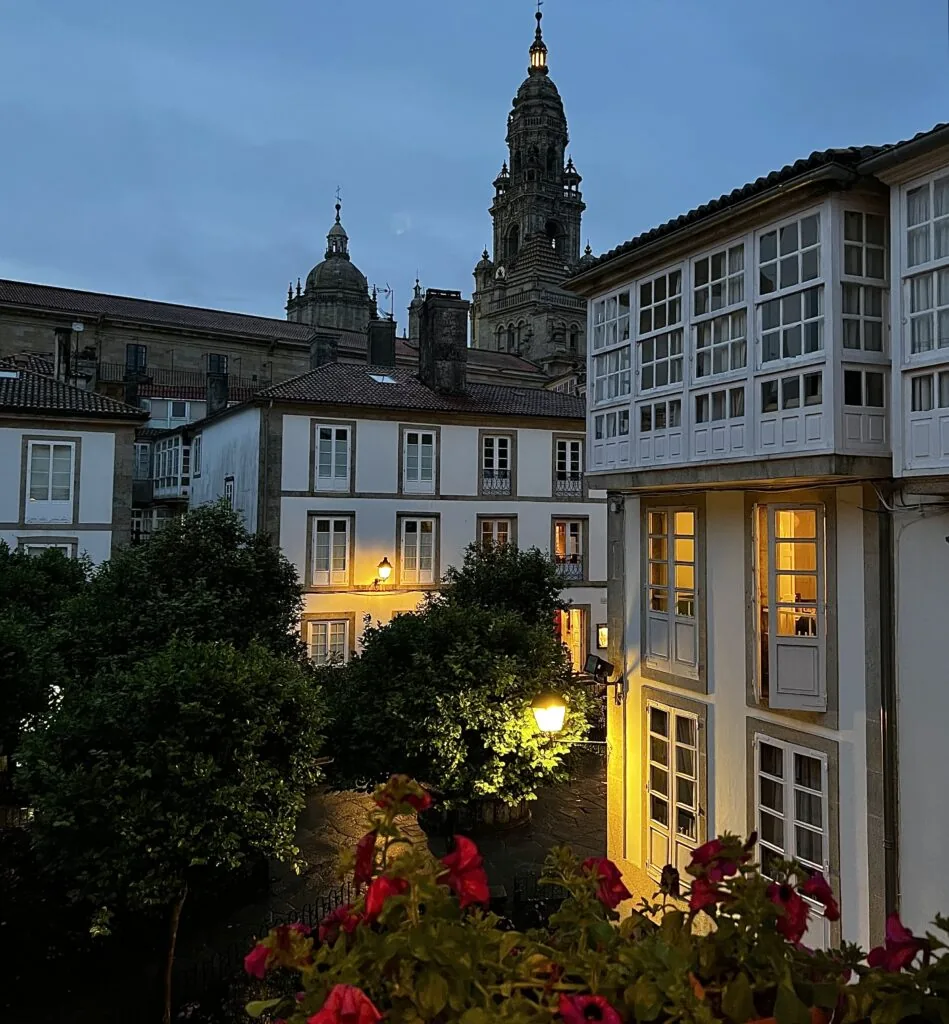
A light on top the Cathedral’s Clock Tower glows 24/7 to guide walkers into the city during Holy Years. Imagine pilgrims from decades past seeing this at nightfall on their way to the Cathedral!
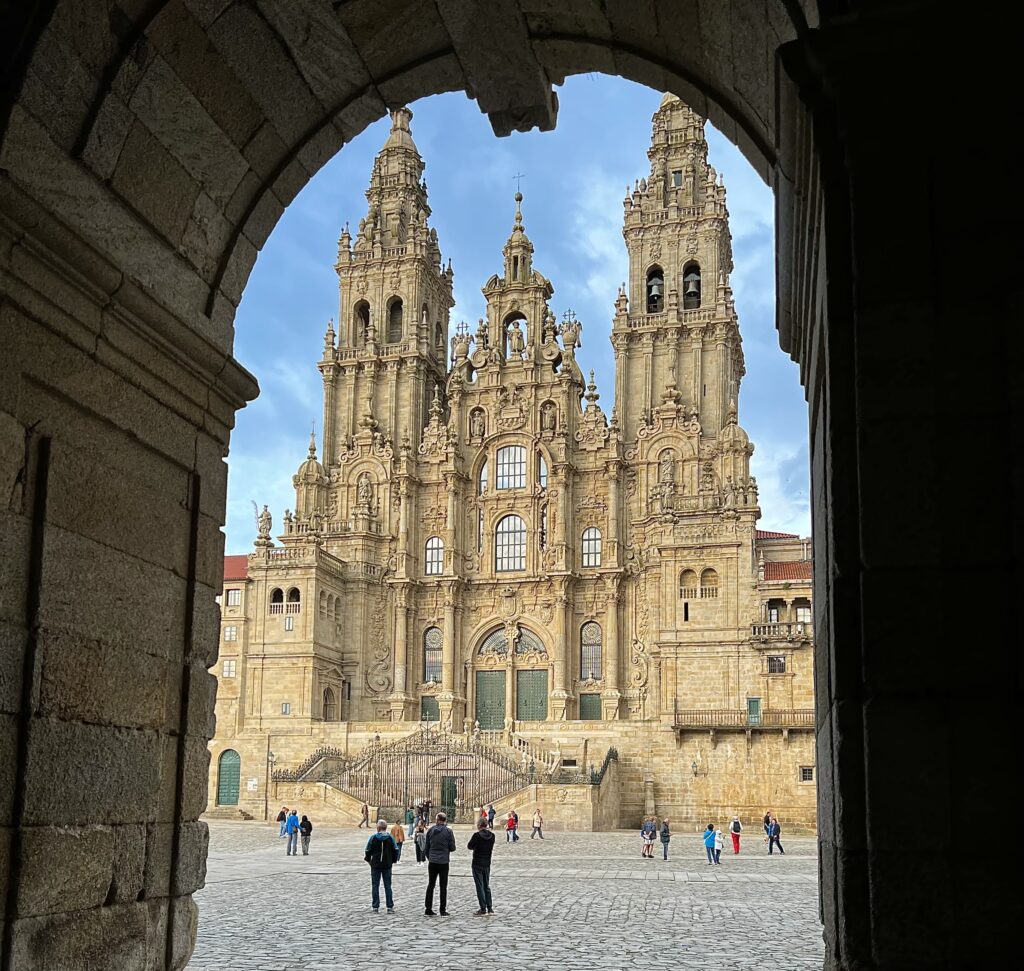
Obrigado & Adios Camino Portuguese!
Dad & I are thankful for having the opportunity to finally walk this lovely trail and experience Portuguese hospitality, Spanish charm, and meeting people from around the world.