
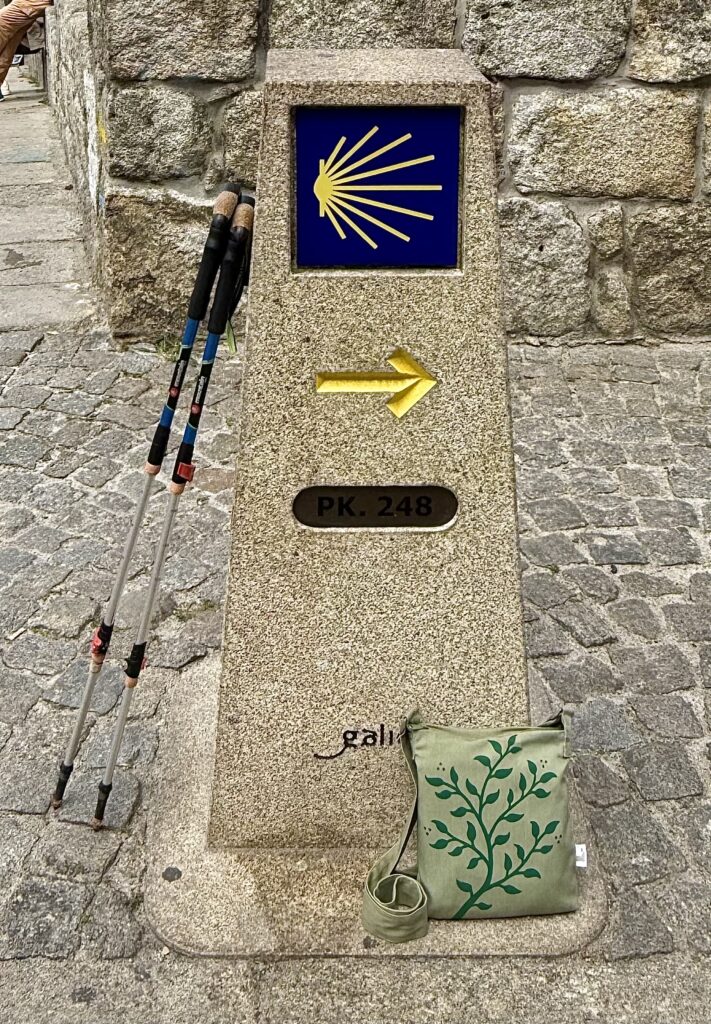
The final days to Porto remained warm but not as hot as the previous week. By then I was used to getting up extra early and completing most of the day’s mileage by noon. The mornings have been my favorite time to walk on Caminos — there’s a magical quality and the promise of discoveries ahead.
The marker shown in the photo is in front of the Porto Cathedral (Se do Porto) and signifies both a beginning & an end point: for me it was the end of my journey from Lisbon to Porto done over these past two years. For pilgrims walking from Porto to Santiago de Compostela the marker represents the start of their trek.
In June 2022 I took a photo of Dad by the marker before we began from Porto. This year the Green Foliage Bag was with me to celebrate the finish at the Cathedral.
Snapshots of the final 4 days:
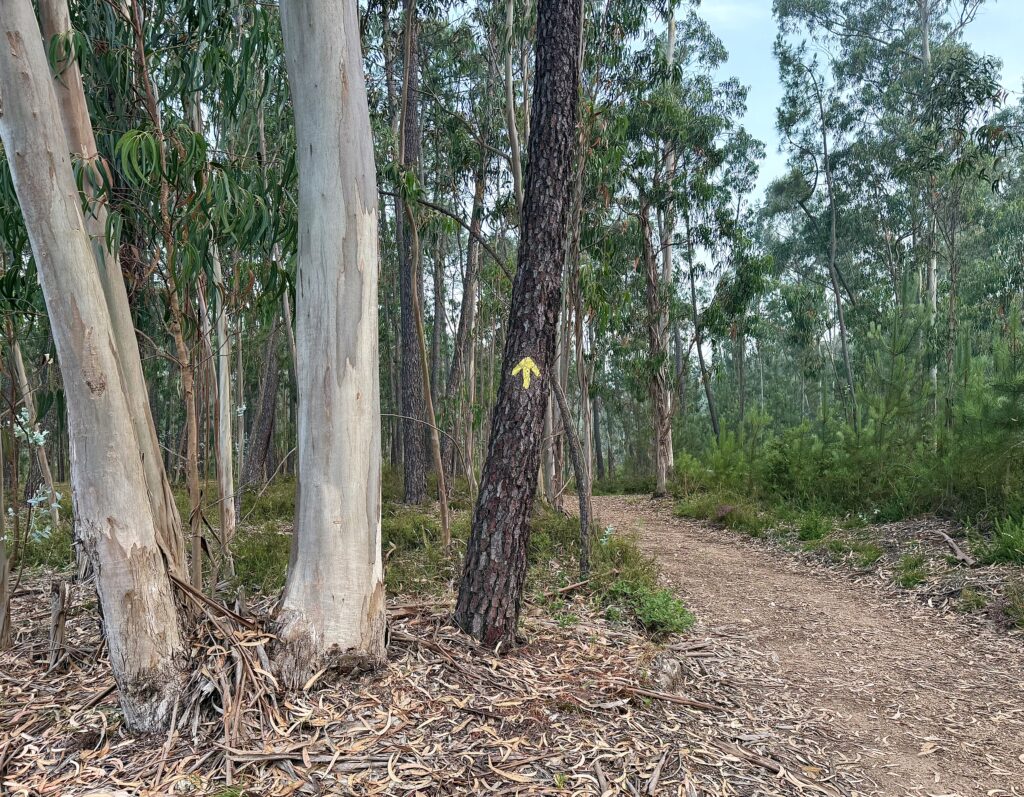
Day 7: Sernadelo to Agueda — the eucalyptus groves continued — the leaves felt soft underfoot.
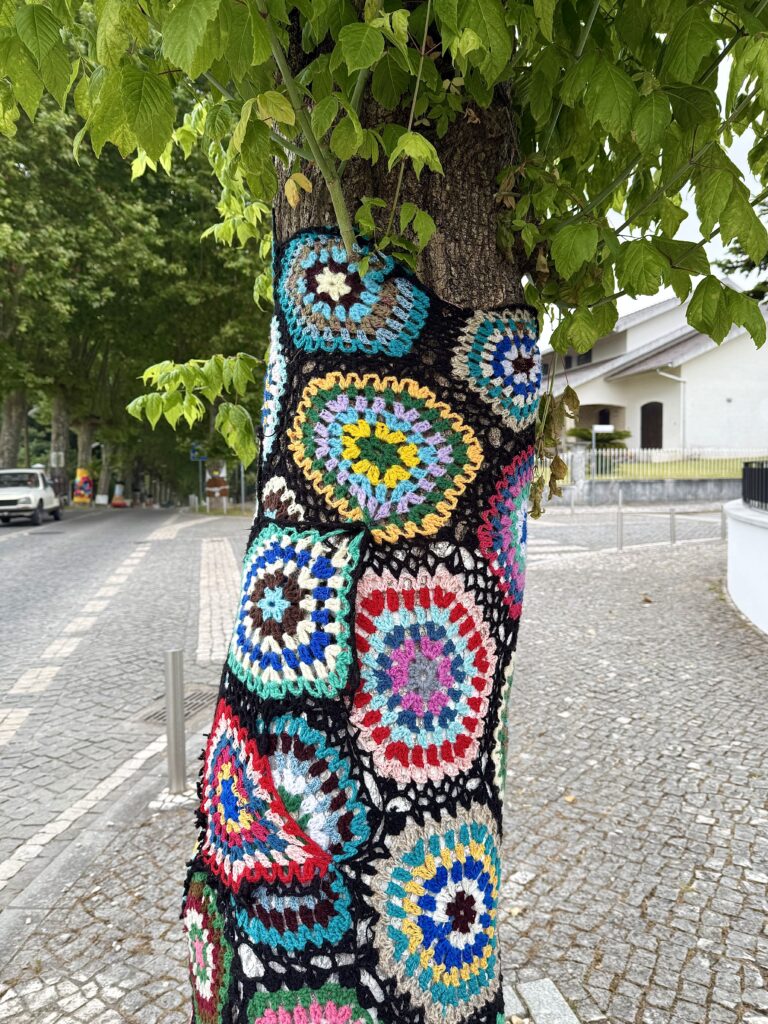
Yarn art decorated some of the trees in Anadia.
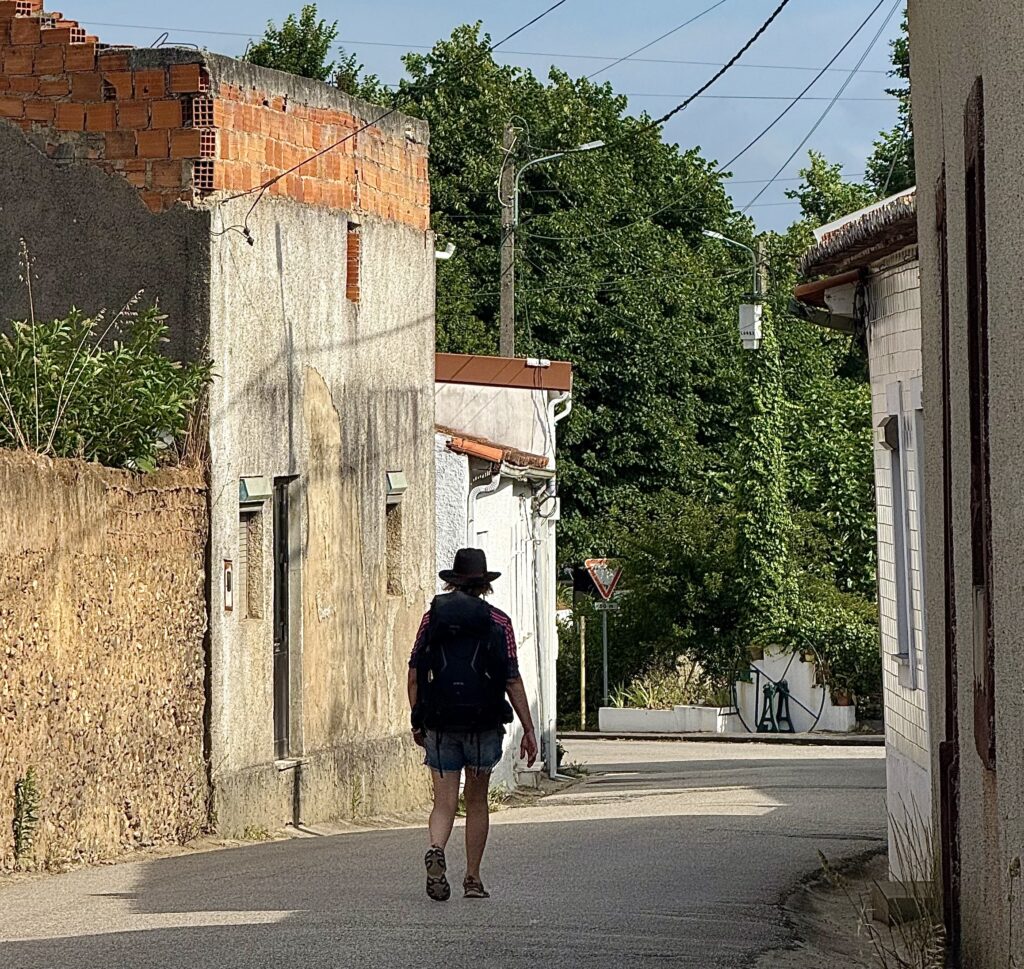
Walking in Avelas de Caminho
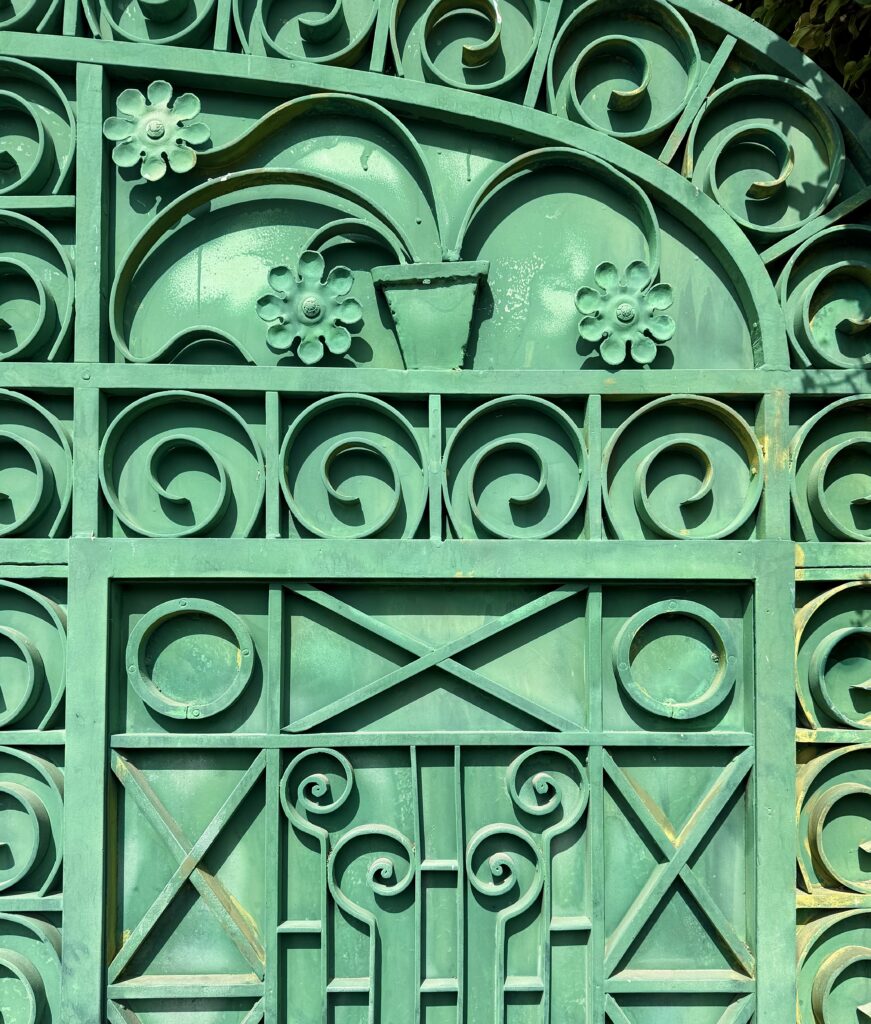
Very cool Art Deco style gate
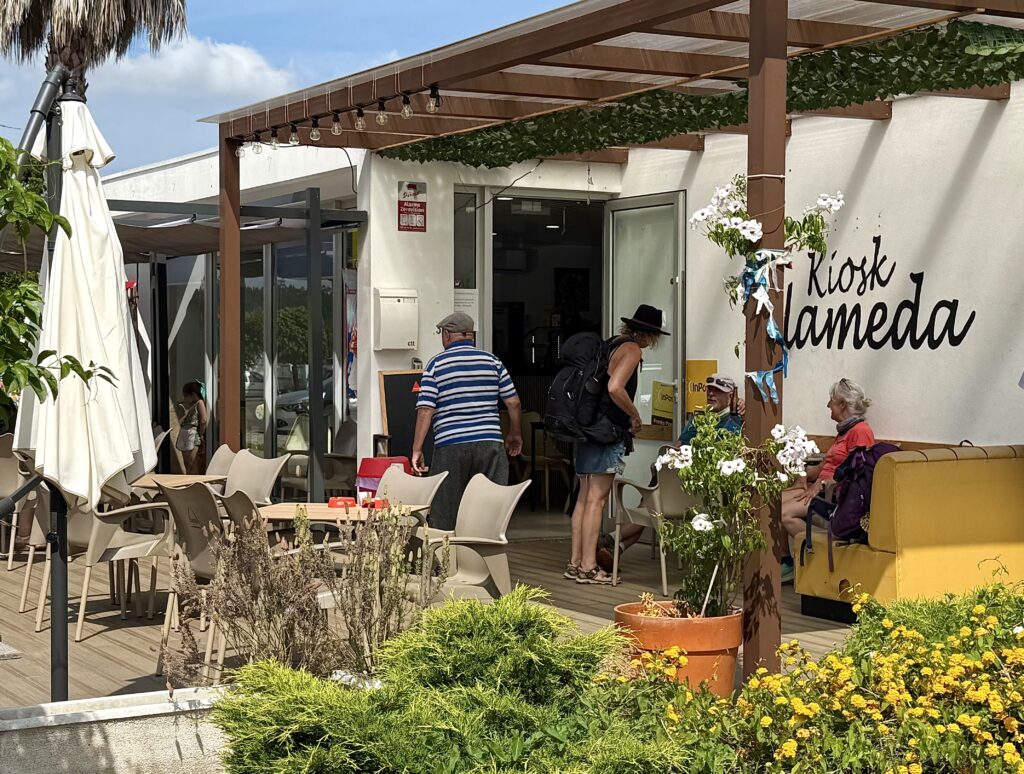
A cafe in Aguada de Baixo provided a good place for locals & pilgrims to refresh.
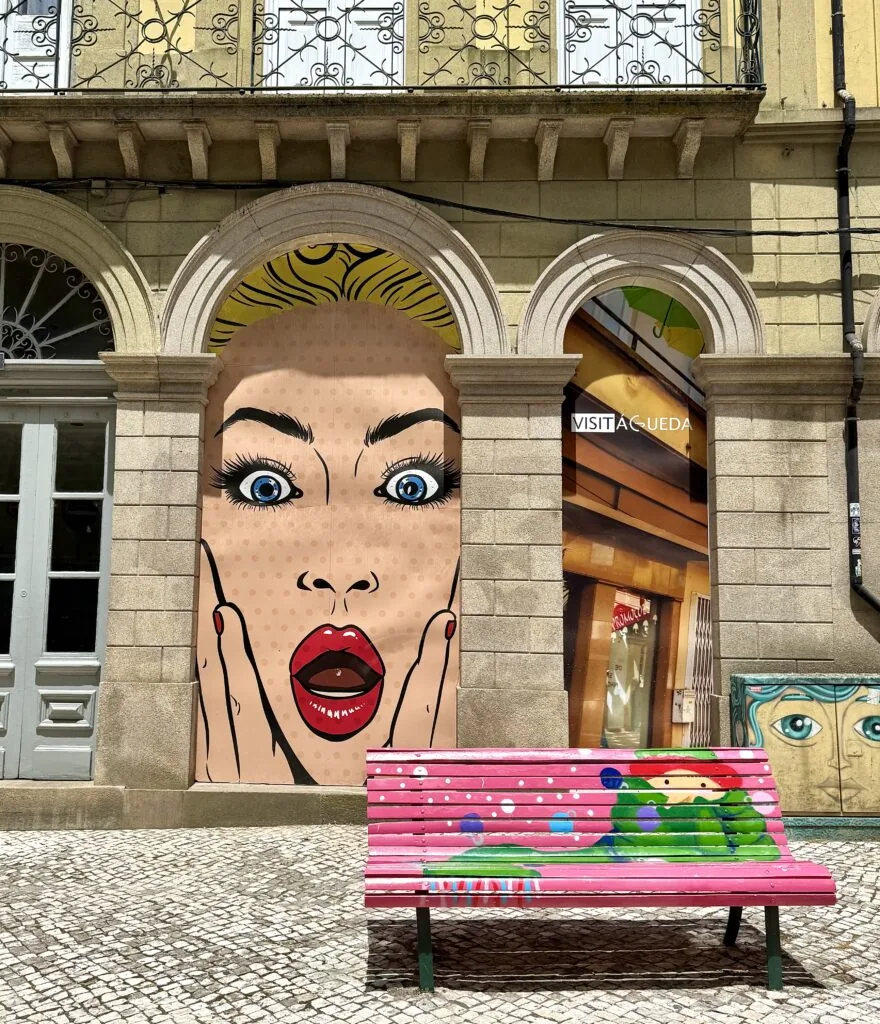
Art inspired by Roy Lichtenstein covered a store window in Agueda, a charming town with a public art installation called “Umbrella Sky Project” that features hanging umbrellas.
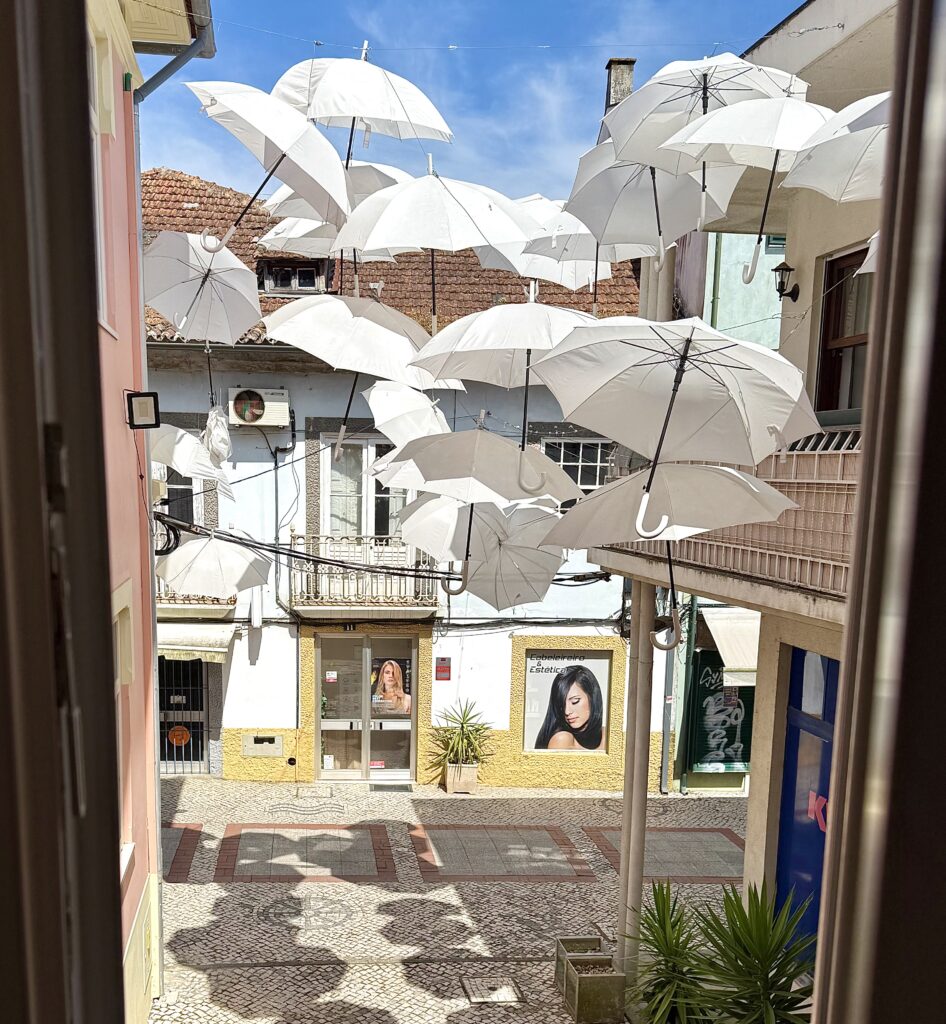
An umbrella display outside my hostel
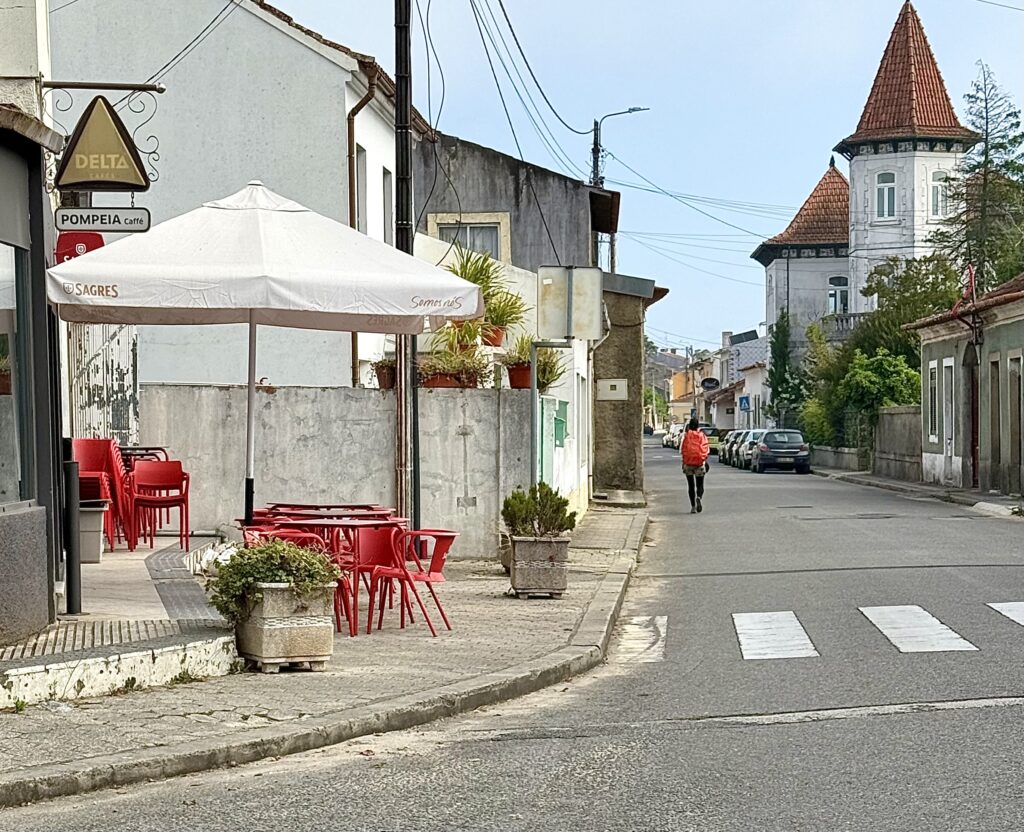
Day 8 to Albergaria-a-Nova included a morning cafe break in Mourisca do Vouga.
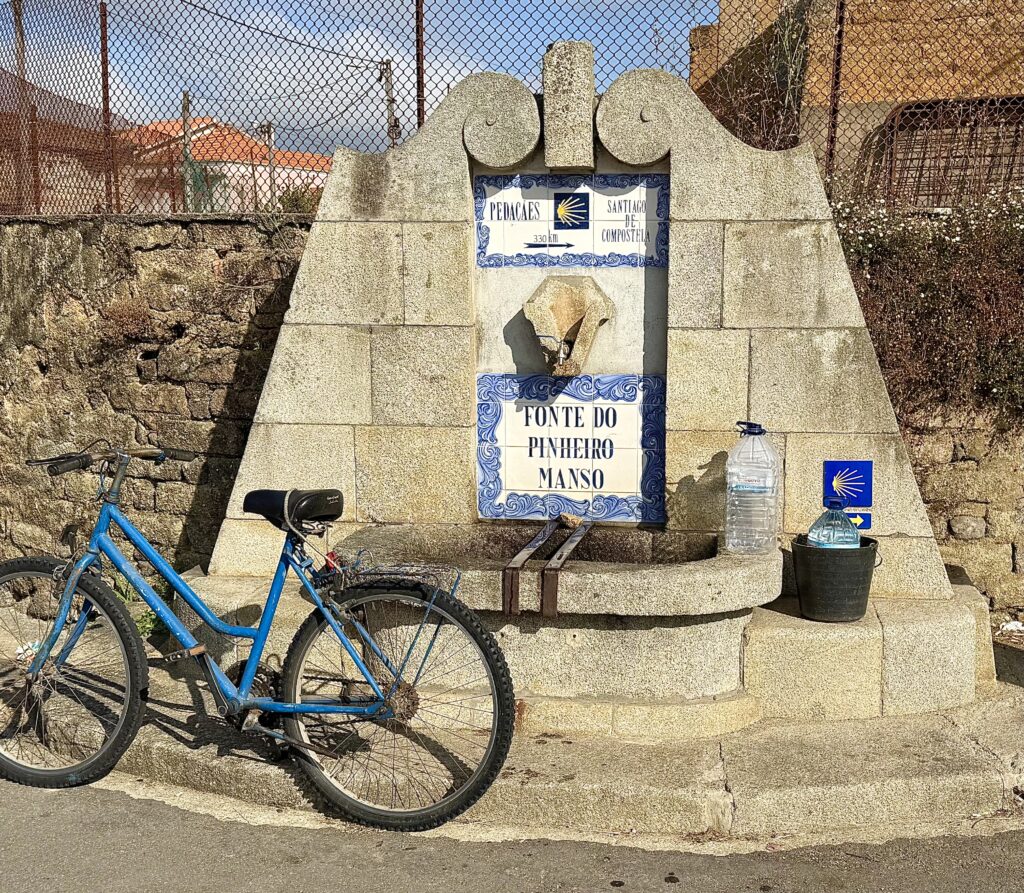
In Lamas do Vouga I filled up my water bottle at the public fonte. A local man on a bicycle had stopped to fill water jugs too.
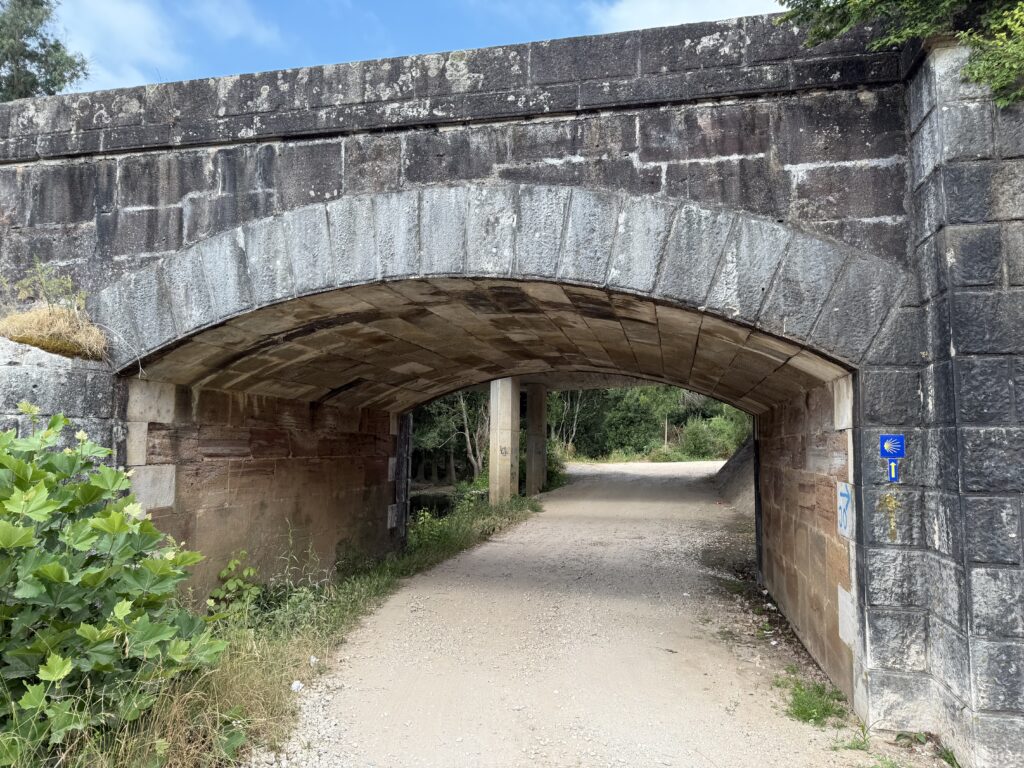
Under the roadway bridge in Lamas do Vouga
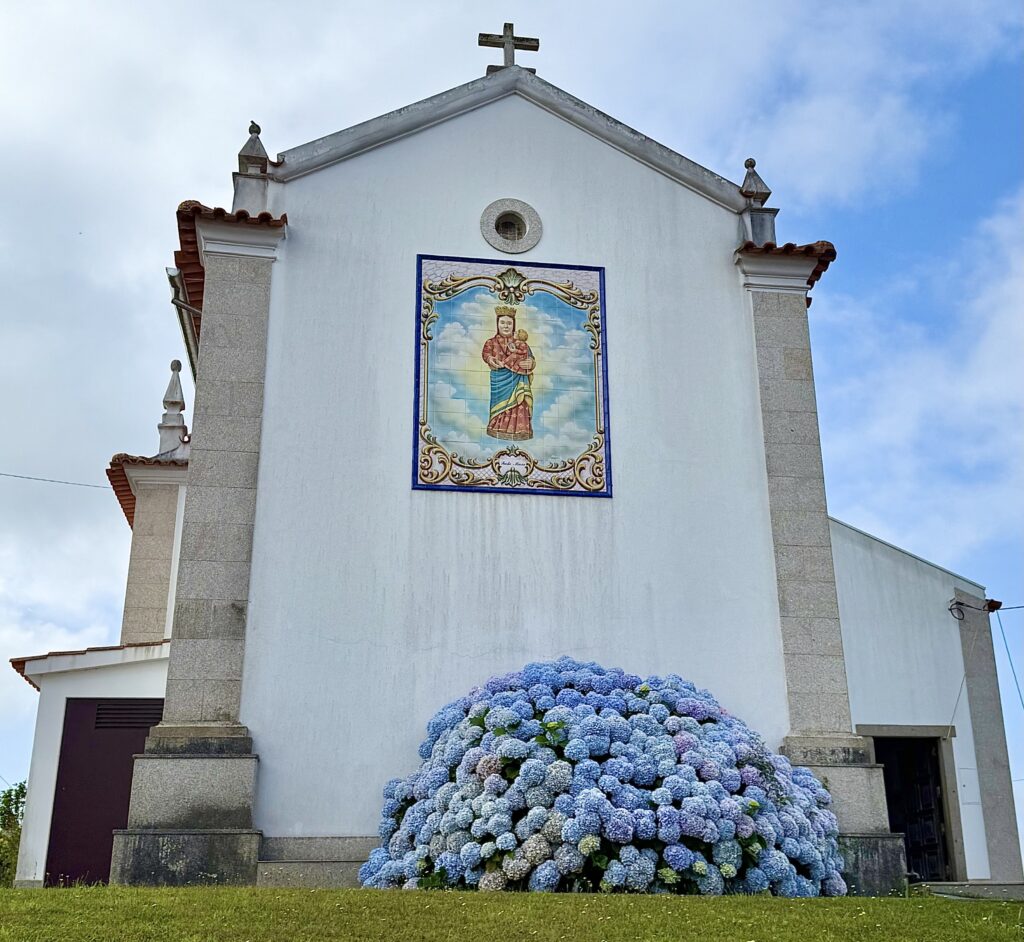
Hydrangeas were blooming in the back of 19th c. Igreja Parochial Lamas do Vouga.
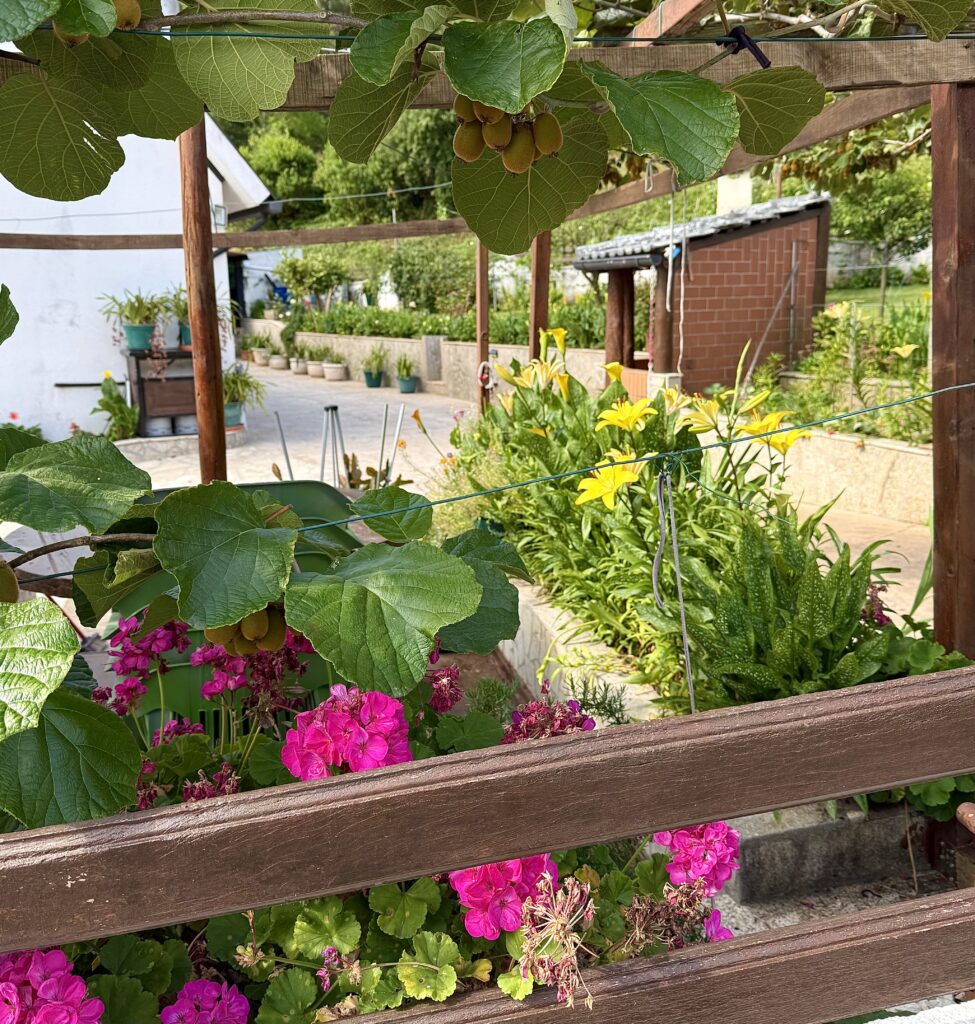
Garden in Lameiro
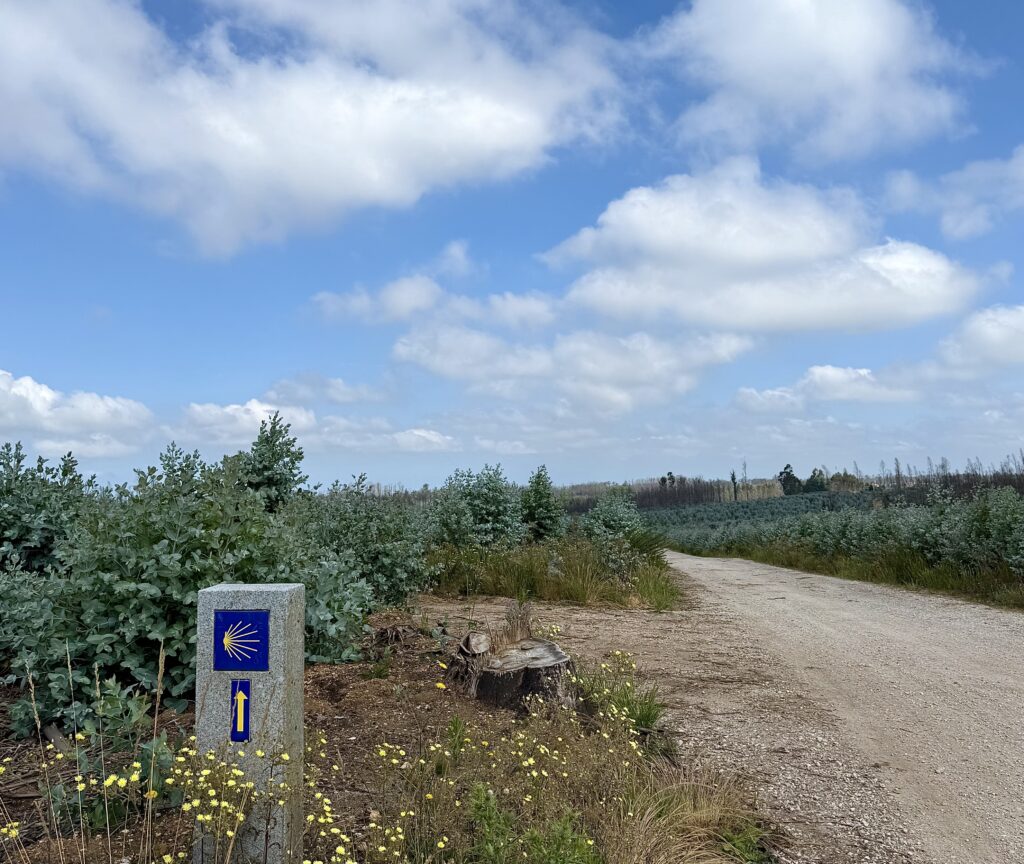
On the trail by Albergaria-a-Velha, the town before my destination
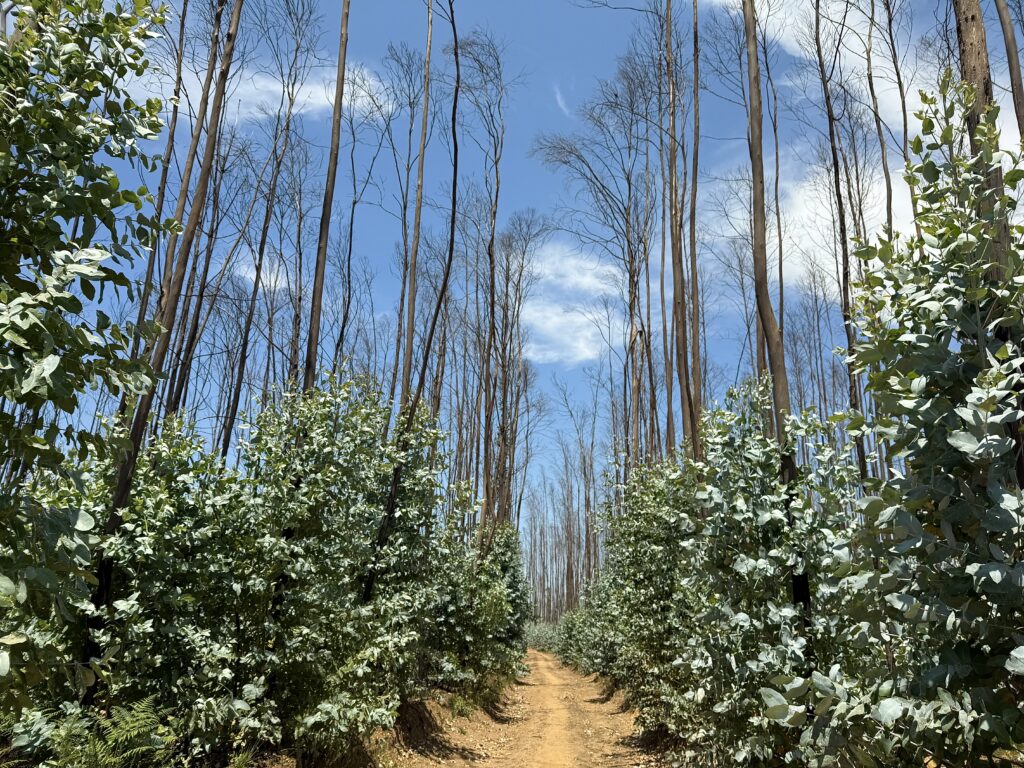
The last stretch to Albergaria-a-Nova wound through a surreal landscape with tall barren trees surrounded by silvery-green bushes.
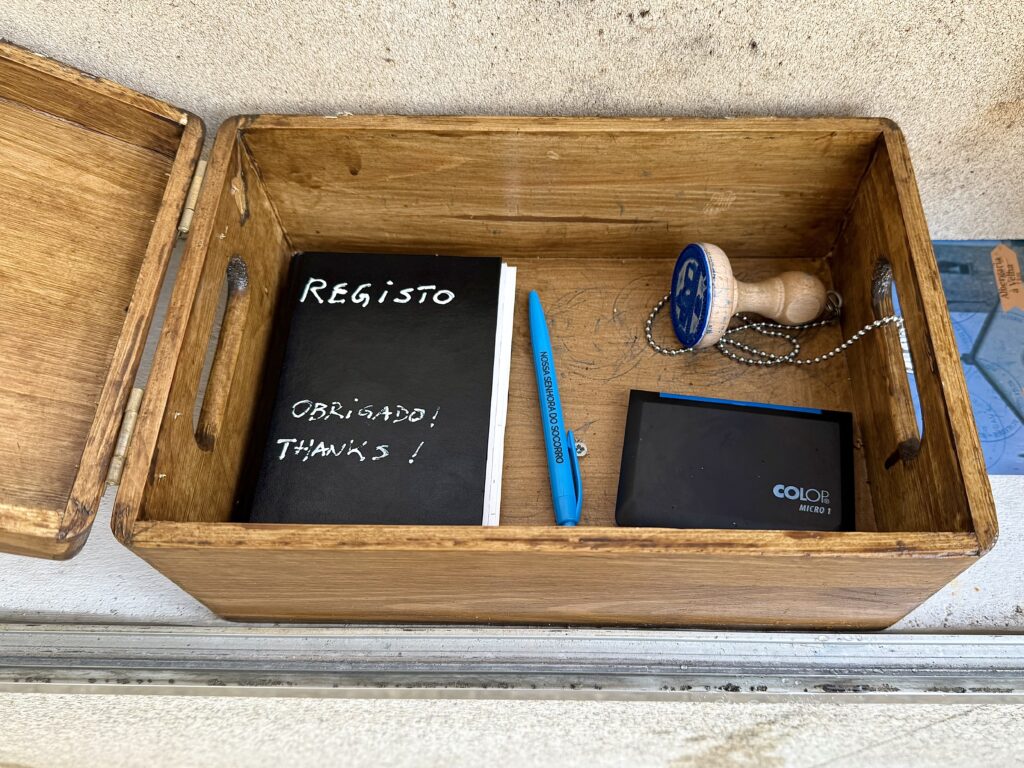
Day 9 to Sao Joao da Madeira: While leaving Albergaria-a-Nova in the morning I stopped at Capela de Nossa Senhora da Alegria, which offered a sello for walkers. The stamp box was in a niche outside and contained a booklet to record your name & address.
**Credencials with sellos are required to receive a Compostela (certificate of completion) at the Pilgrim’s Office in Santiago. See Camino de Santiago, Part 1 for more info about this document.
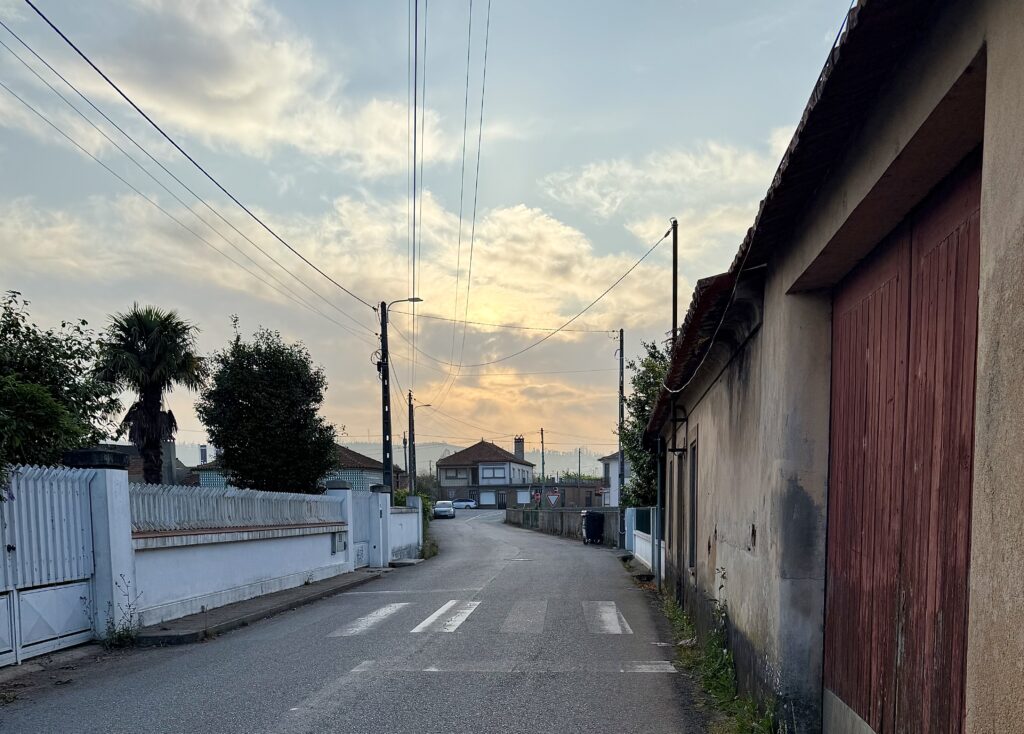
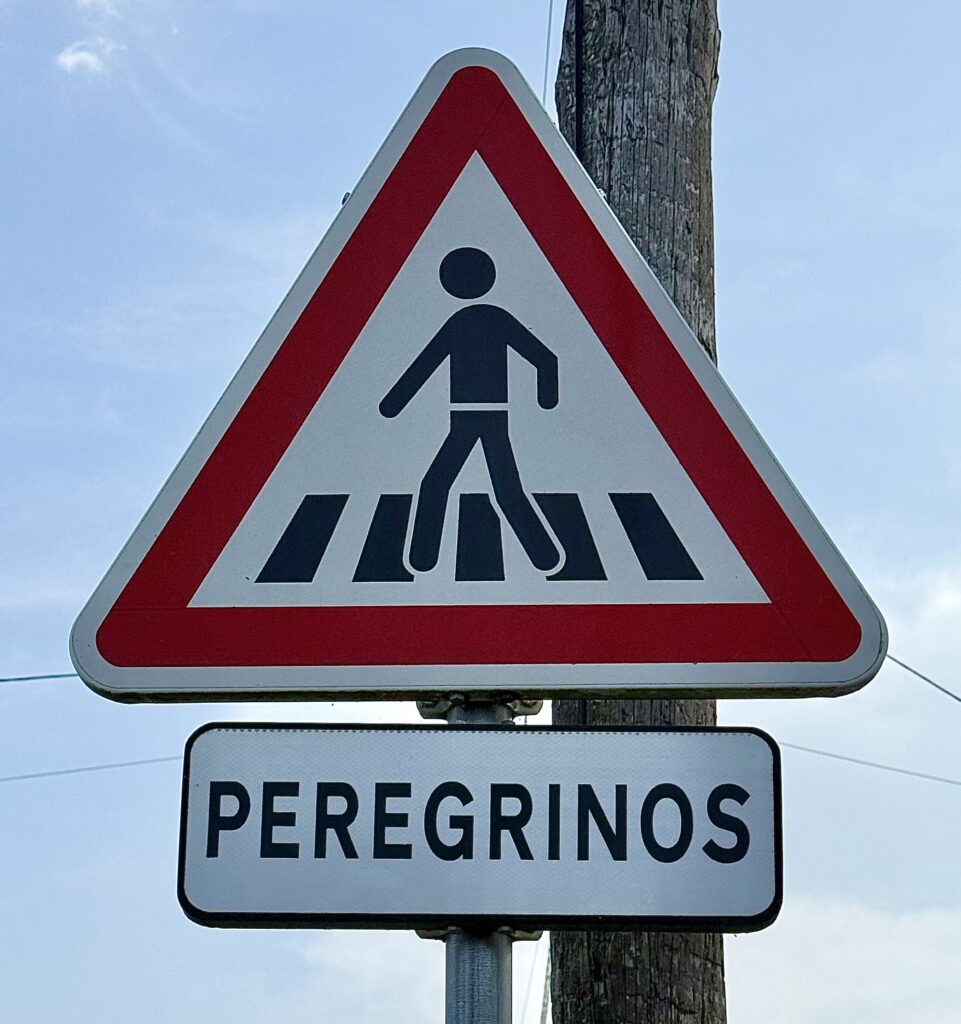
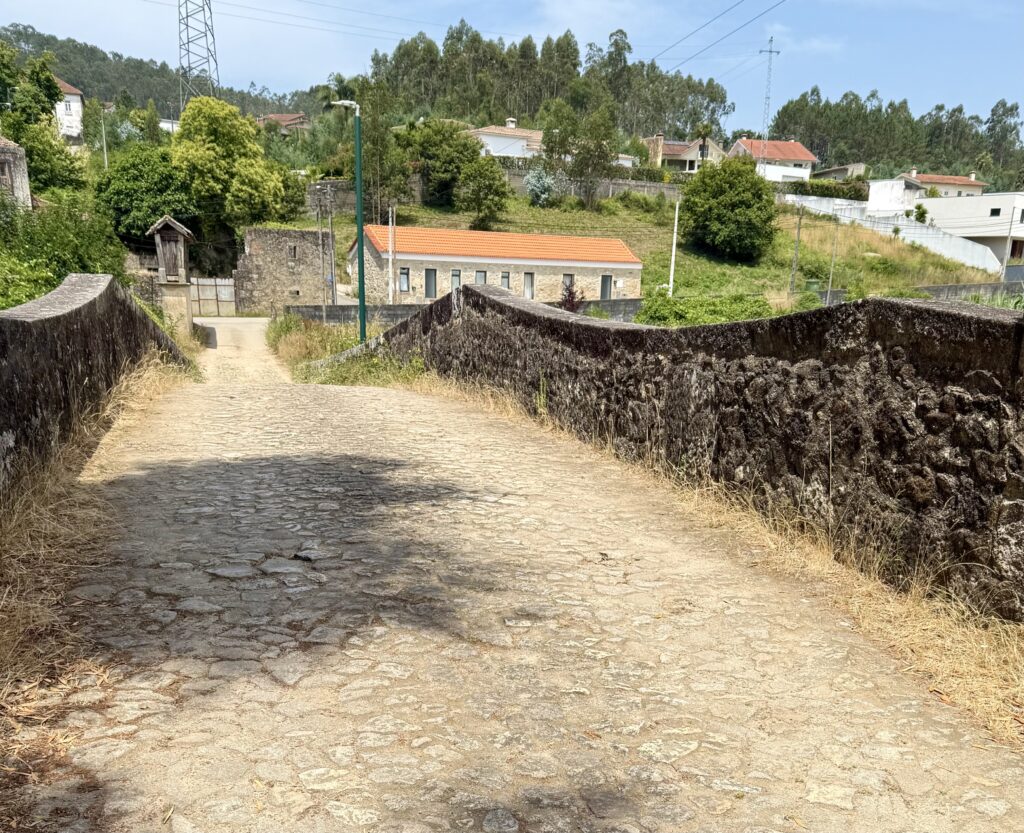
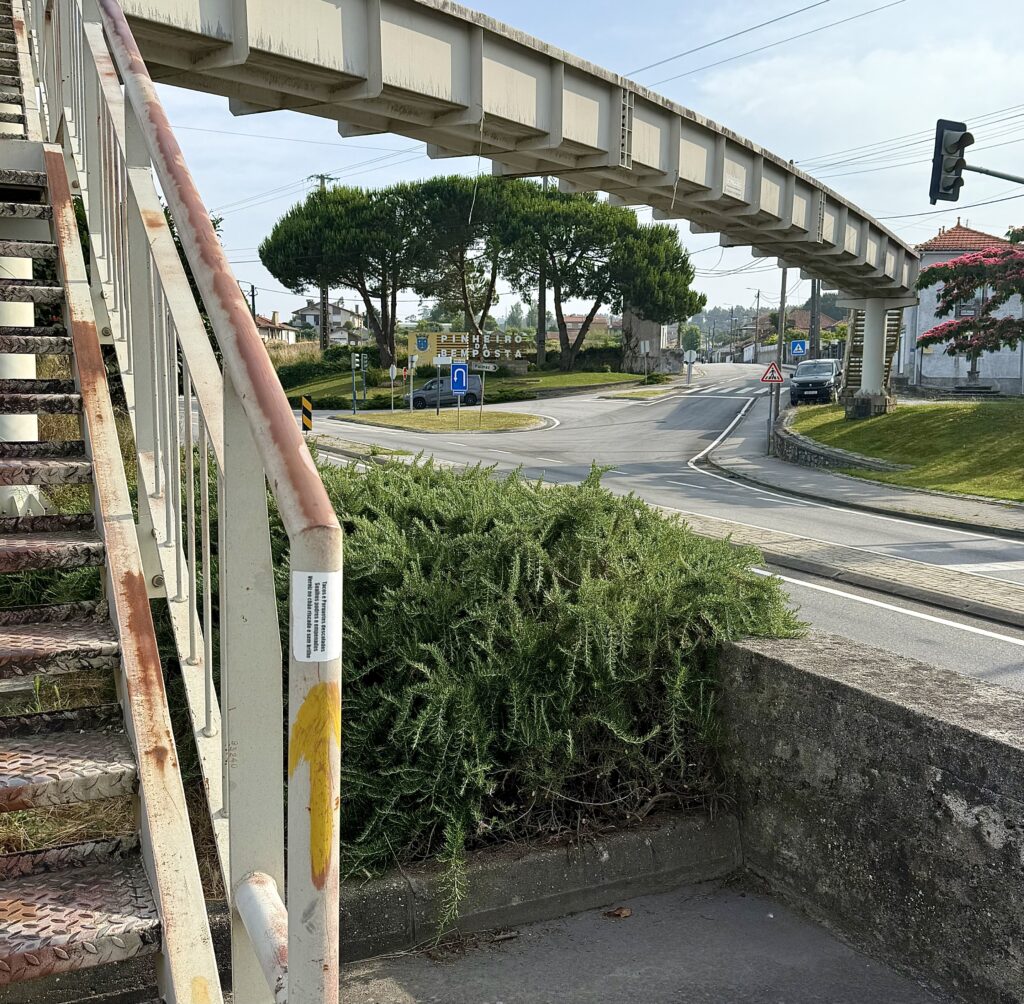
The yellow arrow pointed up and over a walkway in Pinheiro da Bemposta.
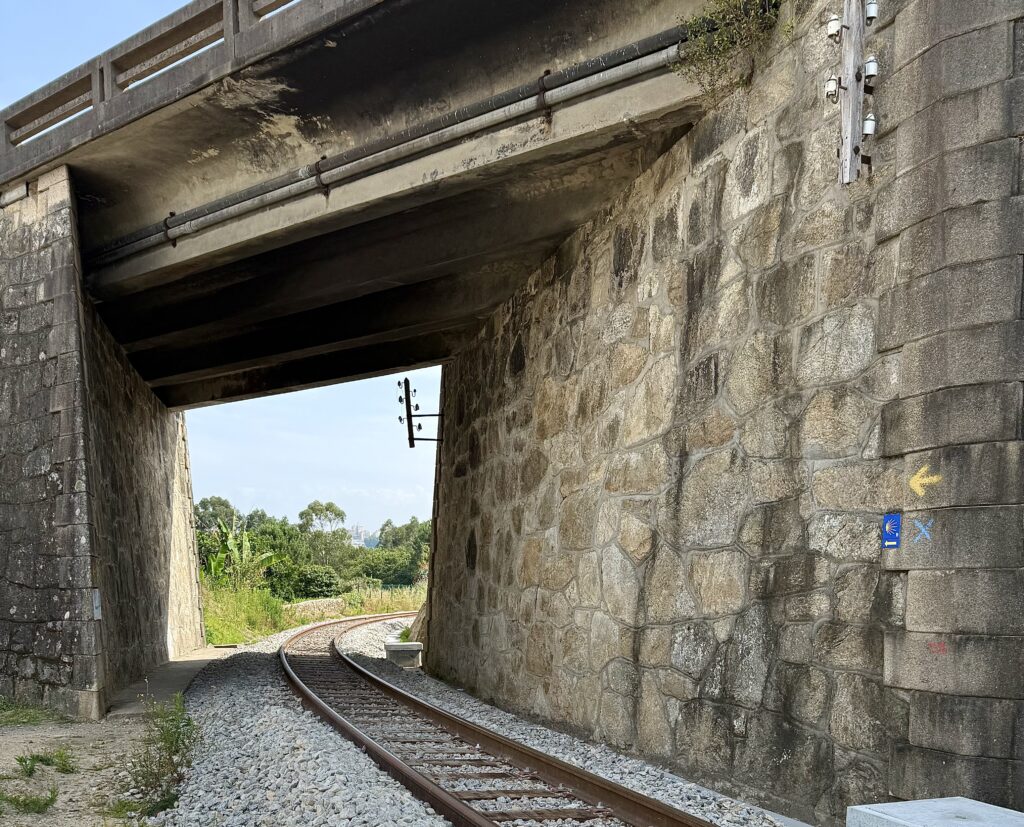
Railroad tracks intersected the trail several times (I looked for trains before crossing!).
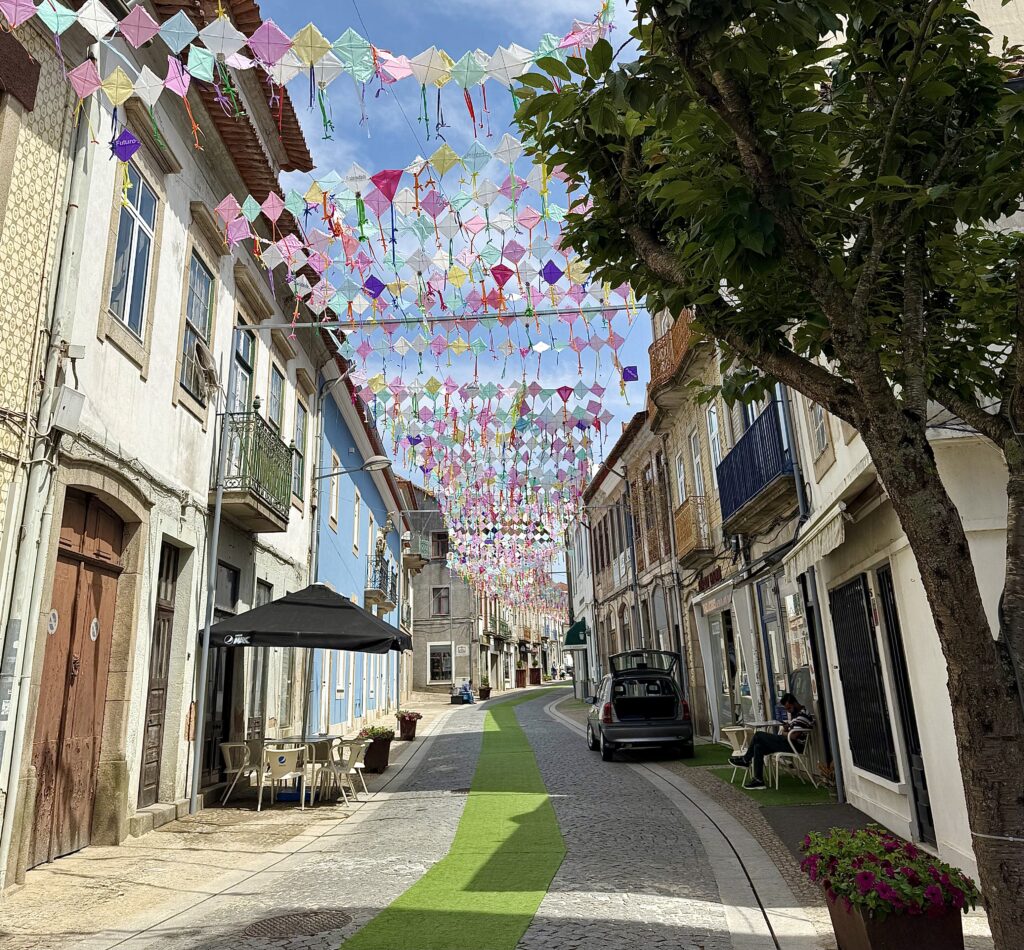
Kites flew overhead in Oliveira de Azemeis.
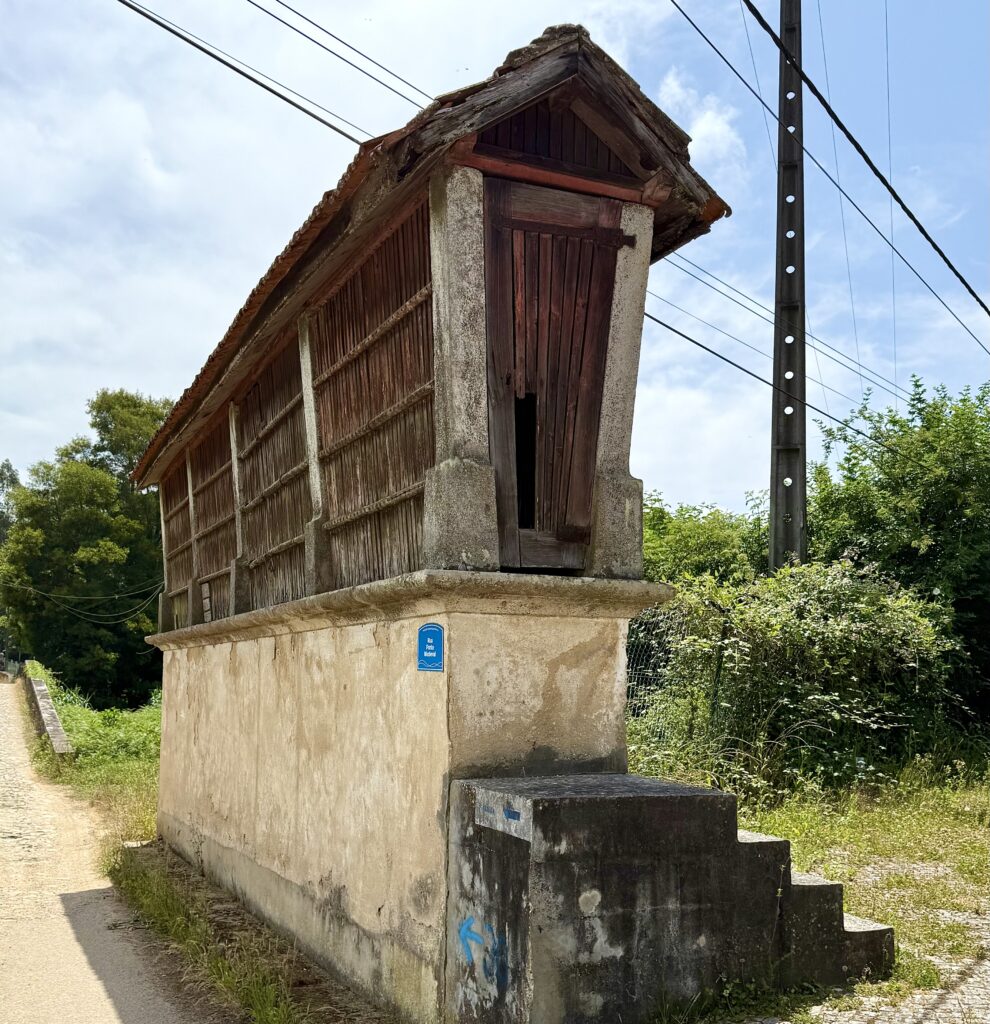
Horreos, or granary storage structures, started to appear — the earliest date back to the Middle Ages. They’re one of my favorite cultural customs seen in Portugal & Spain.
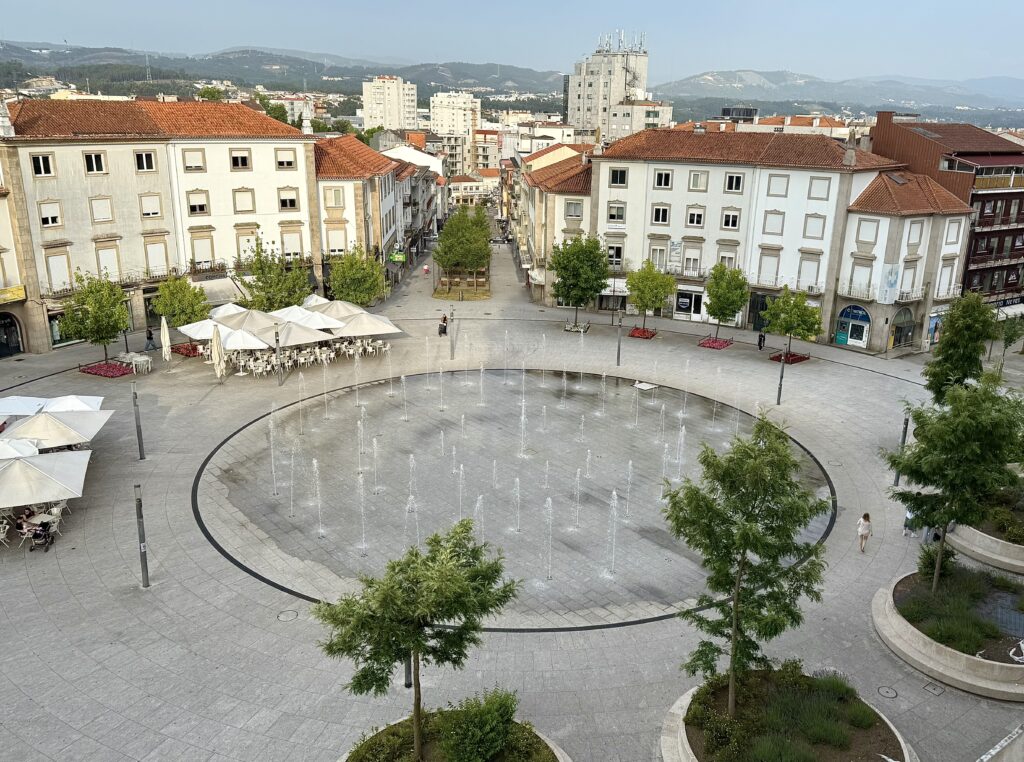
View from my hotel in Sao Joao da Madeira — the plaza’s water fountain spouted intermittently.
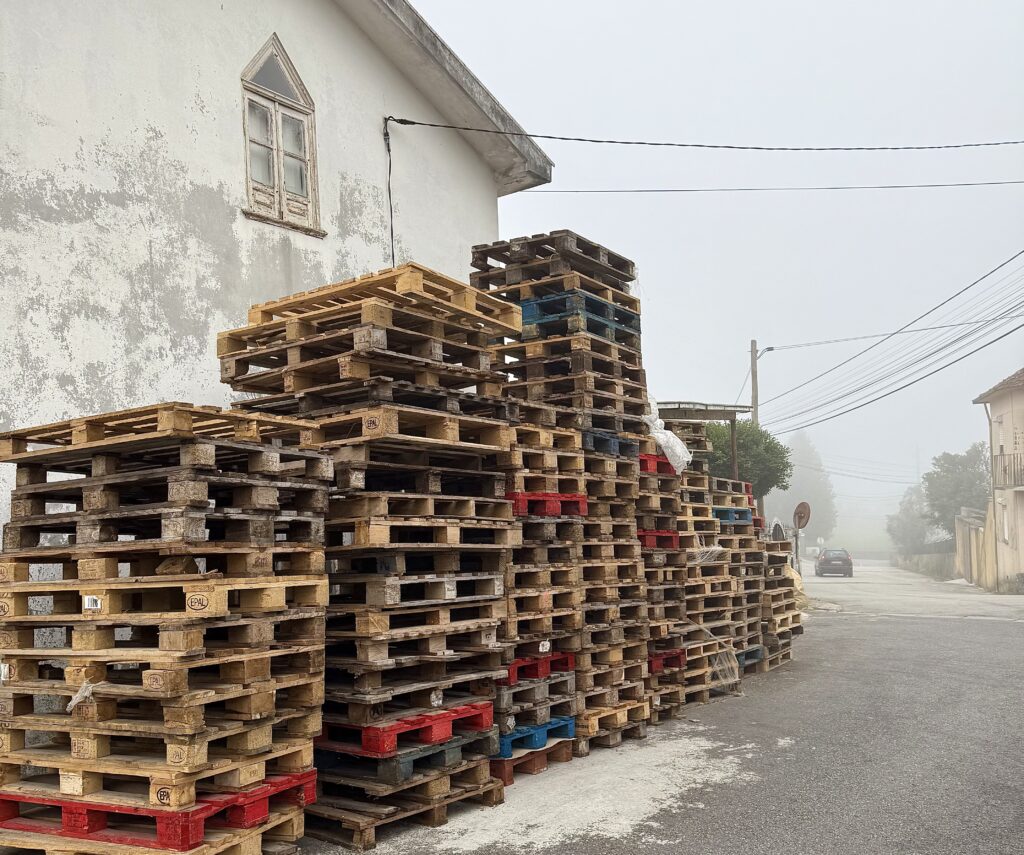
Day 10 to Grijo began with fog, a mystical atmosphere to walk in
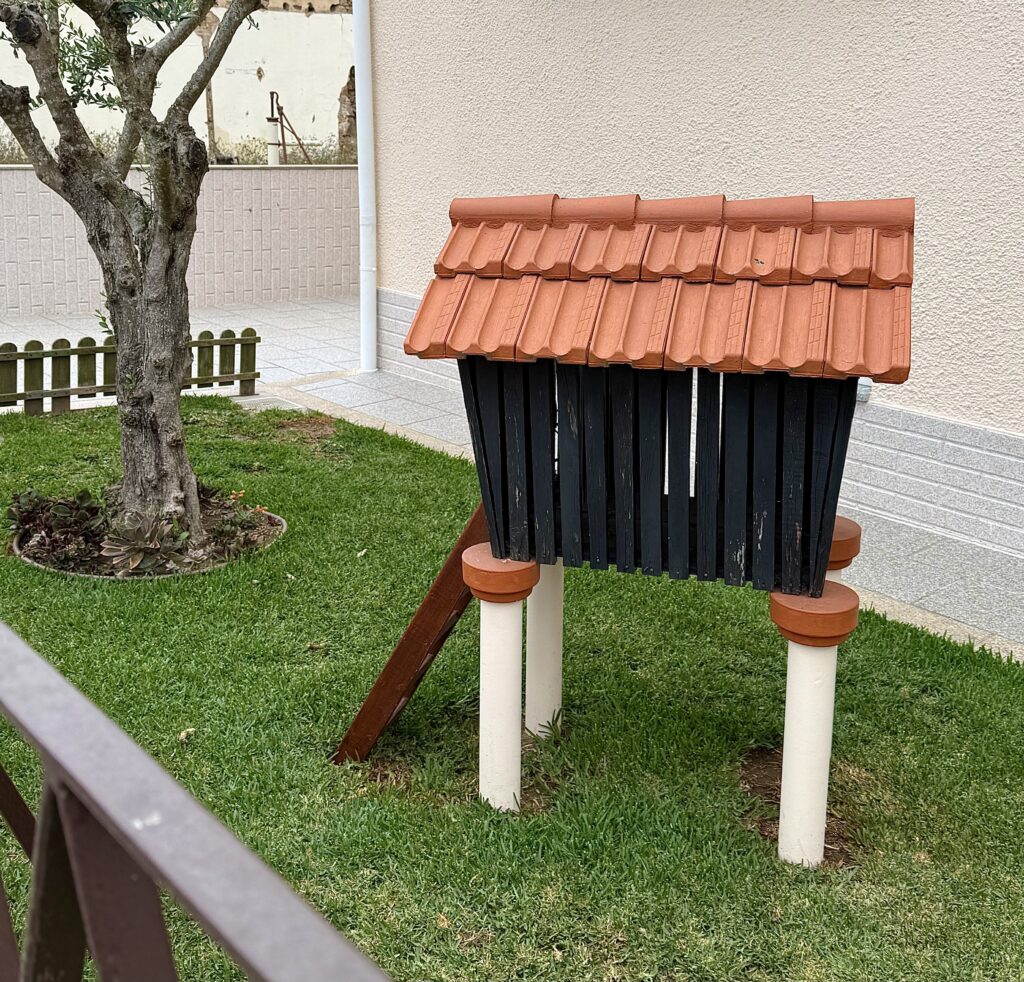
‘Mini-horreo’
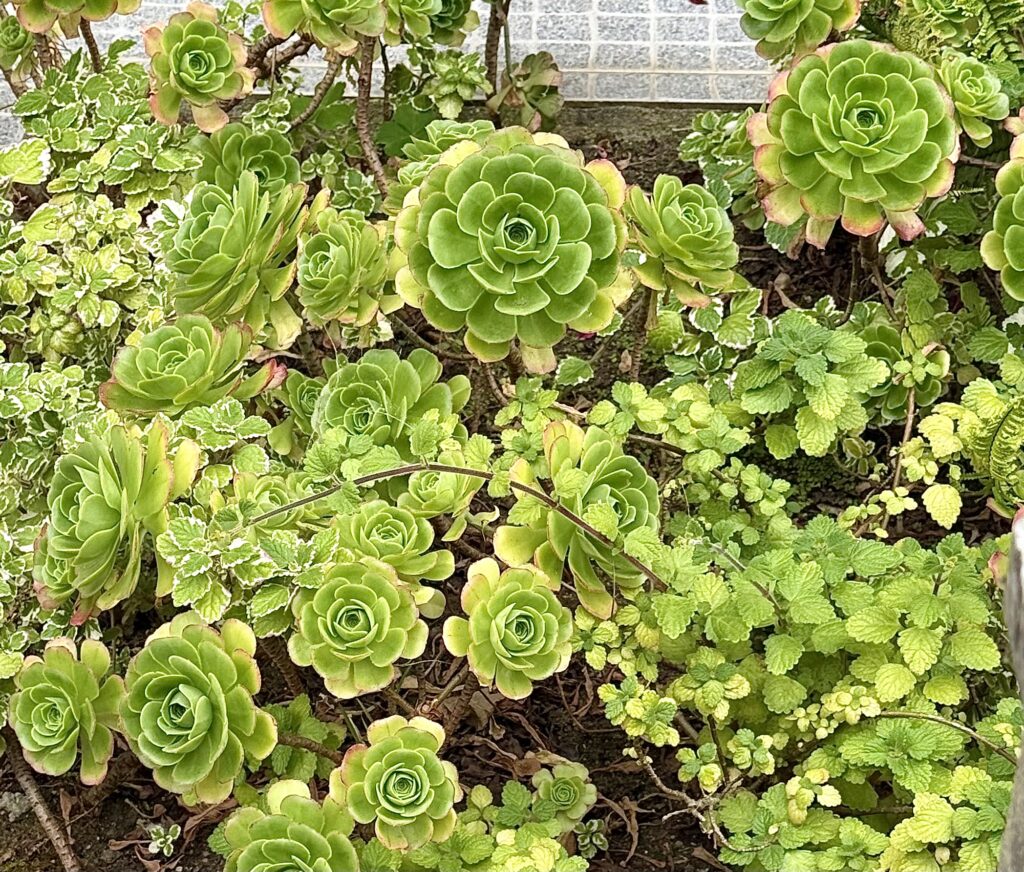
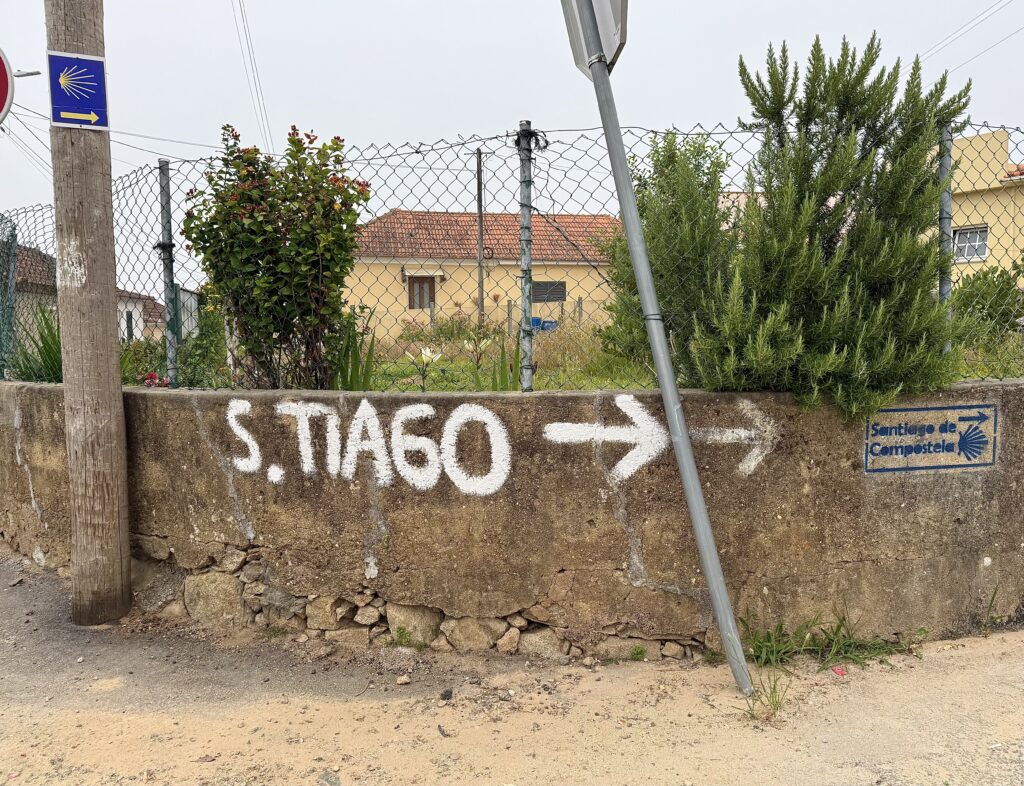
4 arrows directed walkers at a corner in Escapaes.
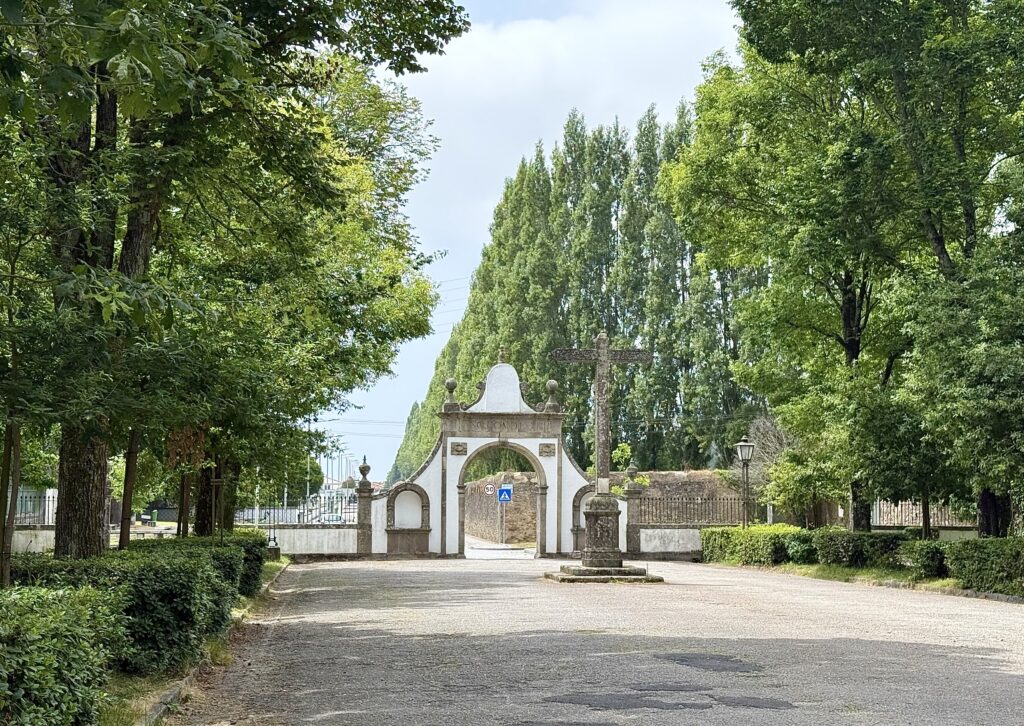
Gateway to the Mosteiro de Sao Salvador in Grijo — the order was transferred here in the 12th c.
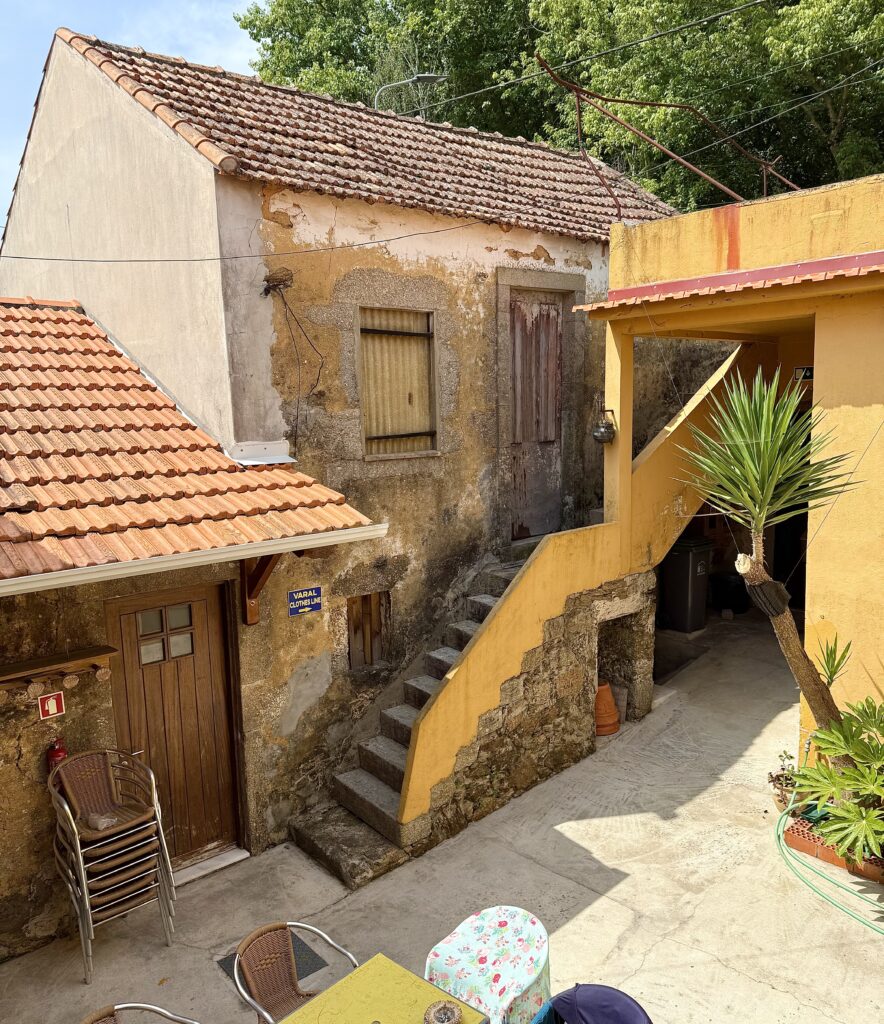
The older part of Albergue Sao Salvador de Grijo where I stayed in Grijo — the hospitalero mentioned that the American Pilgrims on the Camino organization had contributed to remodeling the ‘newer’ section, which included a kitchen & spacious bathroom.
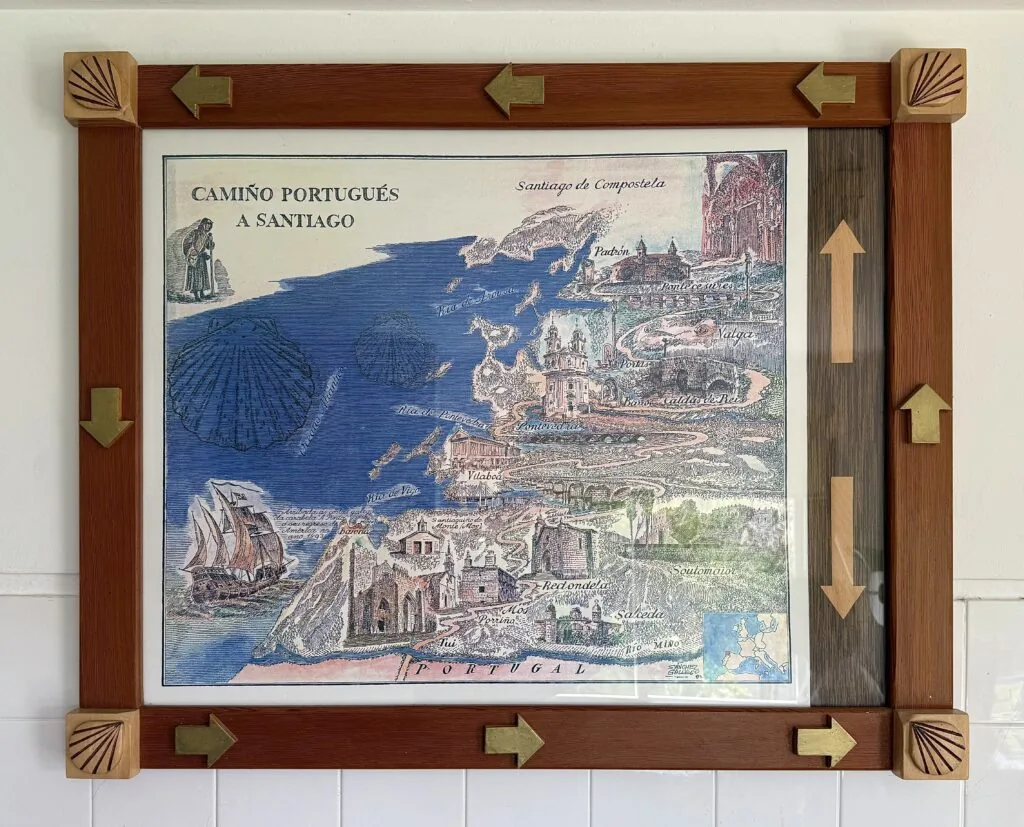
The albergue’s illustrated map detailing the Portuguese routes
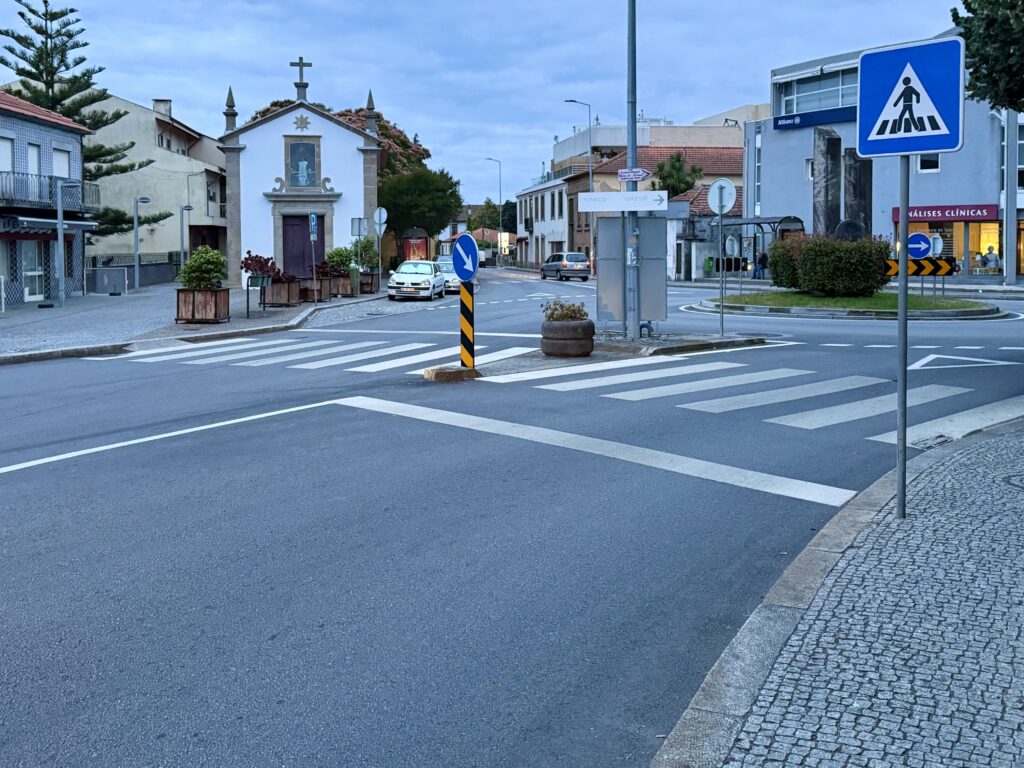
Early morning light leaving Grijo on Day 11, the last day of the walk
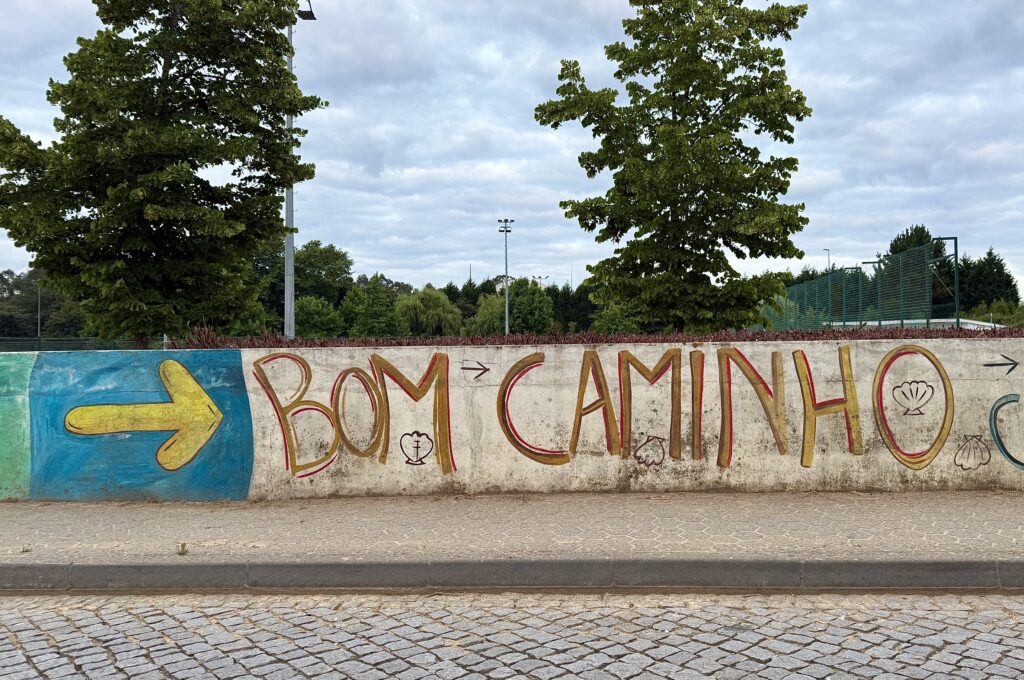

Near Perosinho the path followed the ancient Roman Road (Calzada Romana).
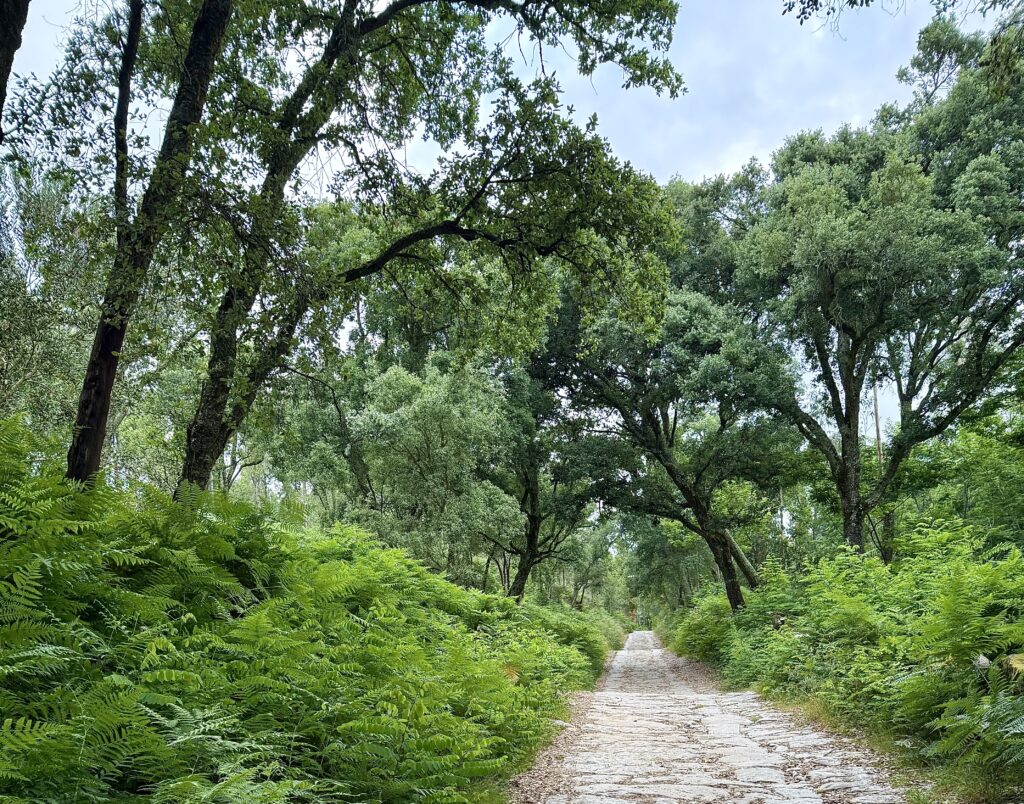
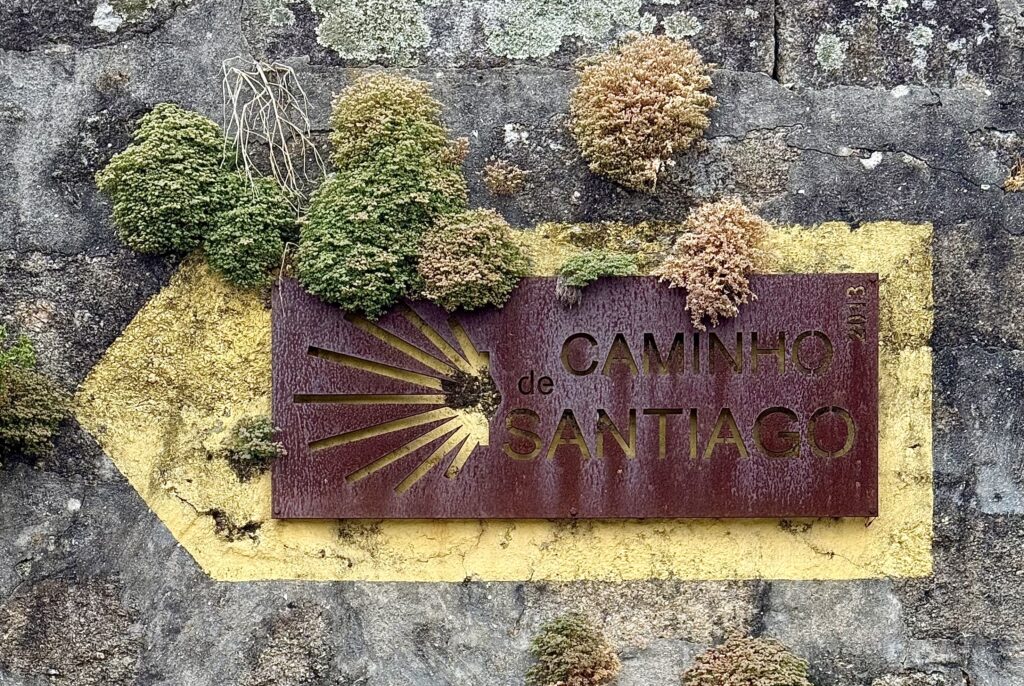
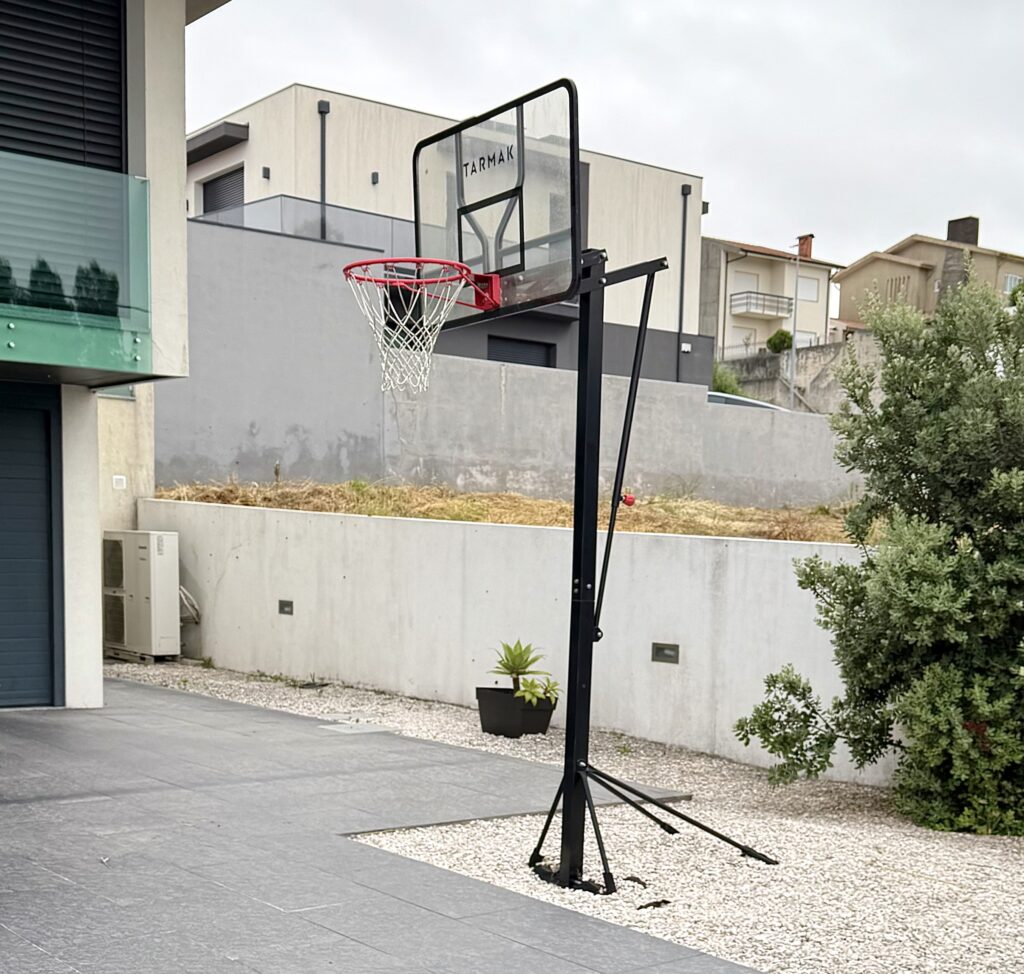
For Dad — a basketball hoop stood ready for action in a residential area.
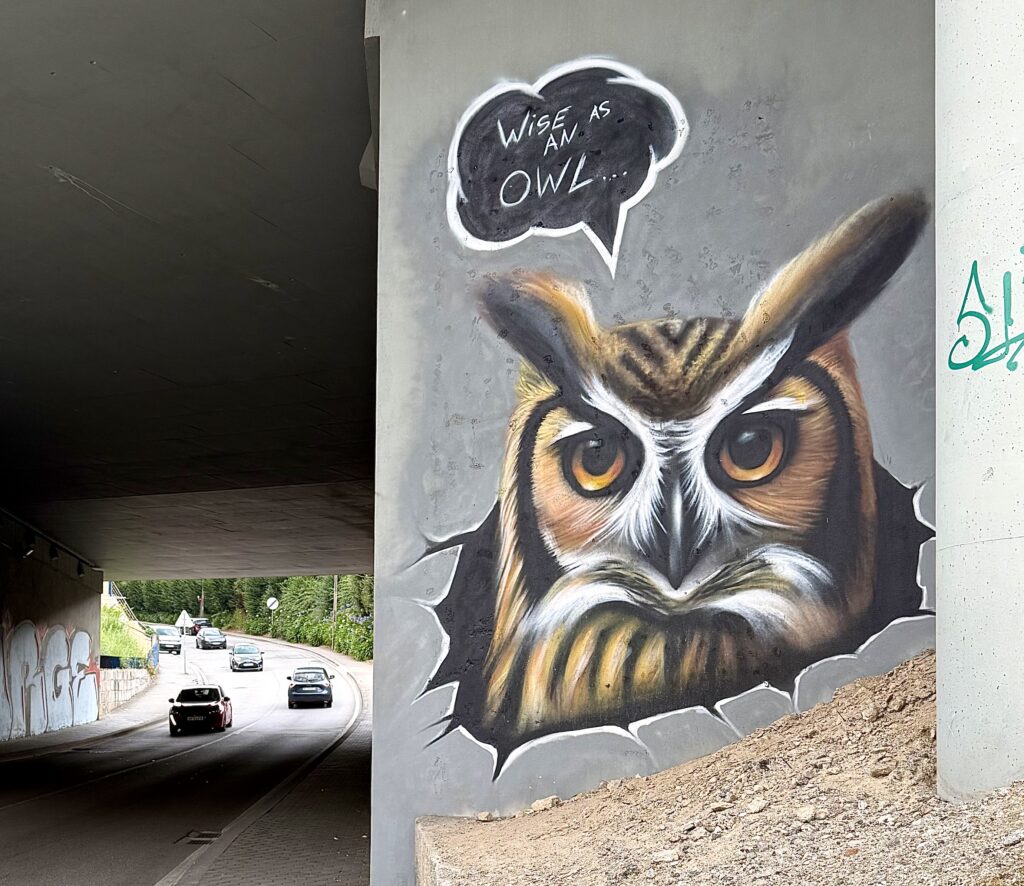
A roadway mural in Vila Nova de Gaia, the city on the Douro River across from Porto
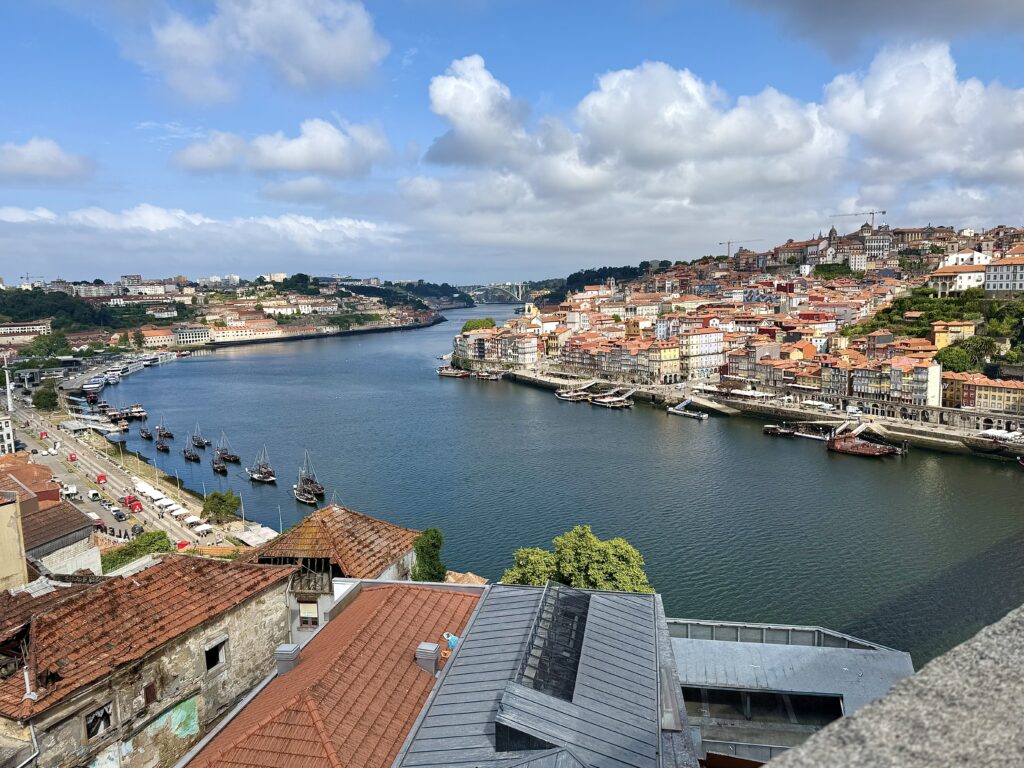
Picturesque Porto can be seen from Vila Nova de Gaia where port wine cellars line the water.
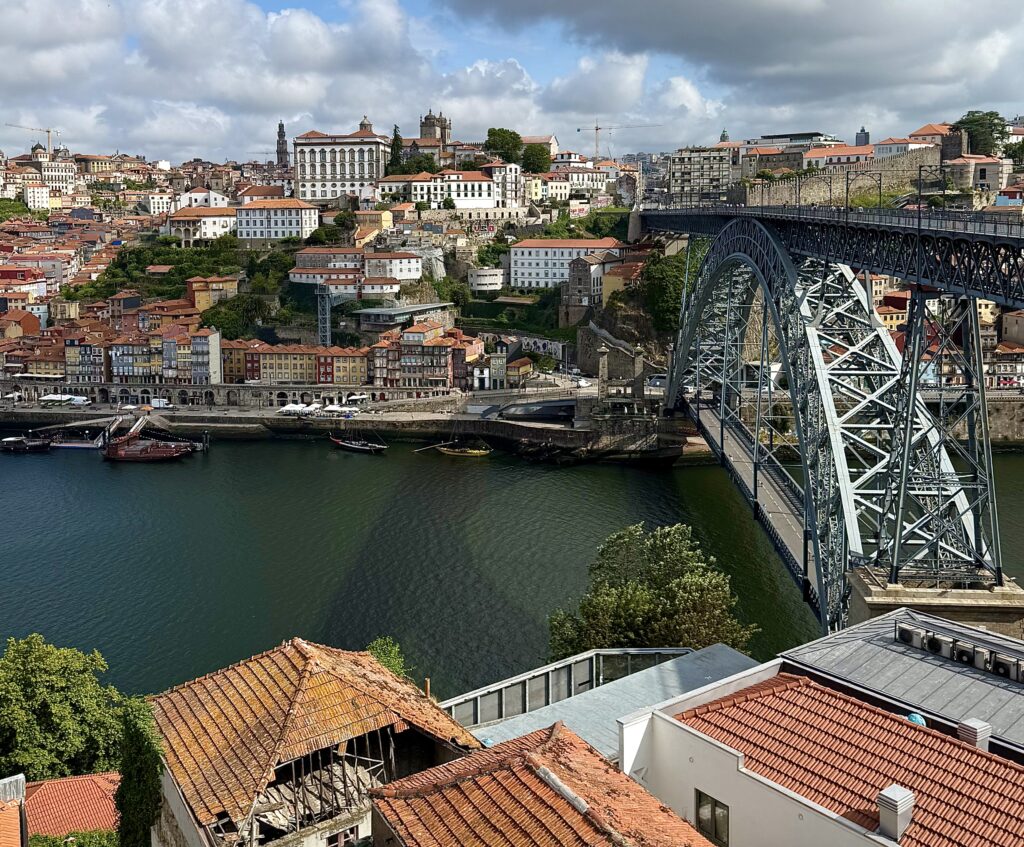
The Ponte de Dom Luis I bridge connects Vila Nova de Gaia to Porto. The trek across was windy but exciting — the final steps to reach Porto!
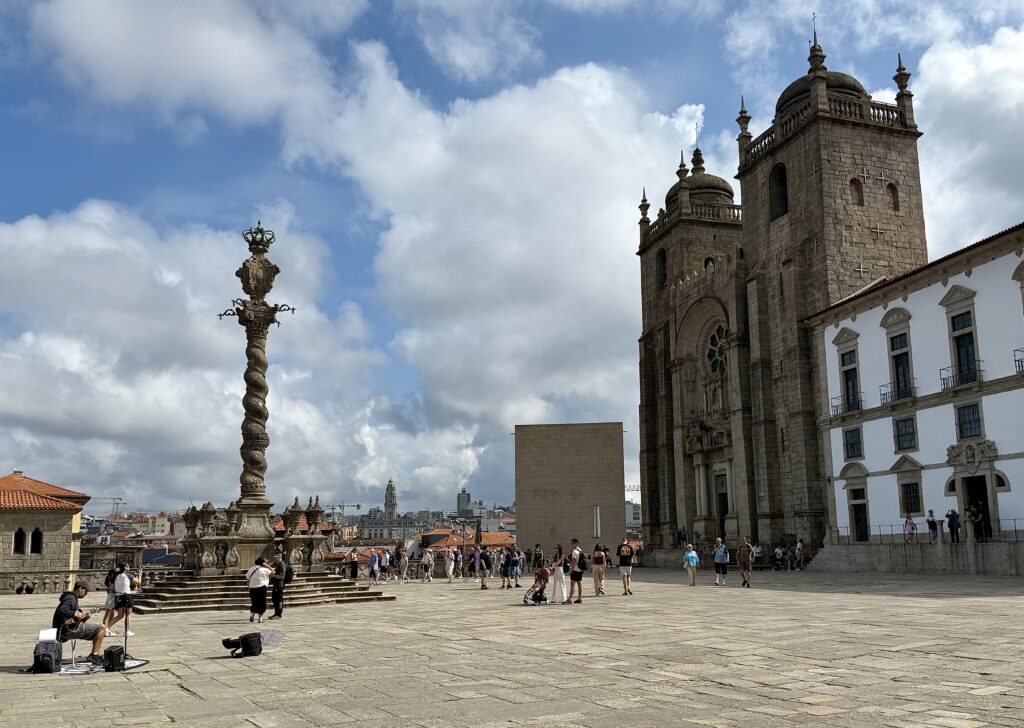
At the Porto Cathedral a musician was playing in the plaza (bottom left corner) — the music added to the moment of arrival.
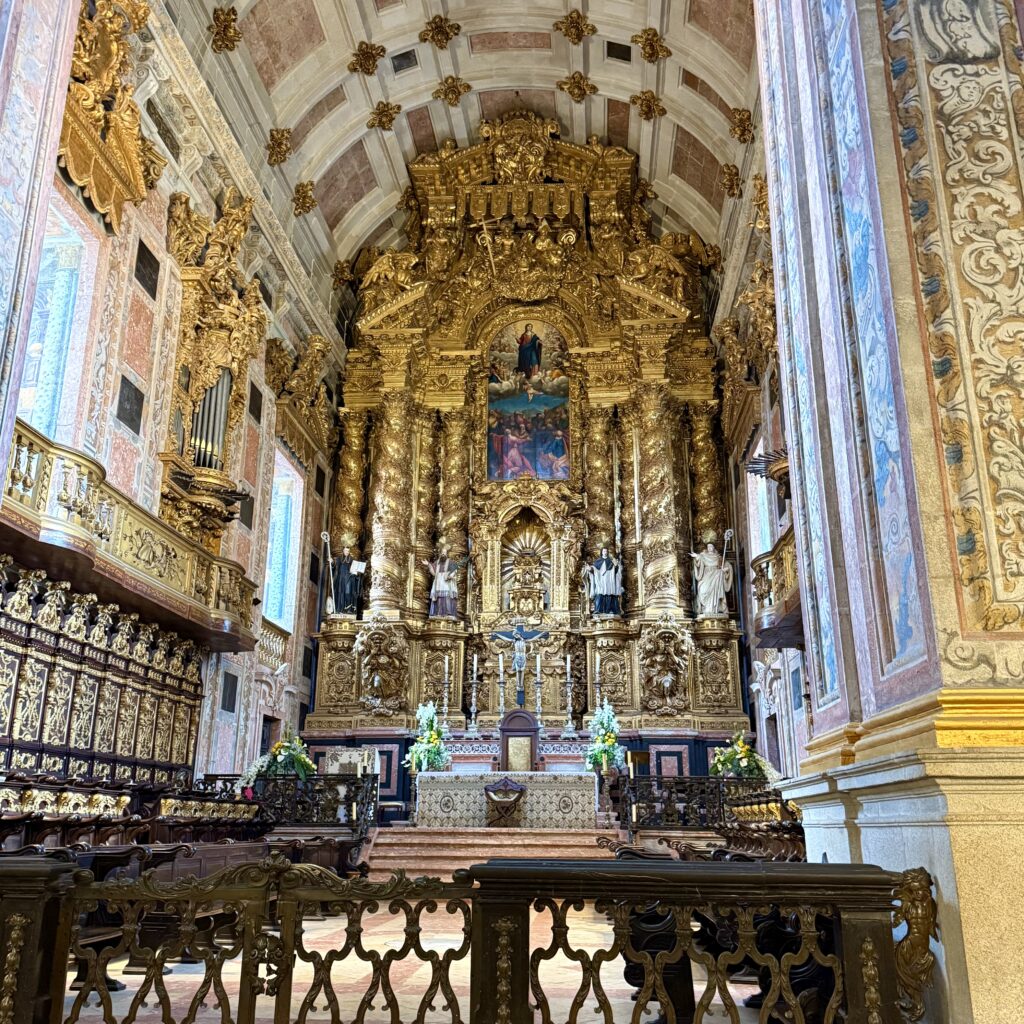
At the Cathedral I received my last sello and afterwards explored the church complex, which originated in the 12th c. The Baroque altar features gilded wood and statues of saints & angels.
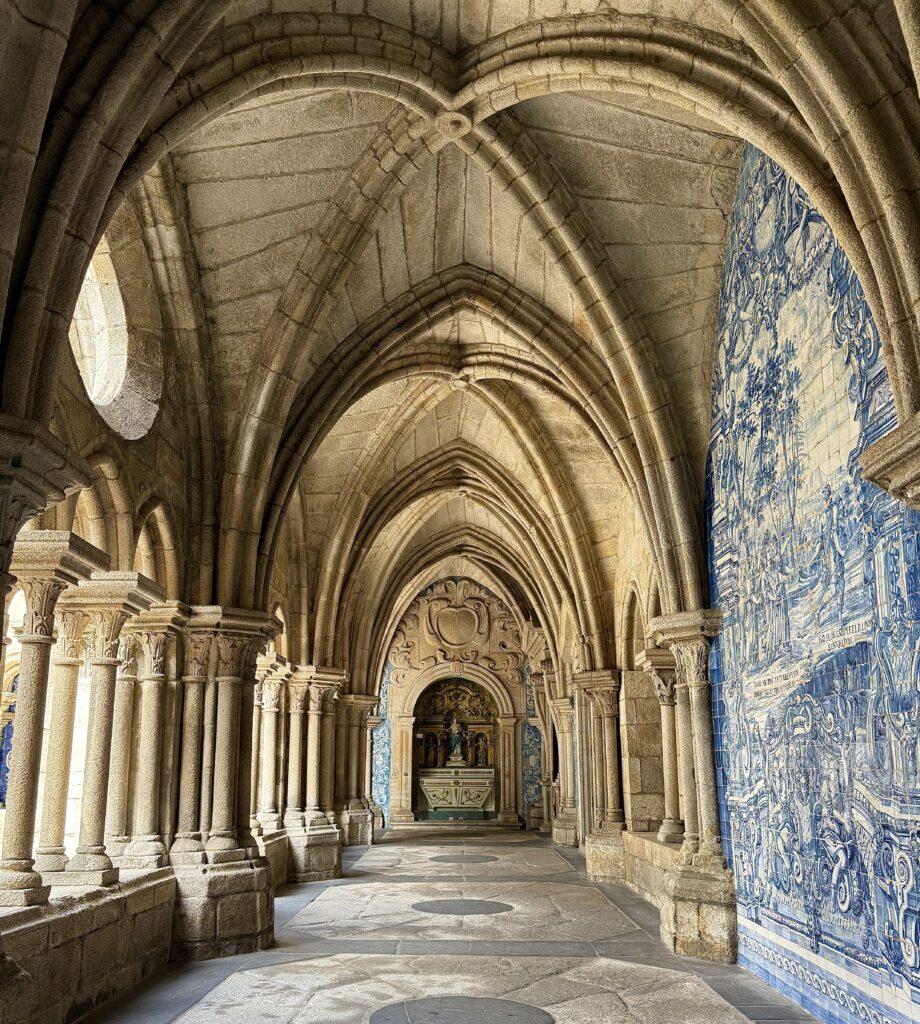
The cloister is my favorite part in a historical church — as I wandered around the azuelo covered hallways the bells began to ring — a wonderful sound to close the long journey begun last year!
From the Cathedral it was a short stroll over to the Sao Bento train station, and about four hours later I arrived in Lisbon to meet Dad. Similar to the past few years, he participated in the Portugal Basketball Festival that takes place the end of June in the city’s Alvalade quarter. It was a jam-packed basketball weekend before flying home.
I’m grateful to have had the opportunity to explore the Portuguese Central route from Lisbon to Porto — the charming towns, landscapes, pilgrimage significance, and the walkers & locals met along the Road contributed to yet another special Camino with many memories to enjoy. Until the next Pilgrim Pouch adventure, Ultreia et Suseia!
For the rest of the journey: Tomar to Porto, Part 1 & Part 2