
Day 4 from Zambujal to Coimbra was forecast to be another hot day. By then my routine entailed waking up at 4:30, getting ready, and then leaving at daybreak. Other walkers met opted for a similar schedule, and we often ran into each other at cafe stops to refresh. A choice beverage was “limonada” made with fresh squeezed lemons or a carbonated drink with real lemon juice.
Thus far, the trail from Tomar to Porto looked similar to the route from Porto to Santiago with many small towns & picturesque countryside. Farmland, olive & eucalyptus tree groves, and gardens bordered by stone fences prevailed. An Irish pilgrim I met near Tomar commented that he wasn’t sure why the route from Lisbon to Porto had received some negative reviews on Camino forums. Perhaps this was because of the industrial section around Lisbon and miles of agricultural fields beyond, but I found the history & landscapes along the path to be interesting and worth exploring.
Snapshots from Days 4-6:
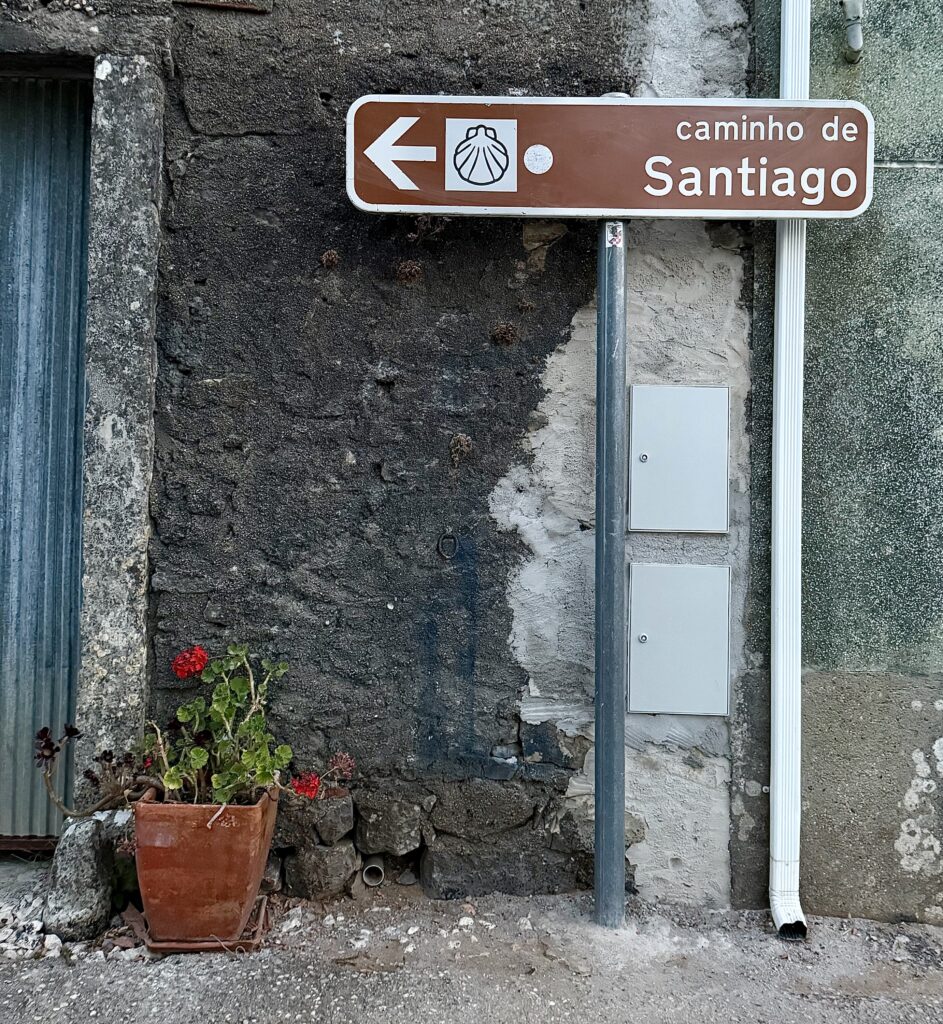
Directions out of Zambujal

Not far from Zambujal an outdoor retreat appeared, created by people promoting peace. “Be happy and make others happy” was their message to the world.

This Way near Condeixa-A-Velha
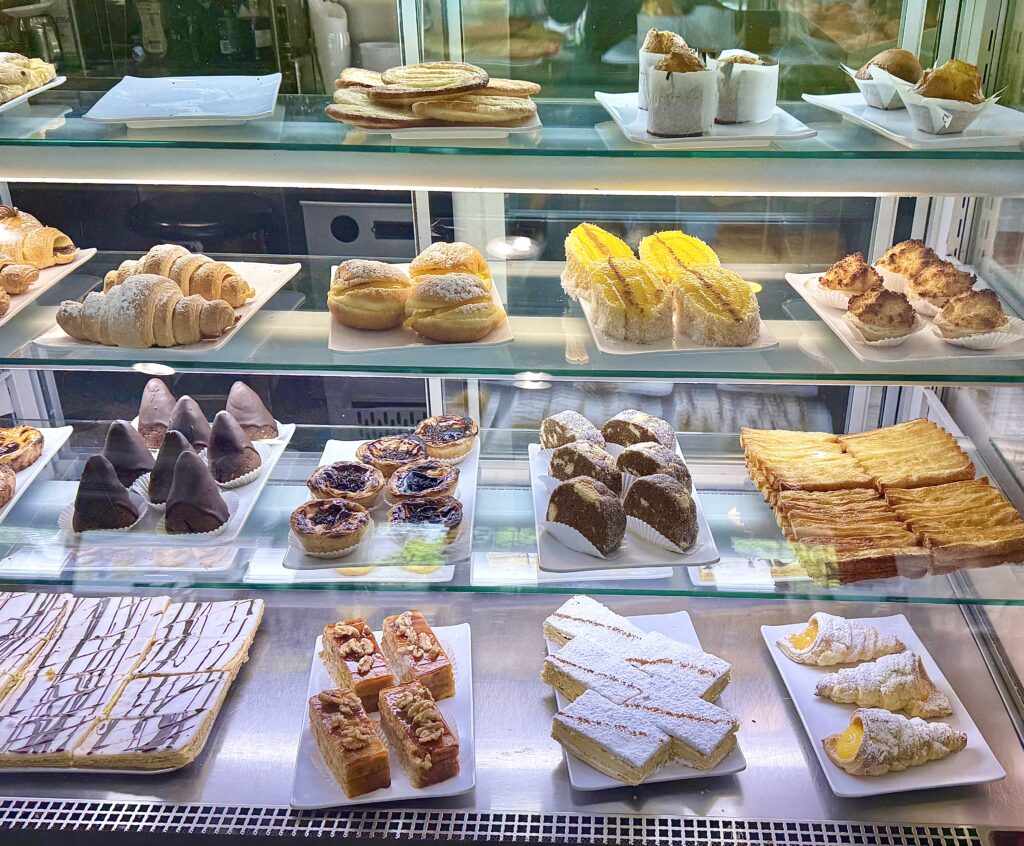
Cafe pastries displayed in Cernache.
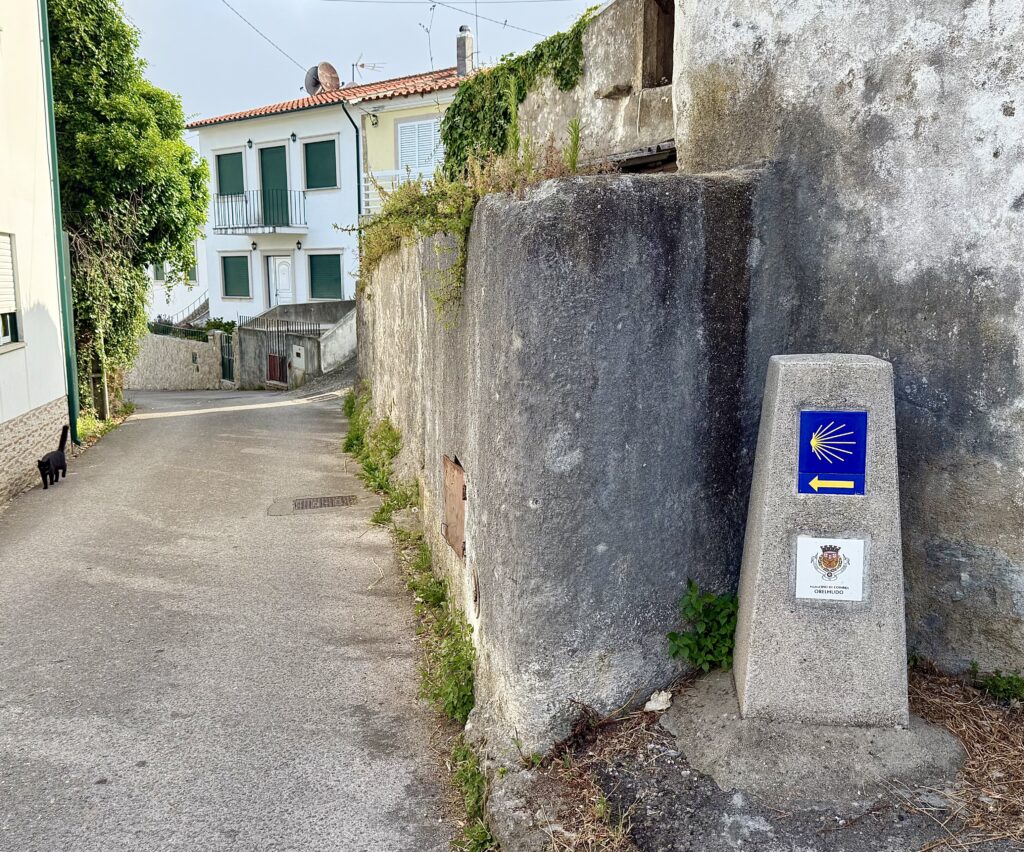
Keep going straight through Cernache-Orelhudo.
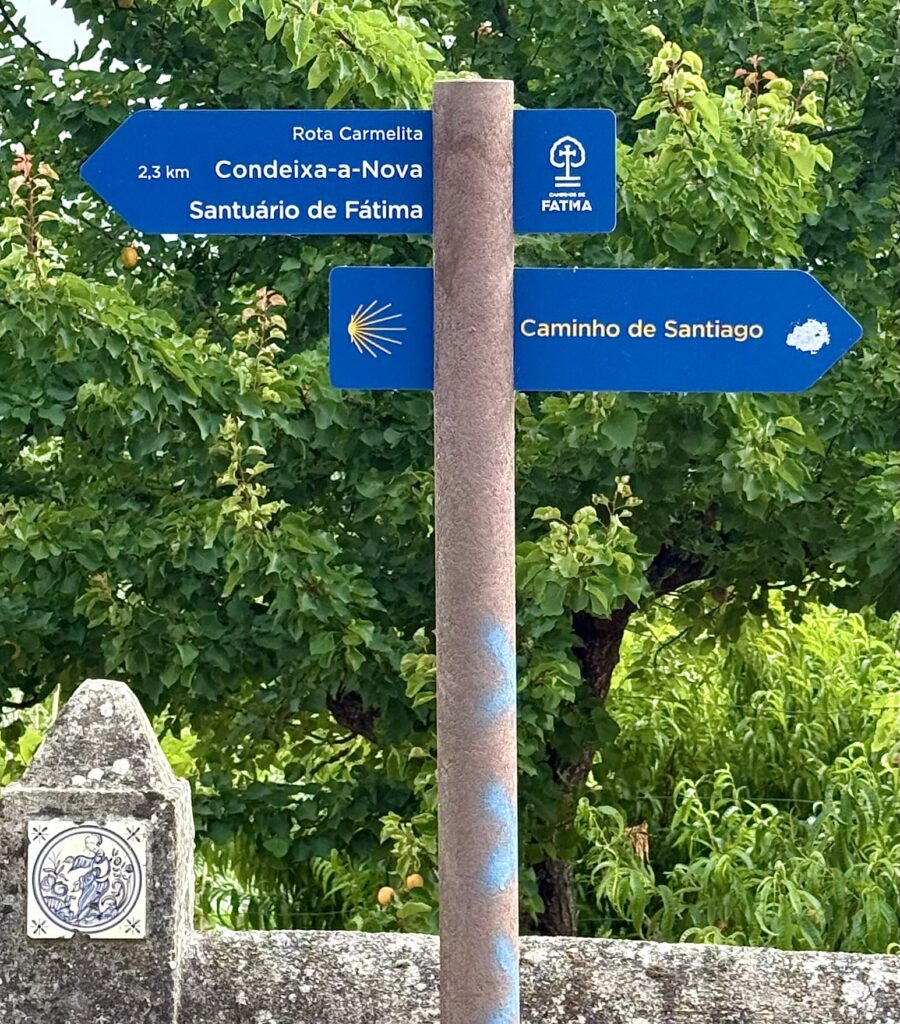
Turn right for the Caminho de Santiago

The path on a roadway bridge in Antanhol-Ladeira da Paula near Coimbra
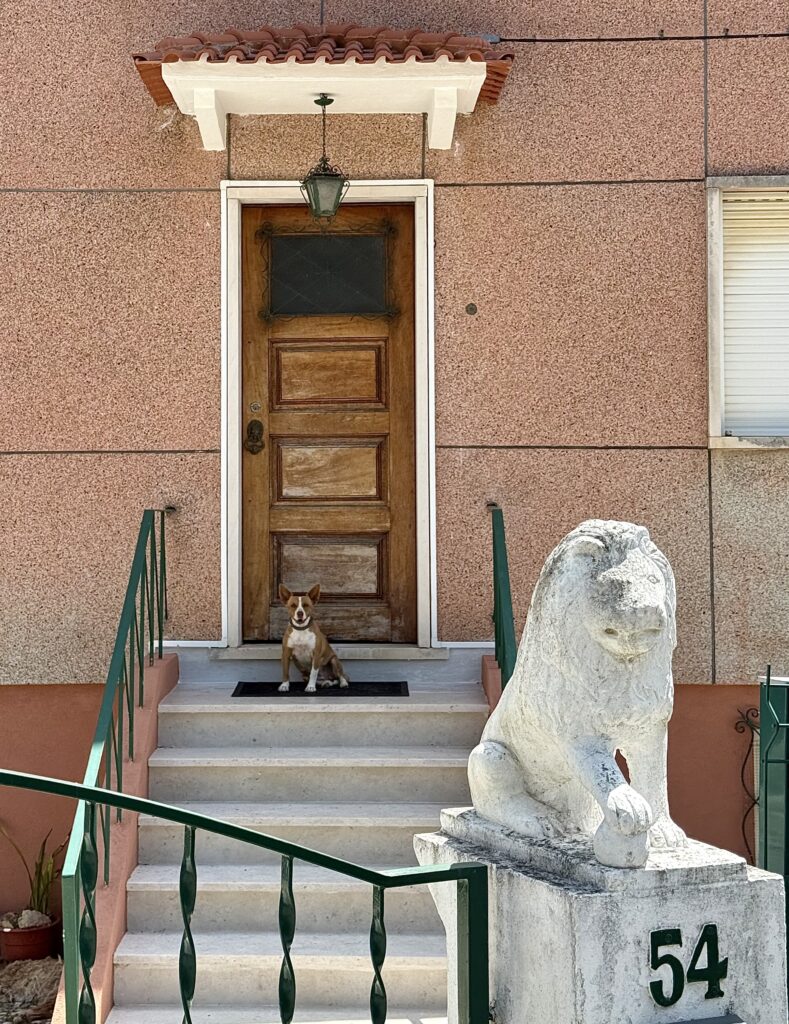
Dog Lion guarding #54
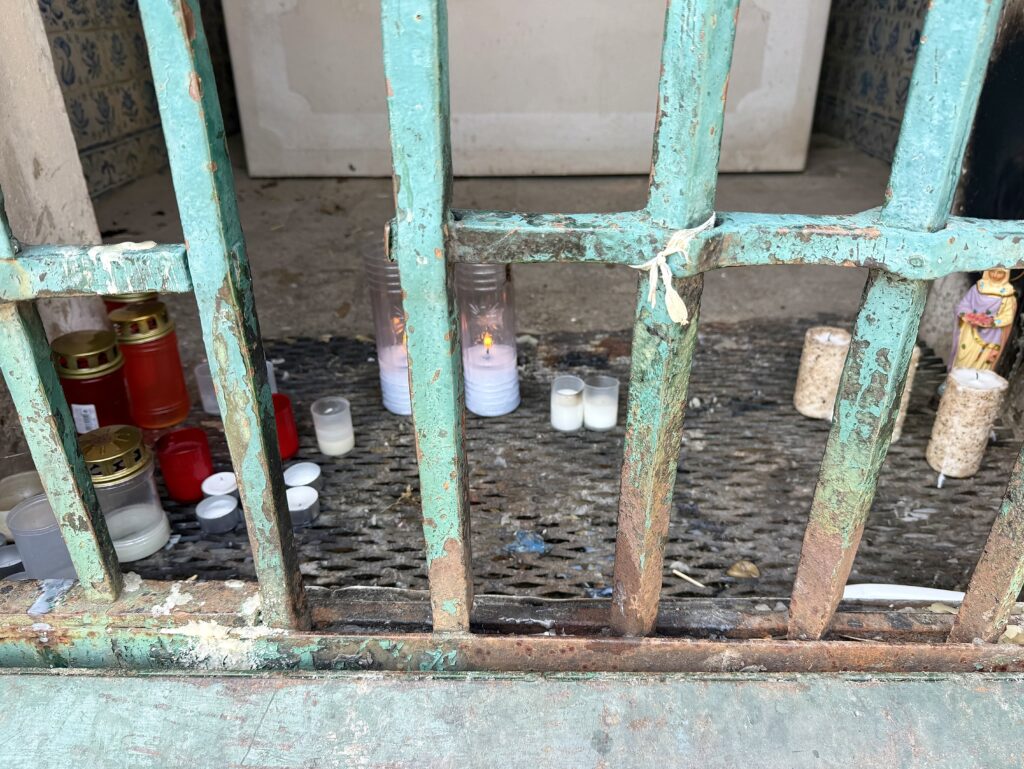
A window shrine in Santa Clara, a parish with two monasteries dedicated to the saint and located across the Mondego River from Coimbra

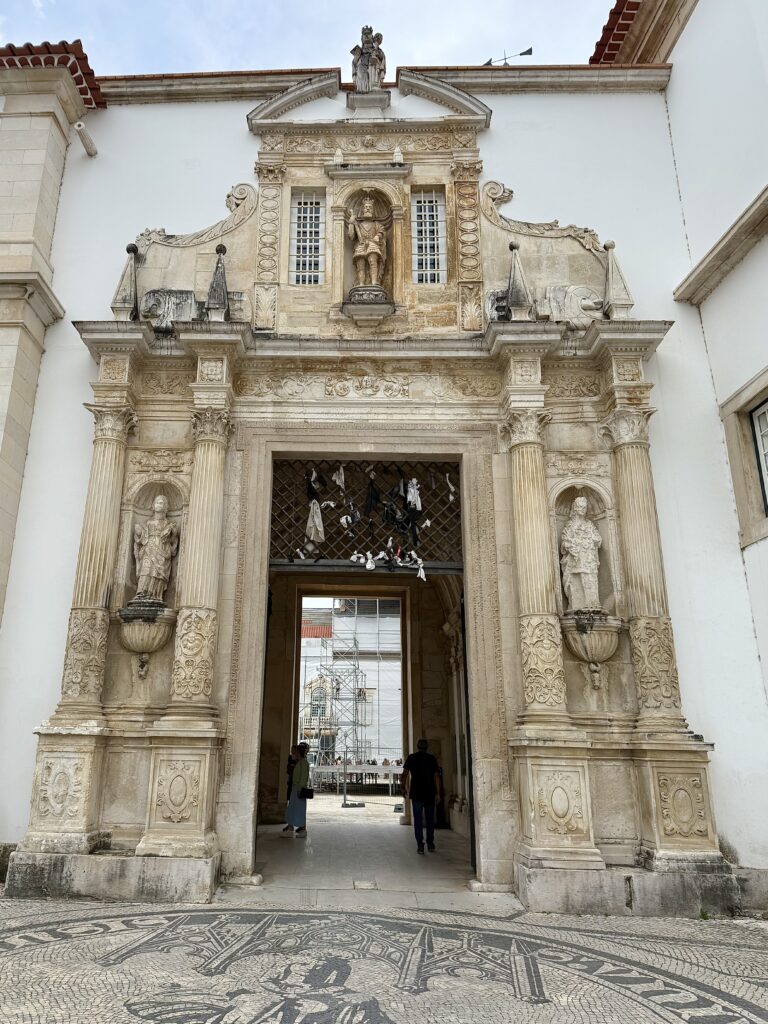
On the highest hill in Coimbra rests the Universidade de Coimbra, a UNESCO World Heritage Site established in 1537. Originally founded in Lisbon in 1290, it’s one of the world’s oldest universities. The entrance gate (Porta Ferrea or “Iron Gate”) into the complex includes a grate above the opening where students tie ribbons to mark the end of exams. The ribbons are then ceremonially burned.
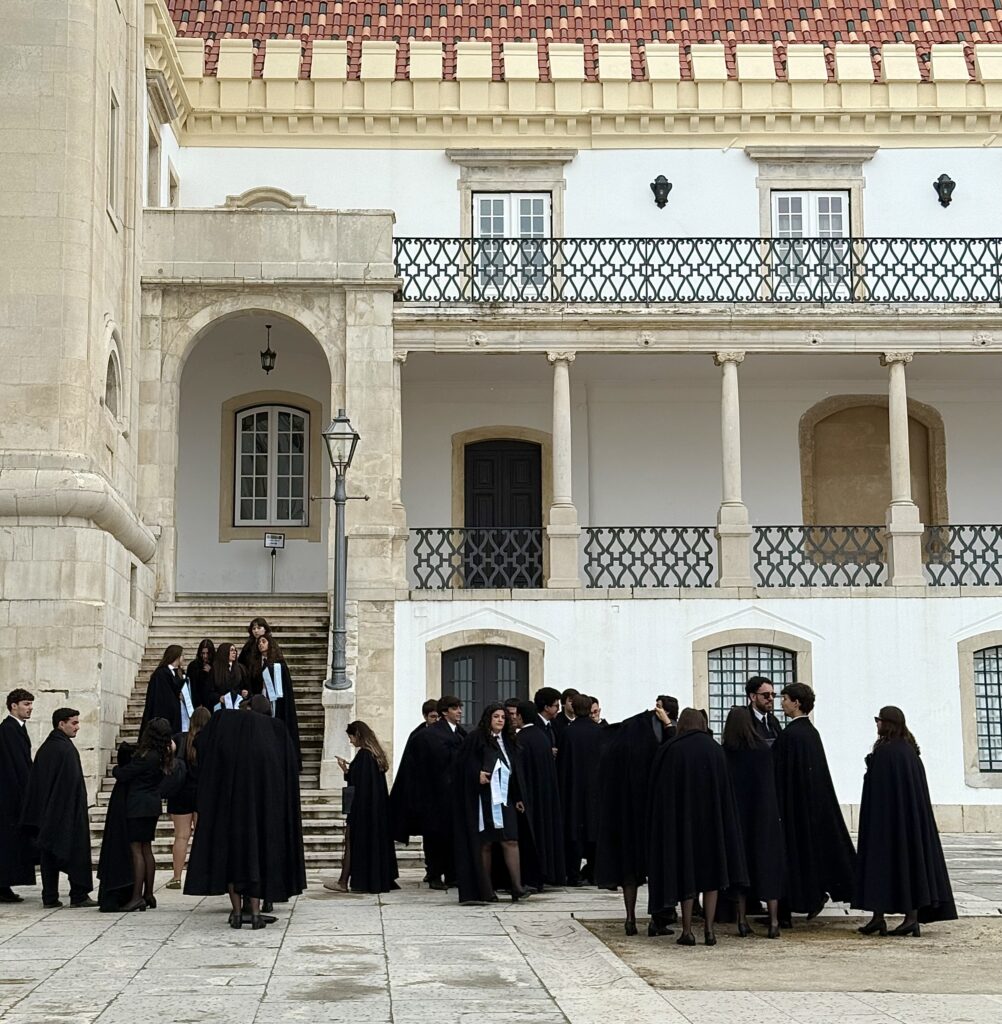
Another university tradition involves students wearing long black capes & robes. Originating in the 17th c., this custom reflected what was worn by clergy and the church’s influence on education. It serves as a symbol of equality, respect, humility, and academic achievement.
Luckily, on the day I visited there were students with their black capes in the university plaza. Tourists watched as they posed for family photos.
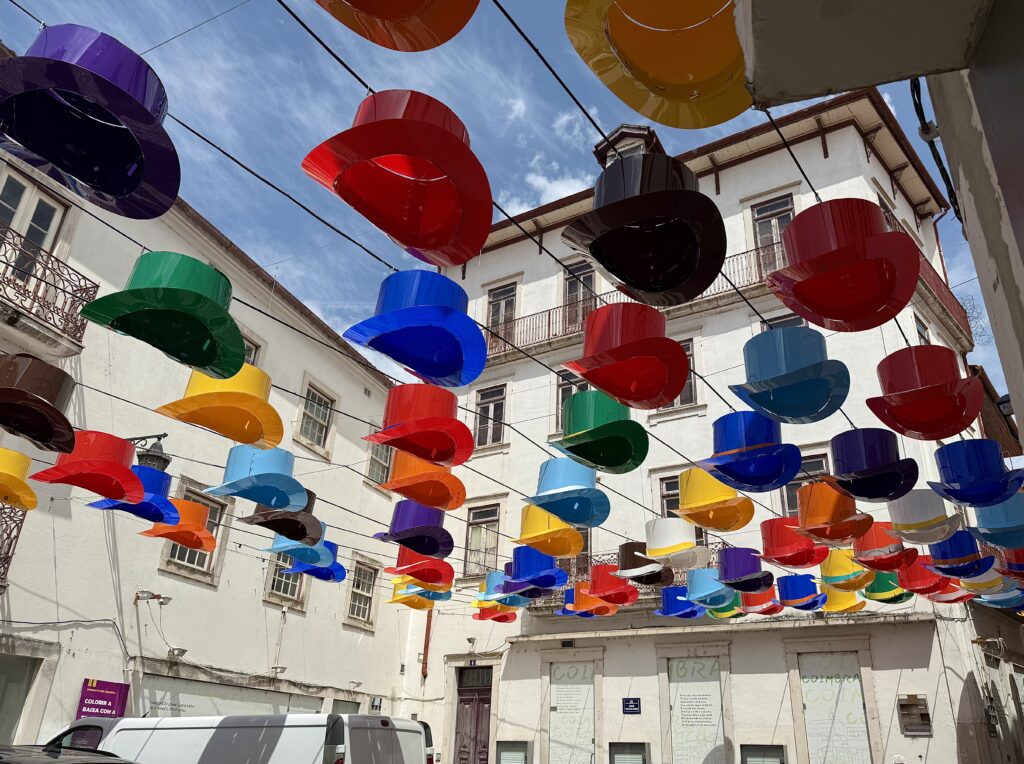
Lively hats hung above streets as part of the graduation festivities.
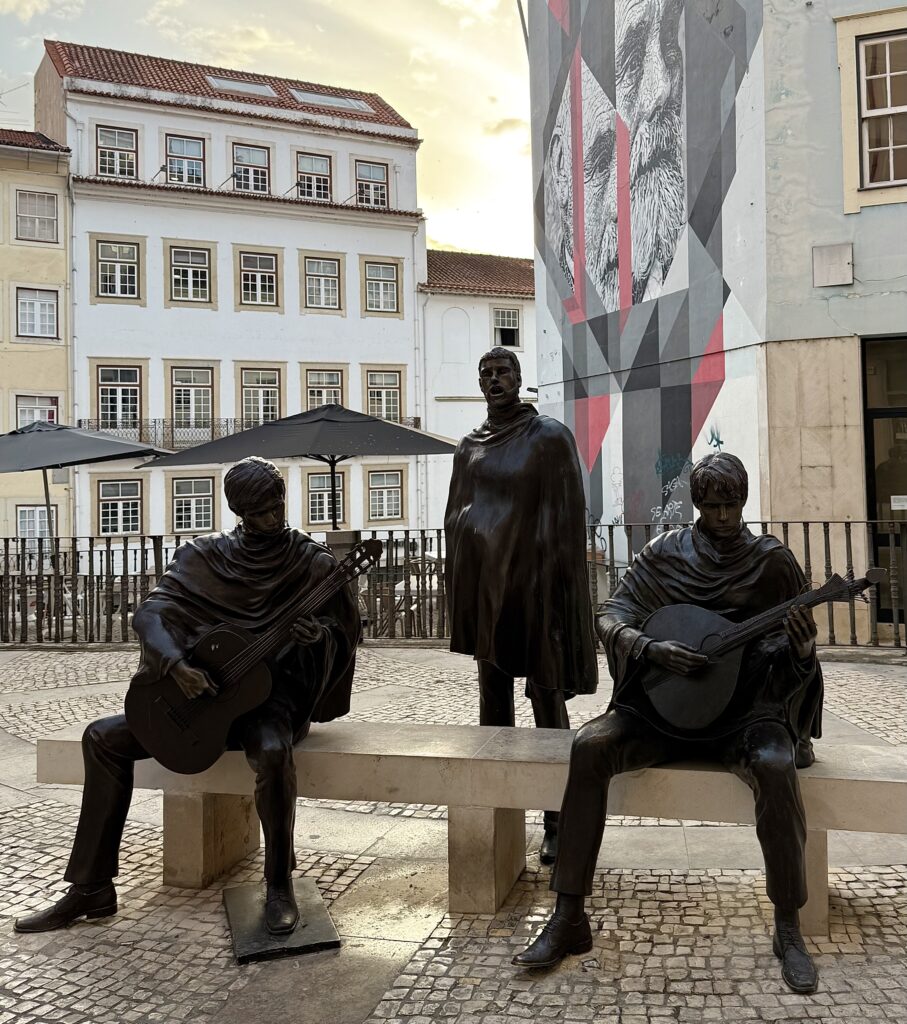
The Portuguese musical tradition fado is typically sung by women in Lisbon, but in Coimbra it’s sung by men. Song themes are inspired by poetry, philosophy, & history tied with the university. Figurative sculptures dedicated to fado also show a guitar style that originates in Coimbra.

The ‘rest day’ in Coimbra began with breakfast at the charming Santa Cruz Cafe, next to the Church of the Holy Cross (Church of Santa Cruz).
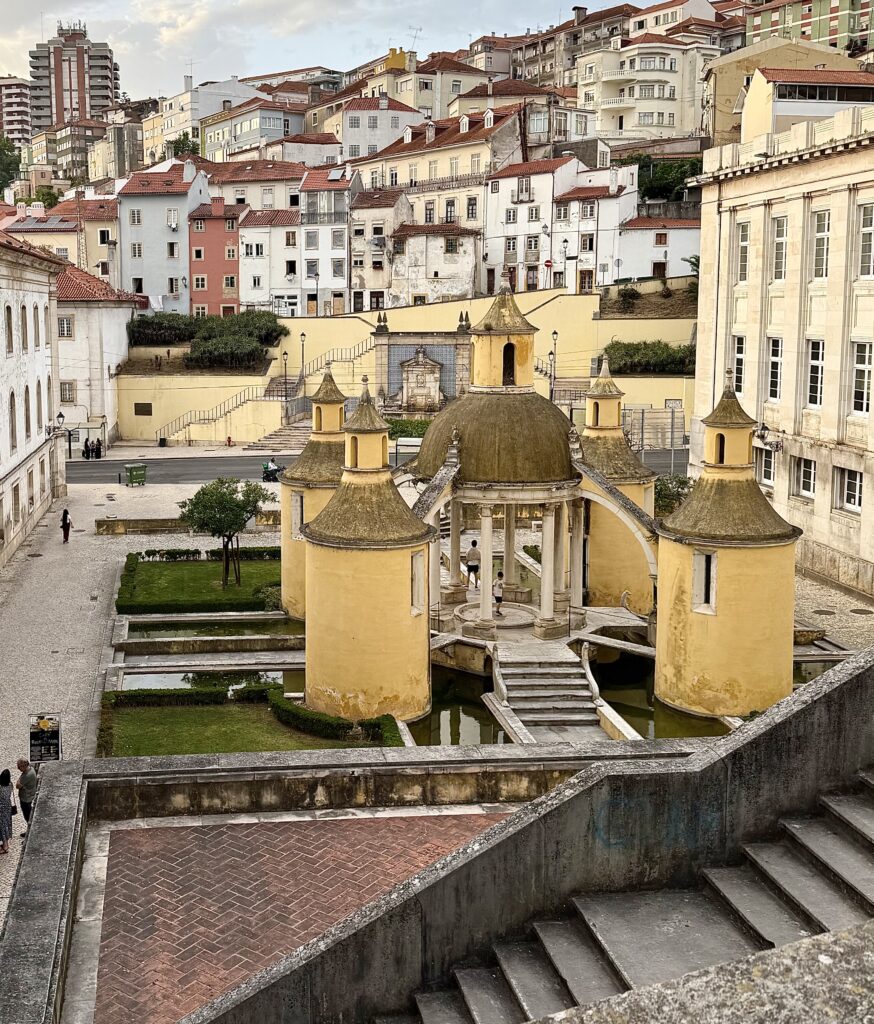
Behind the church stands Jardim da Manga, a Renaissance structure featuring a fountain and a cafe across from it — a peaceful setting for a sightseeing break.
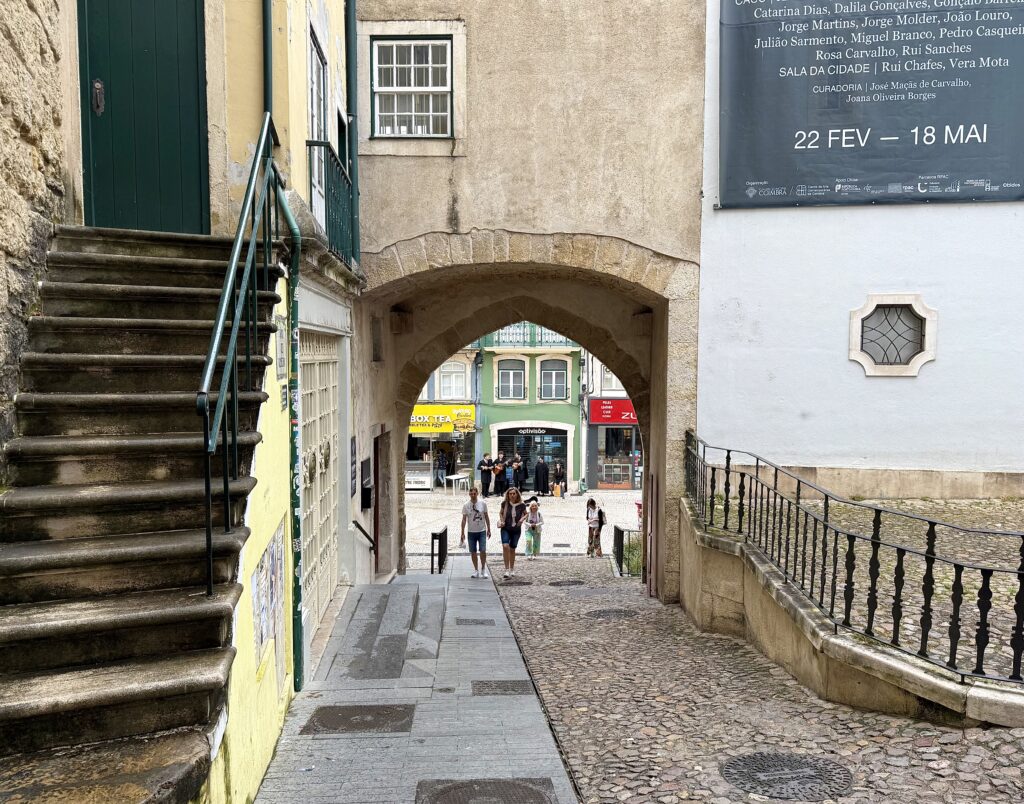
The 16th c. Porta da Barbara gateway leads to the city’s upper section that includes the university.
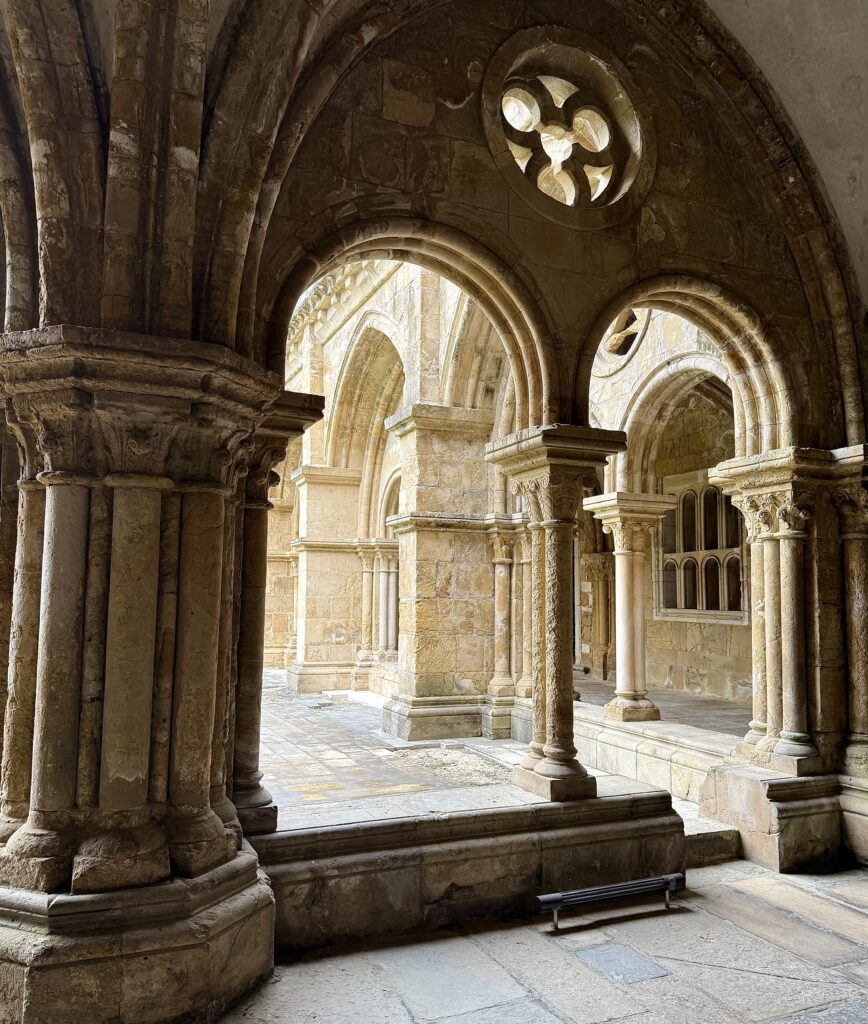
Cloister at the Old Cathedral of Coimbra (Se Velha) from the 12th century
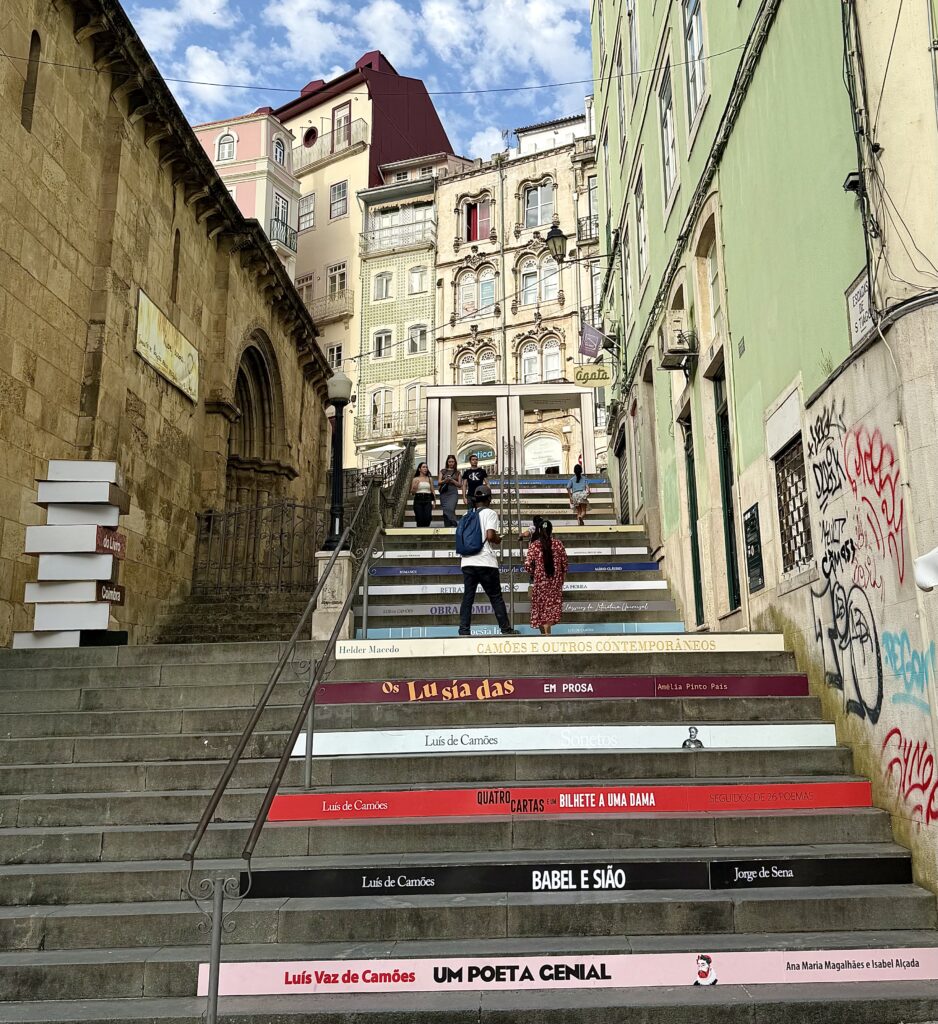
In conjunction with a book fair there were stacks of oversized books and book spines highlighted on a staircase.

The sky was still dark when I left my hotel for the Day 6 walk to Sernadelo.
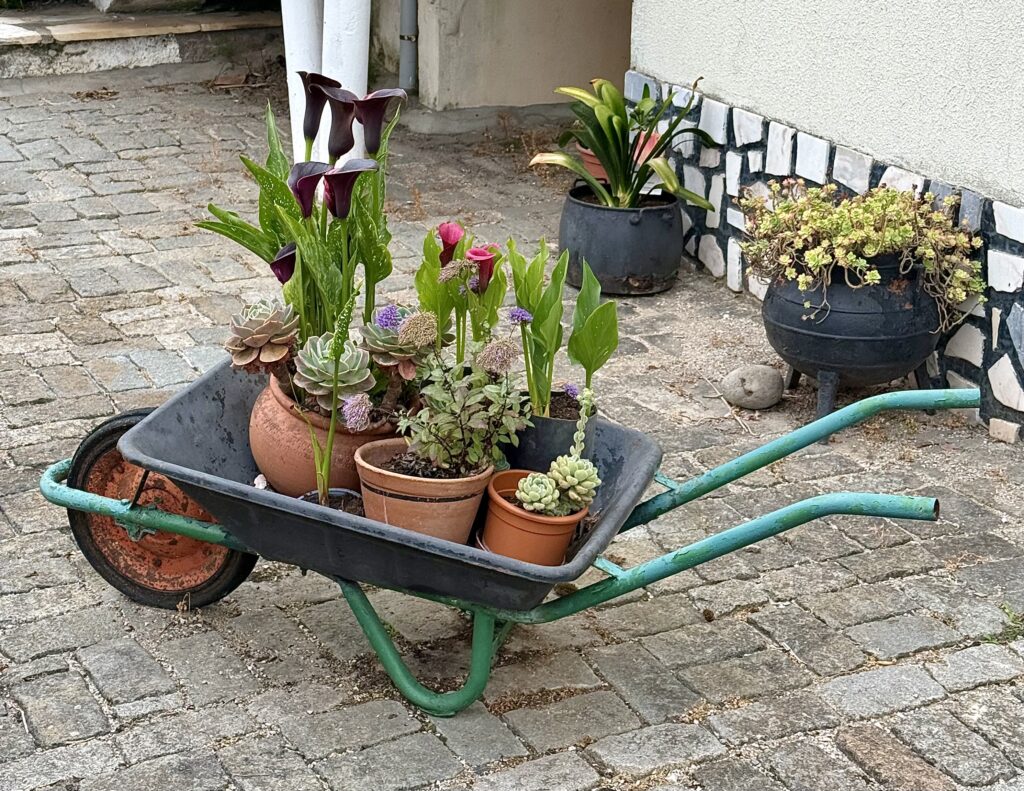
Wheelbarrow planter outside Coimbra
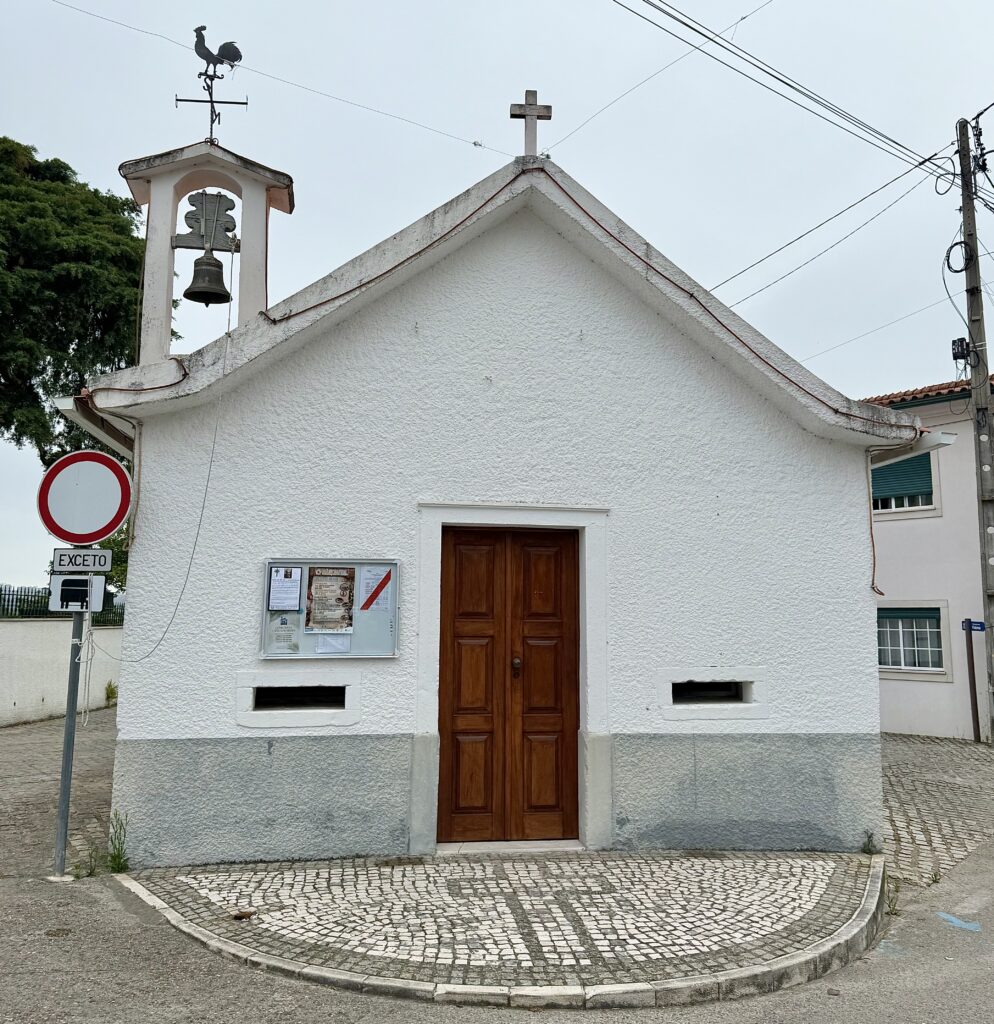
Capela de Adoes in Adoes with a rooster weathervane, often found on top of chapel bell towers

Fresh bread for sale from a street vendor in Trouxemil
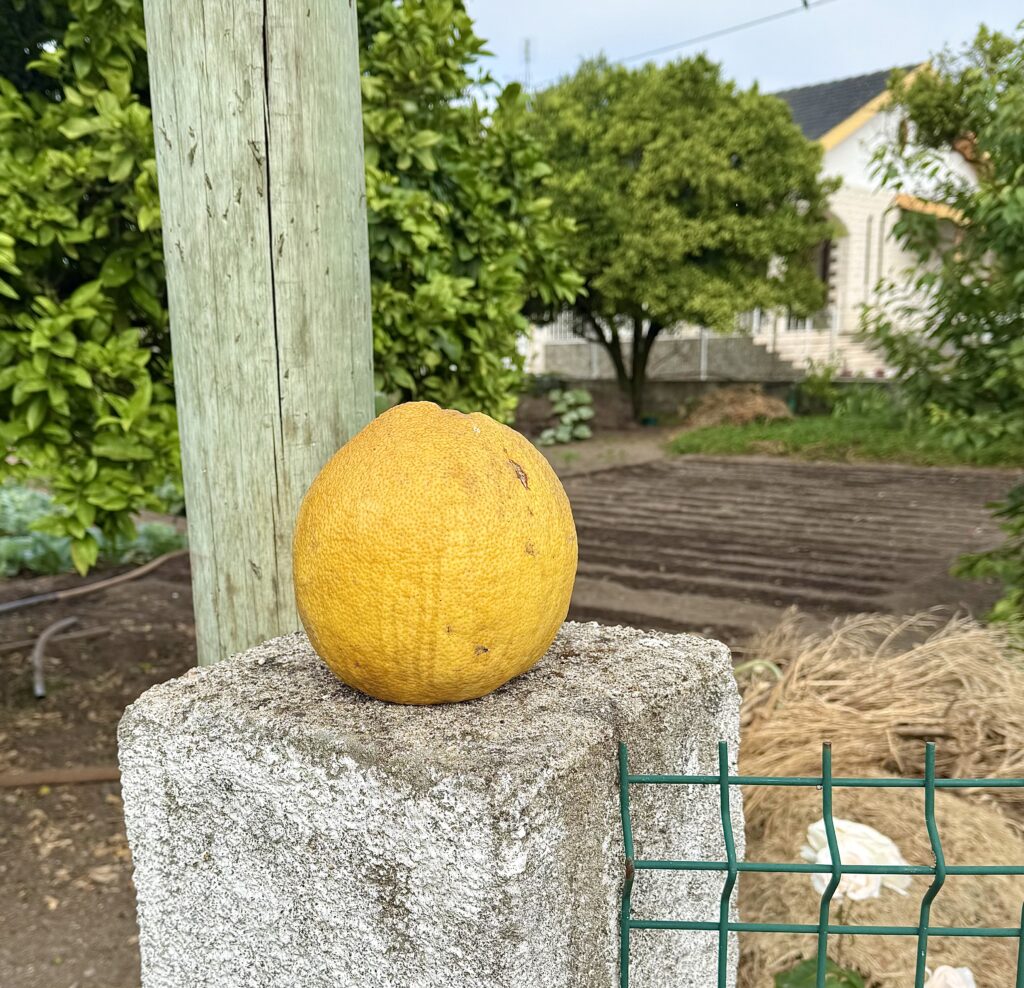
A large lemon from a residential garden
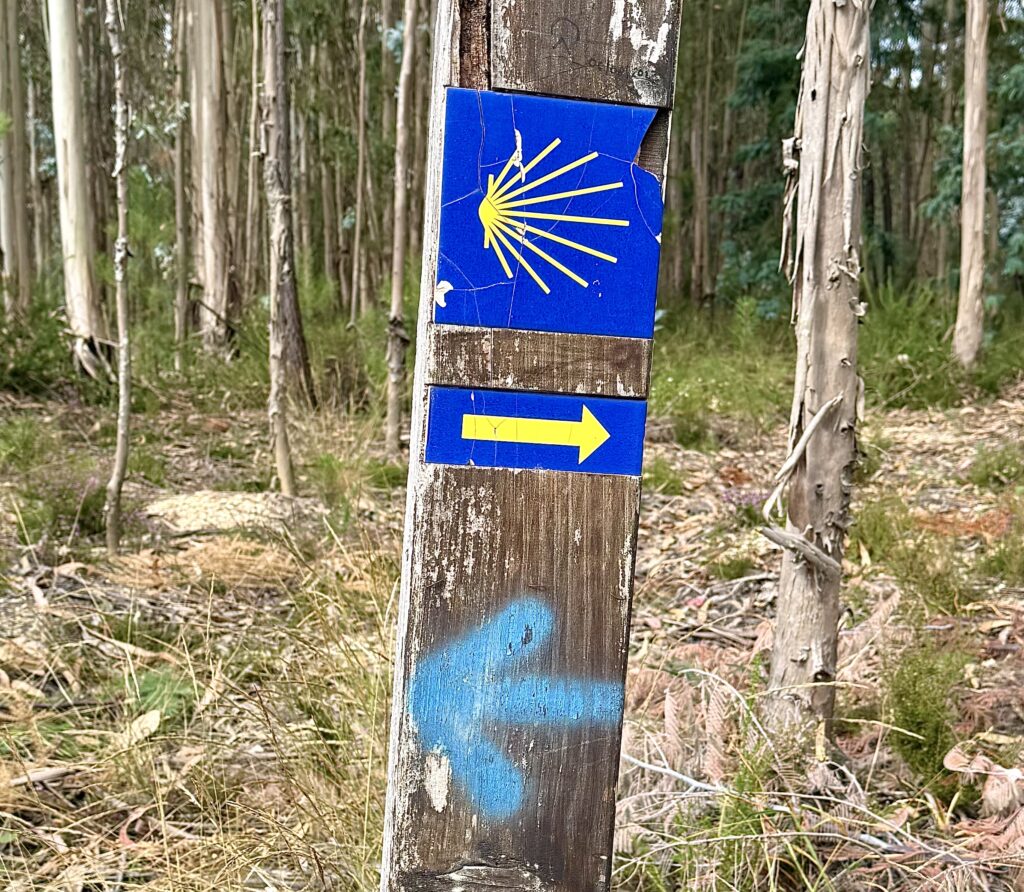

More eucalyptus groves
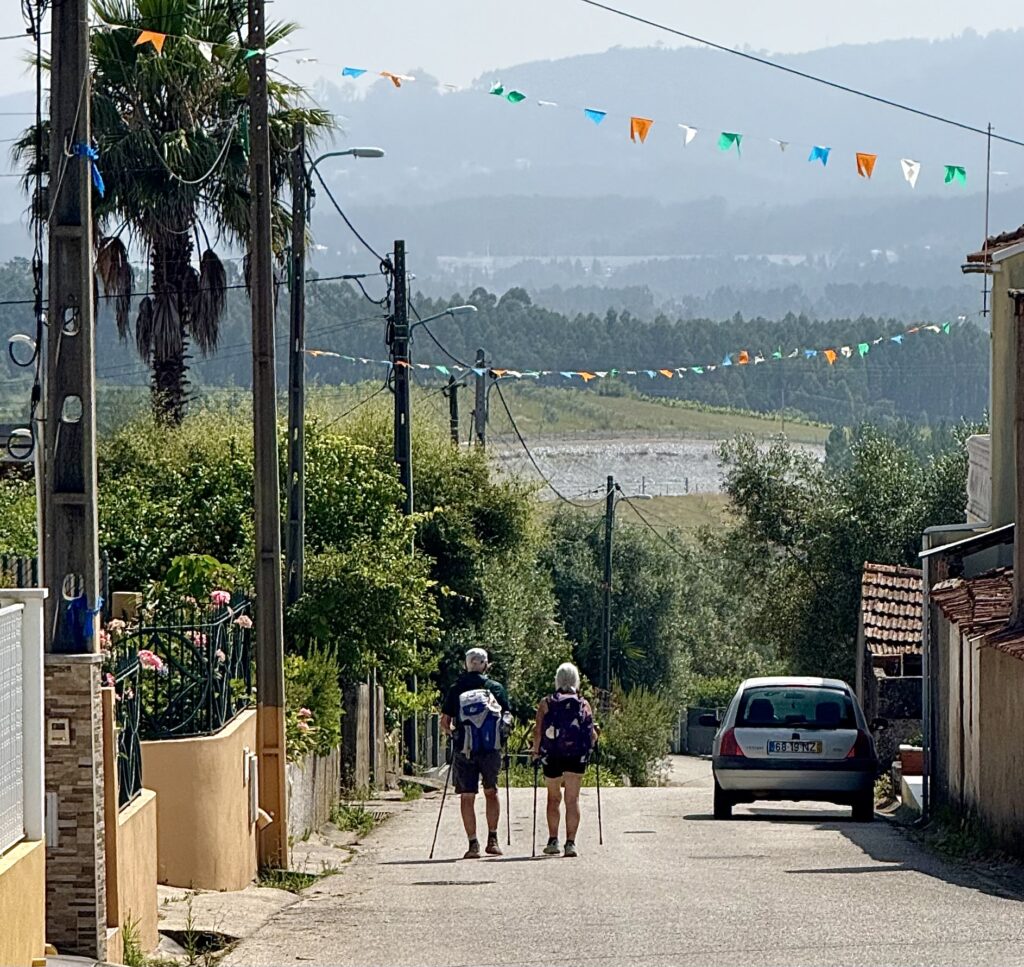
In Casal Comba — Vimieira
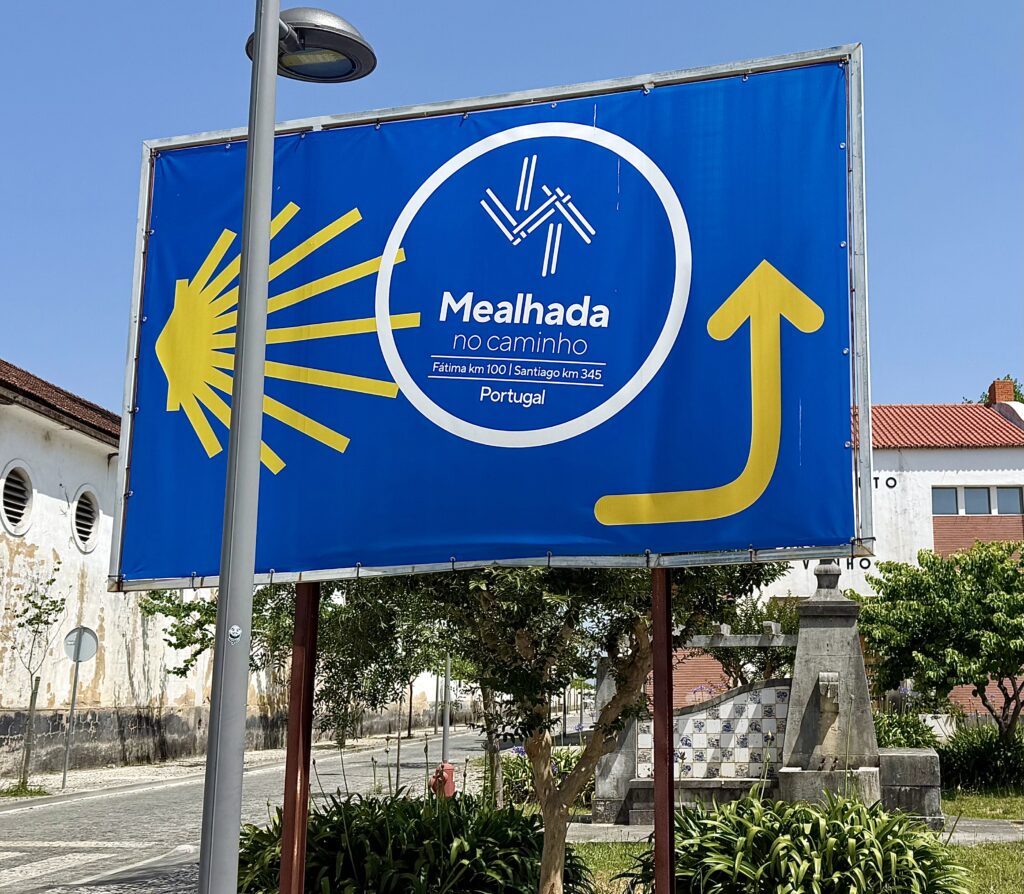
Sernadelo ahead about a mile from Mealhada

My lodging in Sernadelo was at Albergue-Residencial Hilario, which offered private rooms for only 20 Euros. A grocery store nearby sold sandwiches, fruit, & juice for dinner.
Questions about staying in albergues, lodging choices, & making reservations on the Camino? Check out lodging information in Camino Resources, Part 1.
Next: Reaching Porto with stays in Agueda, Albergaria-a-Nova, Sao Joao da Madeira, & Grijo
See Tomar to Porto, Part 3